By Contributing Writer Rob Silverman
- Convincing likeness, check!
- Good composition, check!
- You need not be an award-winning artist, check!
We’ve all seen demos by accomplished portrait artists that begin with a perfect drawing,
followed by filling in just the right flesh tones for an impressive portrait.
But how does that help you if your drawing skills are not at that elite level?
Here is an option that any aspiring portrait artist can turn to for an impressive likeness, and
ALL YOU NEED TO KNOW IS HOW TO DRAW A BOX!
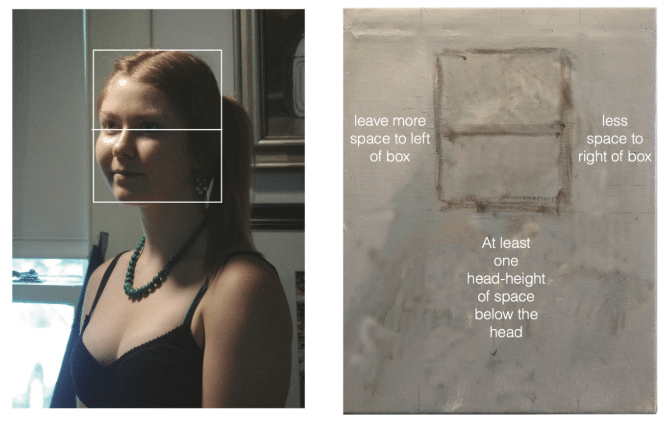
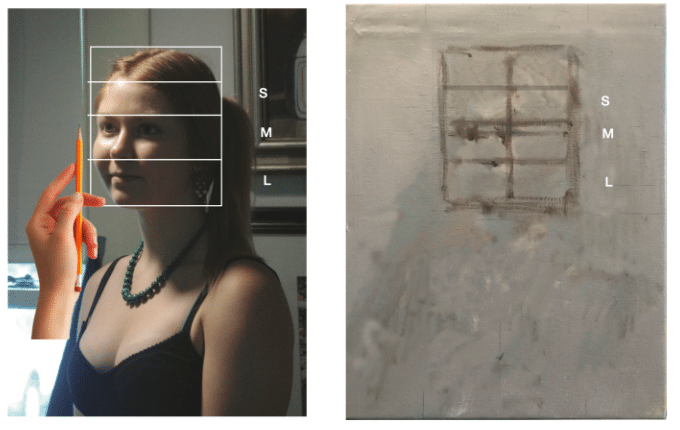
STEP 1: DRAW THE BOX (OR ENVELOPE) AND PLACE IT FOR A GOOD COMPOSITION
- Estimate the width vs. the height of the head to determine the box proportions. This shape, often
called the ENVELOPE, contains the head
- Leave more space in the direction the sitter is facing than the space behind the head.
- Leave about a head-height or more below the box. This will insure the shoulders will fit.
- Divide the box in half, vertically. This is the location of the tear-ducts.
Rob Silverman is an innovative and highly motivated instructor who has been
teaching (in-person and virtually) Portraiture, Figure, Fundamental Art Principles, as
well as landscape and still life in the tri-state area for over 15 years. He has been
featured in American Artist Workshop Magazine and The Art of the Portrait, the
official publication of the Portrait Society of America. As an illustrator, his work has
appeared in numerous publications such as the NYTimes, Travel and Leisure and
Scientific American.
Streamline Publishing offers a rich library of instructional videos that provide a solid foundation in portrait painting in several mediums.
A Short Spring Stroll with Gustav Klimt
Austrian turn of the century artist Gustav Klimt painted marvelously ornate and radically unconventional canvases that pushed the boundaries of art toward modernism in a big way. In his most famous works, sensuous women and passionate lovers entwine with elegant shapes and swirls of exotic color and gleaming gold leaf. But Klimt painted beautiful landscapes too, where he continued his experimental marriage of realism with decorative near-abstraction.
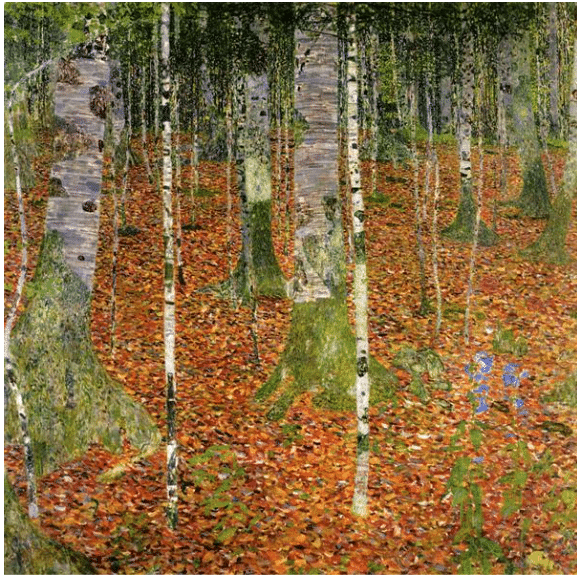
Gustav Klimt, Birch Forest, 1903, about 100 x 100 cm (roughly 40x4o in.)
You can’t trust the colors of paintings you see online. Actually, you can’t trust anything about paintings you see online – they should always be experienced in person whenever possible. (As soon as you do this with a painting you think you know well, you realize that paintings are something different from what you thought when viewing them digitally from afar.)
I don’t know which of the following images is closer to the original, so I include both. Either way it’s a wild composition that makes one look and look again, while the lithe saplings shimmy like dryads before the mind.
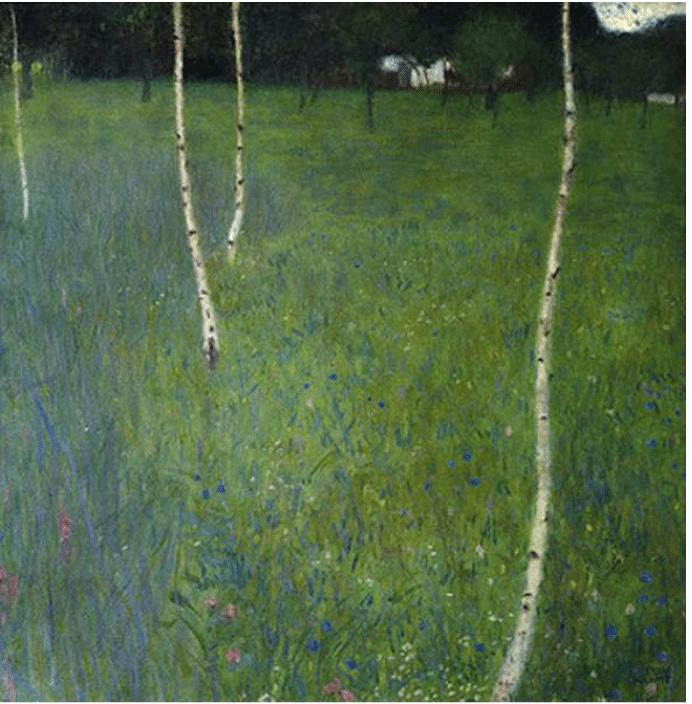
Gustav Klimt, Farmhouse with Birch Trees, 1900, 81 x 80 cm, oil on canvas

In any case, if you really want to know which is the truer reproduction, you’ll have to go to the Belvedere Palace in Vienna where it resides in the largest collection of Klimt’s paintings in the world.
May we all approach the coming spring with as clear an eye and as fresh a creative vision.
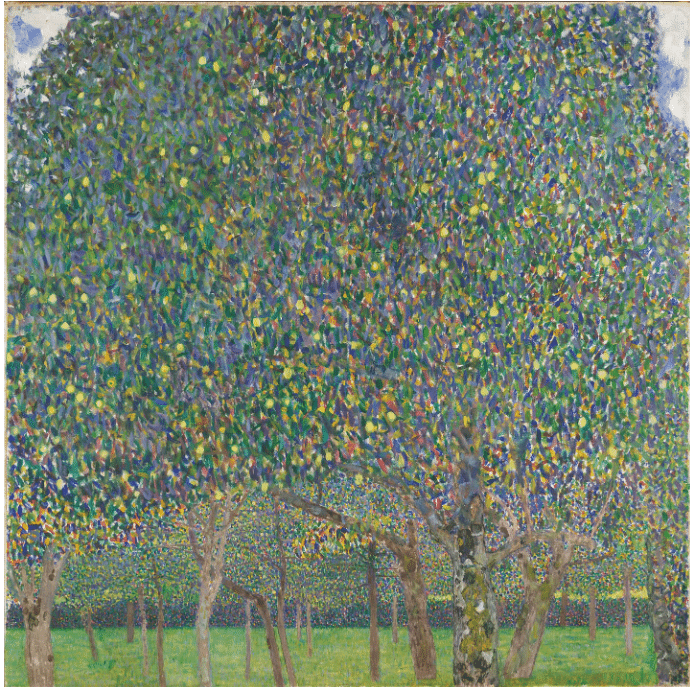
Birnbaum (Pear Tree), 1903, height: 101 cm (39.7 in); width: 101 cm (39.7 in), oil and gold leaf on canvas