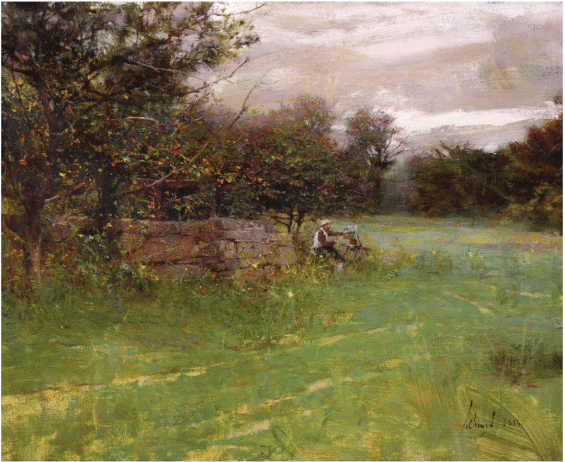
By Kelly Kane
A growing body of evidence proves something the readers of PleinAir™ Magazine (and Inside Art) have long understood: Art makes us feel better.
Whether we’re making it or simply looking at it, art can transform our biology by rewiring our brains and triggering the release of neurochemicals, hormones, and endorphins.
In response, doctors, social workers, and other public health practitioners have started to prescribe art experiences as part of treating a wide array of conditions, including obesity, heart disease, chronic pain, dementia, Parkinson’s disease, loneliness, and depression.
“Art opens the closets, airs out the cellars and attics. It brings healing.” — Julia Cameron
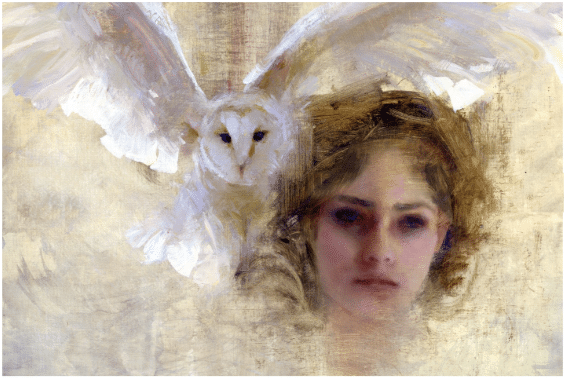
Katie Swatland, “Athena’s Owl,” oil on linen, 12 x 16 in.
Art as healing is a strong part of Katie Swatland’s philosophy of painting. Katie is the author of the books Alla Prima II and the Alla Prima II Companion: Richard Schmid’s Materials, Tools, and Techniques. Both offer a thorough account of the revered late painter’s acclaimed approach to landscape, still life, and the figure. Order your copy here.
One study showed that making art of any kind for just 45 minutes lowered the stress hormone cortisol by as much as 25 percent. Other research suggests that art making builds our executive function and decision-making skills, and that just one art experience per month can extend our lives by 10 years. Whether you like to collect art, make it, or simply enjoy looking at it, this is good news!
For the plein air painter, the news gets even better, with loads of evidence showing that going outside can have positive effects on both our physical and mental health. Specifically, the practice called “forest bathing,” being immersed in nature for as little as 10 minutes, has been shown to lower anxiety and improve mood.
I recently spoke with a group of world-renowned watercolorists — a mix of landscape, still life, figure, and experimental artists — as they plein air painted around Lake Tahoe. All agreed that being able to escape their daily lives — and their studios — for a week, to engross themselves in art making and talking about art, was both relaxing and rewarding.

Scott Christensen, Pacific Air, oil on canvas.
Christensen demonstrates three different landscapes in his video “Three Landscape Studies” as well as how to paint LARGE landscapes in a second video, Painting Large Landscapes. Both are available here.
“It was a bit intimidating at first, but once painting, we were all friends, unified by the same task in front of us: how to capture this expanse of stunning beauty on a flat piece of paper, with our own unique voice,” said Michigan artist Kathleen Conover.

Kathleen Conover,“Dream Runner,” giclee print
Hearing about their experiences made me more excited than ever for the next Plein Air Convention & Expo, which will be held in Lake Tahoe and Reno in May. It’s a busy week and an investment in oneself, to be sure, but it’s a wonderful opportunity to disconnect from everyday concerns and pressures to indulge in art in an extraordinary setting.
One thing we’ve learned for certain is that art isn’t a luxury; today, many scientists recognize it as a basic human need. “Art is one of our oldest creations (humans invented paint long before the wheel), one of the earliest means of communication (we drew long, long, long, long before we could write), and one of our most universal urges,” writes Bianca Bosker in her book Get the Picture: A Mind-Bending Journey among the Inspired Artists and Obsessive Art Fiends Who Taught Me How to See.
As we usher in the new year, join me in my new mantra: A drawing a day keeps the doctor away.
Kelly Kane is Editor in Chief of PleinAir™ Magazine. Get your copy and subscribe to PleinAir Magazine here.

Richard Schmid, “Winter Geraniums,” 12 x 20 in. oil.