The Consistency of Variety: Defining Your Artistic Style
Should you create artwork that’s consistent or eclectic? Here’s what one successful artist has to say about his experience and finding (or making) your niche.
More than once, I have been encouraged by galleries that show my work to be “more consistent.” They have encouraged me to “establish an identity” (or “brand” in today’s jargon) by doing works that have similar content — a recognizable “genre.” In general, this is probably solid advice, but it hasn’t worked for me.
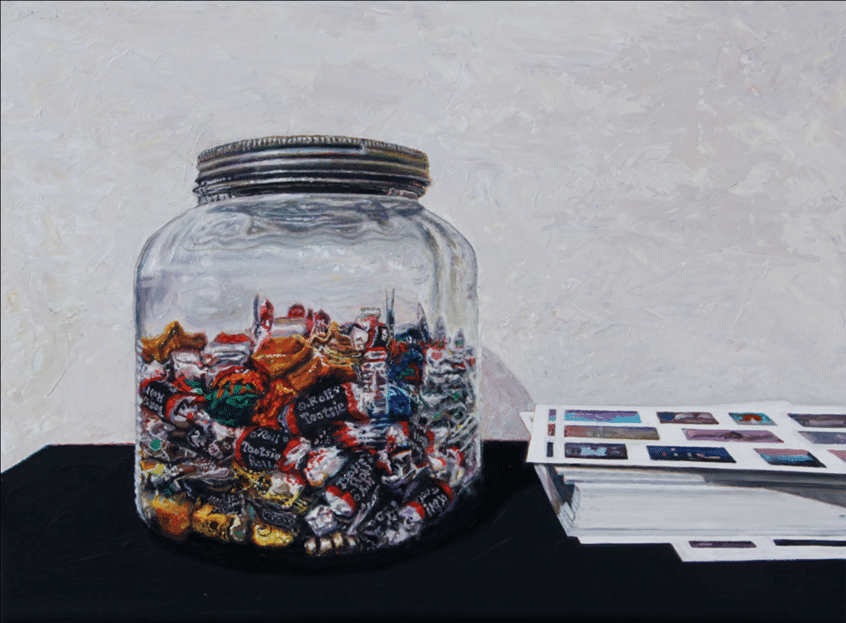
Fred Danziger, “Candy Jar,” oil, 11 x 14 in.
The theory is that artists become “known” by becoming identified with one thing, like Edward Hopper’s lonely, geometric interiors, or Wayne Thiebaud’s luscious pastries, for example. Artists who “jump around” aesthetically can be seen as not yet having “found themselves,” or being “trendy.”
My New York dealer in 2004 loved what I called “natural abstractions” — very close-up, detailed views of grasses, leaves on ponds, and tangled vegetation. It was an idea that originated when my high school art teacher, John Dropcho, asked us to “imagine you are an ant” and sent us out to sketch! That point of view had now emerged in my work, many years later!
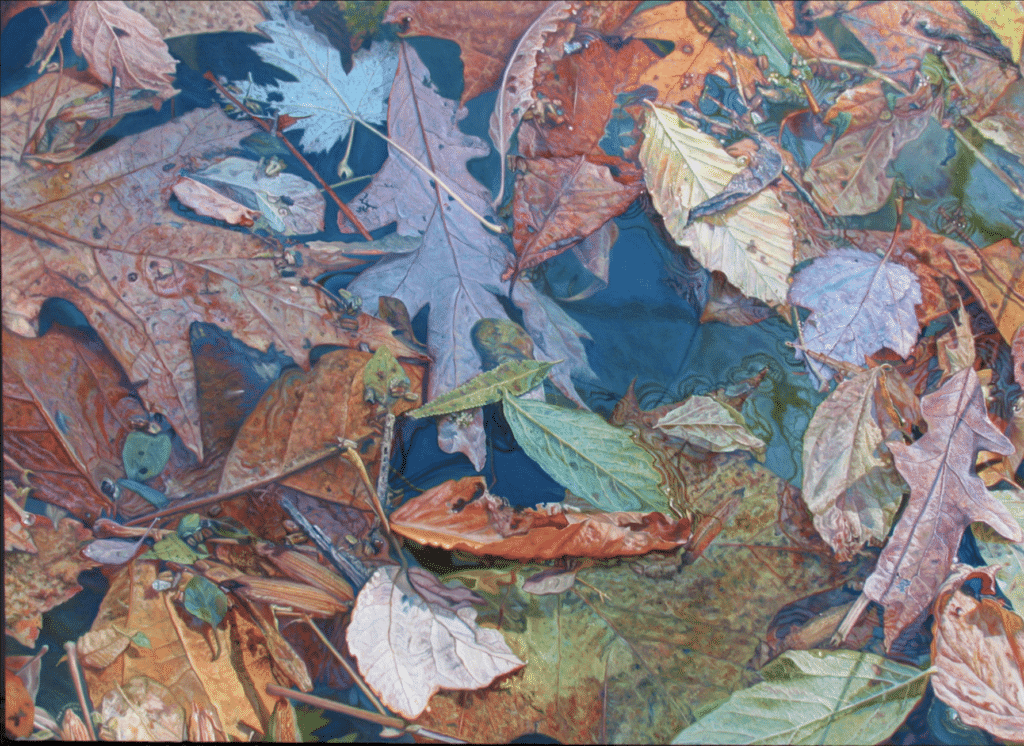
Fred Danziger, French Creek Drift,” oil, 36 x 50 in.
“This is Your Niche!”
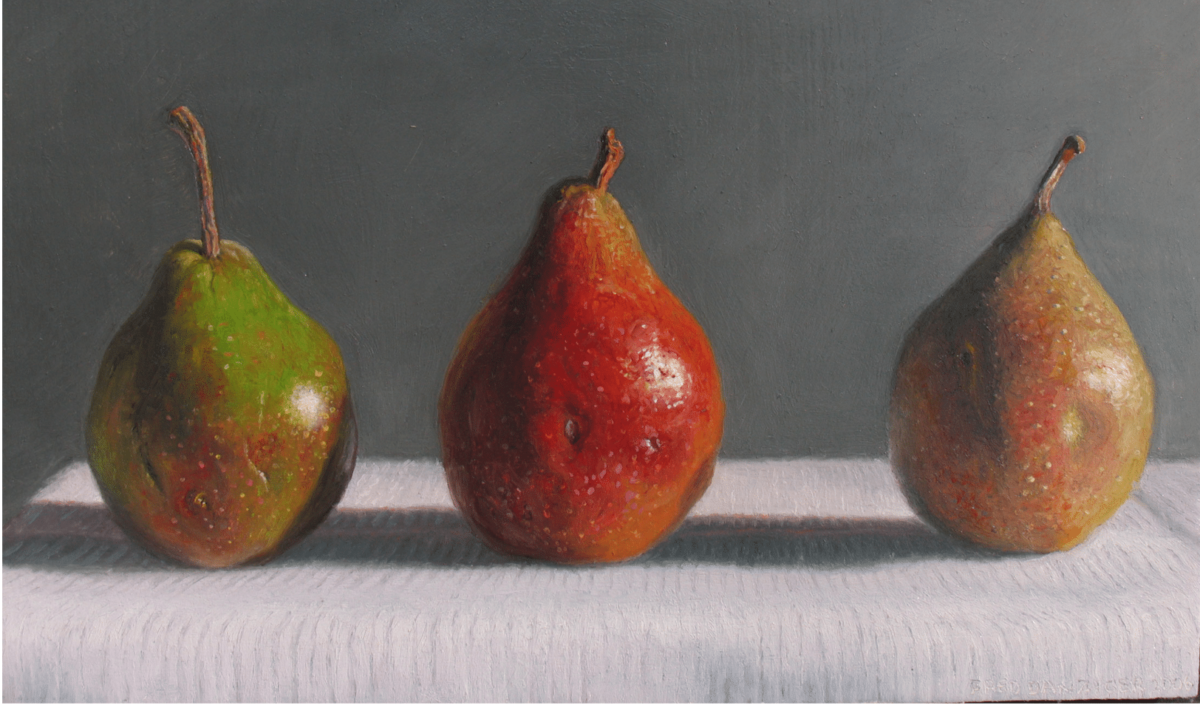
My dealer, Sherry French, loved that these pieces were almost abstract in their complexity and yet were meticulously realistic in their detail. She thought of them as a kind of synthesis of two approaches to painting. Neither she nor I had seen other artists pursuing this approach at the time, and she told me “this is your niche — do only these!” But I was unable to take her advice. I immediately did a very traditional painting of some pears on a table (see “Three Pears” at the top of this page)! I had bought the pears at a roadside stand and their beauty was irresistible. Sherry expressed a certain exasperation with me, even though she sold the pears.
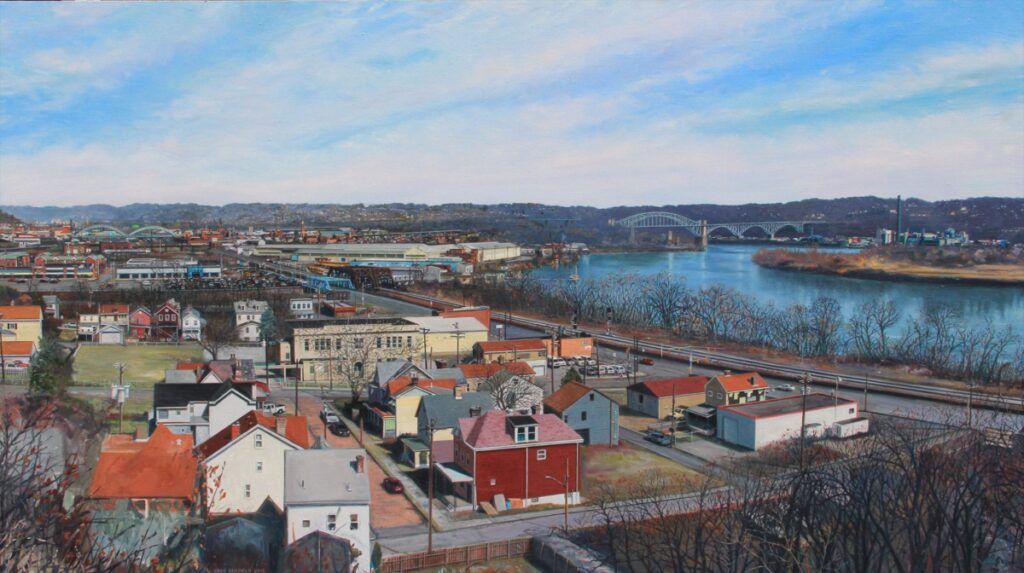
Fred Danziger, “Rivertowns,” 2018, oil, 36 x 64 in
My own restless changes are not uncommon. One of my guiding lights from the past is George Bellows. He is mostly known for gritty street scenes of New York City as part of the “Ashcan School.” But he also did wonderful, often tender portraits, and one of his many landscapes, “North River” done in 1908, is as fluid and alive as any Sargent. I saw this painting often when I was teaching at the Pennsylvania Academy of the Fine Arts, where it is part of the permanent collection. Contrasted especially with his paintings of boxers, in dense smoky interiors, it made me think about “range.”
There are simply too many amazing things in the world to limit myself in any way. Every time I begin to settle into one identifiable “niche,” I see something vastly different that I want to paint — a face, a street light casting an amazing shadow on a brick wall, or a pile of shells at low tide — and I have to paint it! It may or may not fit into things I’ve been doing, either as subject matter or point of view, but it won’t let me go until it is on a canvas!
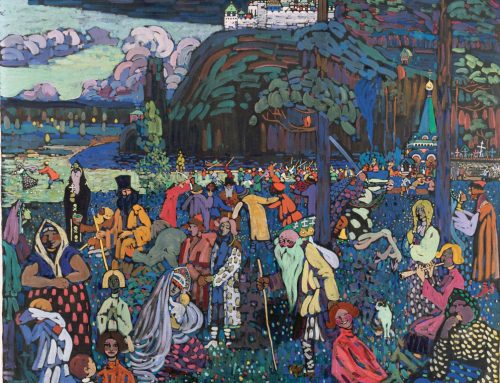
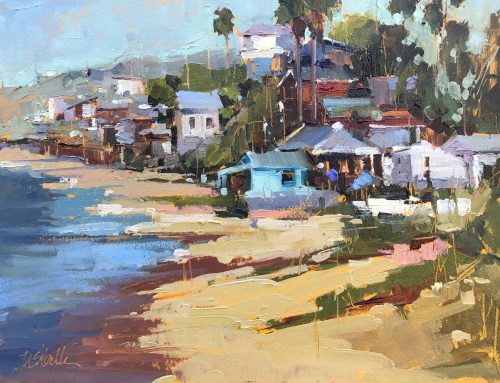
For me, the “consistency” is in the palette, the rendering of light, and the commitment to seeking my truth through faithful portrayal of the observed external world. I’m very fortunate that the owner of my current gallery in Philadelphia, Fraidoon Al-Nakib, told me when we first associated and discussed this topic, “Fred, paint anything you wish — I’ll show it!” As a result, my first art exhibit in his gallery includss a broad range of subjects, from highly rendered cityscapes, to meticulous close-ups of tide pools in Maine, to my loosely painted plein air works.
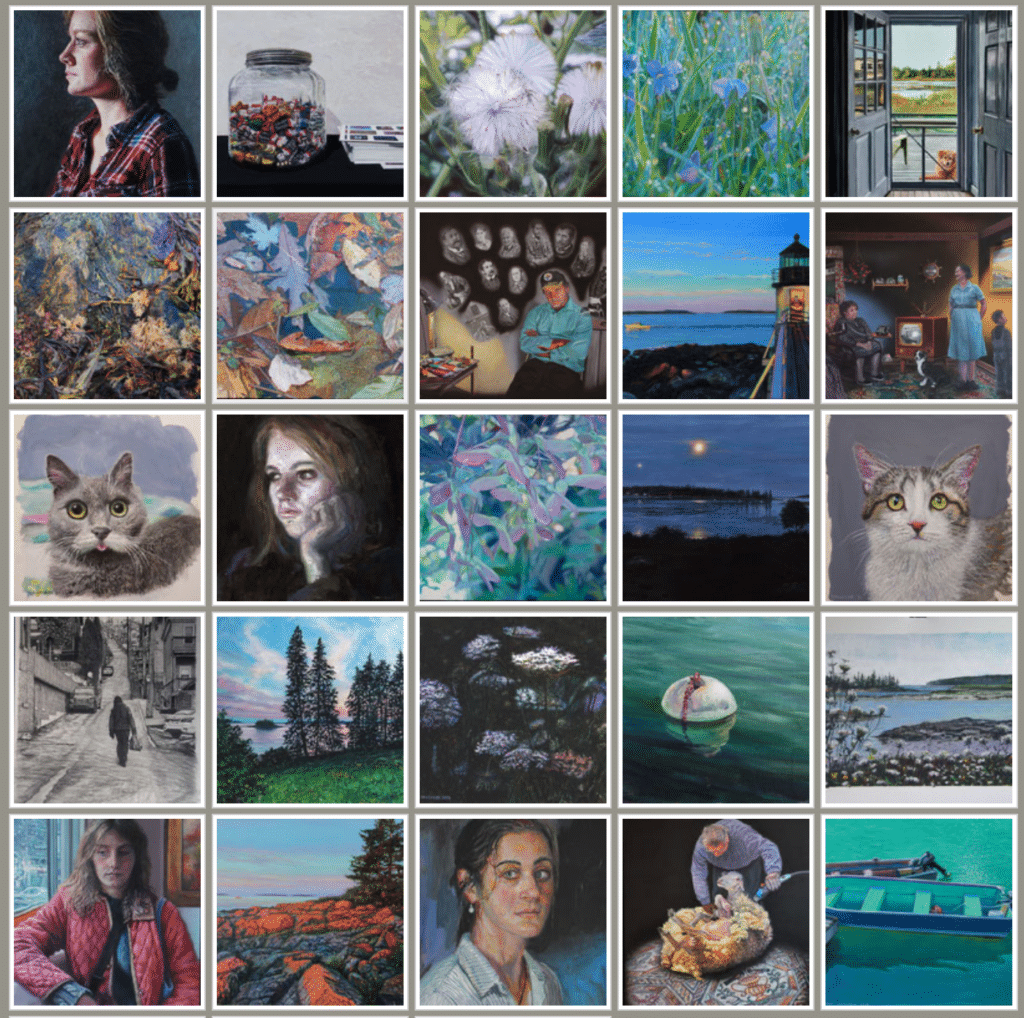
An eclectic selection of Fred Danziger’s paintings currently for sale at Philadelphia’s F.A.N. Gallery.
It’s Okay to Change
It is not unusual for artists (after testing several directions in early training), to devote their entire lives to one essential “style.” But it is also not unusual for artists to change, often dramatically. It is usually done gradually, over a period of years. But the flow of our creativity is fed by many tributaries, and we occasionally see shifts and revisions and whole new approaches emerge in a relatively short time. Sometimes we artists must drag the public and the gallery owners with us. Sometimes, we go on alone.
But if we are changing for reasons of “internal necessity” as Kandinsky phrased it, isn’t that why we do art in the first place? It is that ineffable thing inside which compels us to paint and say to others: “Look at this.” If you find something that satisfies you, by all mean explore it to its boundaries no matter how long it takes. But if you are always wondering what is over that next hill, travel on! We need to go where we need to go. It is just as valid in art, to consistently embrace variety.
If you want to add some extra income, become a successful full-time artist, or bring in enough income as an artist that you can retire comfortably without having to struggle financially, check out this video on art marketing by Eric Rhoads. You’ll get three hours of targeted tips and helpful hints from Eric, aimed at artists wanting to sell more art and at those looking to supplement their retirement income or set themselves up for a successful retirement through art sales.
Getting Down to Business
Visit EricRhoads.com (Publisher of INSIDE ART) to learn about opportunities for artists and art collectors, including: Art Retreats – International Art Trips – Art Conventions – Art Workshops (in person and online) – And More!