Working in one medium is challenging enough, why on Earth should you consider adding a second?!
The simple answer is that it will make you a better painter! Certain things that are easy in pastel are devilishly difficult in oil and vice versa. But once you see the effect in one medium, you will work to find a way to make it happen in the other. The bottom line: you will become a stronger artist by exploring the second medium.
- You’ll become more sensitive to color. Since you don’t mix on a palette but rather on the painting itself, you rapidly learn to see the components of even complex color notes.
- Your color will become cleaner. Each pastel stick is a relatively pure color…usually one pigment plus white or black. This lends itself to a more impressionistic application. Once you see it in pastel, you’ll want it in your oils!
- You’ll gain better edge control. Unlike paint, pastel automatically lends itself to soft edges; in fact, you have to consciously work to achieve a sharp edge. The result is a better understanding of edge relationships.
- Your work should become more “painterly.” Using the side of a pastel stick is very much like making your whole painting with a two-inch brush. You’ll learn to avoid “fiddly,” overly tight strokes. Once you have achieved that painterly look in pastel, you’ll find it easier to achieve in your oil paintings.
- Your work should become fresher. Pastel creates a matte surface. Even with a lot of reworking, you avoid the brush marks, glare, and muddy color that can rapidly make oils look overworked.
- You will become more sensitive to temperature shifts. Pastel lends itself to subtle layering techniques. You can easily place warm over cool and vice-versa. Again, once you achieve these effects in pastel, you will work to get similar results in oil. (Even though it is more difficult.)
Oh, by the way, pastel is a beautiful and rewarding medium in its own right!
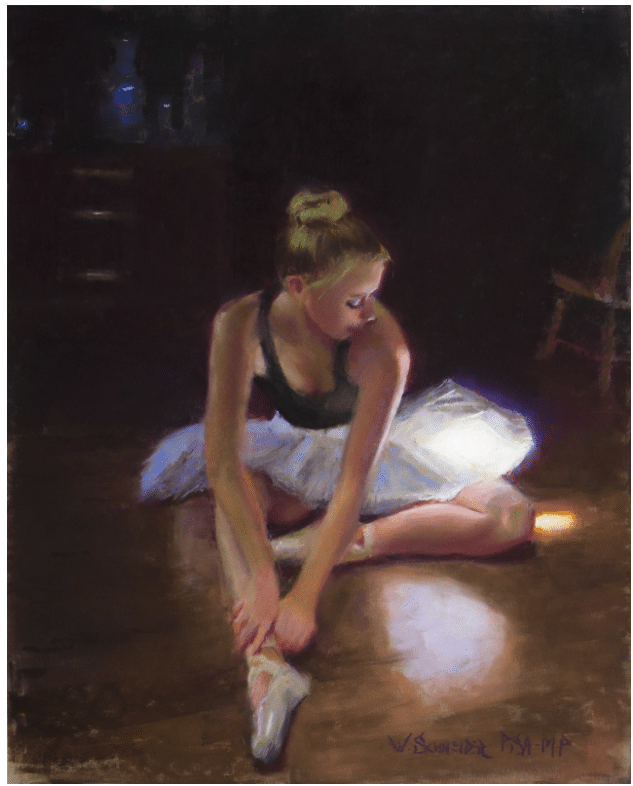
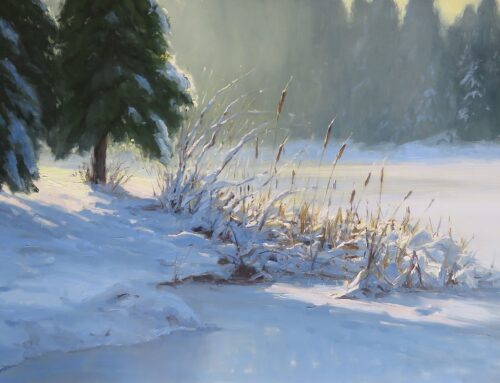
William Schneider, Sunspot, pastel
And now the flip side:
Why Pastel Painters Should Paint in Oil
- Your darks will become stronger. In oil paint, it’s easy to mix a rich, warm, transparent dark. Once you see it in oil, you will want to figure out how to get that look in pastel too. (It’s possible, but takes more work!) Helpful hint: Terry Ludwig’s “30 Intense Darks II” has the richest darks I have found!
- Your repertoire of techniques will expand. Most masterworks were created in oil. Understanding those techniques adds more tools to your conceptual tool kit. One example: Nicolai Fechin’s broken-stroke paint application is fairly easily learned in oil. It can be replicated in pastel, although it’s more difficult because you only have one shot at it.
- Your color choices will improve. In oils you have to mix colors on the palette rather than just selecting the right sticks and letting the pure pigments “optically mix” on the support. (This is actually why oil painters greatly benefit from using pastel!) However, a danger in using pastel’s more pure colors has to do with the way our retinas work. If we stare at a high chroma color, our retinas produce the complement as they fatigue. Overlaying that complement on the original color makes it appear grayer…until we look at it later with fresh eyes! We may find that the pastel painting looks more saturated than we intended, i.e. more garish! (If you want to observe this effect yourself, take a bright red object and put it close to a strong light. Stare at it without blinking for 45 seconds. Then immediately close your eyes and cover them with your hands. After a couple of seconds you should see an after-image of the object in blue-green! Working in oil makes us realize that the world is grayer than we think!
- Thick vs. thin. Oil painters routinely vary the thickness of their paint application — typically thin transparent shadows and thick juicy lights. (Some of Sargent’s highlights were a ¼ inch thick). Again, when you learn to paint that way in oil, you will want to figure out how to get the same effect in pastel. Hint: you can take advantage of the varying degree of softness in pastels made by different manufacturers. And use blending vs. strokes that are “left alone” to create a similar effect.
- Glazing and scumbling are classic oil painting techniques. In both techniques light passes through the glazed or scumbled layer to the underpainting and then bounces back out through that layer, creating a beautiful, glowing, translucent effect. With work you can learn how to create similar effects in pastel.
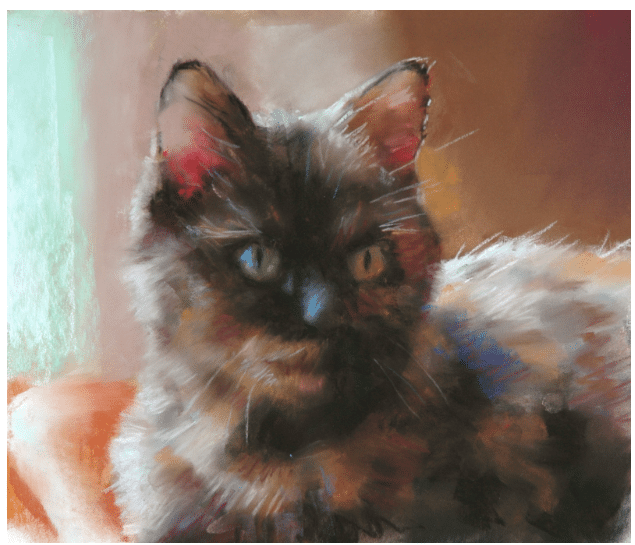
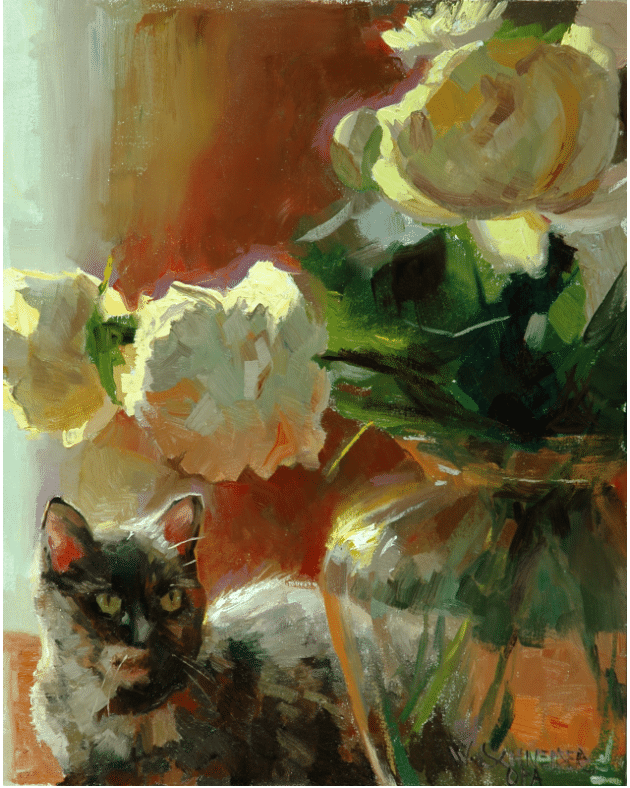
William Schneider, Her Majesty, pastel
A fringe benefit of working in oil is that your sales will probably go up. Many collectors and even some galleries think that oil paint is a more permanent medium. (It’s not, but it’s easier for the sales people to give the customers what they ask for rather than to try to educate them…Grrr!)
William Schneider offers numerous videos covering technique, including composition, mediums (oil and pastel), color, and the most crucial aspects of the figure. Browse his many popular teaching videos here.