Charles Hawthorne (January 8, 1872 – November 29, 1930) founded the popular Cape Cod School of Art in Provincetown, Mass. Hawthorne was famous for his fresh, observational approach to painting and for having his students paint the figure en plein air on the beach, in full summer sun. Notably, a young Norman Rockwell attended the school.
Hawthorne was one of the first instructors in America to insist that “the art of seeing” should be foremost among foundational tools: “Anything under the sun is beautiful if you have the vision,” he said, “… it is the seeing of the thing that makes it so.”
“The ring, the call, the surprise, the shock that you have out-of-doors – be always looking for the unexpected in nature, do not settle to a formula,” he urged his students. “Get into the habit of doing what you see, not what you know.”
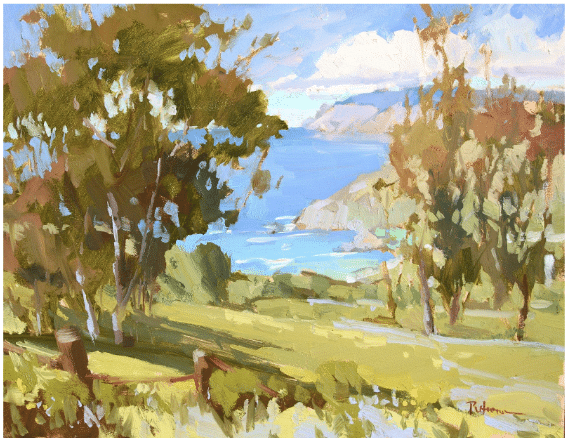
Lori Putnum, “On a Clear Day,” 11 x 14 in., oil on canvas
If Hawthorne’s paintings sometimes look unfinished, it’s because in theory and practice his approach was such a modest one: “Human reason cannot foresee the accidents of out-of-doors,” he said. “Humble yourself before nature; it is too majestic for you to do it justice.”
Hawthorne’s inspiring insights and ideas have been a touchstone among artists for more than 80 years The book “Hawthorne on Painting” consists of notes from Hawthorne’s students, collected and first published by his widow, J.C. Hawthorne, in 1938. The book – a slim “bible” of spontaneous painting – is still available from Dover Publications (as well as in PDF form online – but you should support Dover Publications because they do good things, like keeping books like this in print for people like us).
Hawthorne was all about capturing the essential feeling of the thing. He advised his students proceed by painting “spots of color” and allowing their relationships to form the outlines of objects and figures. His technique is almost a definition of direct painting: “Let color make form,” he advised, “do not make form and color it.”
When rendering the features of a face, for example, or composing a landscape painting or a still life arrangement, remember what made you want to paint it in the first place, he’d say: “Settle in your mind what interests you most – do that thing, don’t do the scene. There isn’t room in your consciousness for more than one sentiment about a thing. Tell that one…. Your ability to see – that’s the whole job of a painter.”
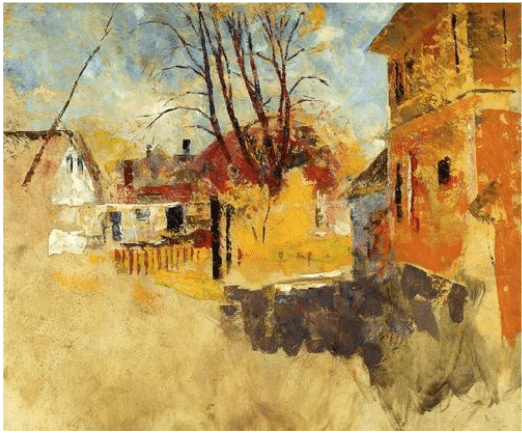
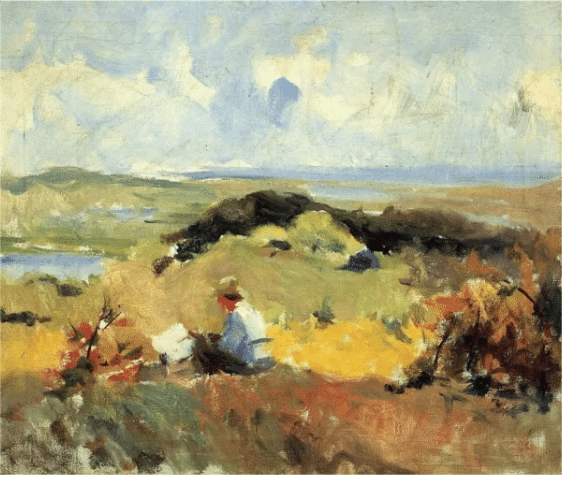
Charles Hawthorne, plein air painting, c. 1920, oil
“It is beautifully simple, painting – all we have to do is to get the color notes in their proper relation,” he said. “Learn to see more beautifully, just as if you were studying music and tried to get the finer harmony more and more truly all the time.”
“Your ability to see is your tools of the trade; nothing else matters. Beautiful seeing is the desideratum. Remember, when you hear people say that they can see a thing but not do it that they cannot really see it. If they did, they could do it even if they put the paint on with their fingers.”
“A painter spends his life in despair trying to paint the beauty he sees – in so doing he approaches more beauty. Knowledge will come to you unknowingly. Think of what beauty is revealed to you; try to put that down.”
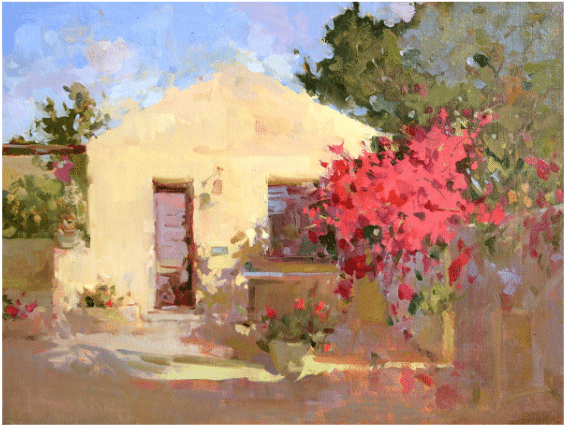
Lori Putnum, Expanded, 18 x 24 in., oil
“As long as one is simple and childlike and humble, one progresses. Keep this point of view and there is no limit.”
“The spirit that moved the greatest master is the spirit that moves us. He may do it more beautifully, but he approaches it in the same way.”
Lori Putnum, whose paintings share space in this article with Hawthorne’s, teaches her own brand of alla prima painting in the video Bold Brushstrokes and Confident Color.
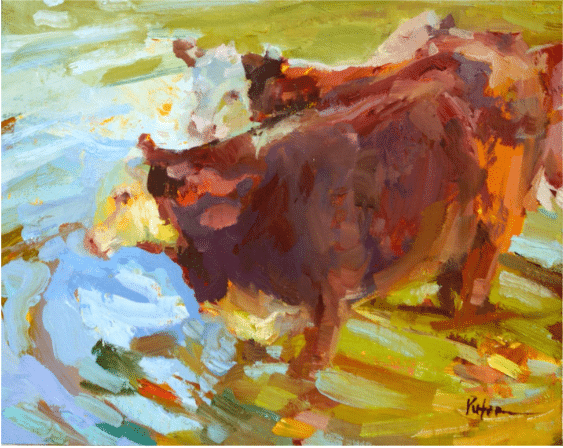
Lori Putnum, Tip Dip, 8 x 10 in., oil