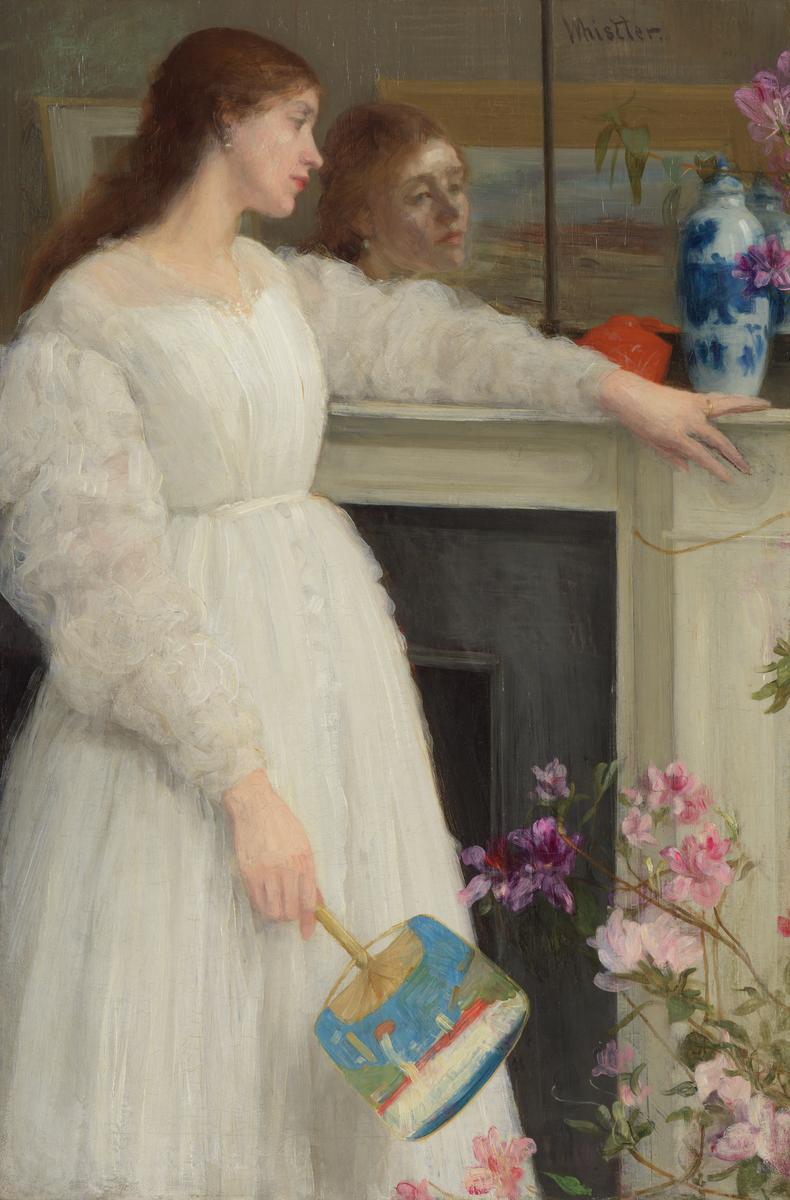
“To say to the painter that nature is to be taken as she is,” James McNeill Whistler once declared, “is to say to the player that he may sit on the piano.”
It’s a line worth pausing on — because more than a century after Whistler delivered it, contemporary painters are still wrestling with the same question he was asking: What is painting actually for?
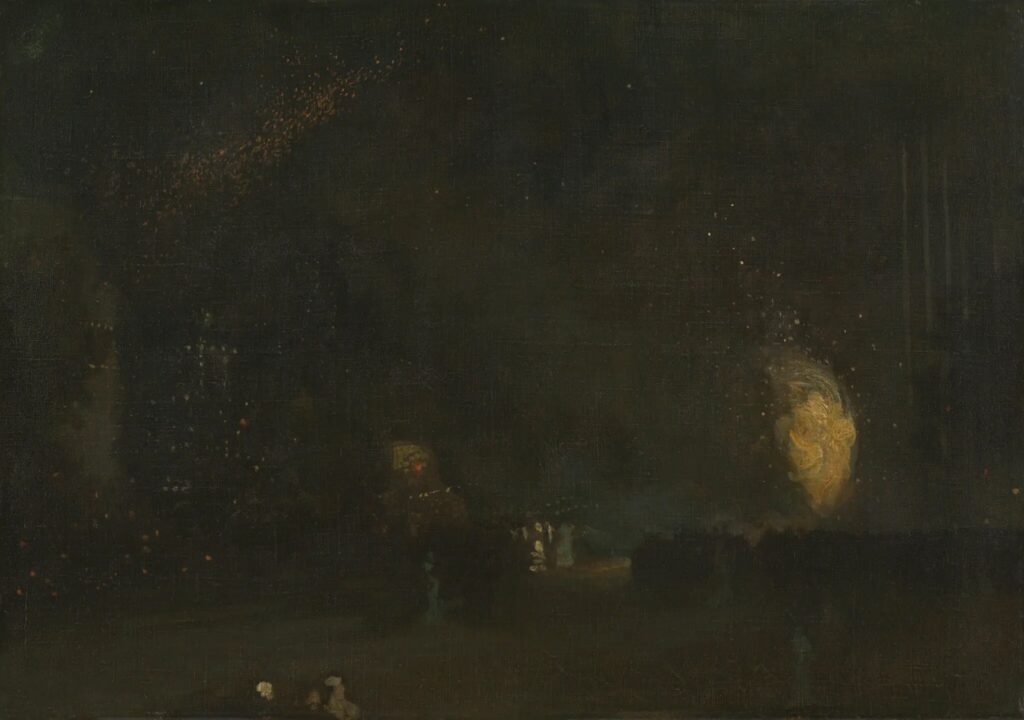
“Nocturne: Black and Gold — The Fire Wheel” (1875-7) by James McNeill Whistler, oil on canvas, 21 3/8 × 30 in. Tate Britain
Whistler’s answer was unambiguous. A painting is not a record of what the eye sees. It is an arrangement — of color, line, scale, and harmony — in which the artist’s vision takes precedence over literal description. His titles said as much: not landscapes and portraits, but symphonies, nocturnes, arrangements, variations. He was telling anyone who would listen that painting was closer to music than to photography. The subject was a starting point, not a destination.
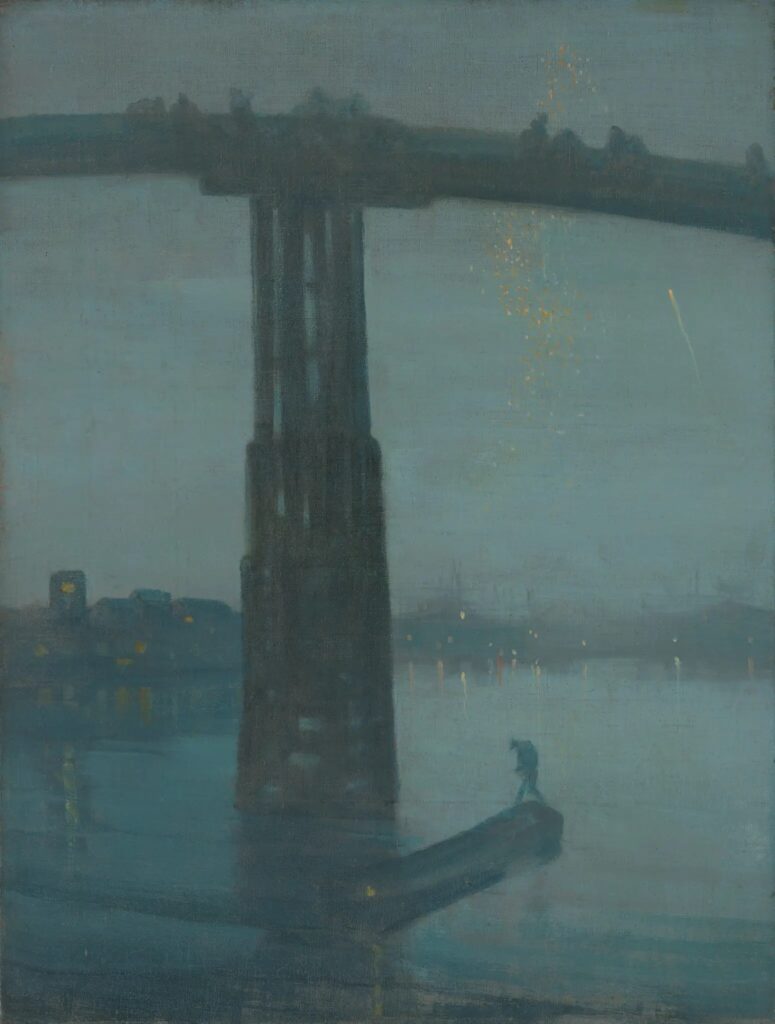
“Nocturne: Blue and Gold — Old Battersea Bridge” (1872-5) by James McNeill Whistler, oil on canvas, 27 x 20 in. Tate Gallery
That philosophy cost him. Critics called his work unfinished. John Ruskin famously accused him of “flinging a pot of paint in the public’s face,” triggering a libel trial that Whistler won — but that drained him financially and alienated many of his peers. He spent years traveling Europe, rootless and underappreciated, producing hundreds of small etchings and landscape works that would only be fully understood later.
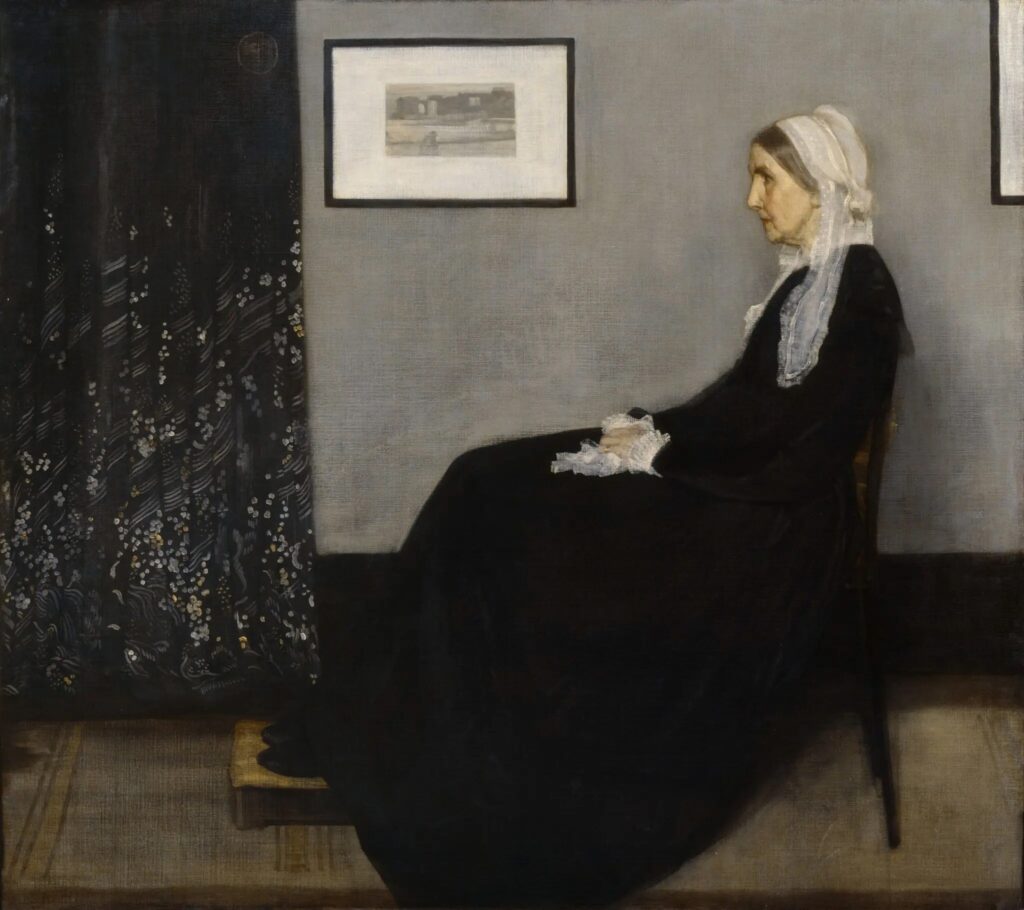
“Arrangement in Grey and Black No. 1 (Portrait of the Artist’s Mother)” (1871) by James McNeill Whistler, oil on canvas, 57 x 64 in. GrandPalaisRmn/Musée d’Orsay
What looks radical in biography looks inevitable in retrospect. The looseness and fluid surfaces his critics mistook for laziness were the result of meticulous technique — specific layering of thinned paints, careful working back of the canvas to produce texture. The softness was earned, not accidental. And his instinct to treat a composition as a work of design rather than documentation now seems not just modern but essential. Japanese printmaking, with its bold horizontals and compressed perspective, was a significant influence — a reminder that Whistler was always looking beyond the Western tradition for solutions to problems his contemporaries didn’t yet know they had.
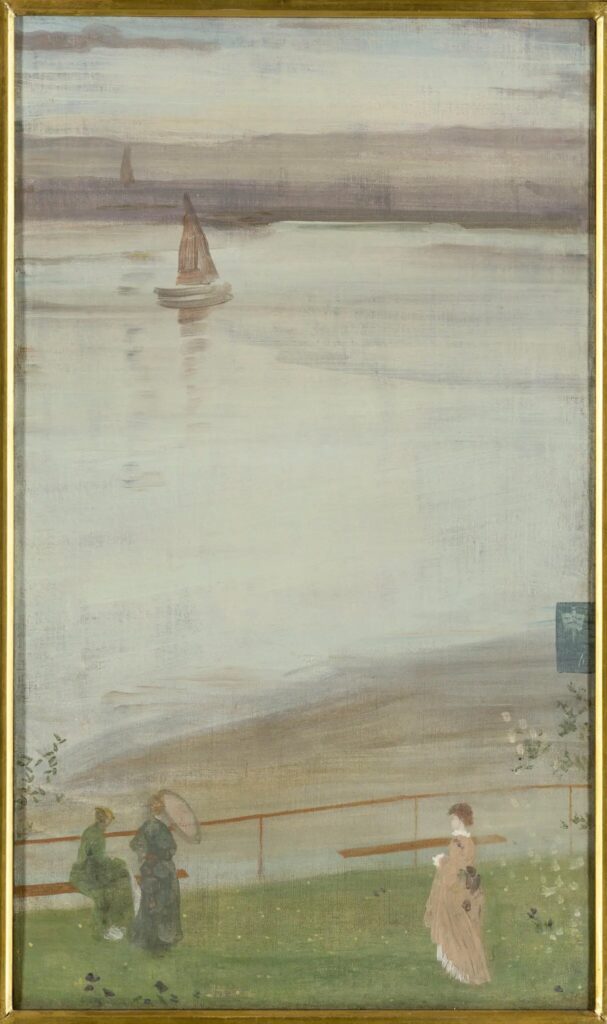
“Variations in Violet and Green” (1871) by James McNeill Whistler, .oil on canvas, 14 x 24 in. GrandPalaisRmn/Musée d’Orsay
For contemporary plein air painters, the lessons are practical as well as philosophical. Whistler’s nocturnes — those hushed, limpid paintings of the Thames at dusk — were not painted on location in the dark. They were built from observation, memory, and deliberate construction. He understood that fidelity to a scene and fidelity to a feeling were not the same thing, and that the second mattered more.
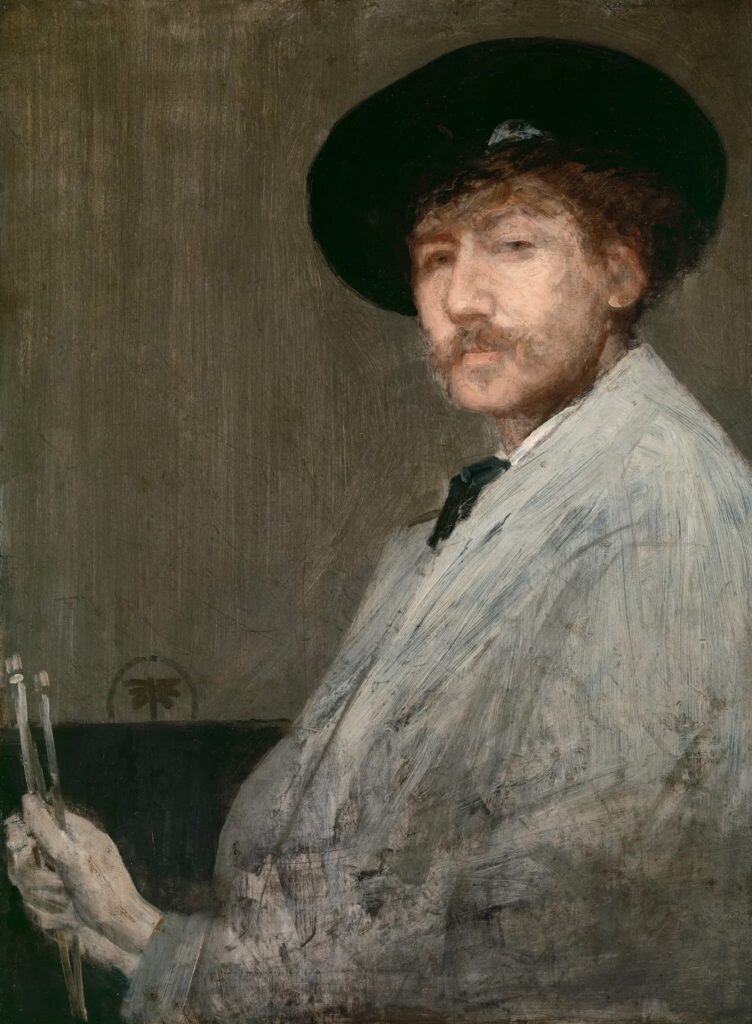
“Arrangement in Gray: Portrait of the Painter” (c. 1872), by James McNeill Whistler, oil on canvas, 29 1/2 x 21 in. Detroit Institute of Arts
His late self-portrait, finished two years before his death, shows him peering out of a haze of soft golds and browns, wearing a quiet smile — committed, as always, to his belief that “completeness is a reason for ceasing to exist.” There is wisdom in that for any painter tempted to overwork a canvas.
A major retrospective of Whistler’s work — the largest European exhibition in 30 years — is currently on view at Tate Britain in London through September 27, 2026, bringing together world-famous paintings alongside rarely seen works spanning three decades of his career. If you find yourself in London this summer, it is not to be missed.
Whistler’s questions — about light, atmosphere, and what painting is really for — are the same ones driving the best landscape painters working today. If this story has you hungry for more, PleinAir Magazine is where that conversation continues. Published bi-monthly and beautifully designed with rich reproductions on high-quality paper, it brings together the top historical and contemporary artists from around the world — the kind of company Whistler, restless and ambitious, would have kept.