By Thomas Jefferson Kitts
In nature, wind bends trees, water snakes downhill, and clouds come and go. Nothing is symmetrical — yet nothing feels out of balance. To strike that same equilibrium in your work, visualize the composition as a seesaw, with a child at one end and her mother at the other, then look for ways to achieve balance.
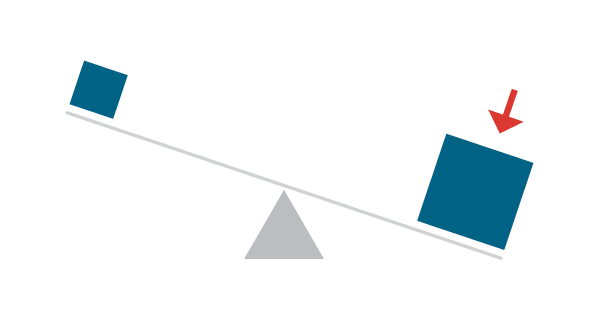
Here, the child and mother sit at opposite ends with the fulcrum placed exactly between them. We have asymmetry, but no equilibrium — the difference in visual weight tilts the seesaw to the larger shape — the mother.
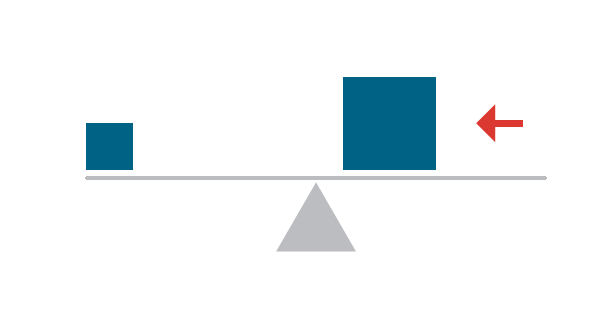
Using the exact same elements at the same size, we can achieve asymmetrical equilibrium simply by moving the the mother closer to the fulcrum.

We can also achieve it by moving the fulcrum itself, returning the child and mother to opposite ends.
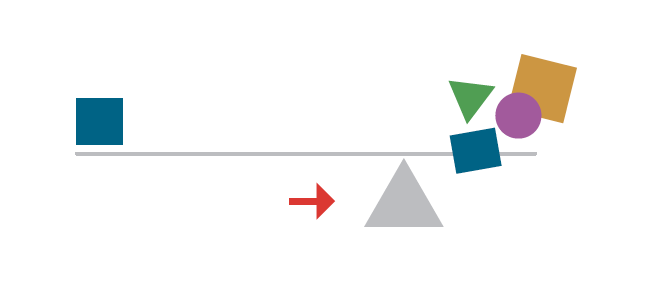
Finally, asymmetrical equilibrium can be created by grouping multiple smaller shapes together so that their combined visual weight equals that of the mother.
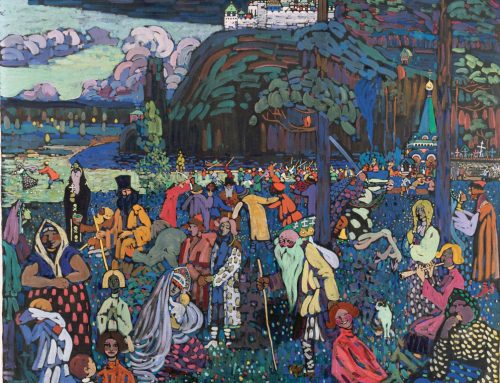
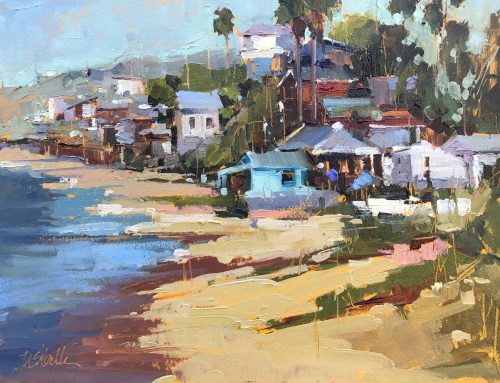
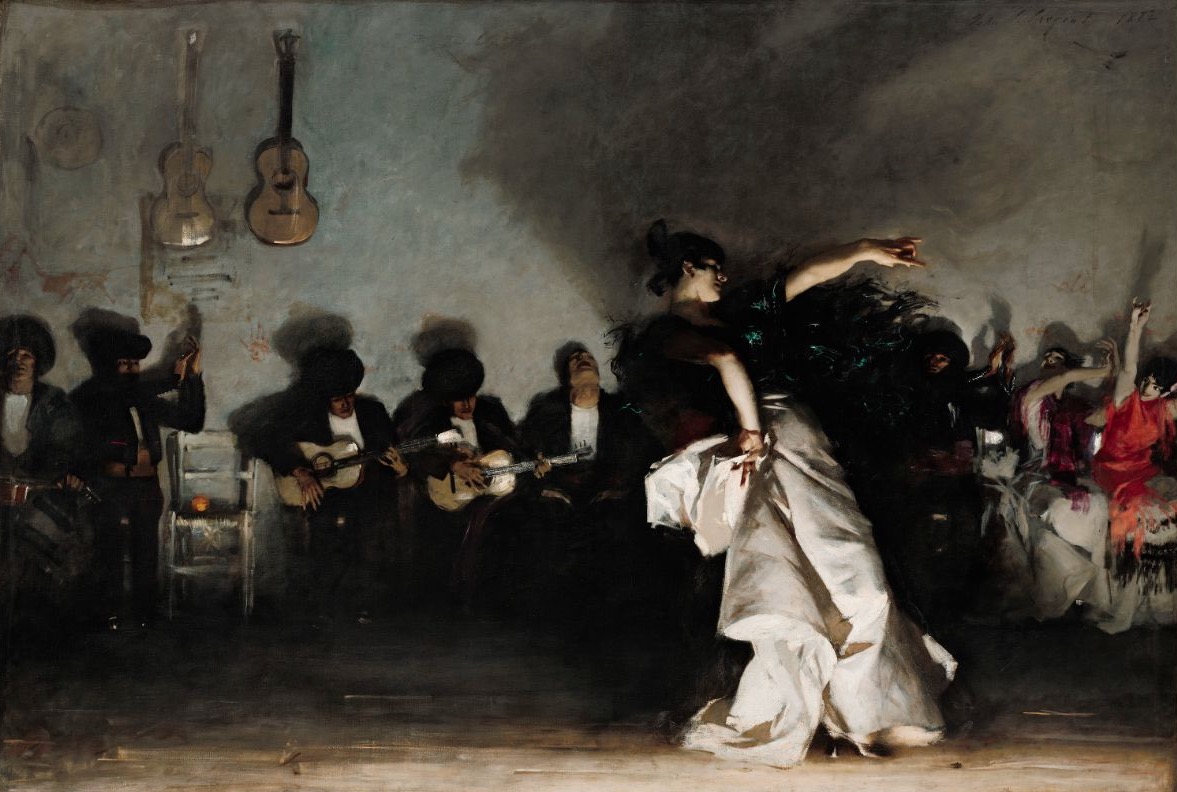
Admittedly, this is an abstract way to think about composition, and you can expect lively debate with artist friends about how large or small visual weights need to be, or how far off-center the fulcrum should sit — but those are questions worth exploring on your own. Try nudging an awkwardly placed tree a little to the left, shifting a still-life object to the right, or repositioning a figure until the painting feels resolved. The key insight is this: You can set aside the idea that a mirror-like arrangement is best. More interesting compositions come from varying shapes, sizes, groupings, placements, colors, and edges.
THE PRINTS THAT CHANGED EVERYTHING
Much of what we understand today about asymmetrical equilibrium comes from the influence imported Japanese ukiyo-e prints, screens, kimonos, and fans had on a generation of young European artists.
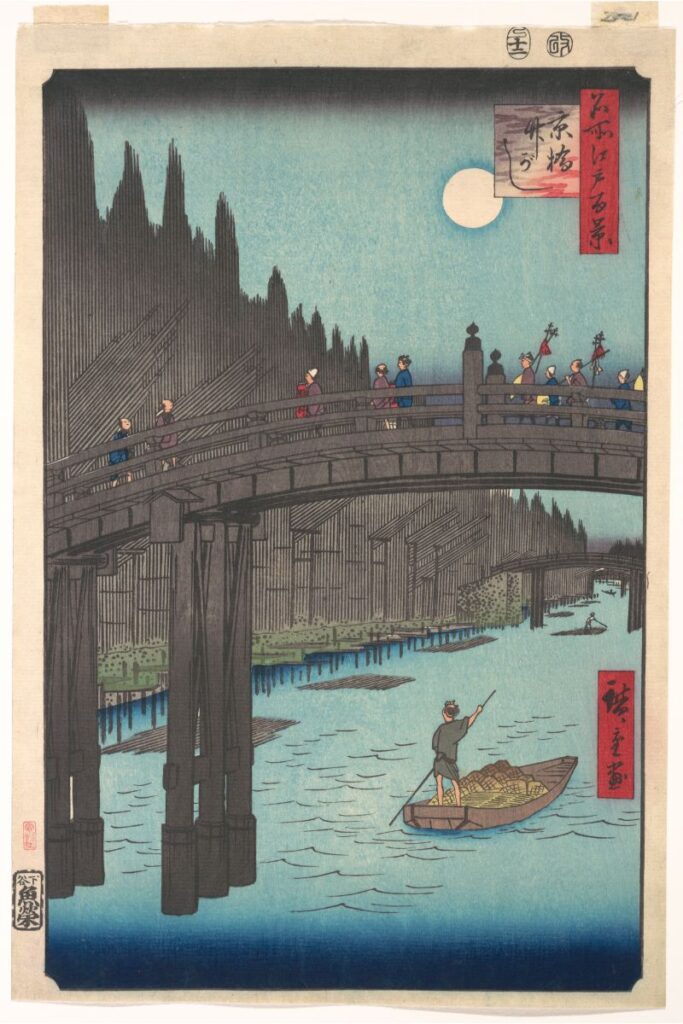
“Bamboo Market at Capital Bridge,” Utagawa Hiroshige (Japanese, 1797–1858), 1857, woodblock print; ink and color on paper, 14 1/16 x 9 1/2 in., The Howard Mansfield Collection, Purchase, Rogers Fund, 1936, Metropolitan Museum of Art
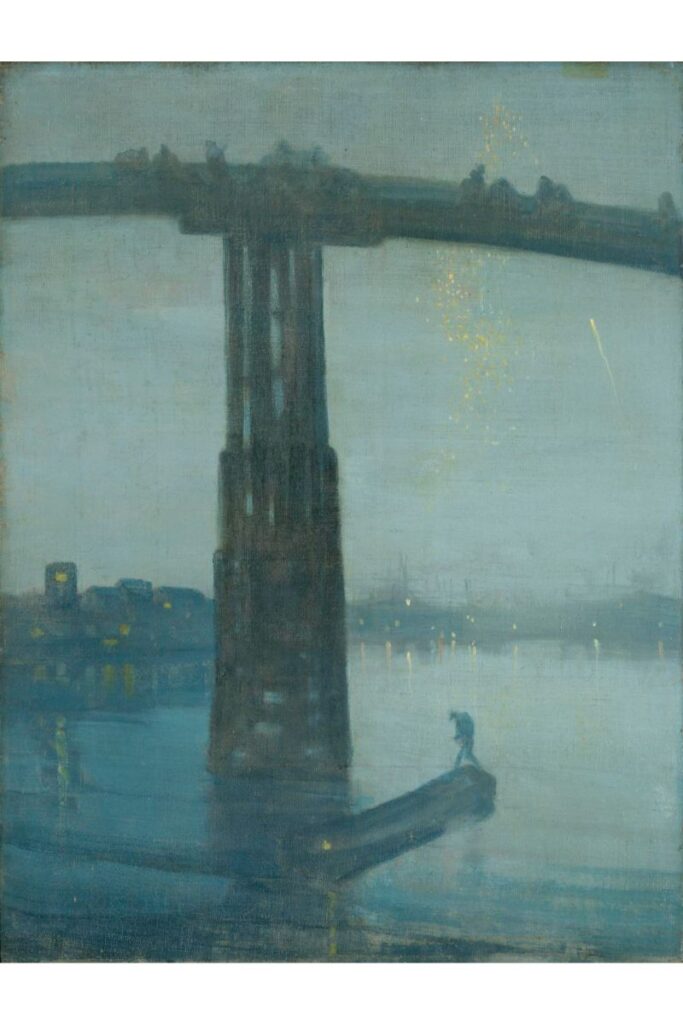
“Nocturne in Blue and Gold — Old Battersea Bridge,” James McNeill Whistler (American, 1834–1903), c. 1872 -1875, oil on canvas, 27 x 20 in., Tate Gallery, London
In the first half of the 19th century, Katsushika Hokusai (Japanese, 1769–1849) broadened the ukiyo-e art form — previously focused on courtesans and actors — to include landscapes and everyday scenes. That expanding vision reached European shores in the most unlikely way: as packing material stuffed into crates of imported porcelain. Flattened out, the prints charmed a generation of artists grown weary of prevailing conventions — Whistler among them. The influence in these two images is direct: Drawing on a print by Hiroshige — Hokusai’s celebrated contemporary — Whistler borrowed the narrative, atmosphere, asymmetry, and uncommon vertical format to transform an industrialized urban landscape into a poetic nocturne.
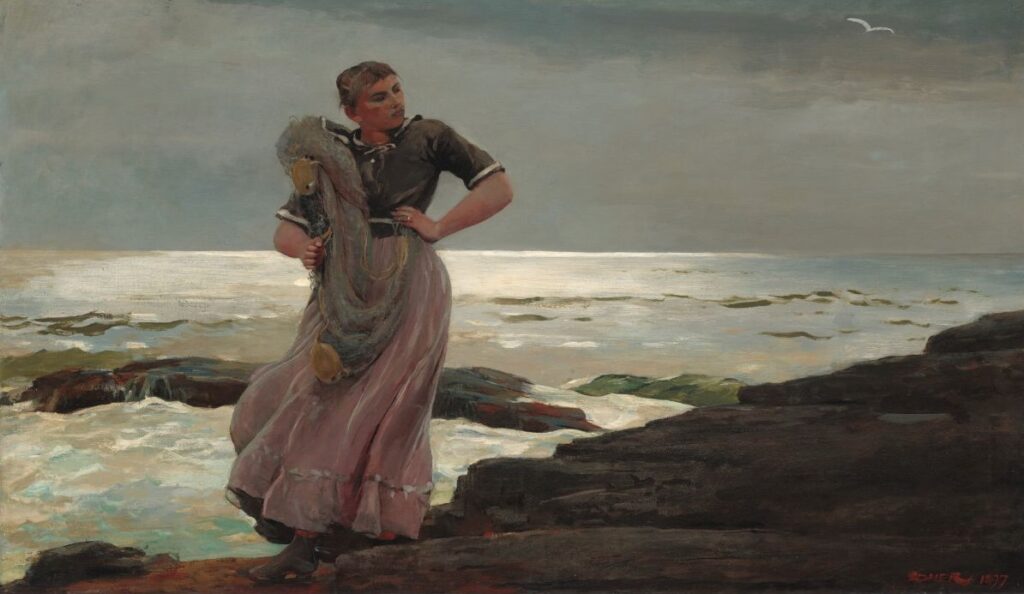
Sometimes very little is required to create asymmetrical equilibrium. Homer places a sturdy fisherman’s wife left of center, backlights her torso, raises her shoulder, and sends her gaze hard to the right — toward someone or something we will never see, for reasons we will never know. That unanswerable question generates mystery and emotional tension powerful enough to convert a fleeting moment into a balanced fulcrum. Homer offers a master class in understatement, demonstrating that asymmetrical equilibrium can be built from an unresolvable story just as surely as from shape and mass. Andrew Wyeth knew this too, and returned to it often.
“A Light on the Sea,” Winslow Homer (American, 1836-1910), 1897, oil on canvas, 28 3/16 x 48 1/8 in., Corcoran Collection (Museum Purchase, Gallery Fund), National Gallery of Art
In the current issue of PleinAir Magazine, Thomas Jefferson Kitts analyzes more paintings and offers more of the practical, no-mystique instruction that you’ve come to expect from your favorite art publication.