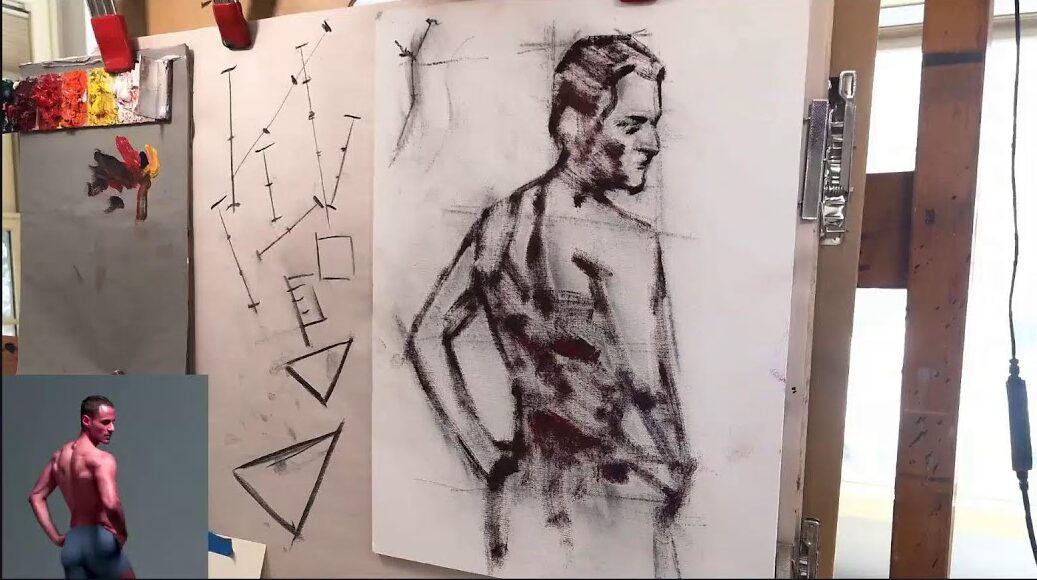
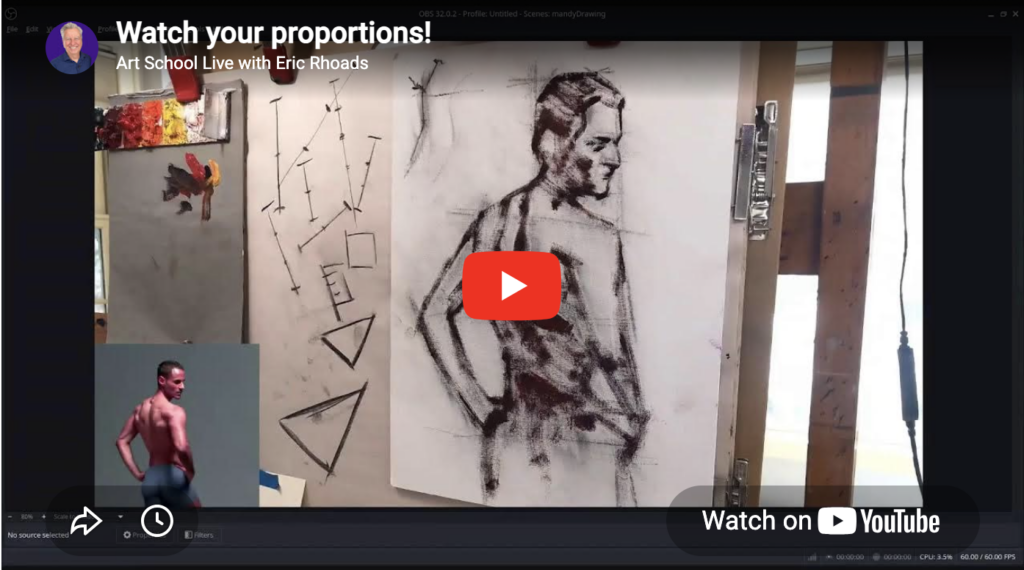
Most painters learn to measure proportion the same frustrating way: point to point, mark by mark, hoping the measurements eventually add up to something believable. Ricky Mujica, in an episode of Art School Live hosted by Mandy Theis, makes the case for something more flexible — a toolkit of observation strategies that goes well beyond rote measuring, helping artists find accurate relationships faster and with far more confidence.
The starting point is measuring done smartly. Mujica recommends working from a reliable unit — most often the head, from top to chin, since it contains clear internal subdivisions like the brow, nose, and mouth. That unit becomes the key to finding halves and thirds and establishing the overall vertical envelope before worrying about width. A few practical habits make the difference:
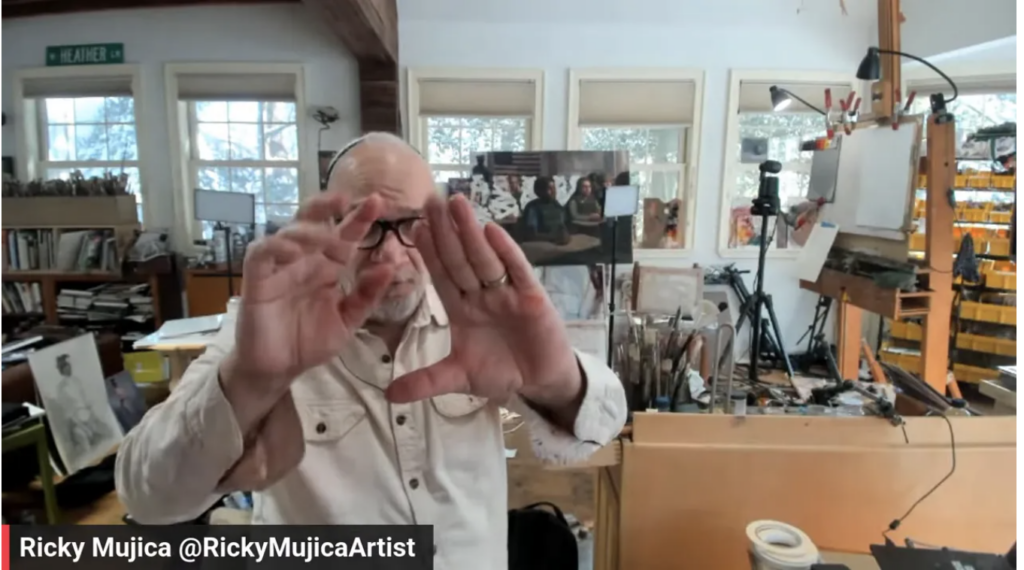
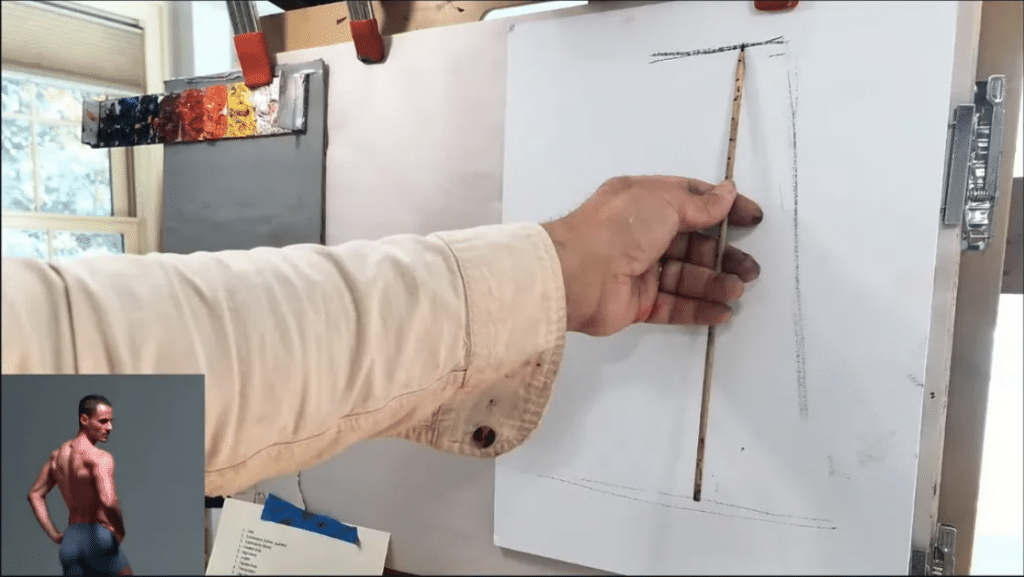
- Use your dominant eye. Frame a small hole with your hands, open both eyes, close one and then the other. The eye that keeps the image stable is the dominant one to keep open when measuring.
- Keep your arm extended and the stick perpendicular. Shortened arm positions and changing distances ruin repeatability.
- Measure with imagination, then check. Try to place the mark visually, then verify with your tool. This trains the eye so tools become a teacher, not a crutch.
Curves present a harder problem, since they resist direct measurement. Mujica’s solution is to break them into faceted lines — starting with large, low-resolution facets and gradually increasing detail. Each facet has an angle that’s easy to check, and once the angles align, the distances tend to fall into place on their own. A related trick, cubing, involves spotting perfect squares within the image — chin to hairline, for instance — and using that square as a built-in ruler to place other landmarks accurately.
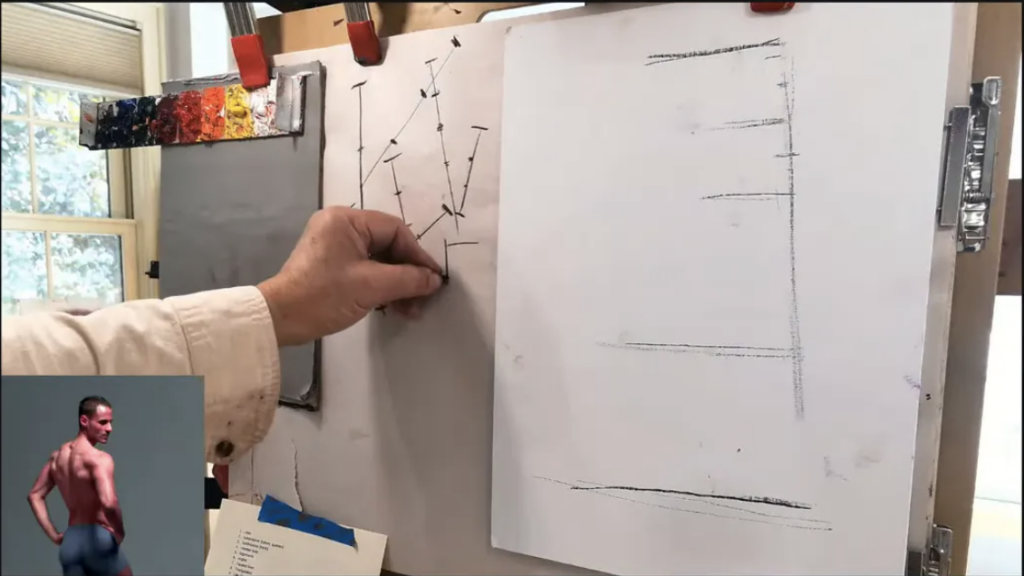
For especially tricky details, Mujica turns to triangulation: hold one known distance, match two angles, and the third point reveals itself — a technique that works at any scale and excels exactly where direct measurement fails.
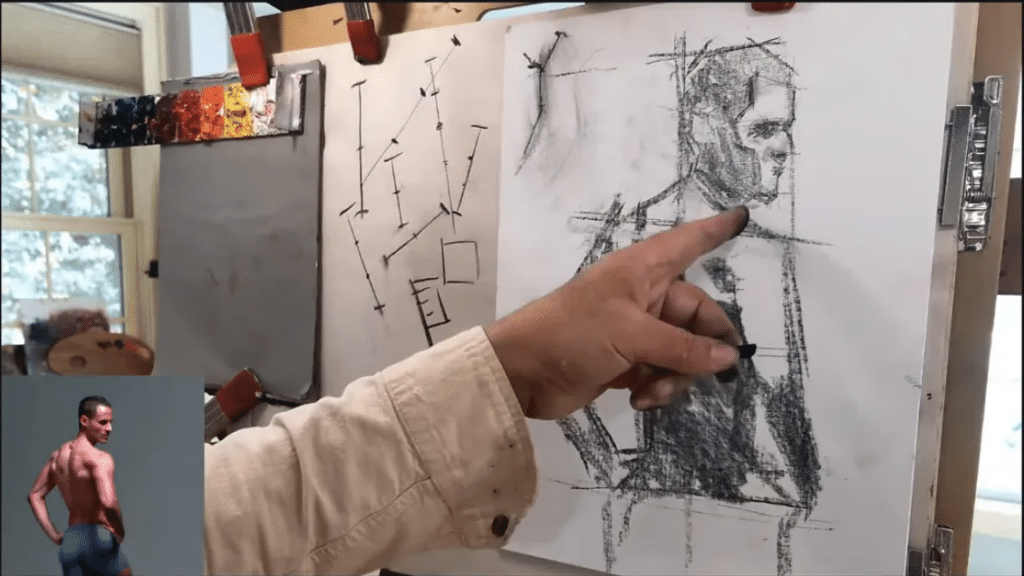
Negative shapes offer another category of clues, particularly useful when perspective complicates the positive forms of a figure. Dropping a plumb line through the composition collects alignment points — brow, chin, shoulder — that let an artist cross-check one observation against another, so mistakes become visible and fixable rather than invisible and compounding.
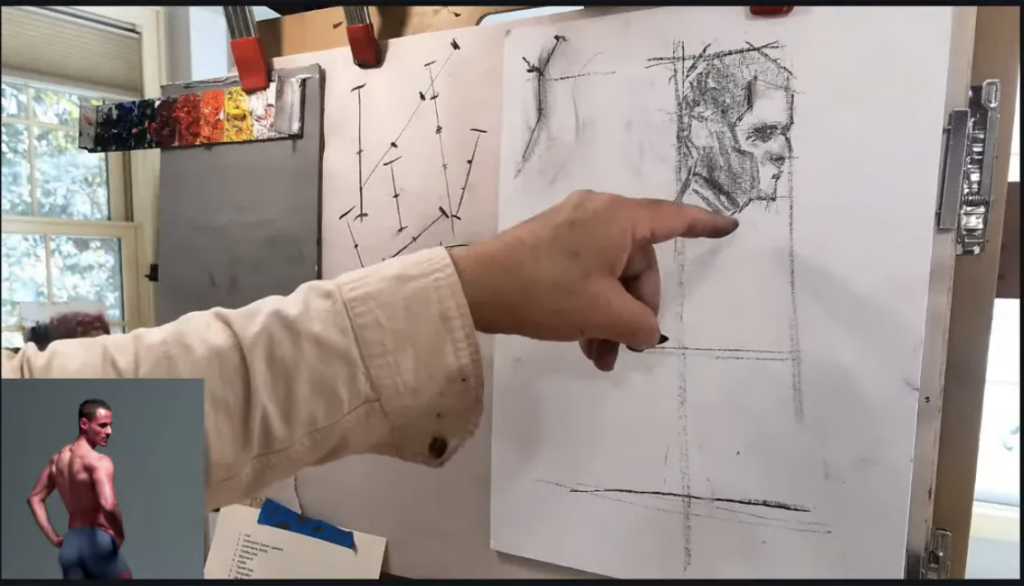
Perhaps the most memorable piece of advice is the most playful: name the shapes you see. Calling a fold of fabric a squid, or a shadow a face, makes it instantly more findable and describable — a perceptual shortcut rooted in pareidolia, the same mental tendency that finds faces in clouds. Combined with a puzzle mindset — solve the easy pieces first, let those clues narrow down the harder ones — proportion stops feeling like guesswork and starts feeling like detective work.
As Mujica puts it simply: “You are solving a puzzle.” The payoff, for any artist willing to adopt the mindset, is fewer frustrating guesses and a workflow where every mistake becomes a clue rather than a dead end.