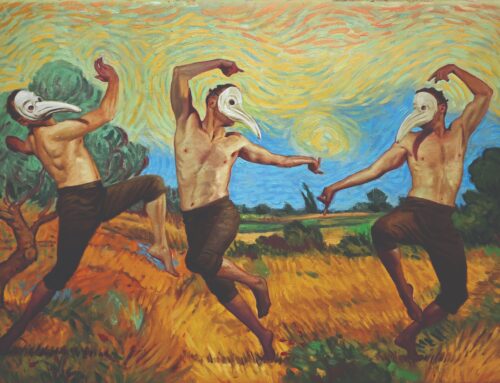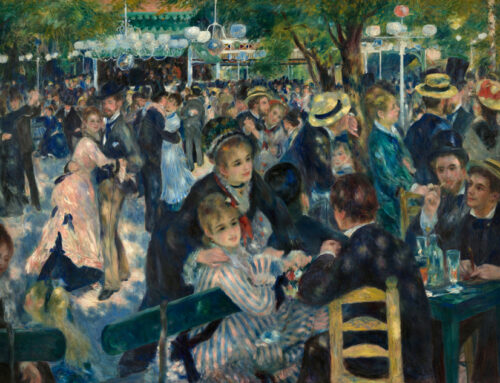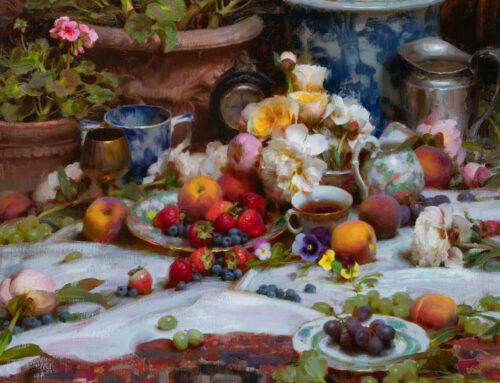
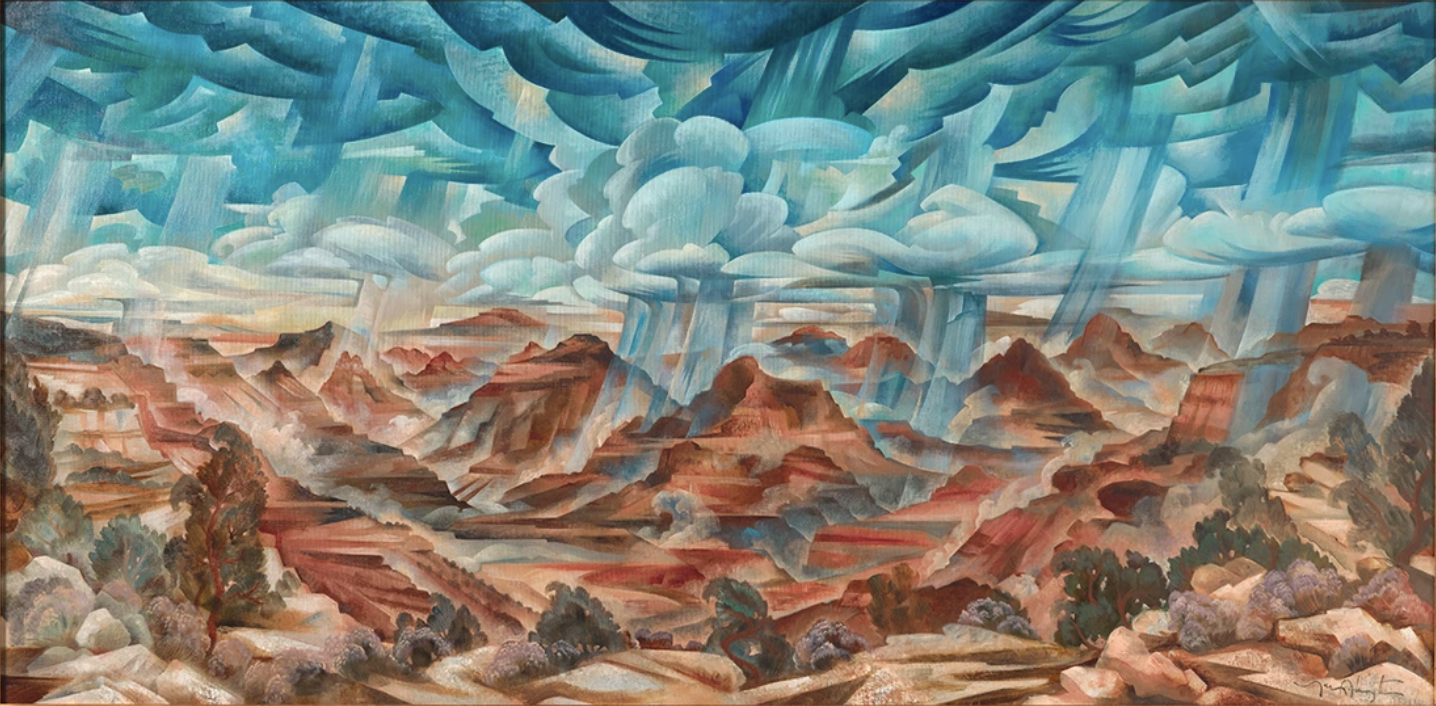
For most of the 20th century, the American art world had a clear — and quietly devastating — idea of what Native American art was supposed to look like. Textiles. Ceramics. Objects. Crafts. Painting was something else, something that belonged to other traditions, other histories, other people. Native artists who picked up a brush were working against that assumption every time they worked.
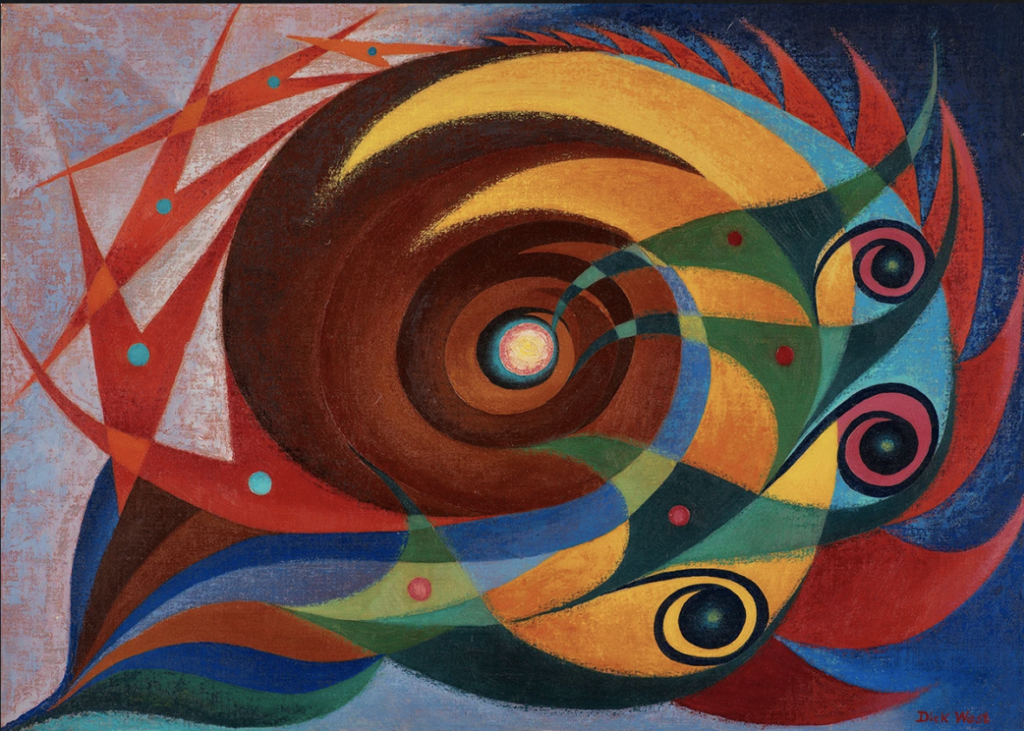
Dick West (Southern Cheyenne, 1912–1996), Spatial Whorl, 1949–1950. Oil on canvas. Gift of Dwight D. Saunders, 2004. (26/5102)
Stretching the Canvas: Ten Decades of Native Painting, now on view at the National Museum of the American Indian in Washington, D.C., is a direct challenge to that history — and long overdue. The exhibition brings together more than 50 works by over 40 artists, spanning from the period after World War I to the present, charting how Native American painters carved out space for themselves in a world that either ignored them or, when it did pay attention, told them their work should look a certain way. “Look Indian,” the unspoken mandate read. Anything else was suspect.
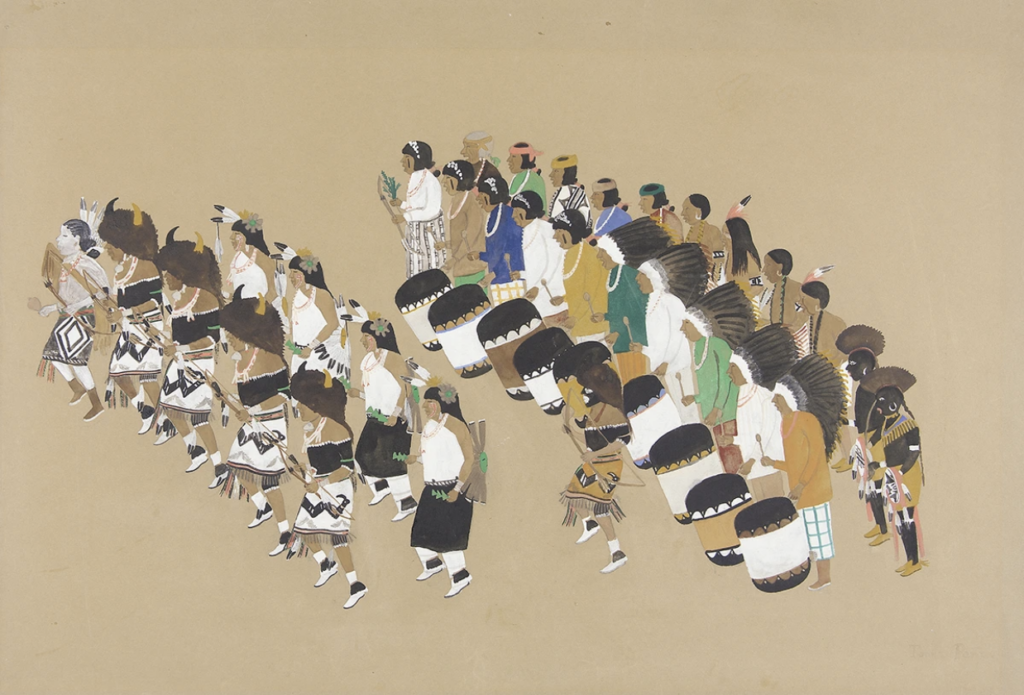
Tonita Peña (San Ildefonso Pueblo, 1893–1949), Buffalo Dance, ca. 1939. Tempera and watercolor on paper. Transfer from the IACB Headquarters Collection, Department of the Interior, 2000. (26/2456)
The show opens with artists like Fred Kabotie, Tonita Peña, and Stephen Mopope — painters who had to fight for the simple right to be considered painters at all — and traces a century of expansion, evolution, and advocacy. Later generations represented in the exhibition include Jaune Quick-to-See Smith, Kay WalkingStick, Fritz Scholder, James Lavadour, Jeffrey Gibson, Dyani White Hawk, and Athena LaTocha, artists who pushed the boundaries of what Native painting could be and insisted on the full complexity of their own expression.
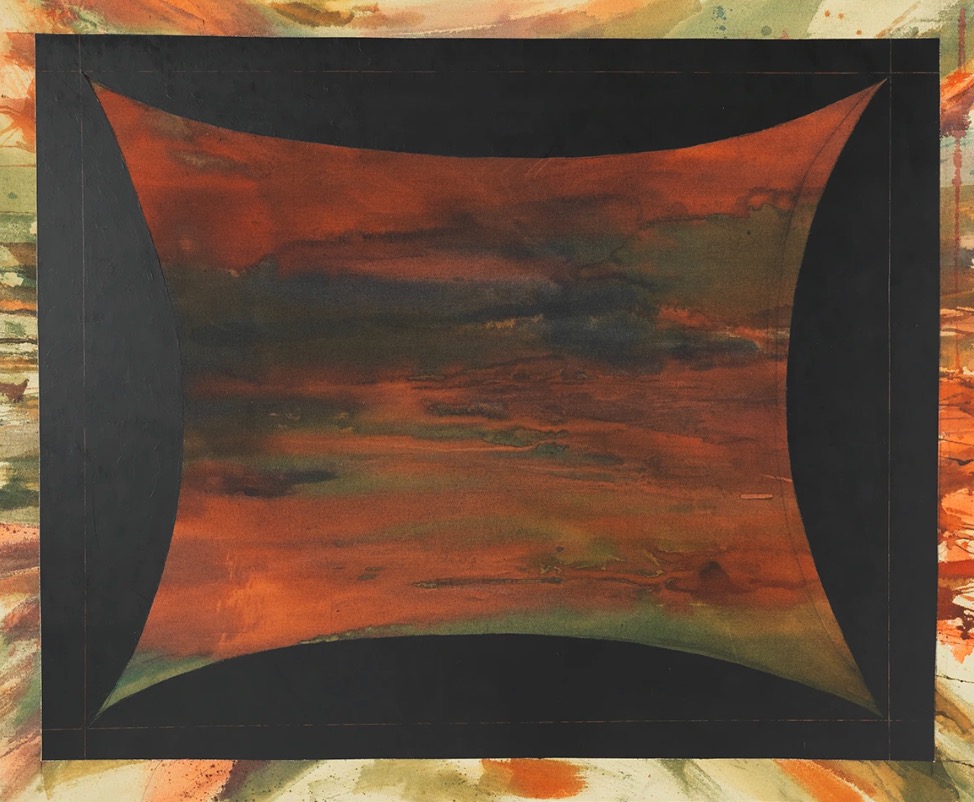
Kay WalkingStick (Cherokee Nation, b. 1935), Homage to Chief Joseph (Chief Joseph #1), 1975. Encaustic on canvas. Gift of Reverend Monsignor Cajetan Thomas Salemi, 2011. (26/8542)
The institutional context matters here. The National Gallery of Art presented Contemporary American Indian Painting in 1953 and has not focused on Native painters since — a gap of more than 70 years. Washington’s museums, like much of the mainstream art world, largely left this story untold. Stretching the Canvas doesn’t just fill that gap. It makes the case that the gap itself was a form of erasure, and that the painters who persisted despite it deserve to be understood as central figures in American art history, not footnotes to it.
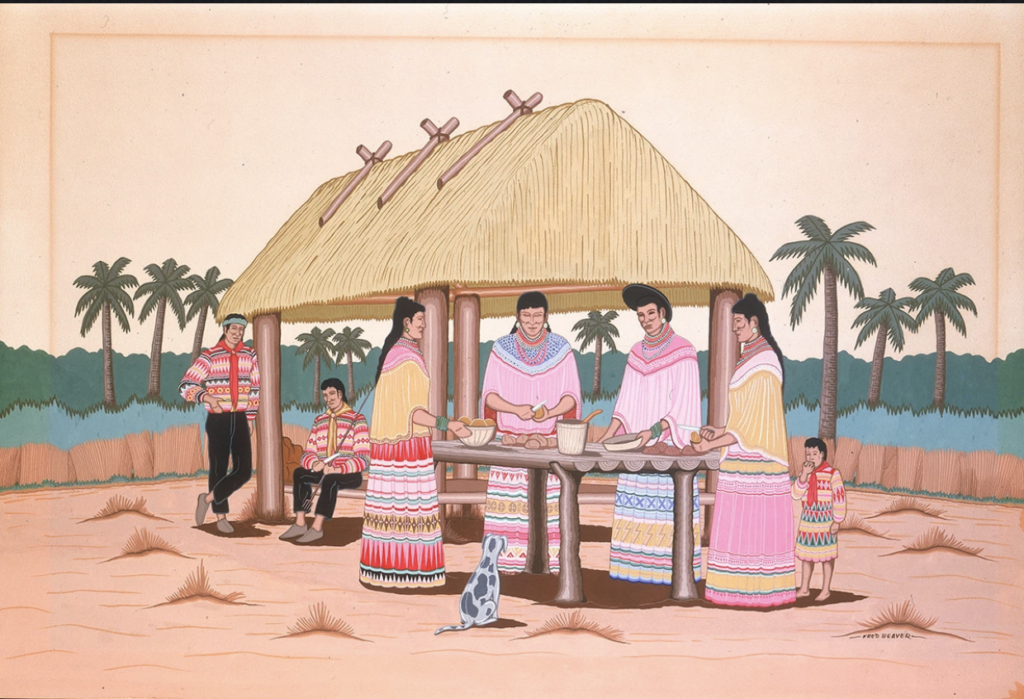
Fred Beaver (Muscogee Nation/Seminole, 1911–1980), Florida Seminoles Preparing Food, 1949. Gouache on paperboard. Museum purchase, 1966. (23/8383)
For anyone interested in the full story of American painting — where it came from, who shaped it, and whose contributions have been systematically overlooked — this is a necessary exhibition. The work is accomplished, the range is wide, and the argument it makes, simply by existing, is one that needed to be made decades ago.
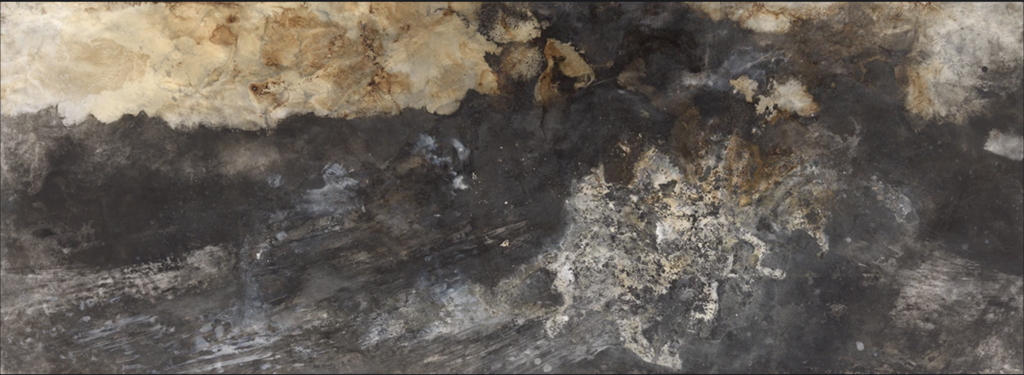
Athena LaTocha (Standing Rock Lakota/Keweenaw Bay Ojibwe, b. 1969), Thirteen Days, 2017–2019. Sumi and synthetic walnut ink, shellac, and soil on paper. Museum purchase, 2025. (27/853)
Stretching the Canvas: Ten Decades of Native Painting is on view at the National Museum of the American Indian, Washington, D.C., through May 1, 2027.