For nearly a century, one question has quietly obsessed art historians: who was Joshua Johnson?
It’s a strange mystery for an artist with some 80 surviving paintings. But Johnson left almost no trace of himself in his own work — only one of those 80 canvases bears his signature, and even that one is hidden, tucked into the pages of a book his sitter holds in her lap. For over a hundred years, his portraits were credited to white painters, or to no one at all. It wasn’t until the 1930s that a historian began connecting the dots, piecing together the life of one of America’s earliest-documented professional Black artists from fragments scattered across Baltimore’s archives.
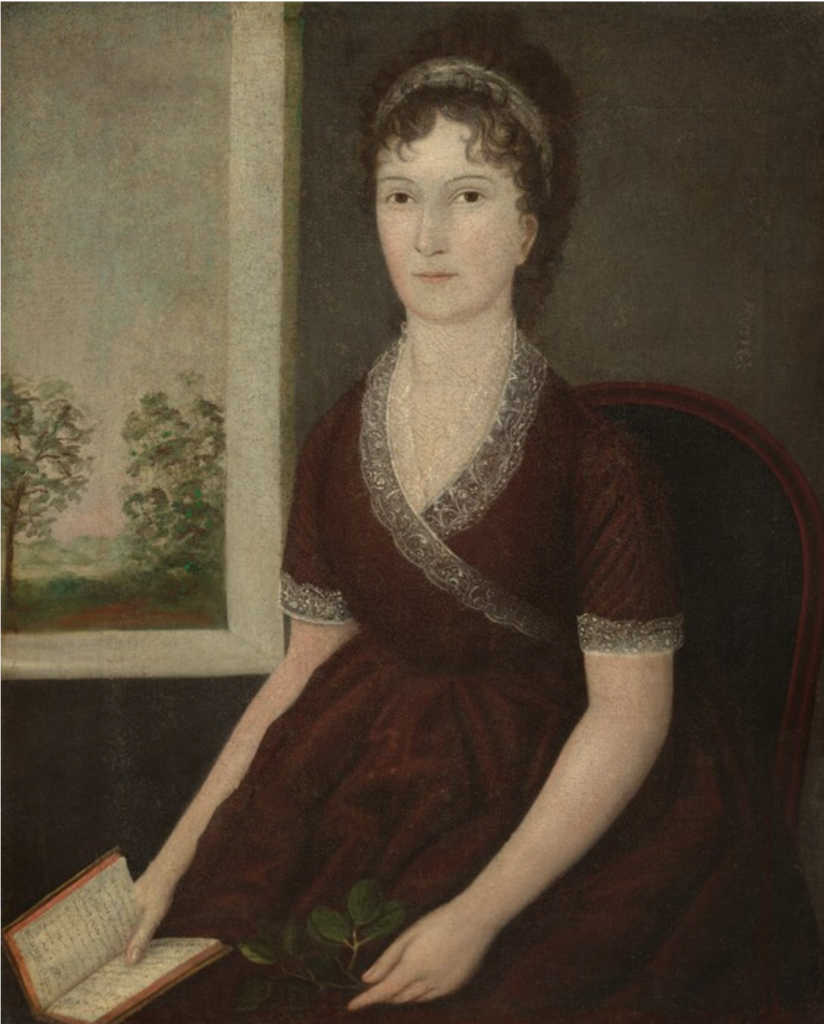
“Sarah Ogden Gustin,” Joshua Johnson, c. 1805, oil on canvas, National Gallery of Art, Gift of Edgar William and Bernice Chrysler Garbisch
Those fragments tell an extraordinary story. Johnson was born enslaved. A bill of sale from 1764 shows he was purchased as a child by a man named George Johnson — who, in the same document, acknowledged Joshua as his own son and agreed to free him once he completed a blacksmith apprenticeship or turned 21. The document was witnessed by a local justice of the peace, a merchant-planter named Colonel John Moale. Decades later, after Johnson had built a career as a portraitist, Moale’s family commissioned him to paint his wife and granddaughter — placing Johnson in the company of portraitists like Rembrandt Peale, who had also painted Mrs. Moale.
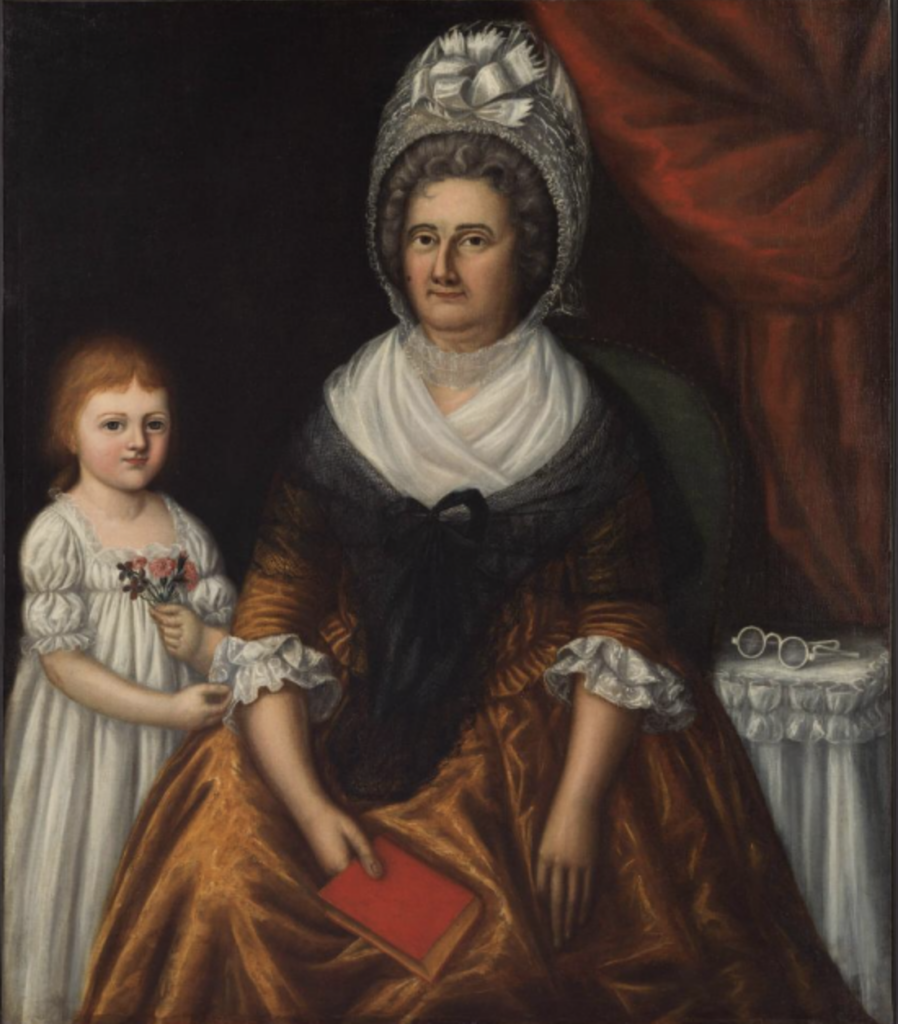
“Portrait of Ellin North Moale (Mrs. John Moale)(1740-1825) and Her Granddaughter, Ellin North Moale (1794-1803),” Joshua Johnson, c. 1798-1800, oil on canvas 40 1/2 x 35 3/8 in., The Colonial Williamsburg Foundation, Museum Purchase, Mr. and Mrs. Robert S. Wilson
By 1790, Johnson was listed in Baltimore’s city directories as a painter, having transitioned from a trade in metal to one in pigment at a time when painting itself was still considered a craft rather than a fine art. In an advertisement he placed in a Baltimore newspaper in 1798, he described himself, pointedly, as a “self-taught genius,” one who had overcome “many insuperable obstacles in the pursuit of his studies.”
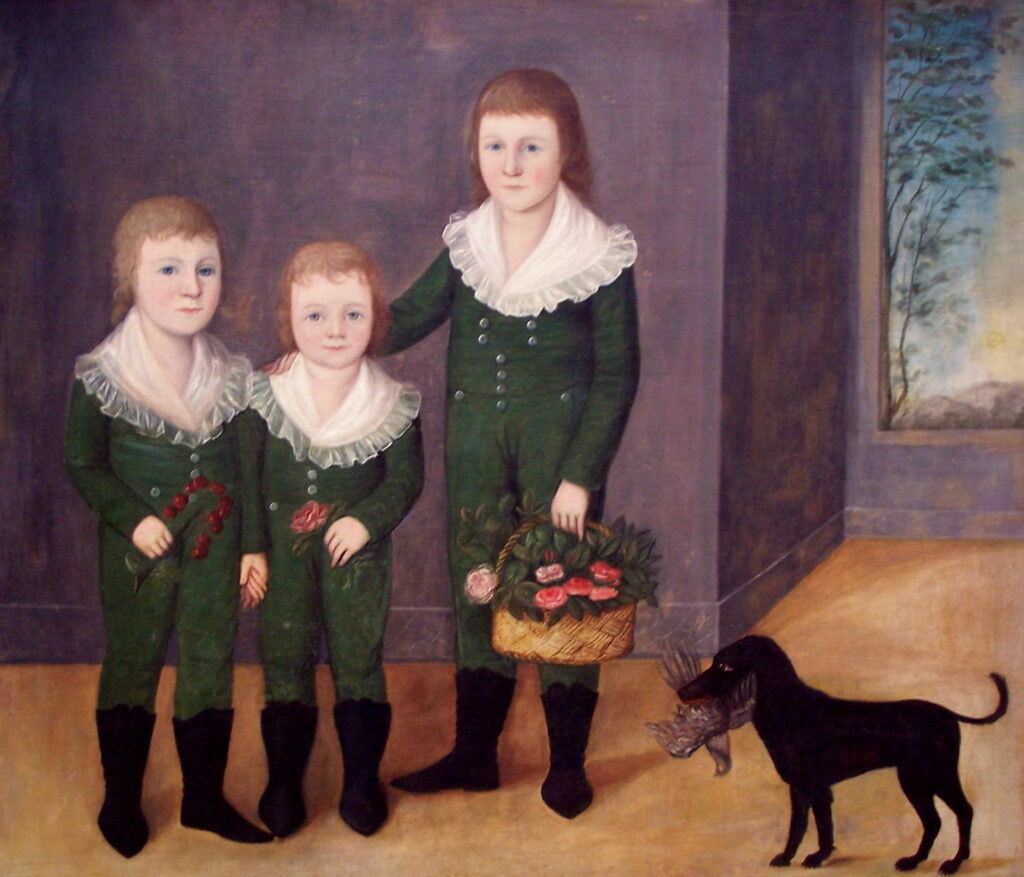
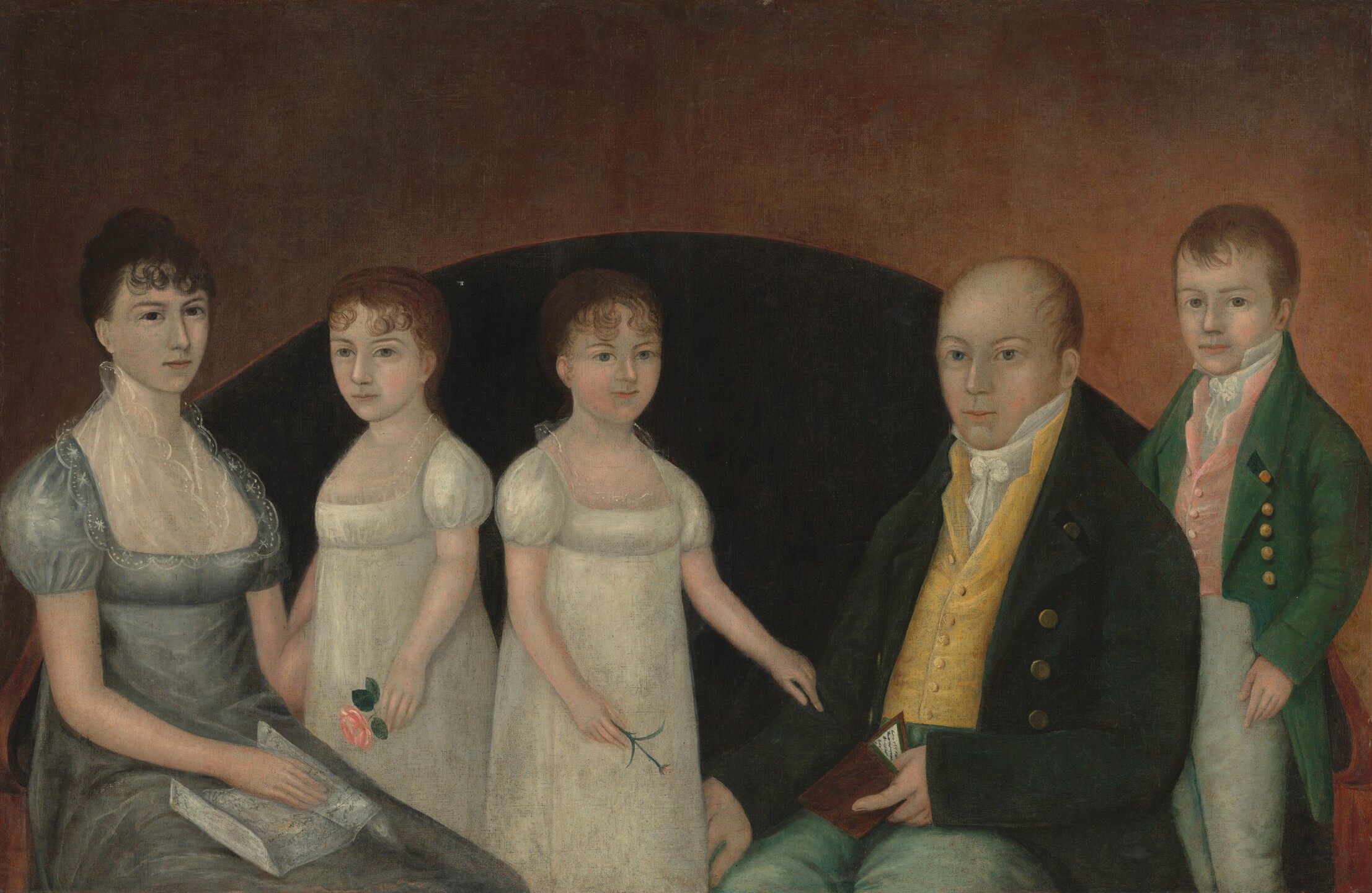
“The Westwood Children,” Joshua Johnson, c. 1807, oil on canvas, National Gallery of Art, Gift of Edgar William and Bernice Chrysler Garbisch
What followed was a career spent documenting Baltimore’s merchant class — bankers, sea captains, tavern keepers, many of them his own neighbors — rendered with a precision that lingered on the texture of lace, the sheen of silk, the individual strands of a child’s hair. He also painted at least two portraits believed to depict members of Baltimore’s free Black community, among the largest in the nation at the time, including a minister of the city’s African Methodist Episcopal Church. Those paintings remain some of the only visual records of that community from the period.
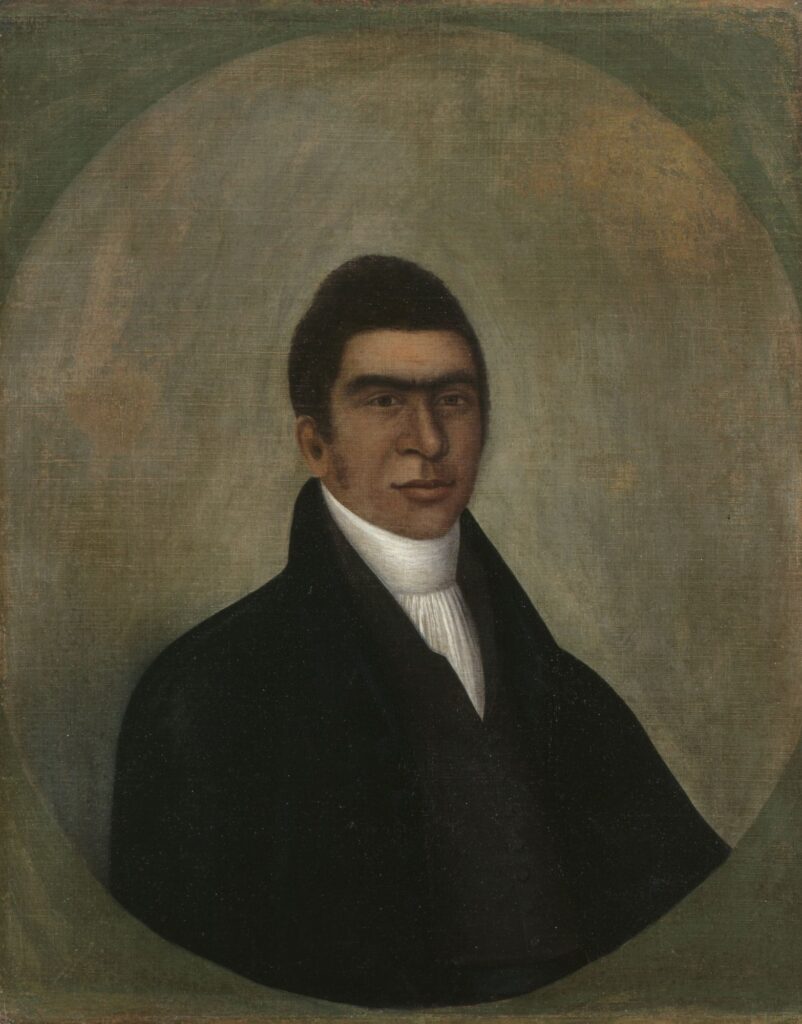
“Portrait of a Man (Abner Coker),” Joshua Johnson, c. 1805–1810, oil on canvas, Bowdoin College Museum of Art, Brunswick, Maine, museum purchase, George Otis Hamlin Fund
And then, just as quietly as he appeared, Johnson recedes again. We know he eventually owned property across several Maryland counties — evidence of real financial success — and that he lived into his 60s. We don’t know how, or exactly when, he died.
It’s a strange kind of legacy: a body of work precise enough to individualize dozens of strangers’ faces, left behind by a man who revealed almost nothing of his own. Whether that silence was circumstance or self-protection, we may never know.
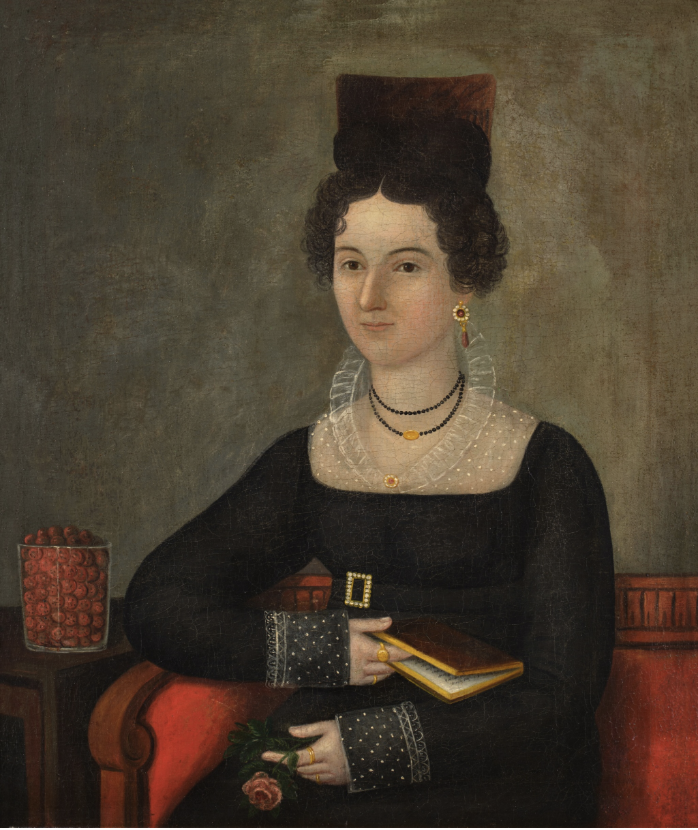
“Lady on a Red Sofa,” Joshua Johnson, circa 1820-25, oil on canvas, 30 ⅛ by 25 ⅜ in., Museum Fine Arts, Houston
Acquiring a Johnson had been a longtime priority for the Museum of Fine Arts, Houston, and they did so this year, adding Lady on a Red Sofa, one of the artist’s last known portraits, to their collection.