To painter Daniel Garber, a gouged-out Pennsylvania quarry offered artists an opportunity akin to the Grand Canyon. He put it plainly: “So many artists go up there and seem to find nothing but the ugly wires and derricks… I don’t see those things at all—the light is too wonderful.”
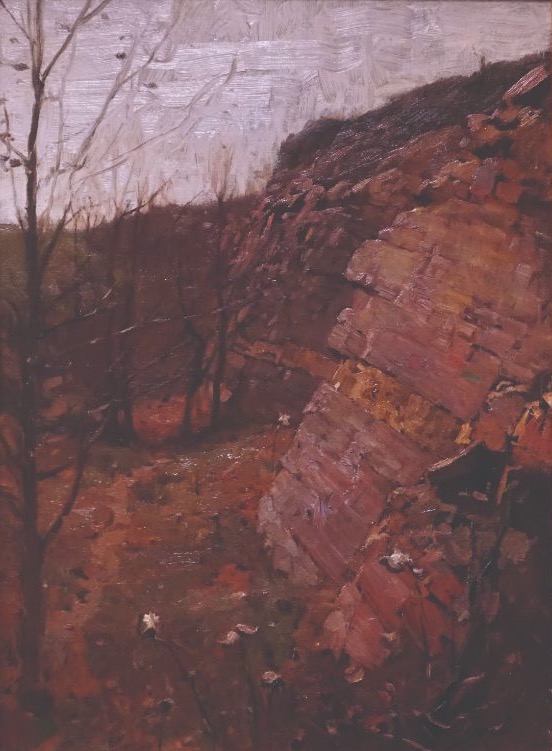
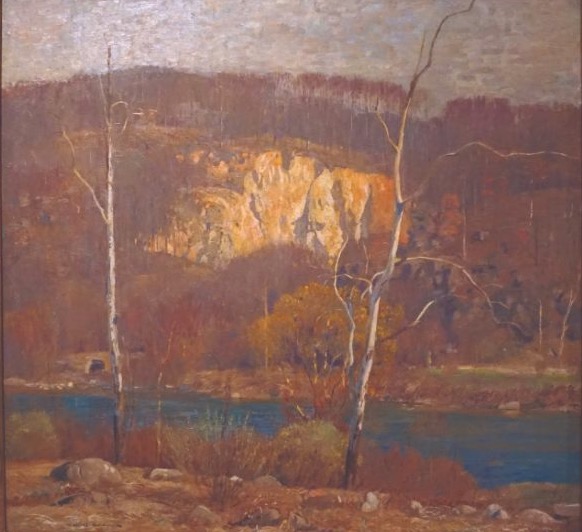
William Langson Lathrop (1859–1938), The Old Quarry, 1900, oil on canvas, 22 x 20 in., private collection
That way of seeing is the focus of Abstractions of Nature: Quarries and Industry in Pennsylvania Impressionism, on view through February 28 at the Michener Art Museum in Doylestown, Pennsylvania. The exhibition examines how artists found compelling form in the less-than-bucolic views along the Delaware River.
Painters began gathering in Bucks County when William Langson Lathrop arrived in New Hope in 1898, and Edward Willis Redfield, Garber, Charles Rosen, and others soon followed. The New Hope Art Colony celebrated the rural landscape (Redfield was especially keen on snow scenes), but its artists were also drawn to the brute and broken quarries where limestone, sandstone, and brownstone had been dug out for generations. The scarred land, with its rigs and shacks, was a subject both real and forceful, tied directly to modern life.
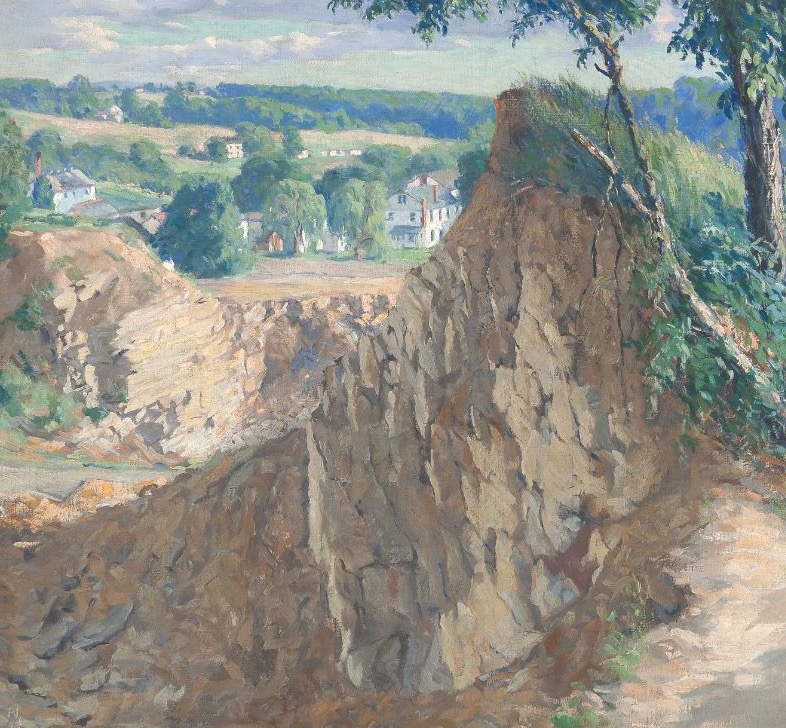
Roy C. Nuse (1885–1975) The Quarry at Rushland, 1938, oil on canvas, 22 x 24 in., Woodmere Art Museum, Philadelphia, purchase, 2012.43.7
Their approach differed from that of New York’s gritty Ashcan School, says Michener chief curator Laura Igoe. “For the most part, the Pennsylvanians integrated quarries and industries into more bucolic landscapes, they painted in a brighter palette, and they were not interested in the grittier aspects of urban life.”
Garber’s Blue and Gold (1927) shows how it worked. The broken rock face of Byram Quarry rises in the distance, framed by two leafless trees, and the stony cut, bathed in soft light, has a lucent beauty of its own. It reads as pure landscape, not commentary.
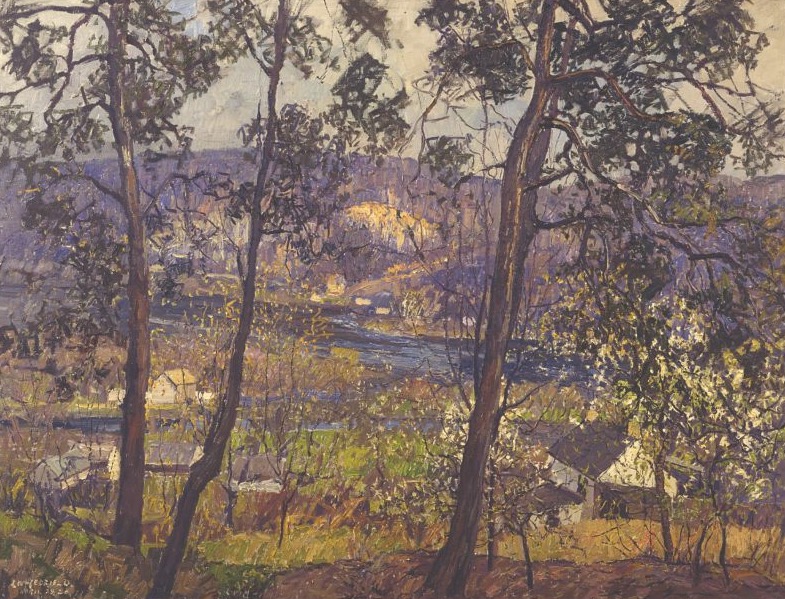
Edward Willis Redfield (1869–1965), Early Spring, 1920, oil on canvas, 38 x 50 in., Michener Art Museum, gift of Marguerite and Gerry Lenfest with assistance from Wachovia, 2001.8.1
Others moved in closer. Roy C. Nuse put the pitted earth front and center in The Quarry at Rushland (1938), with houses in the distance, a vantage point that makes the rough forms feel like sympathetic landmarks. In Rosen’s Delaware Thawing (1906), a plume of smoke interrupts the distant hillside, but the high viewpoint and muted palette create an atmosphere so damp you can almost feel it.
Want a guided look? Igoe leads a virtual tour of the exhibition on November 17. Register at michenerartmuseum.org.
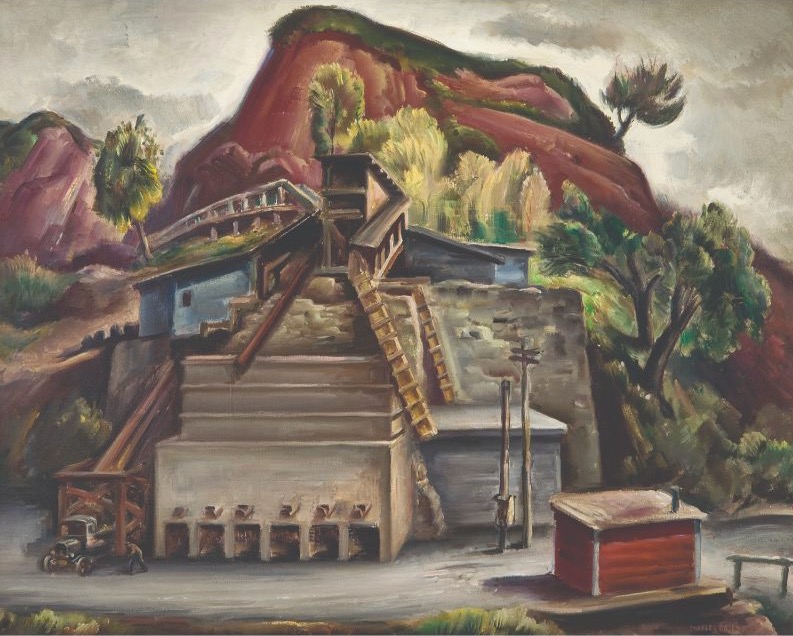
Charles Rosen (1878–1950), Quarry and Crusher, 1930, oil on canvas, 32 x 40 in., Michener Art Museum, museum purchase funded by George C. Benson in honor of his friend, John Horton
Want more stories like this? Thomas Connors’s full article, “Dug Out: Pennsylvania Impressionists & Bucks County’s Quarries,” appears in the November-December issue of Fine Art Connoisseur, along with more of the exhibitions and historic masters shaping the art world.