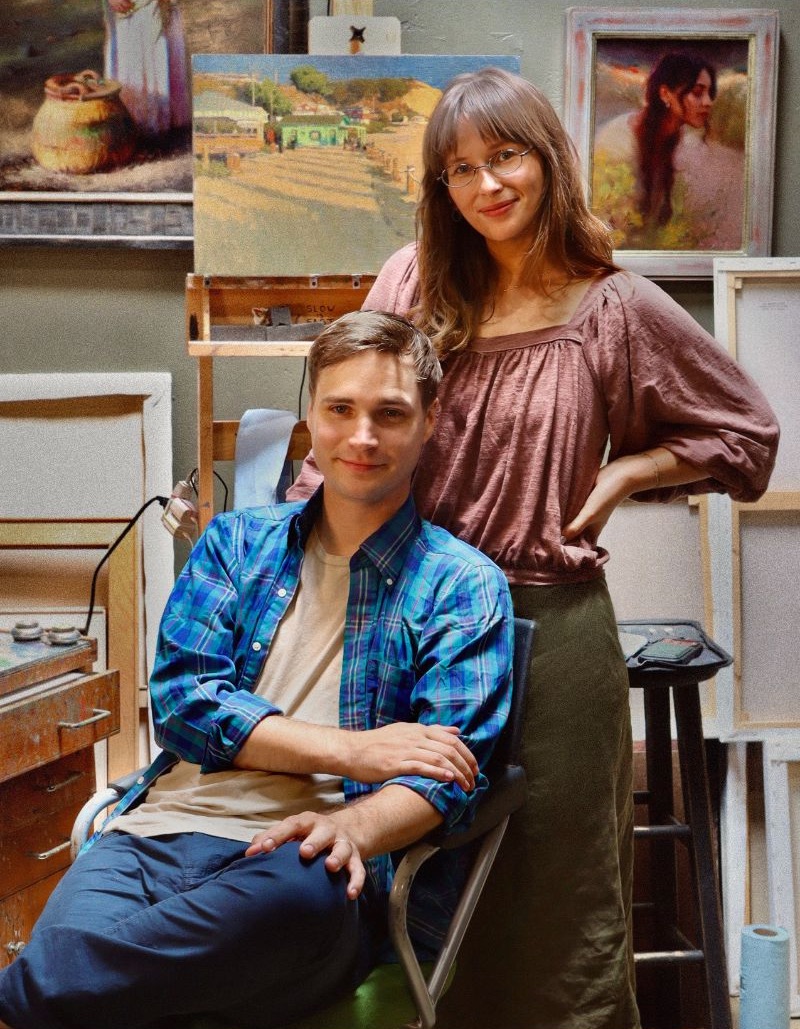
A camera happened to catch it: two strangers, seconds before their lives changed, crossing paths on the first day of a month-long residency at Otis College. Kelley Mogilka and Mason Williams didn’t know it yet, but that instant would become the origin story of both a marriage and a creative partnership.
The two hit it off during the campus tour, joking and trading glances, and soon discovered their studios and dorms were right next to each other. Kelley had even Googled her fellow residents beforehand and found a Mason Williams with a painting in MoMA. When he introduced himself, she asked if he was the one. He wasn’t, and they clicked anyway.
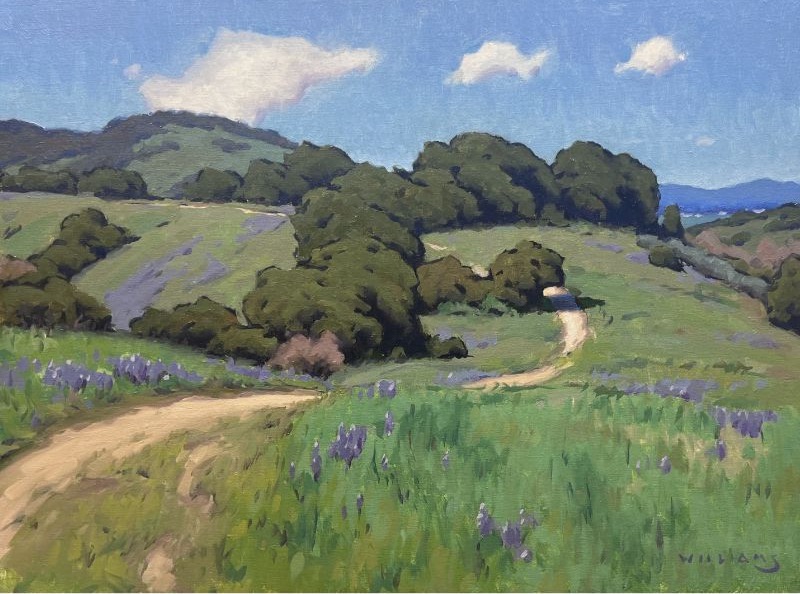
“Salinas Valley Spring,” Mason Williams, oil, 18 x 24 in.
Today, Mason paints luminous, direct-from-nature landscapes, while Kelley paints atmospheric, emotionally charged portraits of women. One looks outward, the other in, yet their work shares patience, restraint, and an eye trained on the same light. They call their arrangement “parallel play,” and it’s nearly literal. “We share a studio with our chairs back-to-back,” Mason says. “I can just turn around and see Kelley working.” For Kelley, that closeness eases the isolation of the job: “We don’t have to suffer alone; if I need to cry over a painting, he gets it.”
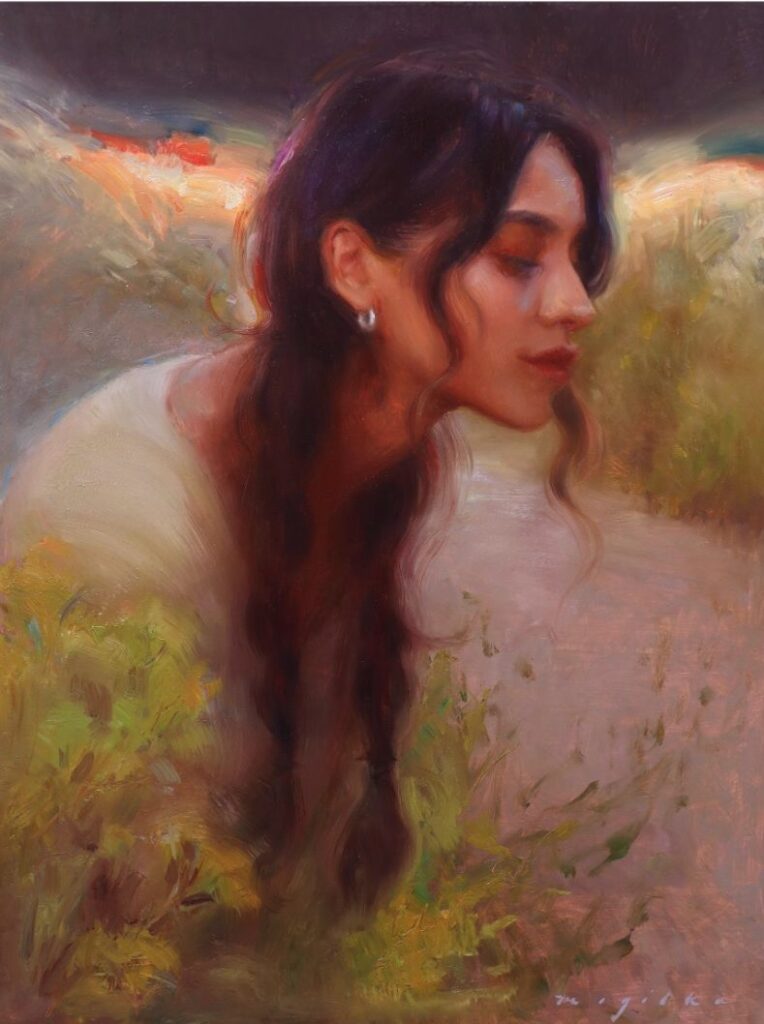
“Lingering Light,” Kelley Mogilka, 2026, oil, 12 x 16 in.
Plein air shaped them both. Kelley, who loved faces but couldn’t justify copying a figure, found her way through Sargent and Sorolla, then spent two years painting outdoors all day on weekends with mentors Mason introduced her to in his native Carmel, including John Burton, Jesse Powell, and Brian Blood. The experience made her studio work more immediate, and she now tells her students that if they want to get great at painting, they should paint the sunset, because you have to move too fast to overthink.
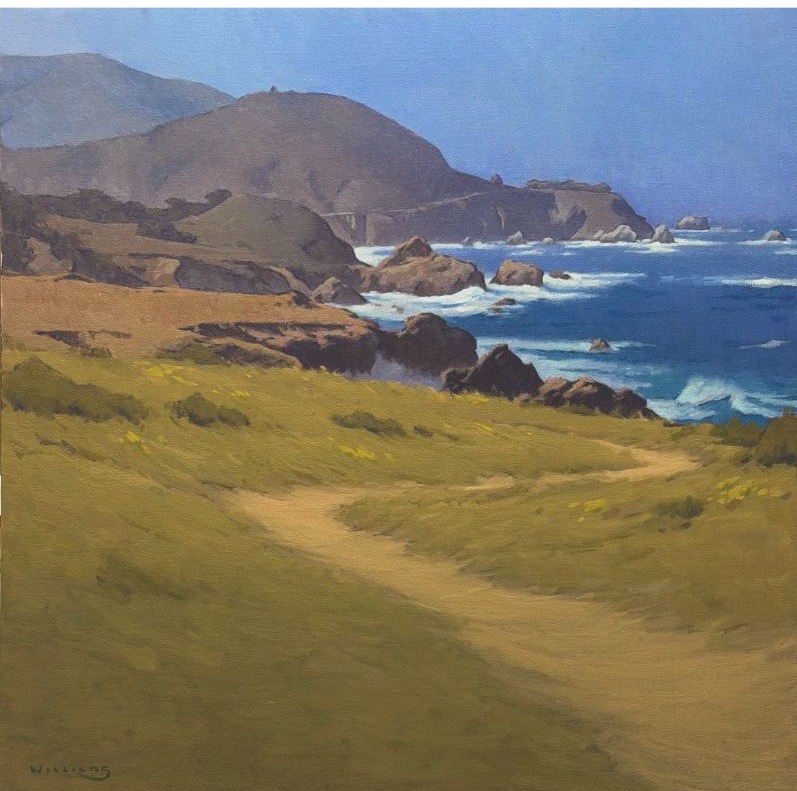
“Rocky Point,” Mason Williams, 2026, oil, 30 x 30 in.
Their approach to feedback is just as deliberate. Mason usually asks first, trusting that Kelley will help him find a way through whatever is blocking him. Kelley wants an unprompted reaction before requesting a critique. Both have learned the hard way to wait. “You can’t ask for feedback while an idea is still in its infancy — step in too early, and you taint it,” Kelley says. “You have to wait until it’s simmering before you start taste-testing.”
They’ve also traded strengths. Watching Kelley’s thoughtful starts taught Mason that a well-structured beginning helps him finish faster, while Mason’s intentional thumbnails taught Kelley that “a good painting requires design, not just accurate drawing.”
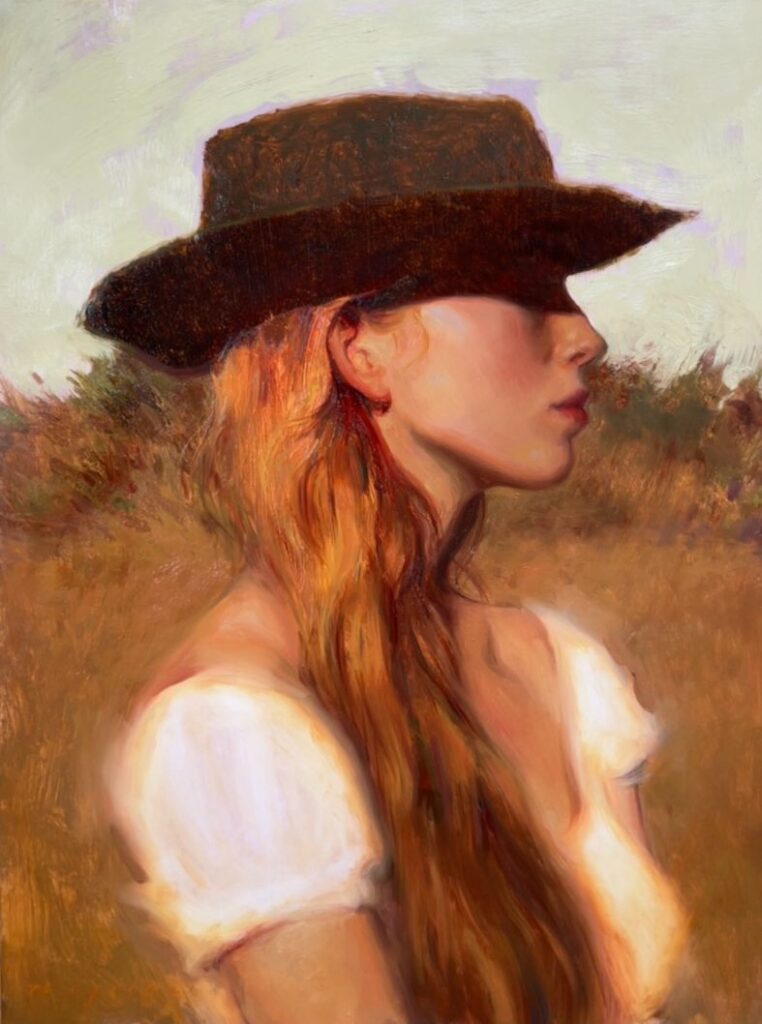
“The Dust Settled,” Kelley Mogilka, 2024, oil, 12 x 16 in.
At home, they know when to put the brushes down. When they start spiraling over a painting, they call a time-out and walk the beach or eat dinner. And when they married, they left their painting gear behind for the honeymoon. “We regretted that immediately,” Kelley laughs.
What do they hope viewers take from their work side by side? “Even though our subject matter is different, I hope they see that we’re seeking the same thing: a mindful, peaceful place,” Kelley says. “Whether it’s a figure or a landscape, it’s all just abstraction and color and intention. If they know we’re married, maybe it makes it extra special — two hearts beating the same way.”
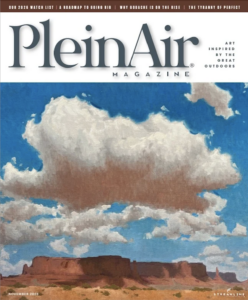 If Mason and Kelley’s story left you wanting to see more of their work, you’re in luck. One of Mason’s paintings graces the cover of the October-November issue of PleinAir Magazine, which includes a fun, inspiring Q+A with the pair.