Edgar Degas never wanted to leave well enough alone.
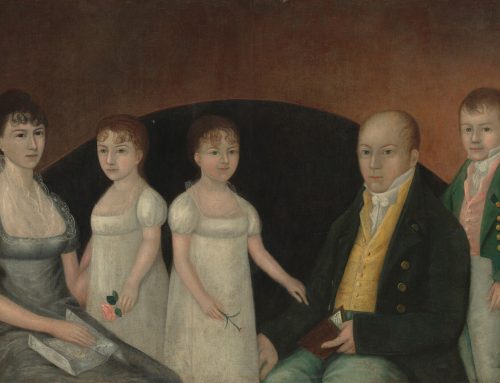
He arrived in painting almost sideways — a year at the École des Beaux-Arts, three years studying in Italy, then a return to Paris where he dutifully followed convention and worked in oils, like everyone else. His early masterwork, The Bellelli Family, took nearly a decade to complete. It was accomplished. It was also, in hindsight, the last thing Degas would do the conventional way.
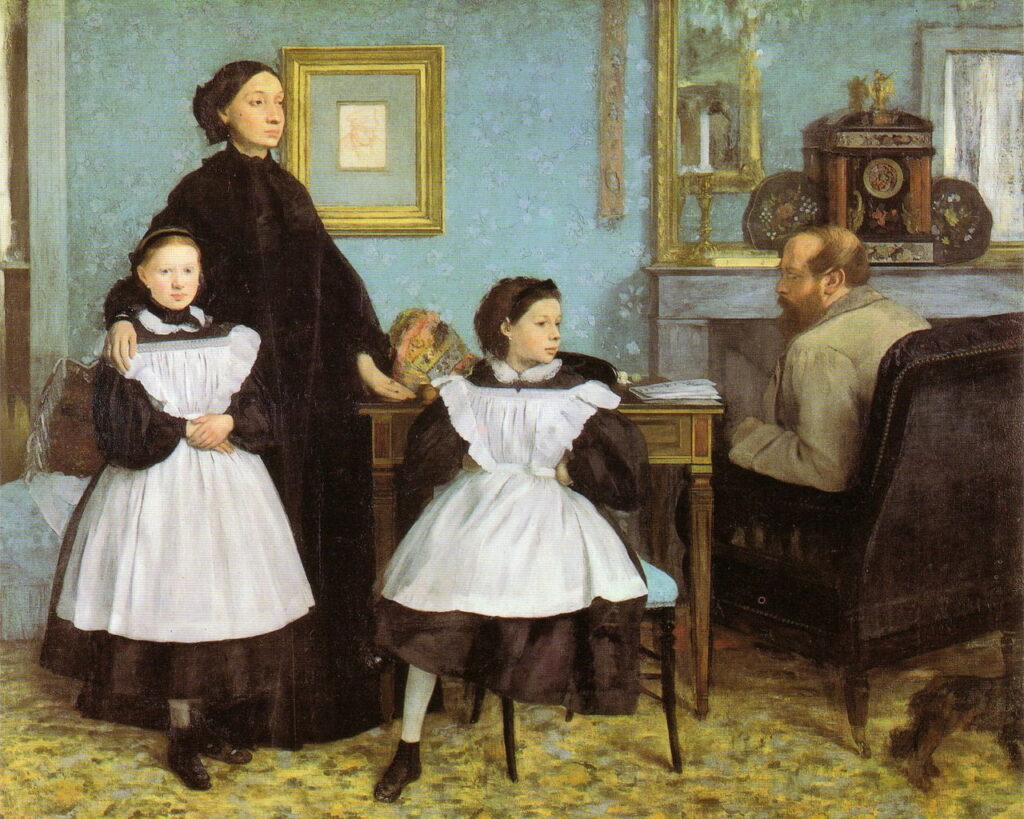
Edgar Degas (1834–1917), The Bellelli Family (1858-67), oil on canvas, 200 × 253 cm, Musée d’Orsay, Paris. Wikimedia Commons.
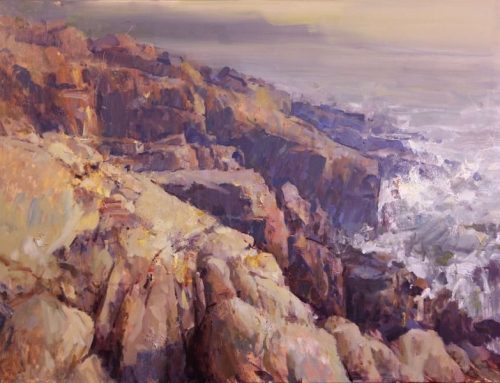
The shift began on a trip to Normandy in 1869, when Degas visited fellow painter Édouard Manet and turned, almost experimentally, to pastel. His Beach at Low Tide captured the coast’s flatness and emptiness — but more importantly, it seems to have unlocked something. Degas began wetting his pastels and applying them with a brush. He started combining pastel with printmaking techniques he was teaching himself. His goal, it appears, was almost chemical: reduce the binder, and get closer to pure, unmediated color.
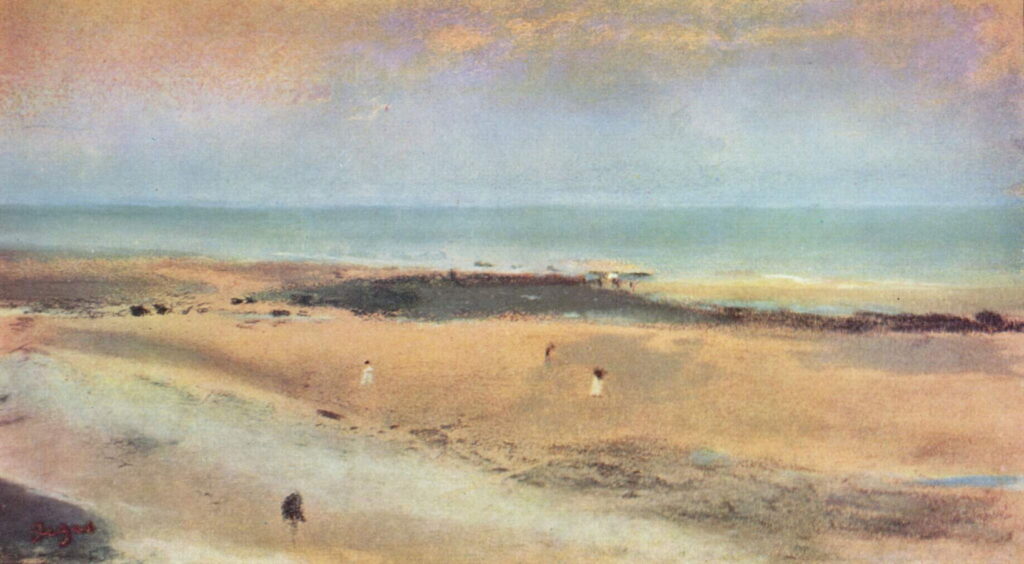
Edgar Degas (1834–1917), Beach at Low Tide (c 1869-70), pastel, 18 × 31 cm, Private collection. Wikimedia Commons.
By the mid-1870s, working on his now-iconic ballet paintings, Degas pushed further still — applying soft pastel over monotype prints made on wet, non-absorbent surfaces. In some works, he crushed pastel sticks entirely, mixed the crumbled pigment with water and gum arabic, and brushed on the resulting paint like a thick, matte wash. For one dancer’s bodice, he may have simply thrown wet pastel fragments at the paper and let them puddle — the dried result reads uncannily like patterned silk.
This was an artist treating his medium as raw material to be reinvented, not a set of rules to follow.
That restless experimentation reached a clear turning point with Danseuse basculant (Danseuse verte) around 1877–79 — painted in a deliberate combination of pastel and gouache. Two years later, Portrait of Edmond Duranty went further still, executed in gouache with pastel over linen, capturing his friend mid-thought, seemingly composing his next essay in real time.
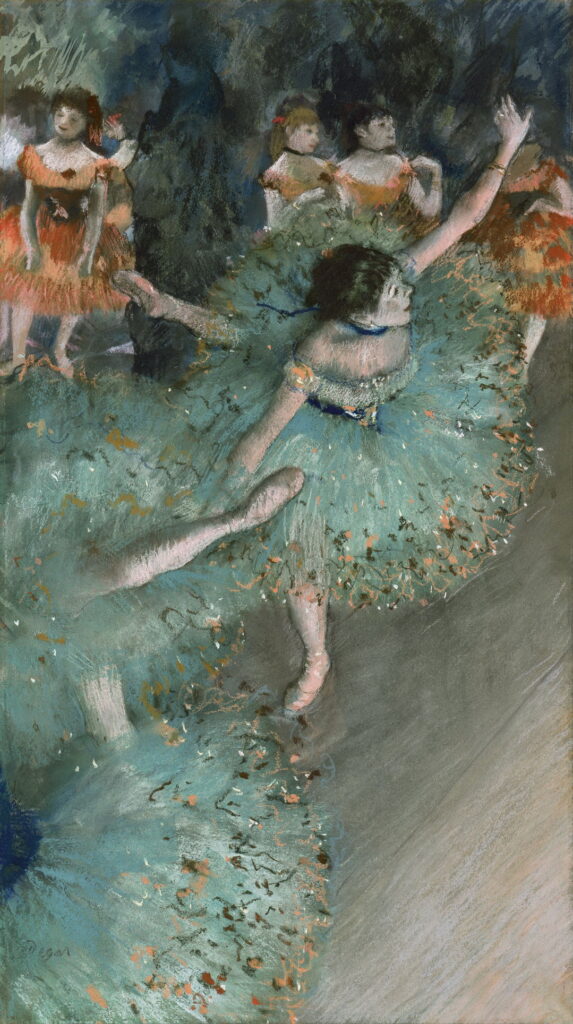
Edgar Degas (1834–1917), Danseuse basculant (Danseuse verte) (Swaying Dancer, Dancer in Green) (1877-79), pastel and gouache on paper, 64 x 36 cm, Museo Thyssen-Bornemisza, Madrid, Spain. Wikimedia Commons.
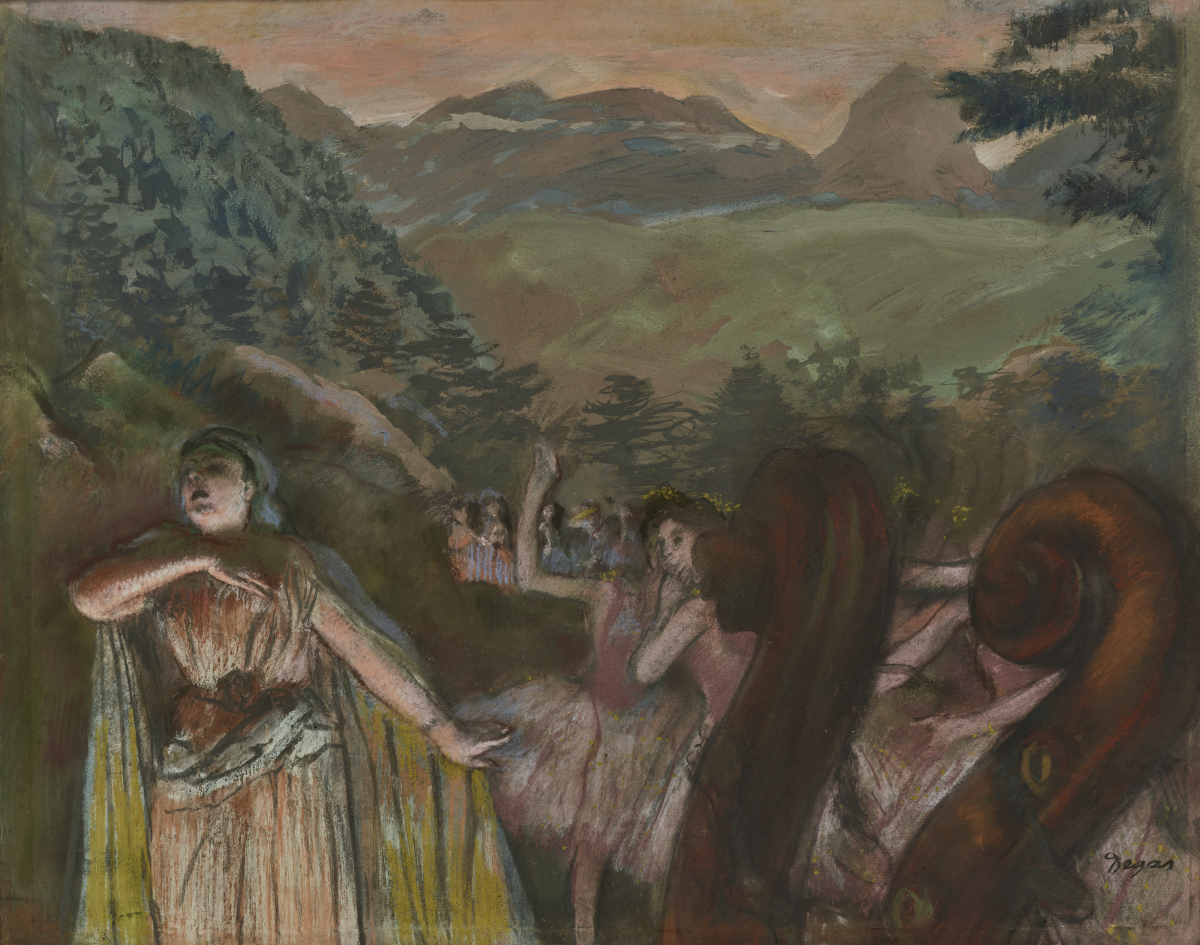
By the early 1890s, Degas was layering soft pastel over monotypes made with oil-based ink, applying the same restless logic to landscape that he’d once applied to dancers and bathers.
Most of his Impressionist peers spent their careers loyal to oil on canvas. Degas was the exception — not just in subject, but in method. He treated pastel not as a fixed medium, but as a starting point, something to be wetted, crushed, layered, and combined until it did something new.
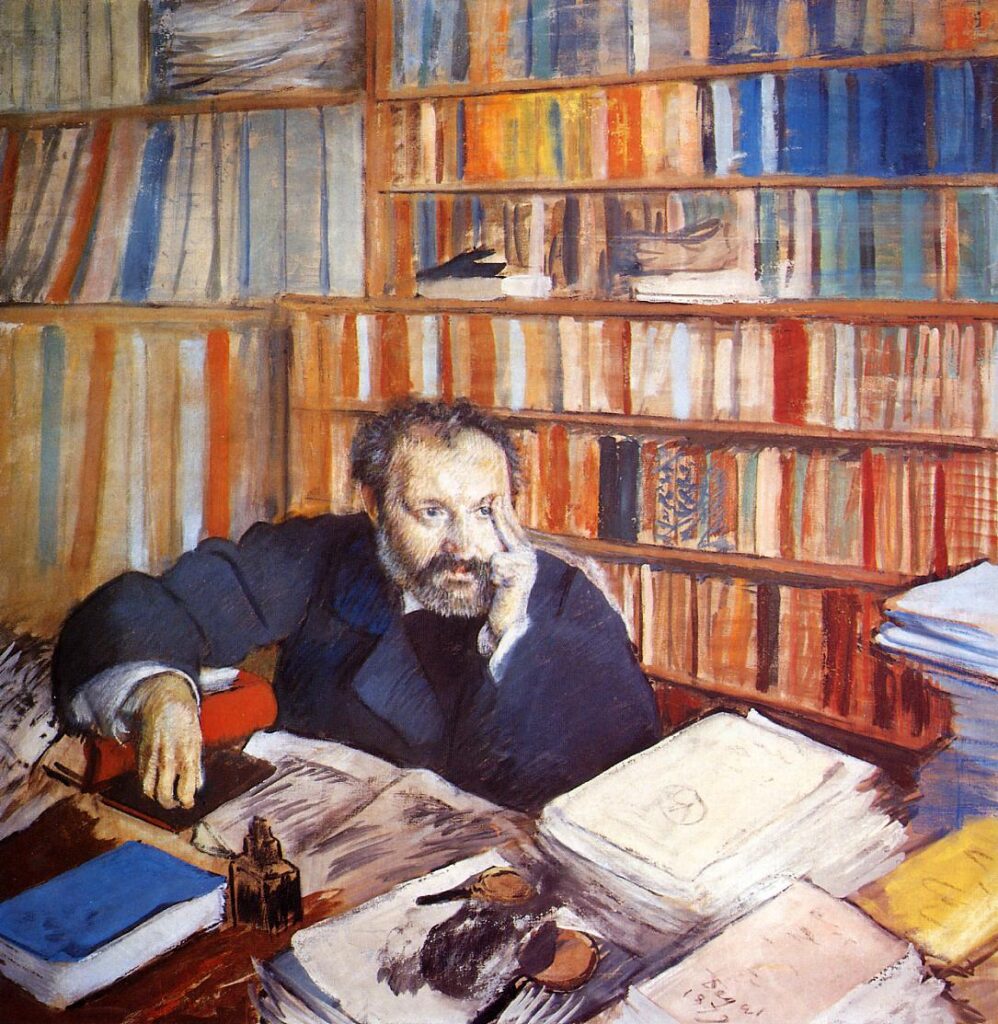
Edgar Degas (1834–1917), Portrait of Edmond Duranty (1879), gouache with pastel on linen, 128 x 128.6 cm, Burrell Collection, Glasgow, Scotland. Image by Rlbberlin, via Wikimedia Commons.
For pastelists today, that’s the real inheritance Degas left behind: not a technique to copy, but permission to experiment. Gouache, monotype, water, crushed pigment — nothing was off-limits if it got him closer to the effect he was after. Pastel, in his hands, was never finished being invented.
Degas never treated his medium as fixed — he crushed it, wetted it, layered it, combined it with whatever technique might get him closer to the effect he was chasing. That same spirit of restless curiosity is at the heart of Gouache Live 2026. Whether you paint in oil, watercolor, pastel, or something in between, the event is built for artists willing to push past their usual toolkit and see what a new medium might unlock. Join us August 20-21, 2026, for two immersive days of live demonstrations and instruction from today’s leading artists.