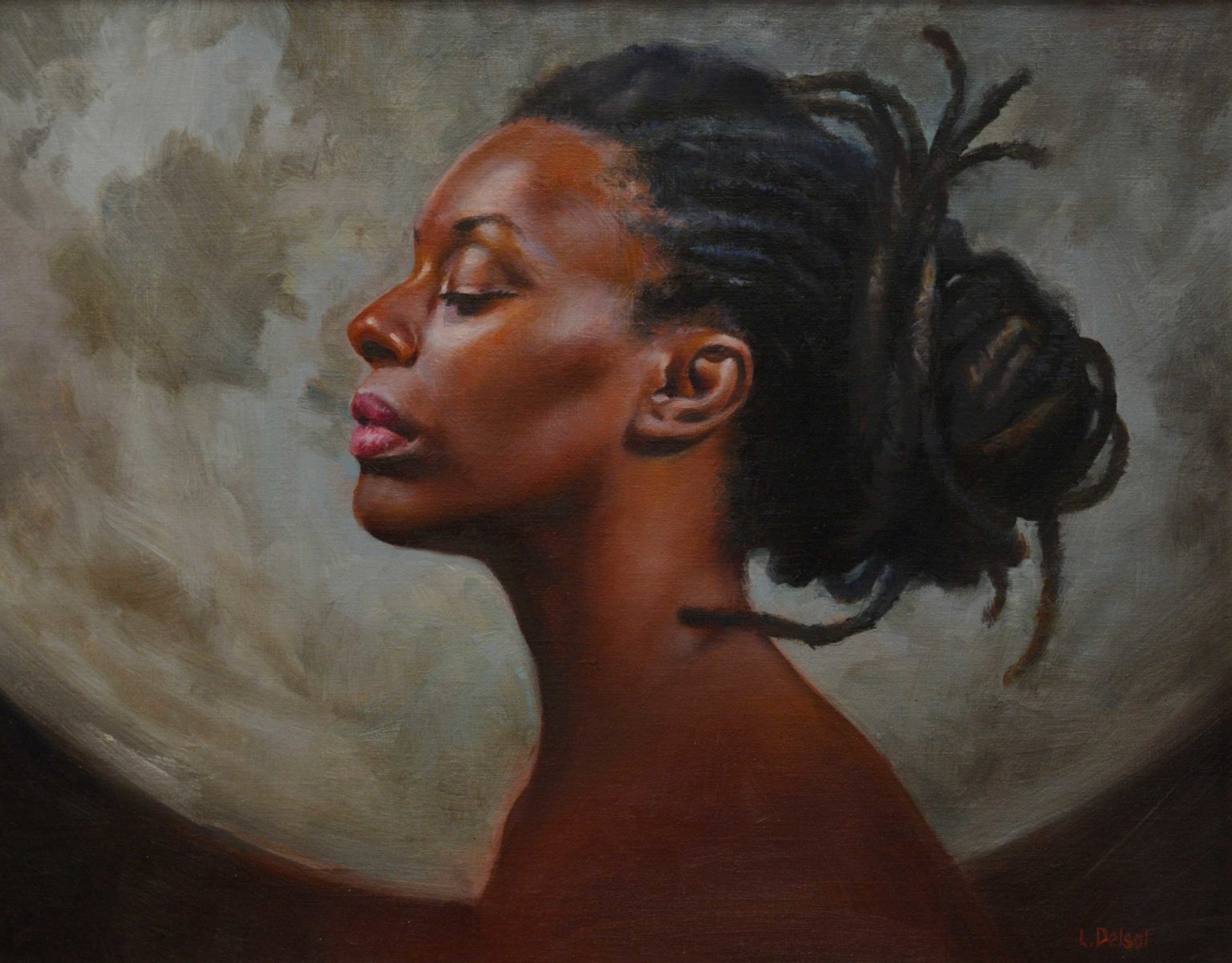
For contemporary painter Lenin Delsol, a portrait begins long before the first brushstroke.
“The portrait is one of my favorite subjects to paint,” says Delsol. “I find that if I’m fortunate enough to meet and talk with the person I’m about to paint, it helps establish a connection with the sitter.” That connection, he explains, shapes everything that follows — the mood of the painting, the choices he makes in execution, the way he interprets what he sees. But the absence of a connection has its own creative value. “Not establishing a connection frees me to do whatever I’d like regarding the execution of the portrait.”
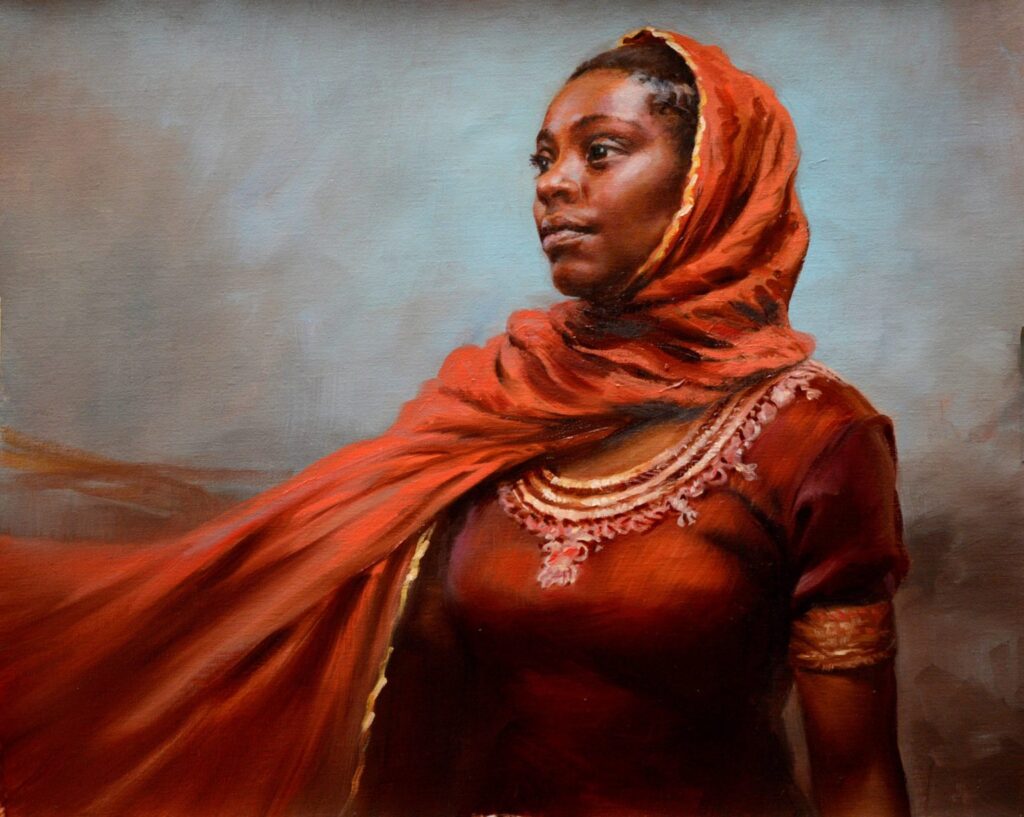
Lenin Delsol, “The Gold Limned Scarf,” Oil, 16 x 20 in., Private Collection
For this demonstration painting, “Deandrea’s Do,” Delsol works from a place of genuine familiarity. Deandrea is a model he knows well, having painted her many times — which means the interpretive freedom he brings to the work is informed by accumulated understanding rather than first impressions. It’s a distinction that matters. Painting someone you know is not simply easier; it’s different in kind, allowing for a depth of observation that a single sitting rarely affords.
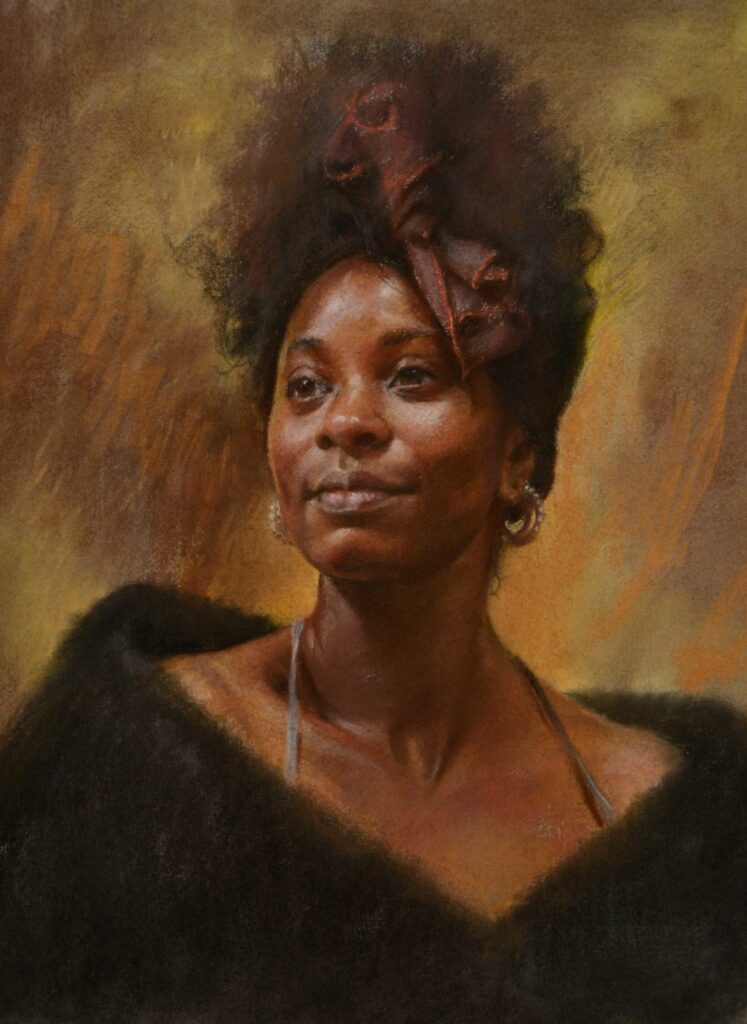
Lenin Delsol, “Black and Gold,” Pastel, 24 x 19 in.
His process reflects that confidence. Rather than building the portrait through careful, incremental steps, Delsol begins with a simplified shape — a quick, proportional placement of the subject on the canvas, drawn in a bright color chosen specifically because it will integrate naturally into the layers that follow. It’s a deliberate move: starting with something bold and visible rather than a tentative pencil line keeps the energy of the painting alive from the first mark.
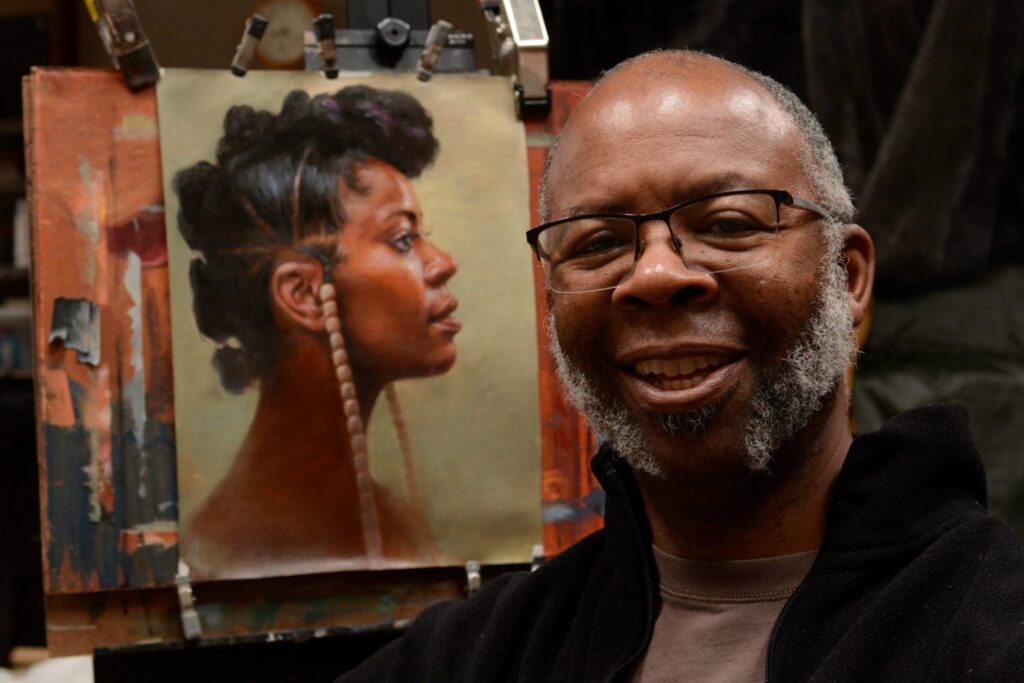
Contemporary realism artist Lenin Delsol
His palette for “Deandrea’s Do” is warm, rich, and carefully considered: Titanium White, Naples Yellow Light, Yellow Ochre, Raw Sienna, Cadmium Orange, Cadmium Red Light, Perylene Red, Permanent Rose, Burnt Sienna, Burnt Umber, Ultramarine Blue, Kings Blue, and Ivory Black. It’s a palette that spans the full range of skin tones — from the warmest highlights to the deepest shadows — while maintaining the color harmony that gives a portrait its sense of life and unity.
What follows is a step-by-step demonstration of how Delsol brings “Deandrea’s Do” to life — from that first bold placement through the layered development of form, light, and color that defines his approach to the human face.
Portrait Painting Step-by-Step Demo: “Deandrea’s Do”
By Lenin Delsol
1. I begin a portrait painting with a good look at my subject. I look for color with my eyes open but squint them to look for shadow patterns. I do this whether I paint from references or in person.
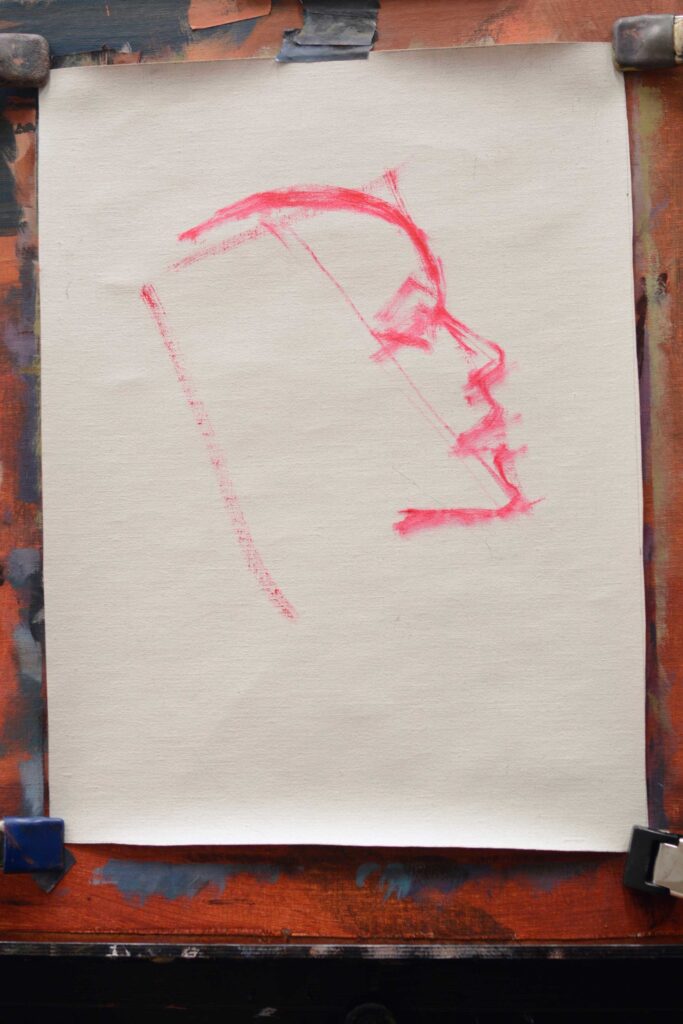
Step 1 of the portrait painting demonstration
2. I sketch in the drawing for my portrait.
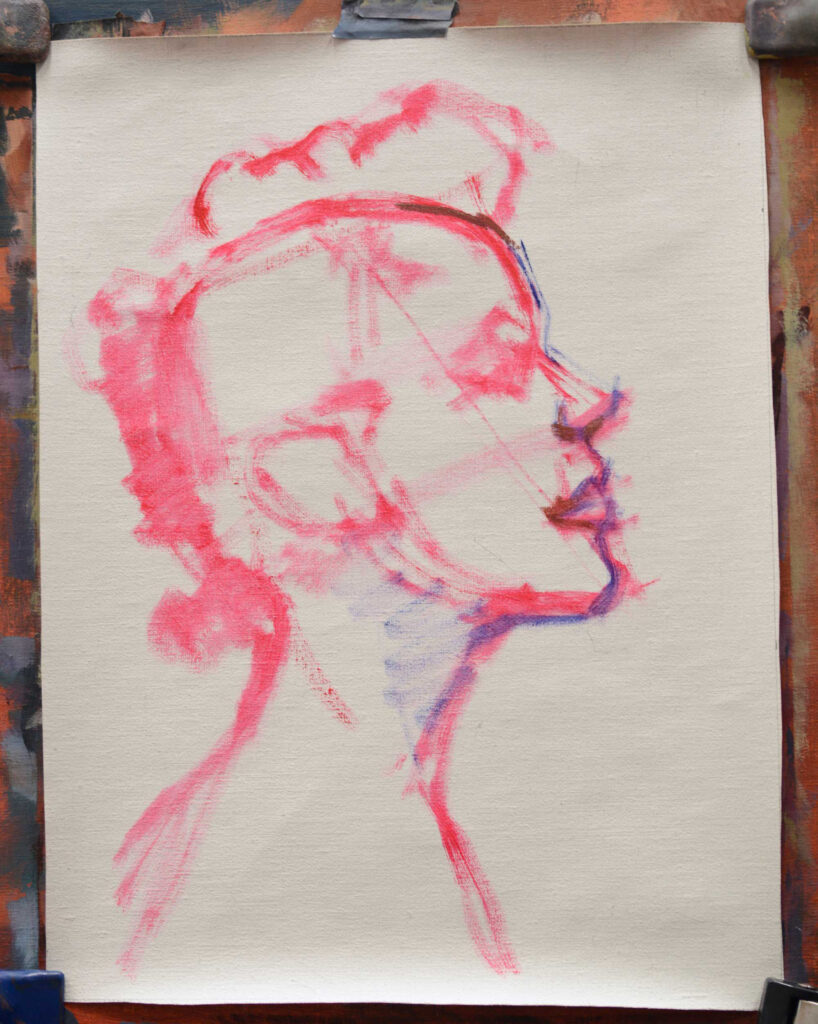
Step 2
3. Next comes the middle-value background. I can adjust it however I’d like as I proceed. The background’s job is to support the subject.
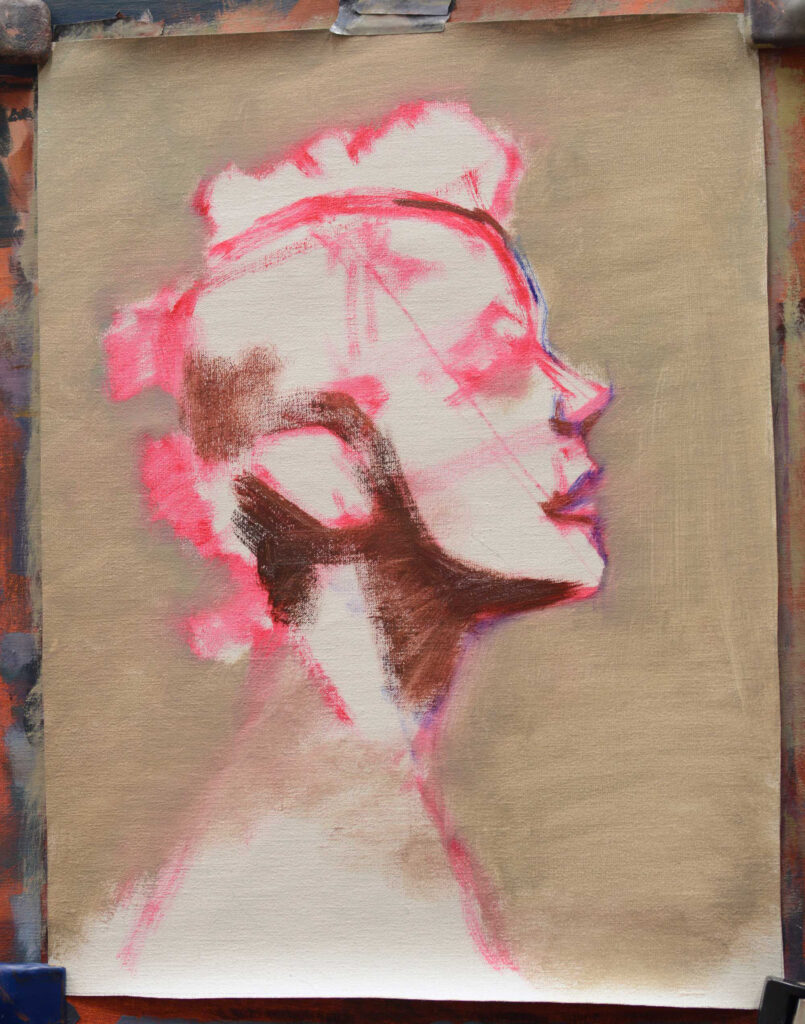
Step 3
4. My application of color is loose and mixed on canvas. The colors applied as I go, the idea being to work from the general to the specific, using relatively large brushes for the subject in order to stay away from unnecessary details too soon in my process.
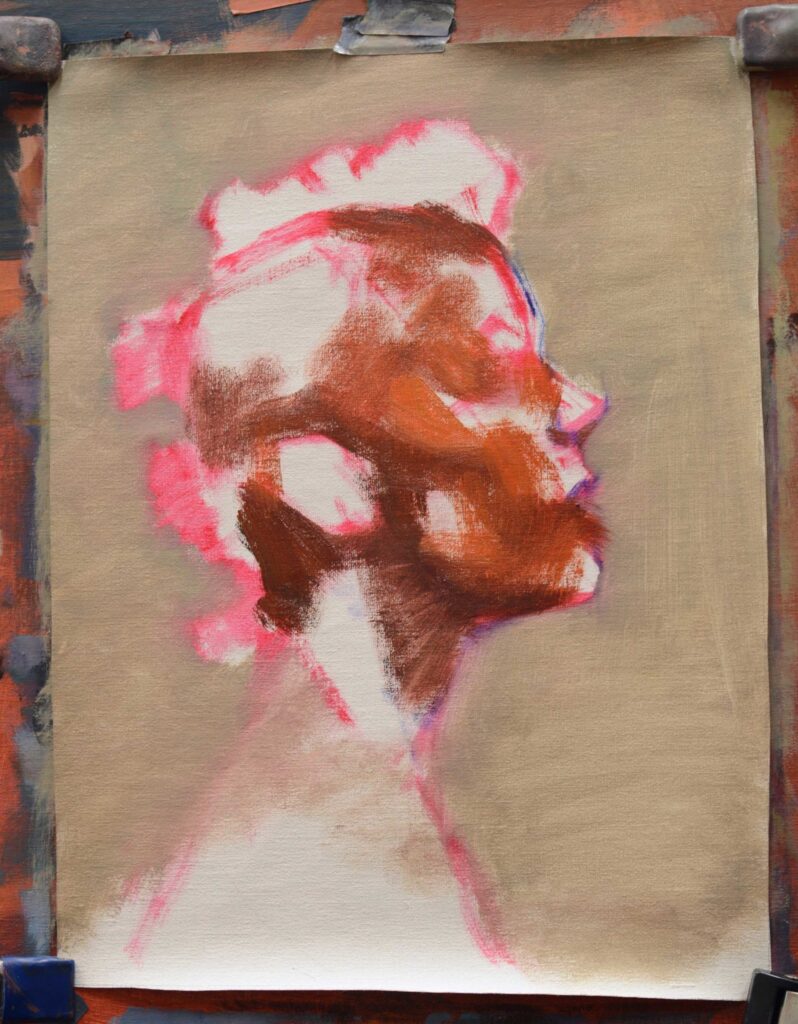
Step 4
5. As I paint, I constantly compare value and color temperature. I’m also painting more carefully now than before, placing my colors to add form to my drawing.
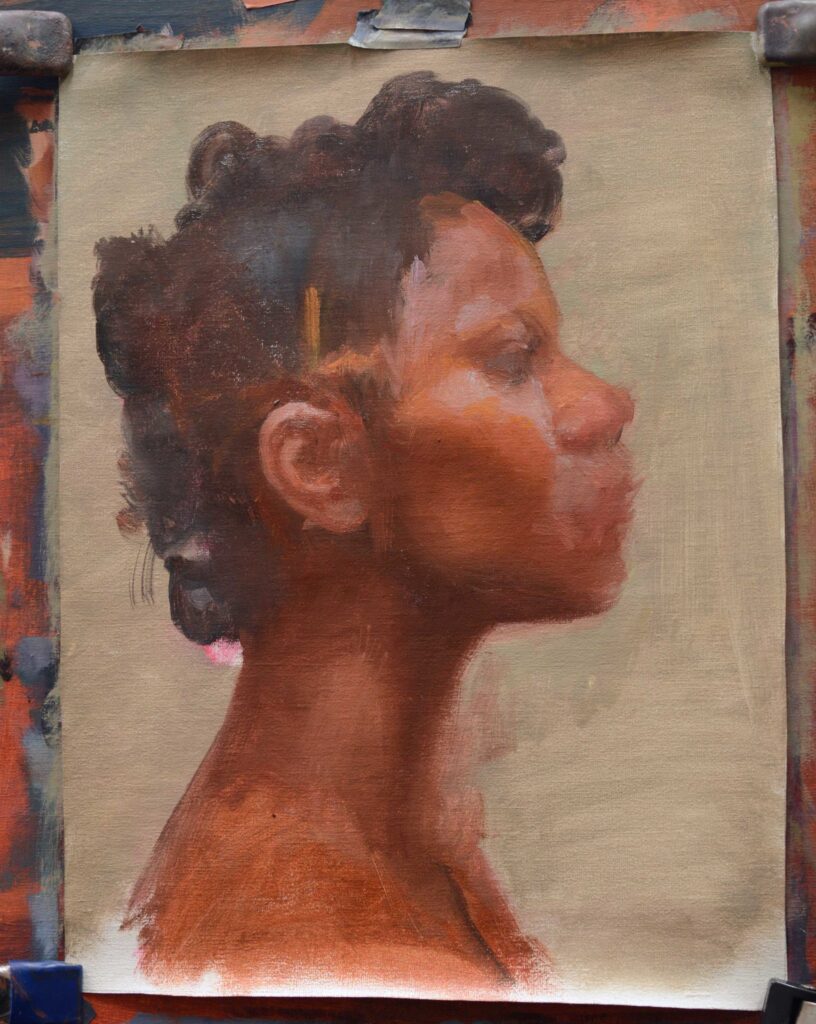
Step 5
6. Once I have the color that I want in the middle values not hindered by any of the lines that I placed earlier for my drawing, I next have to redefine the likeness that I had in the beginning. At this moment I mainly have middle light value, middle value, and middle dark value making up the bulk of the portrait.
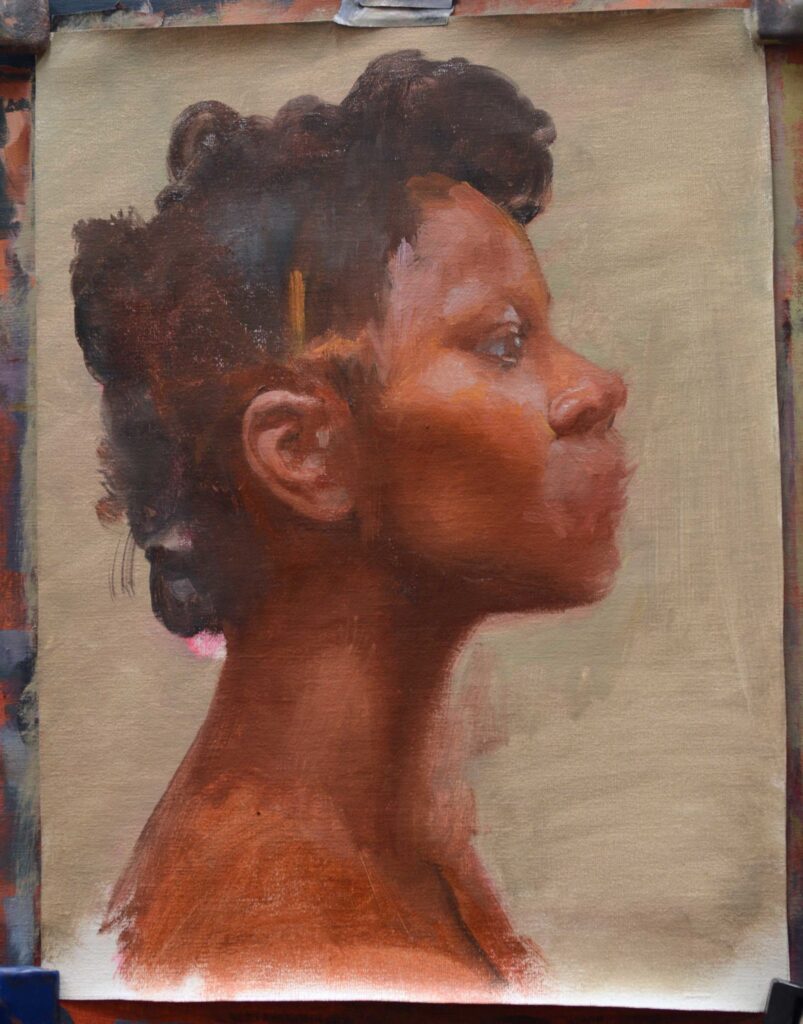
Step 6
7. I continue to build the likeness. I spot in some deeper darks to help re-establish the likeness. This is enough to help me proceed with a little more confidence. The expression is what I mainly wanted to get in this painting, as well as the likeness of the sitter.
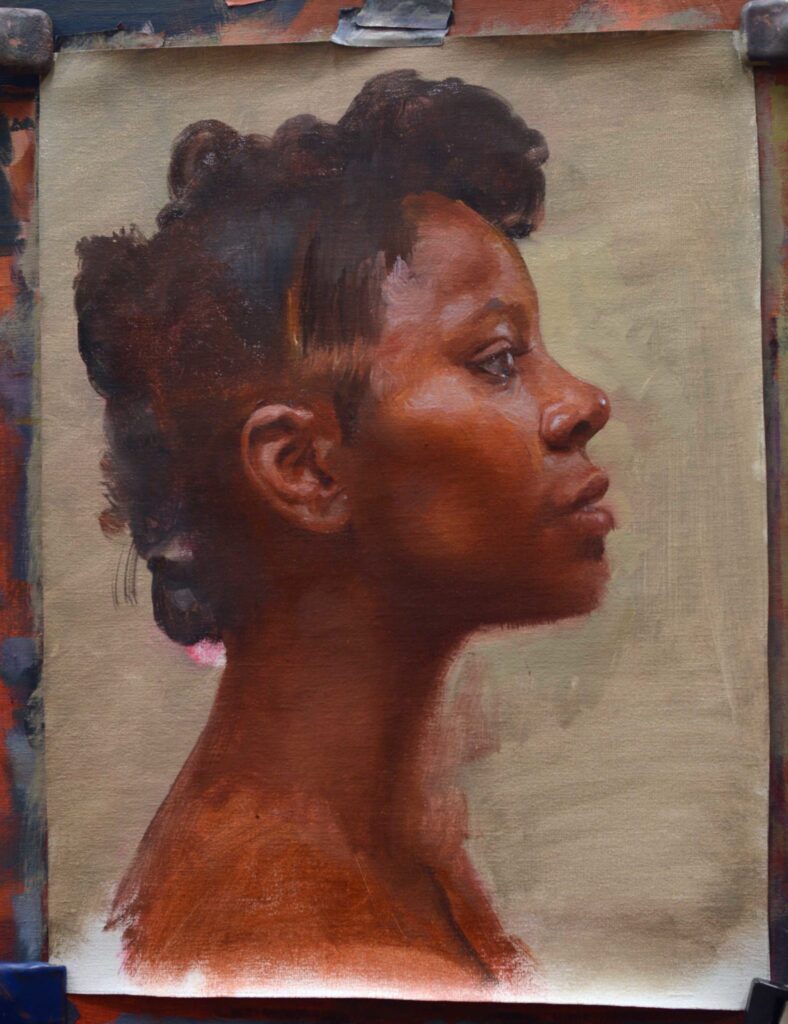
Step 7
8. I have small adjustments to make to the features. I spend more time now comparing the shape and value relationships between features and the outer contours of the face.
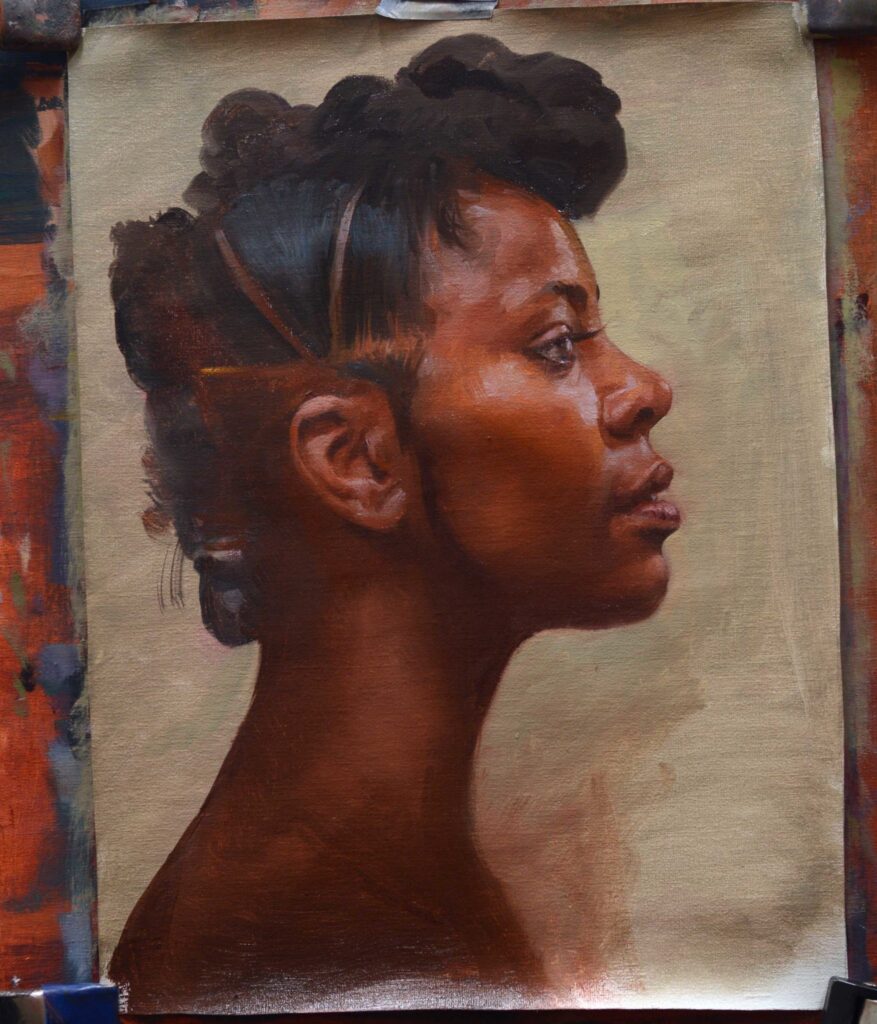
Step 8
9. More work on the hair, and I rethink the neck and shoulders. I also add the beads, which are an integral part of the “do.”
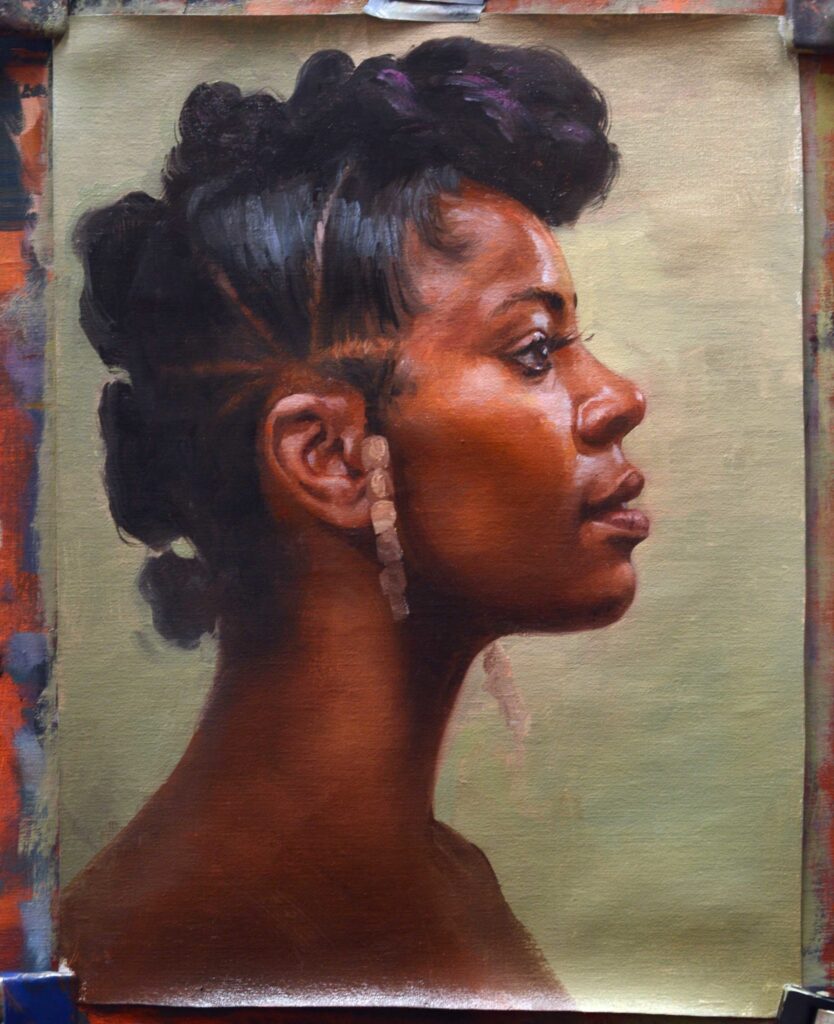
Step 9
10. I’ve taken this as for as I care to in the time I’ve allotted. I muted the values and color of the beads so as not to take away from the face and hair, and also adjusted the values of the background to help highlight the face and expression.
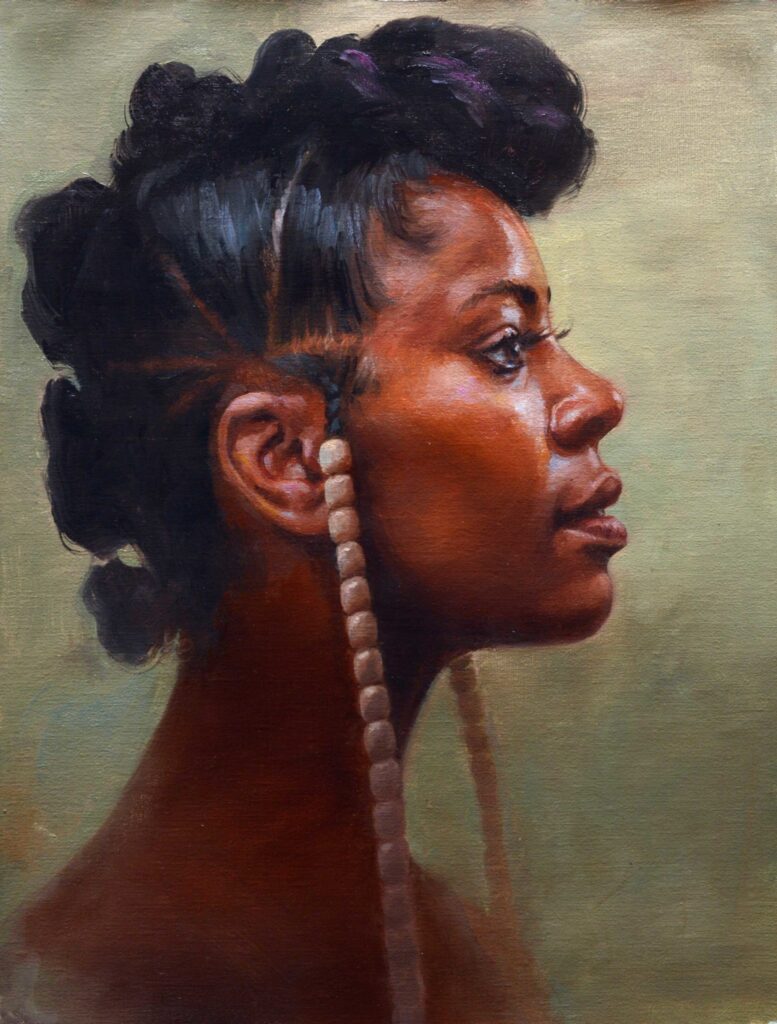
Step 10; Lenin Delsol, “Deandrea’s Do,” 20 x 16 in.
Inspired by Delsol’s approach? Realism Live (November 11-13, 2026) is the place to go deeper — an immersive online event featuring some of today’s finest realist and figurative painters, sharing the techniques, palettes, and philosophies behind their work.