
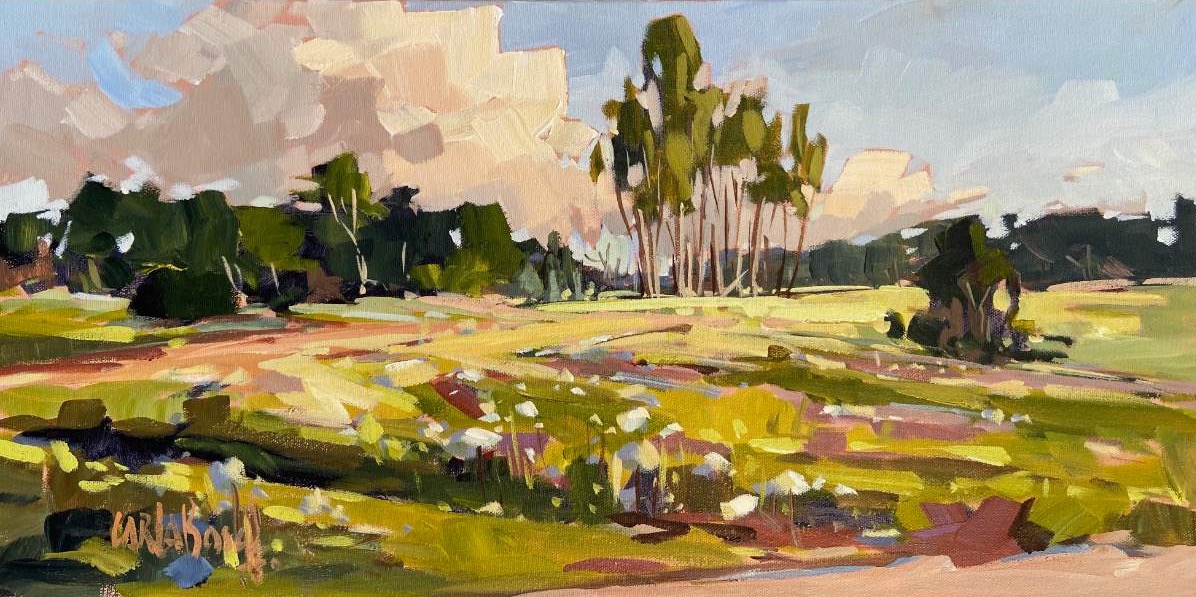
For most landscape painters, the sky is background. For Carla Bosch, it’s everything.
“The sky has always been my favorite part of a painting,” says the acrylic painter. “I love the feeling of lightness and fluidity as clouds are changing all the time — and sometimes quite rapidly.” For Bosch, the sky isn’t simply a backdrop to the landscape below; it’s the emotional engine of the entire painting. “It brings balance, and the clouds set the tone,” she says. “Just think of all the emotions that go through your mind when you consider the possibilities — from an open blue sky to heavy, overpowering cumulonimbus formations, the fun and patchy cumulus clouds, and everything in between.”
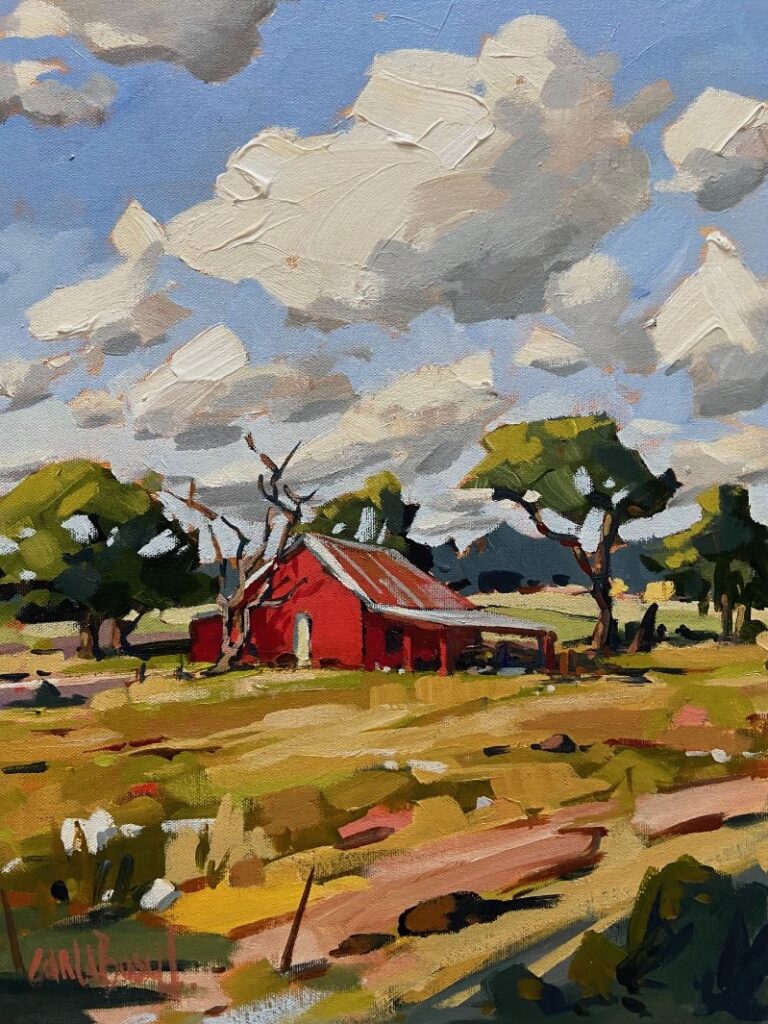
“Liberty Hill Barn” (acrylic, 16 x 12 in.)
What draws her most is drama — specifically, the moment after a storm when the clouds break and sunlight comes flooding through. “Have you ever been on the road during a brief thunderstorm, and all of a sudden some clouds break away, allowing the sun to shine through?” she asks. “To me it feels clean, fresh, and exciting.” It’s a moment she actively pursues. She’ll drive out into the countryside directly after a thunderstorm just to experience — and eventually paint — those fleeting contrasts of dark and bright, shadow and light.
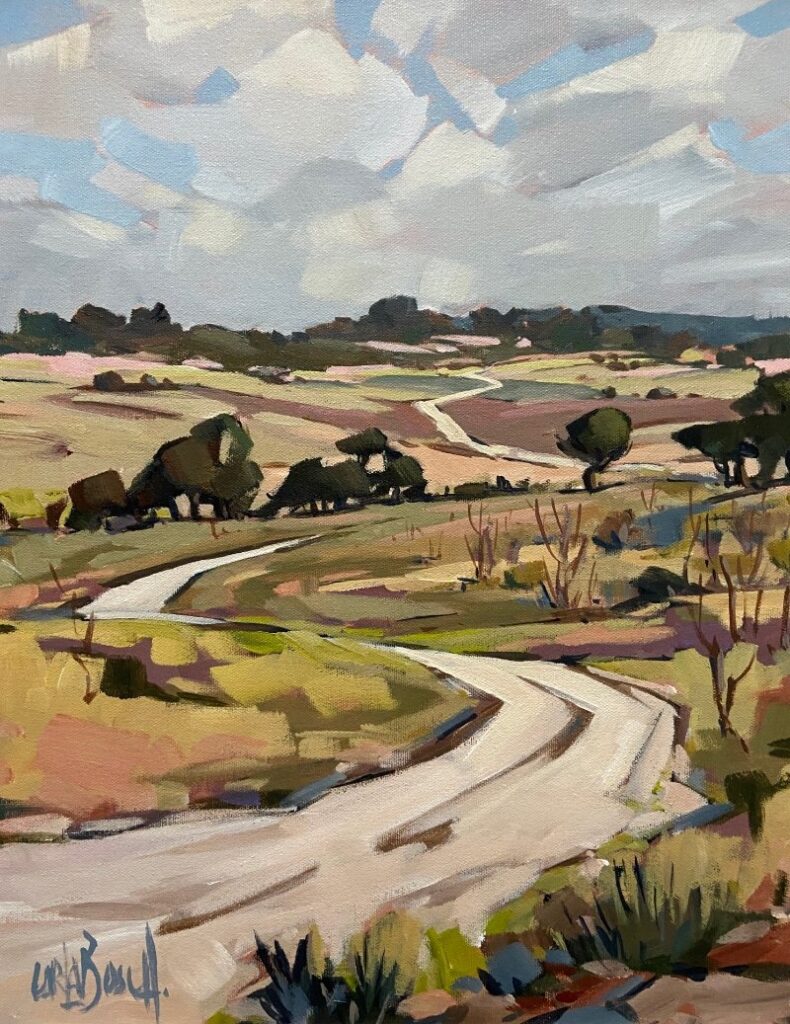
“Don’t Want to Leave” (acrylic, 14 x 18 in.)
Capturing those moments in acrylic brings its own set of challenges. The medium’s fast-drying nature can be a liability on a hot day, when paint dries on the brush before it reaches the canvas. But Bosch has spent years turning that liability into an asset. “I’ve learned to work more deliberately, and with more paint on my brush,” she says. The quick-drying quality has pushed her toward a bolder, looser style — more paint, less fussing, no overworking. “Acrylics have forced me to paint faster and looser,” she says. “And that really suits my style.”
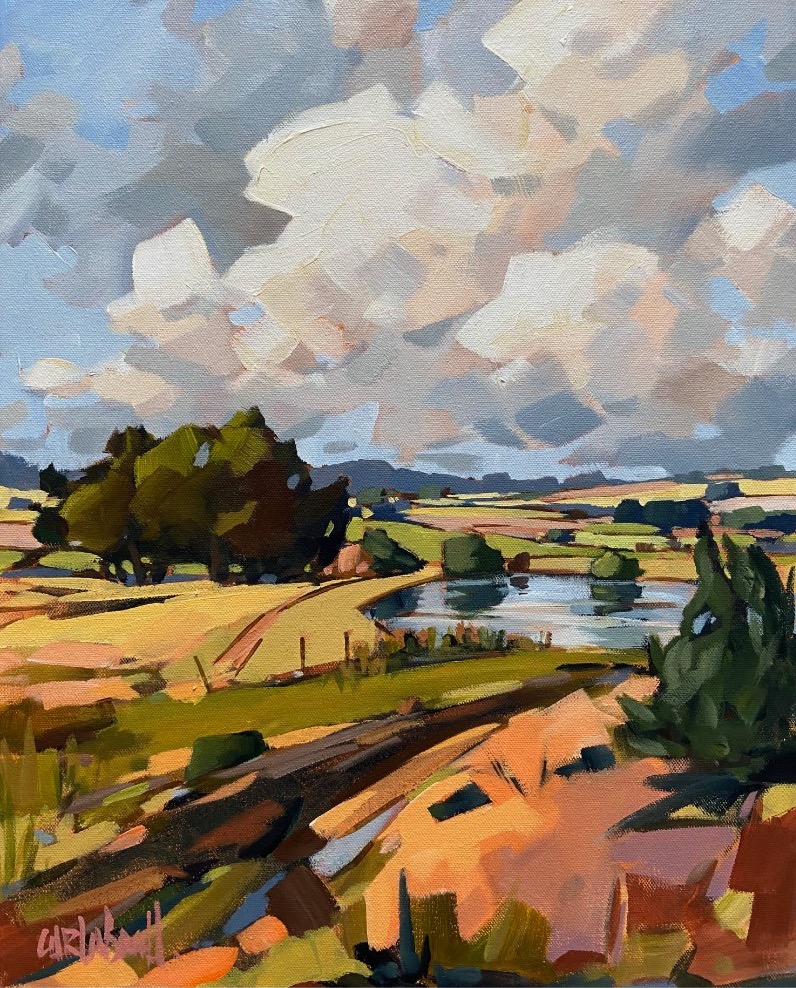
“Roadside Beauty” (acrylic, 20 x 16 in.)
Her process reflects that philosophy. Rather than following the conventional acrylic approach of working dark to light, Bosch begins her skies with the lightest lights in the clouds and works back toward the darker values — a sequence that preserves the luminosity and spontaneity she’s after. She also primes her canvas with a warmer color rather than white, a choice that subtly contributes to the definition and warmth of the clouds.
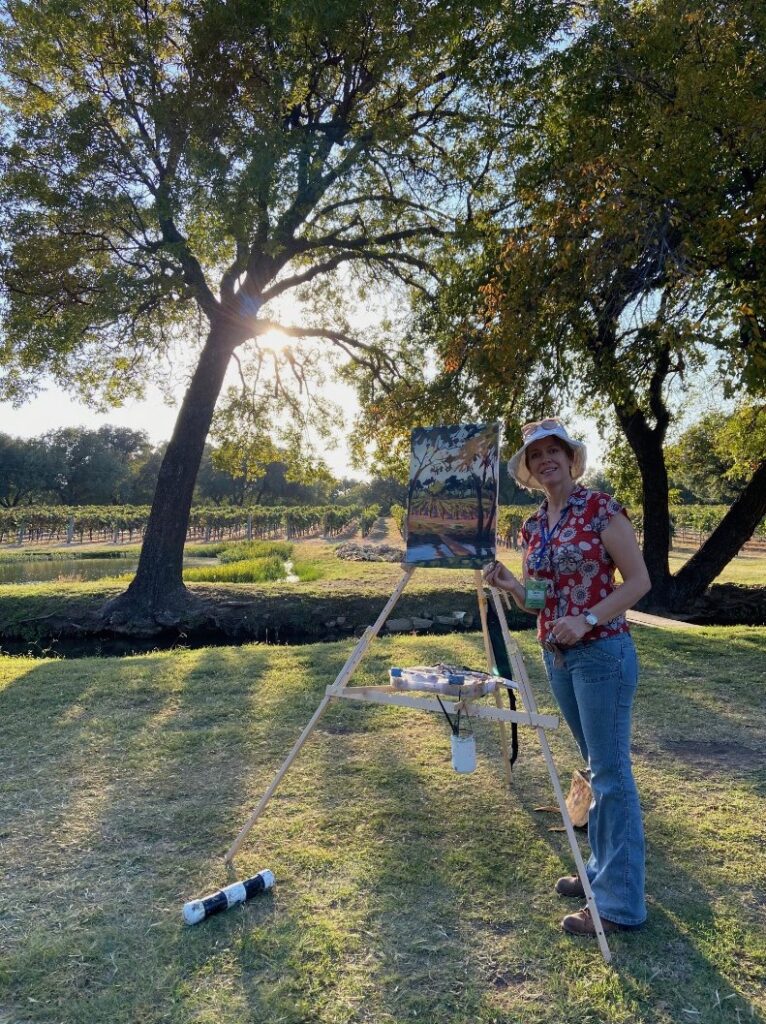
Carla Bosch
Throughout, the goal remains constant: emotion. “I want the viewer to experience the elements in the sky,” she says. Not document them, not describe them — experience them. The distinction matters. For Bosch, a sky painting succeeds not when it looks like a sky, but when it feels like one — that specific, electric feeling of light breaking through after a storm, clean and fresh and briefly, brilliantly alive.