When French Impressionism burst onto the Paris art scene in 1874, most American painters wanted nothing to do with it. After visiting one of the group’s early exhibitions, painter J. Alden Weir wrote home to his parents that he had never seen “more horrible things” in his life. Within a decade, he was a convert.
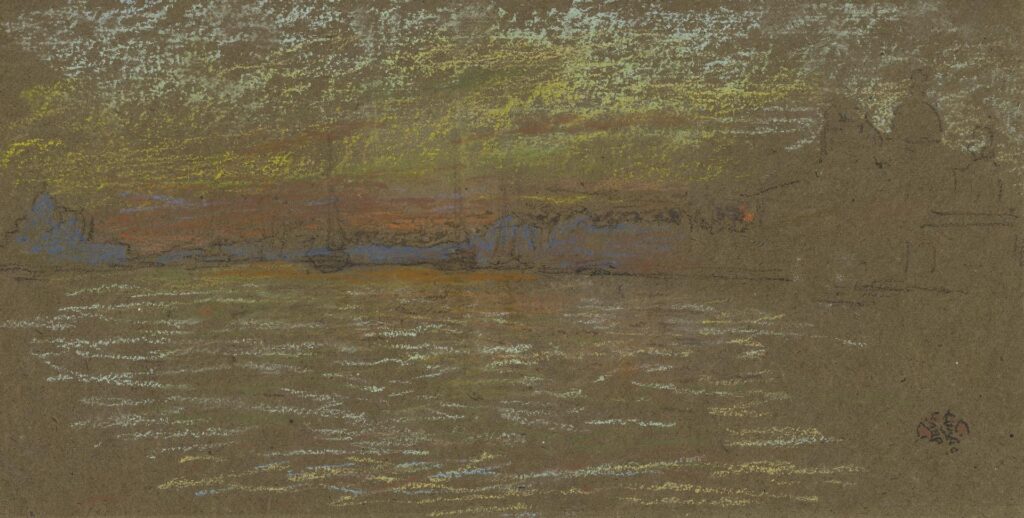
“The Riva—Sunset: Red and Gold,” James McNeill Whistler (American, 1834–1903), 1879–80, pastel and black chalk, 5 1/2 × 10 1/2 in., Yale University Art Gallery, Mary Gertrude Abbey Fund
That rapid reversal tells the story of American Impressionism in miniature — a movement that began in resistance, found its footing in curiosity, and ultimately produced some of the most beloved paintings in American art history. As the United States marks its 250th anniversary this year, that story feels worth revisiting.
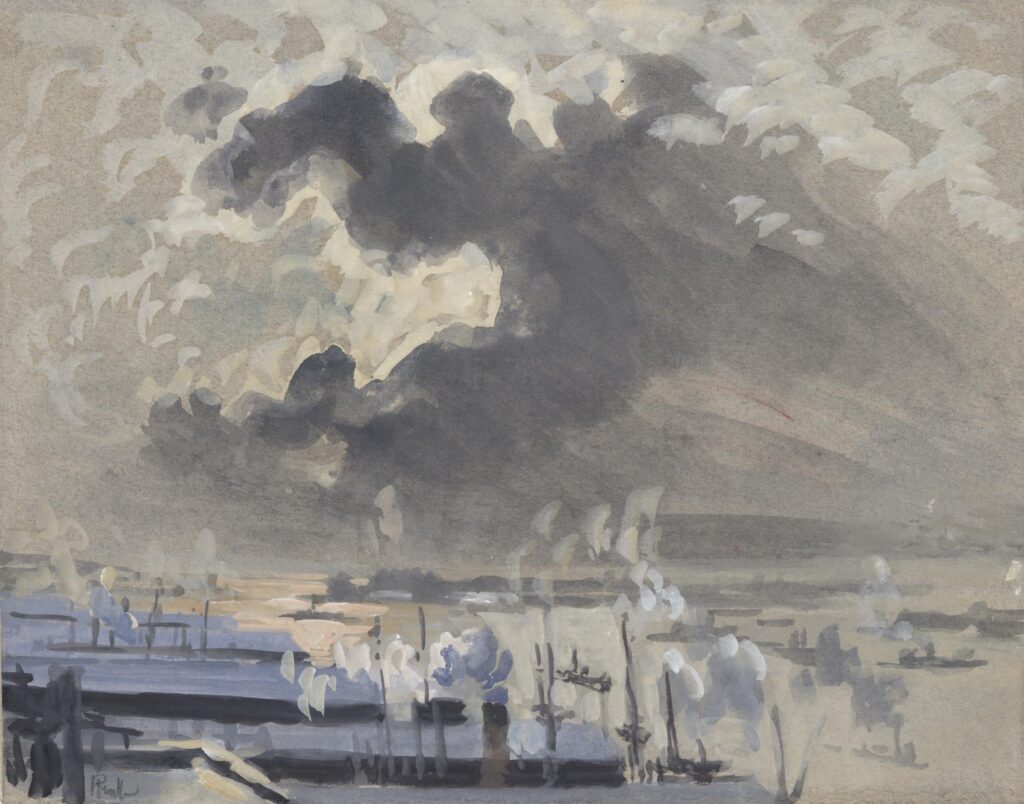
“Storms Coming Up,” Joseph Pennell (American, 1857–1926), ca. 1920, watercolor and gouache, 10 3/8 × 13 in., Yale University Art Gallery, Bequest of John Marshall Phillips
American artists of the late 19th century were a cosmopolitan generation, trained in European academies and deeply attuned to the cultural currents crossing the Atlantic. When Impressionism’s radical energy began softening into something more accessible, American collectors warmed to it — and American painters followed. By the early 1890s, Impressionism was firmly established on this side of the ocean, championed by artists who had absorbed its lessons abroad and brought them home.
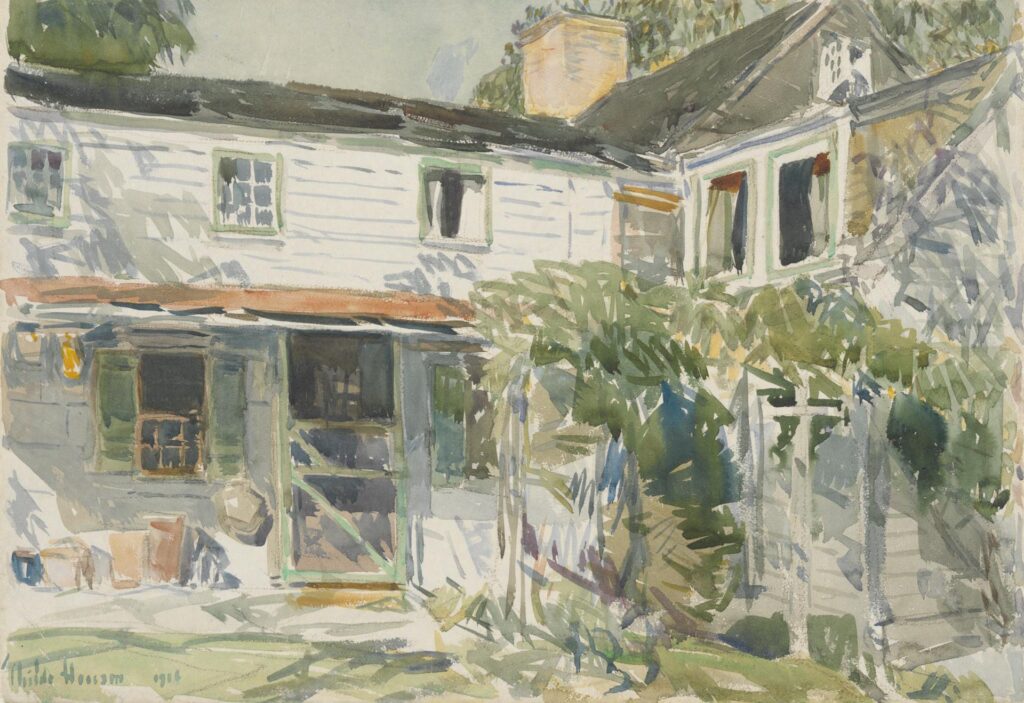
“Back of the Old House,” Childe Hassam (American, 1859–1935), 1916, watercolor over sketch in brown chalk on wove paper, 15 3/16 × 22 in., Yale University Art Gallery, Gift of George Hopper Fitch
While some adopted only the surface effects of Impressionism, simply to accommodate collectors’ evolving taste, many of the American artists shared the conviction that modern life should be recorded in a vibrant, contemporary style. Their works, like those of their French counterparts, appear to be infused not only with light and color but with meanings inherent in the subjects they depicted. Some were captivated by the energy of urban life, responding to the fragmented experience that marked the age in rapidly rendered vignettes. But most American Impressionists chose to portray the countryside, the coastline, and the quiet corners of domestic life to which urbanites like themselves and their patrons retreated.
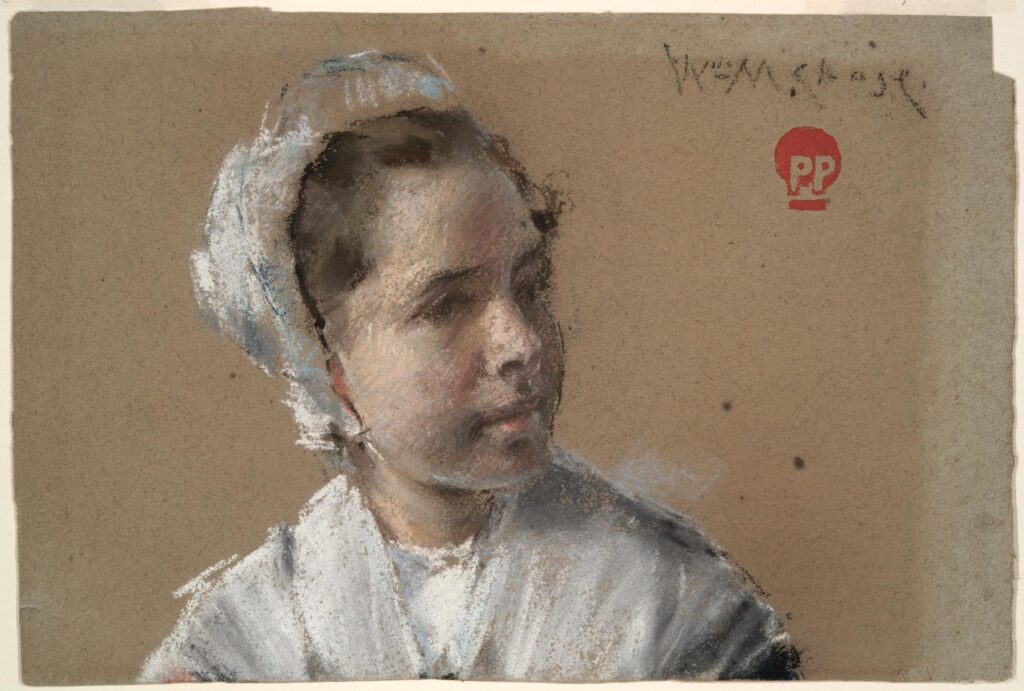
“Dutch Orphan (Young Dutch Orphan),” William Merritt Chase (American, 1849–1916), 1883, pastel on brown paper, 7 1/2 × 11 5/16 in., Yale University Art Gallery, Gift of Mary C. and James W. Fosburgh
They founded and frequented artists’ colonies — the Isles of Shoals off the New Hampshire coast, the east end of Long Island, the villages of Connecticut. In doing so, they created an art rooted in the American experience of a nation caught between its agrarian past and its industrializing future: simultaneously excited by change and nostalgic for what was disappearing.
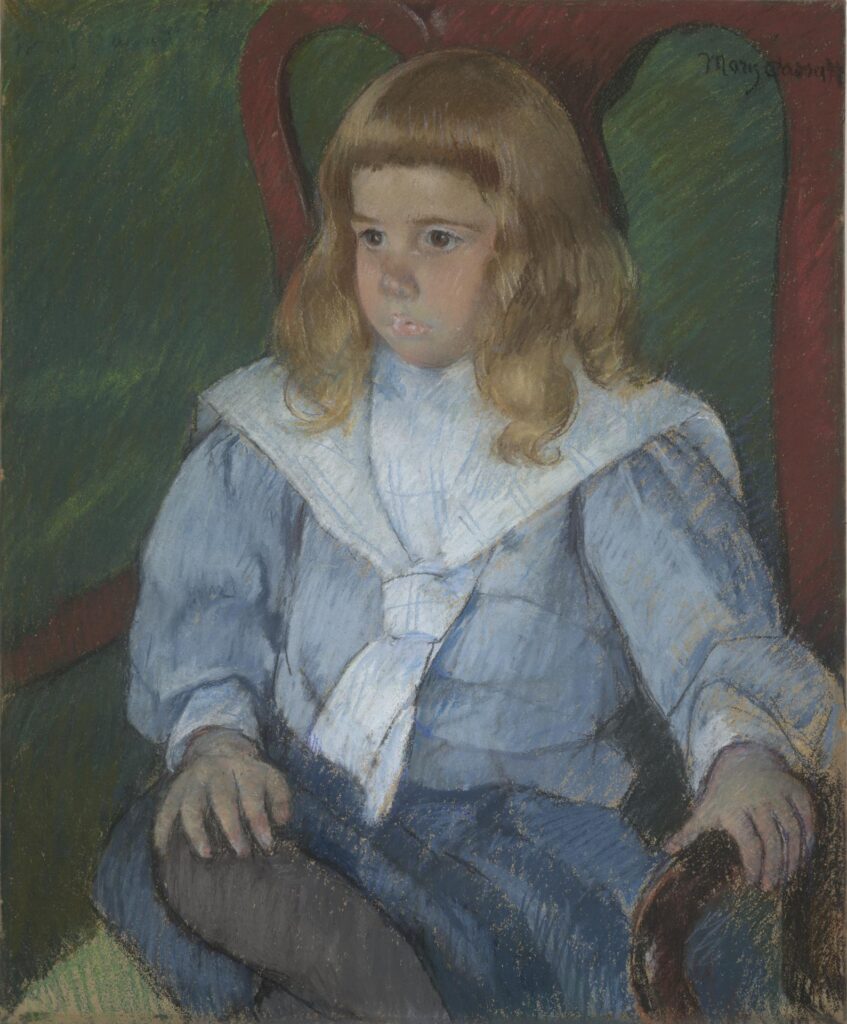
“Boy with Golden Curls,” Mary Cassatt (American, 1844–1926), 1898, pastel on paper mounted on canvas, 30 1/2 × 26 3/8 × 2 3/16 in., Yale University Art Gallery, Gift of Robert N. Whittemore
The movement produced painters whose work still resonates deeply — Mary Cassatt, John Singer Sargent, William Merritt Chase, James McNeill Whistler, and Childe Hassam among them. Hassam in particular helped define what American Impressionism could be, from his luminous depictions of New York street life to his iconic Flag Series, one of the most recognizable patriotic bodies of work in 20th-century American art.
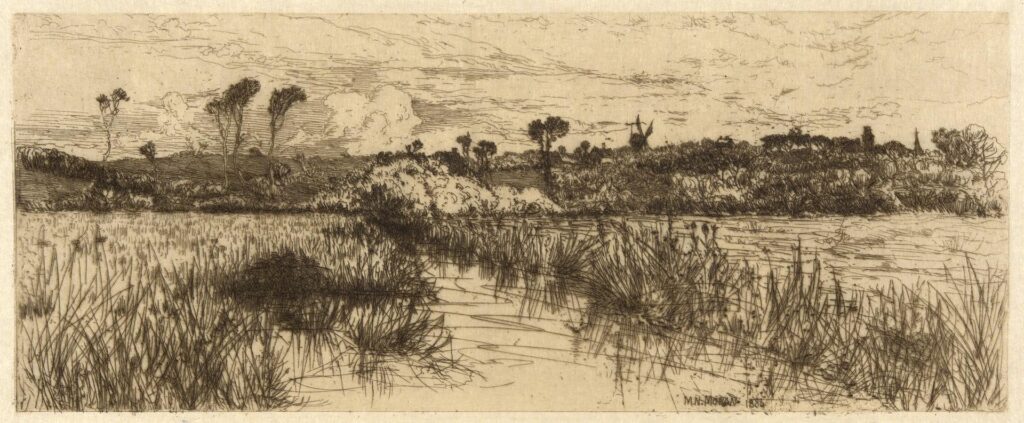
“The Haunt of the Muskrat—Easthampton,” Mary Nimmo Moran (American, born Scotland, 1842–1899), 1884, etching, 10 × 18 in., Yale University Art Gallery, Gift of Theodore E. Stebbins, Jr. in honor of Alan Shestack
This year, with the nation’s semiquincentennial bringing renewed attention to American art and its histories, Hassam takes center stage in a timely installation at the Yale University Art Gallery, on view through June 7. Featuring drawings, prints, and paintings by the movement’s most celebrated figures, it’s a vivid reminder of what American artists made of a borrowed idea — and how thoroughly they made it their own.
The American Impressionists learned their craft by seeking out the best teachers they could find — crossing oceans to study in Paris, gathering in artists’ colonies, and absorbing everything they could from painters who knew more than they did. That tradition of dedicated study is very much alive. If you’re ready to take your own painting to the next level, Oil Painting Bootcamp, June 25-26, 2026, offers an immersive, intensive experience built to do exactly that.