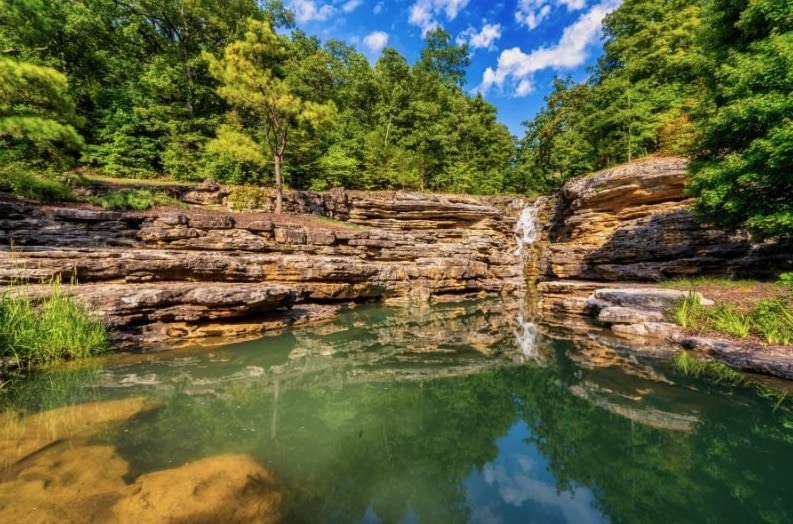
I’ll be honest — I wasn’t sure what to expect from the Ozarks. But the closer I got to Chateau on the Lake, the home for this year’s Plein Air Convention, the more the magic of the place revealed itself. Spring-fed, crystal-clear rivers and streams. Cascading waterfalls. Dramatic limestone and dolomite bluffs. Soft, hazy morning mist. Dappled, layered light filtering through dense canopy.
And the enchantment only grew as we visited each new paint-out spot over the course of the week and I got to see all of that light, water, and layered green through the eyes of hundreds of plein air painters.
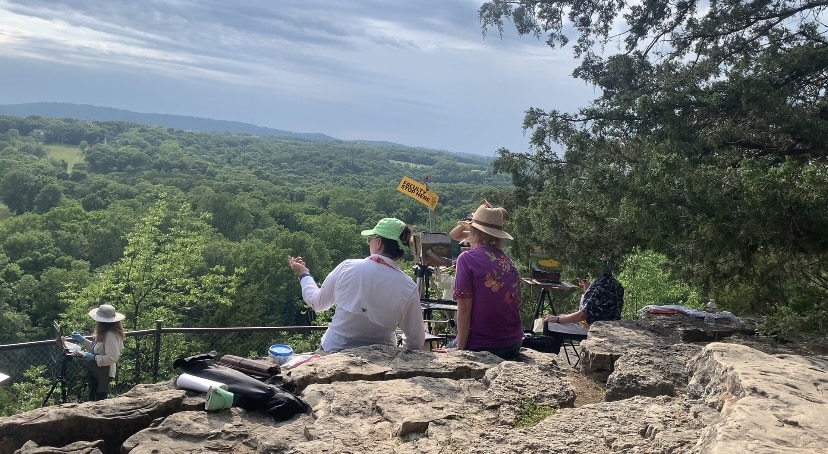
Paint-out at College of the Ozarks (Photo by Brenna Kane)
As editor-in-chief of PleinAir Magazine — the convention’s sponsor — I spent the week introducing faculty demos, meeting attendees, and wandering the paint-out locations as artists and instructors set up side by side, sharing advice and the beautiful scenery. What struck me most, as it always does, was the generosity of the faculty — the way they opened up their processes and shared hard-won knowledge. If you weren’t there, here’s a taste of what you missed.
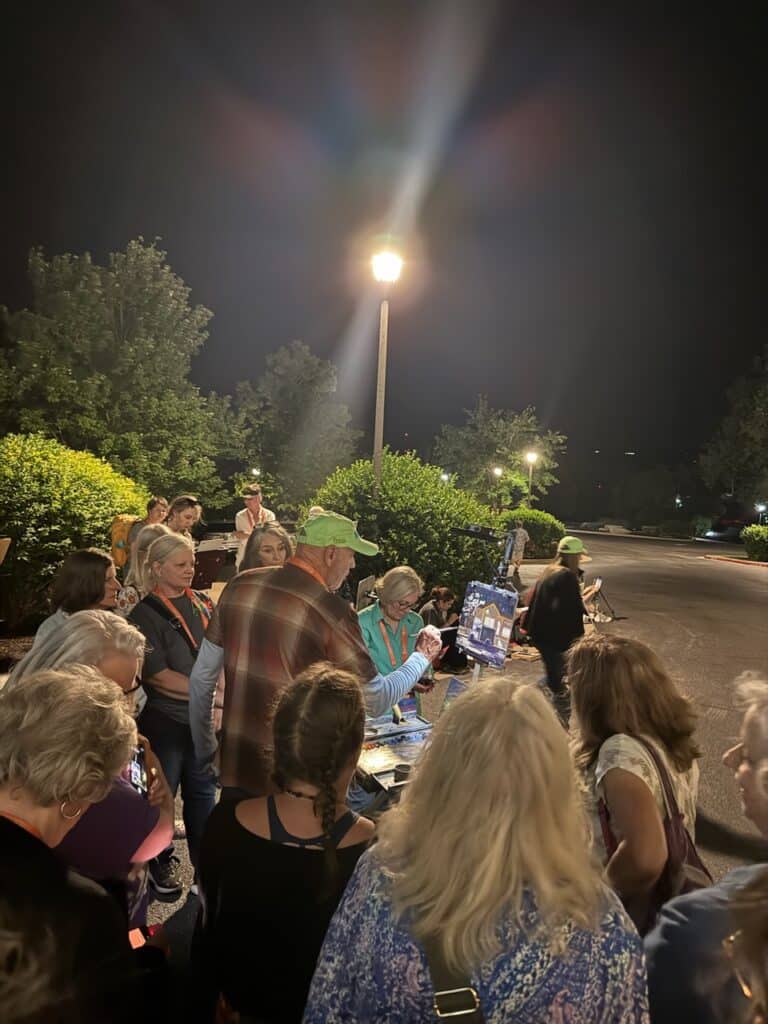
Carl Bretzke gives a nocturne painting demonstration
The message that came through loud and clear from the very first demo: get out of your own way.
Jed Dorsey put it plainly: “Courageous brushstrokes require taking risks. Safe little brushstrokes are timid.” He quoted Matisse — “Creativity takes courage” — and the room felt it. Daniel J. Keys echoed the sentiment from a different angle: “As painters, we have to get away from thinking there’s some trick we just haven’t learned yet that’s going to make a difference. Great painters don’t know anything we don’t know. They’re just more skilled in the fundamentals — and that comes from study and practice.”
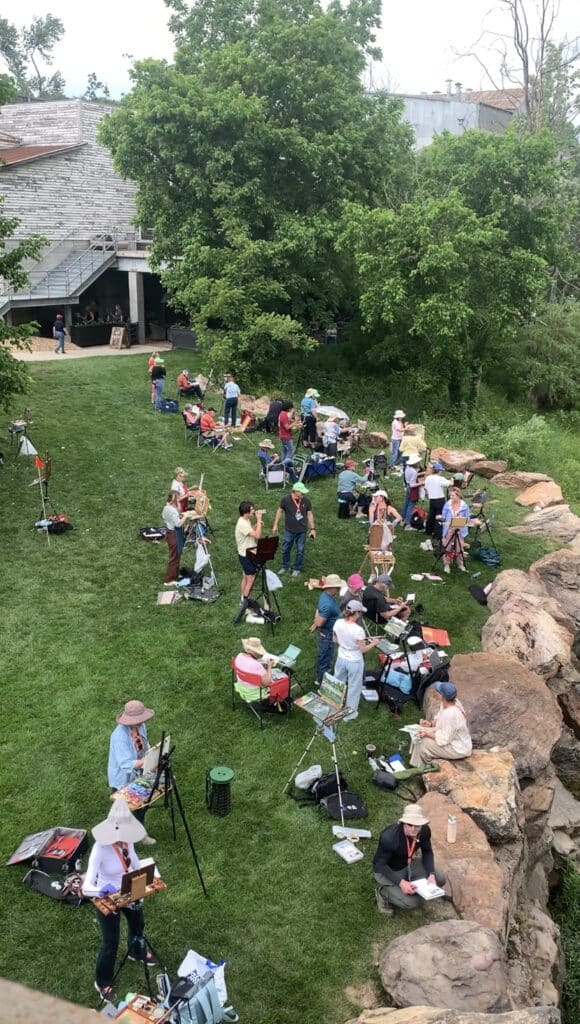
Paint-out at Finley Farms (Photo by Brenna Kane)
Composition and design got plenty of attention too. Jeremy Sams offered this gem: “Anytime you have an intersection of horizontal and vertical, it’s a magnet to your eye. I don’t want any lines going to my corners.” Justin Donaldson pushed painters to interrogate every mark: “When I put a shape down, I want to give it direction and movement. The question I like to ask is, ‘Does this shape know what it’s doing?’” Nathan Fowkes kept it beautifully simple: “I identify the quality that made me want to paint the scene in the first place — the light, a spectacular tree, whatever. Then every brushstroke needs to be in service of capturing that quality.”
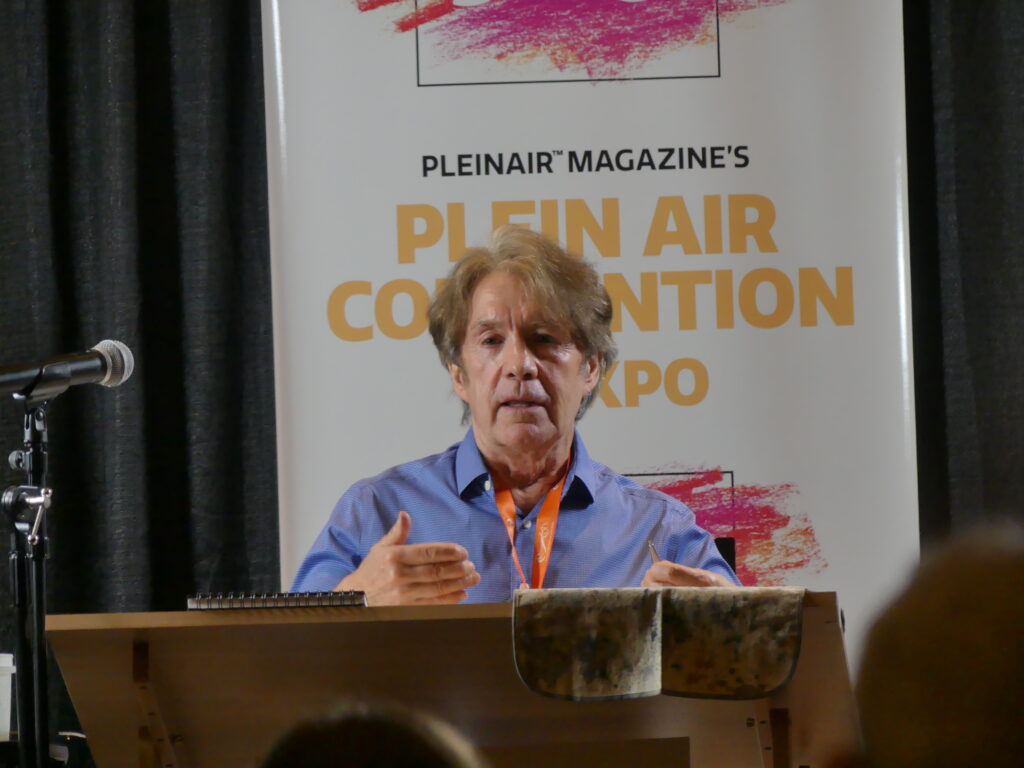
Thomas W. Schaller
The watercolor contingent was well represented. Thomas W. Schaller reminded painters to embrace the medium’s physics: “Generally in life, gravity is not my friend. But in watercolor, it’s very helpful.” And Brienne Brown brought the room back to basics: “We need to be comfortable with timing and paint consistency — how dry is the paper, how much water is in the paint, and how do these things affect what you can achieve.”
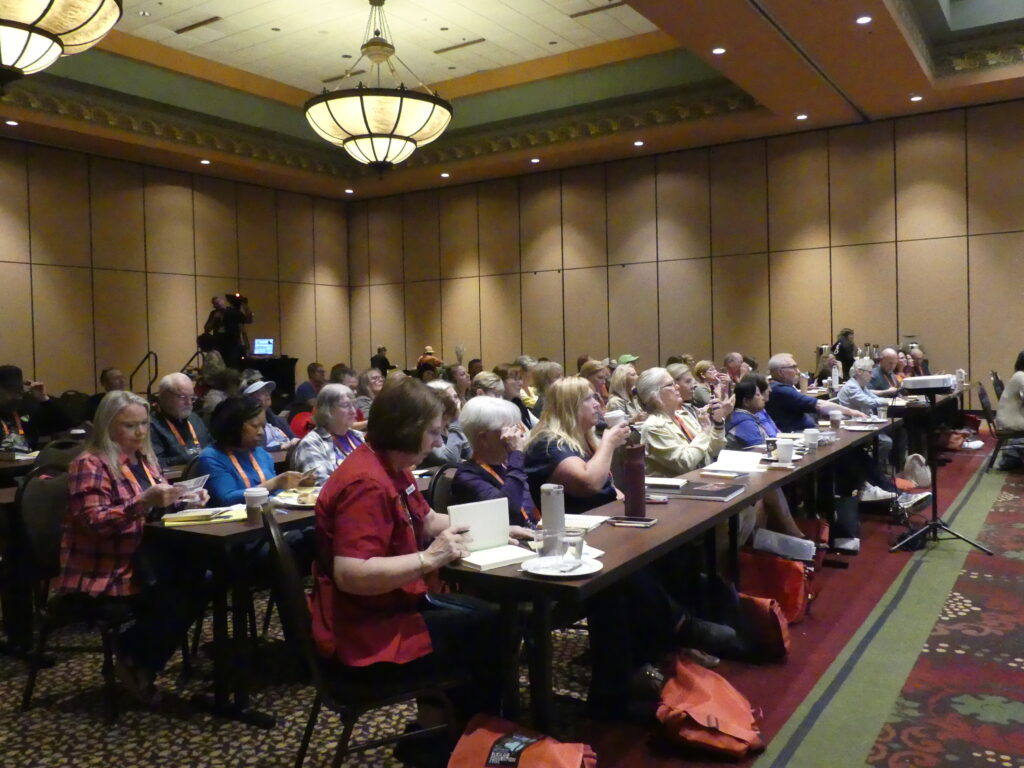
Plein Air Convention attendees
And then there was Lon Brauer, who may have delivered the most quotable line of the whole convention: “Painting is a magic trick. We’re putting marks on a two-dimensional surface. It’s not really water or a mill — it’s magic.”
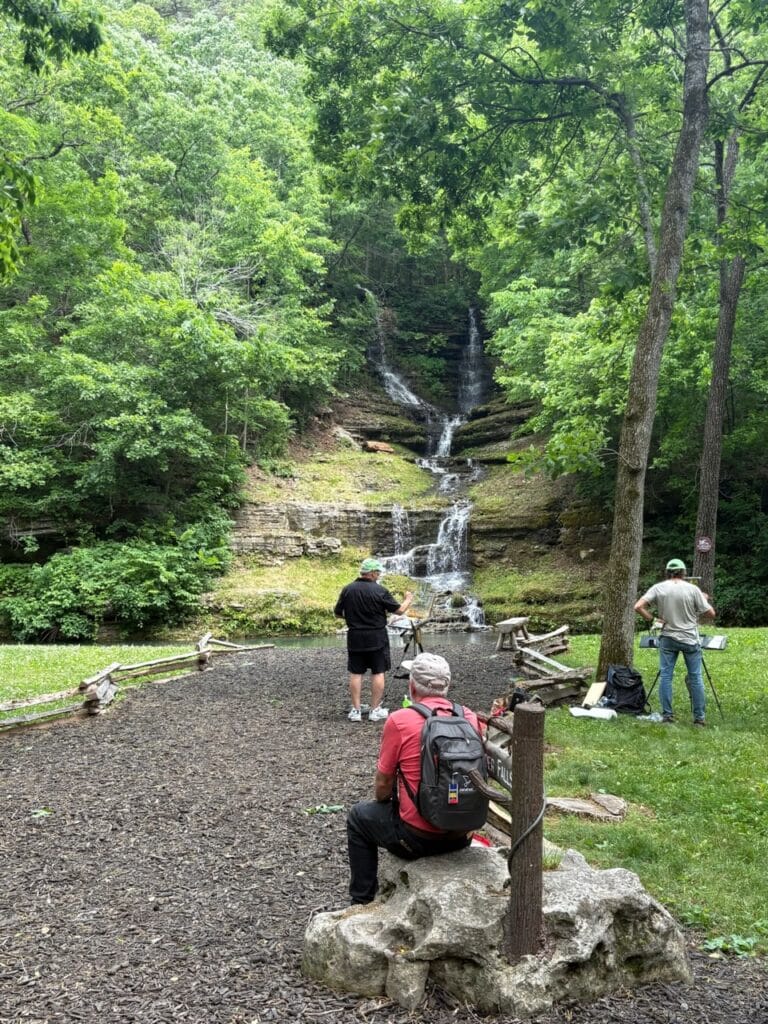
Paint-out at Dogwood Canyon
That sense of wonder — shared openly, freely, among hundreds of painters gathered in the hills of the Ozarks — is what makes the Plein Air Convention unlike anything else on the calendar.
And next year, it gets even bigger.
The 2027 Plein Air Convention heads to Zion and Bryce Canyon — two of the most jaw-dropping, color-saturated, compositionally mind-bending landscapes on the planet. Towering sandstone cliffs. Hoodoos at golden hour. Light that painters have been dreaming about for a lifetime. If the Ozarks filled your sketchbook, Zion and Bryce will fill your soul.
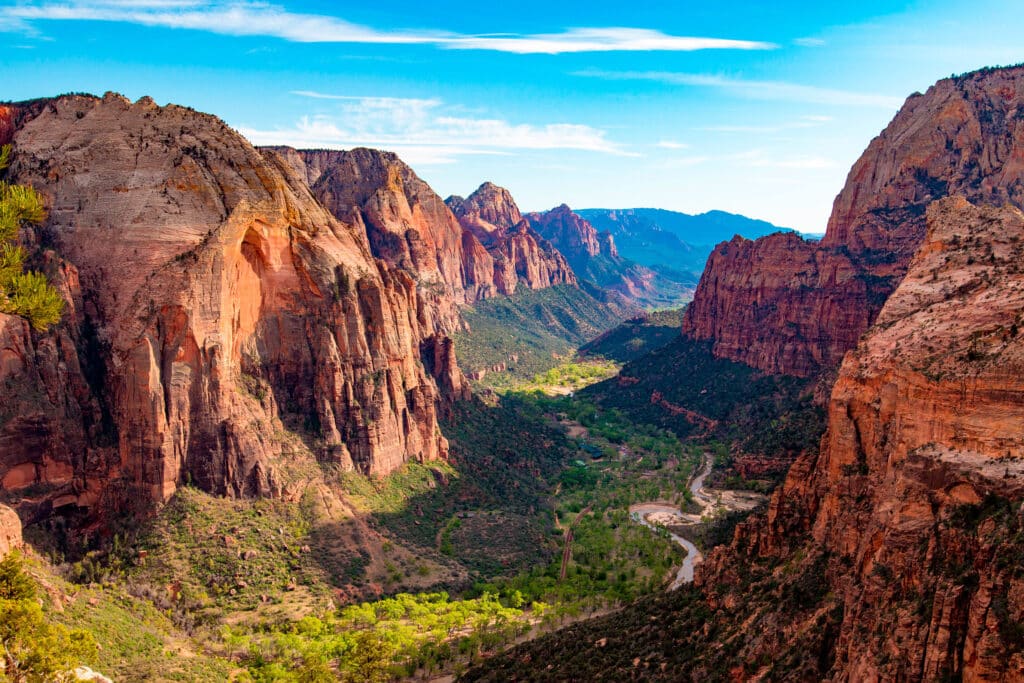
Start planning now. This is one you will not want to miss. Register and get details at pleinairconvention.com.