
I’m traveling home from the Plein Air Convention today (look for highlights later this week!), so I’ve pulled this story by Daniel Coves from the archives. Enjoy! — Kelly Kane, InsideART editor
By Daniel Coves
Although I am a painter, the concepts I present here belong to the Russian director Andrei Tarkovski. In his book, “Sculpting in Time,” Tarkovsky describes how his thinking about art evolved throughout his career as a filmmaker. In the following I have summarized several of the insightful concepts from this book that seem to me true and important.
There are films that until a few years ago were seen as great moments of cinema and that now, suddenly and unexpectedly, seem inadequate, clumsy, childish. Why? I wonder if most of the directors who make films like these approach their work as an act of vital importance to themselves, as a moral endeavor. Yet there is virtue in wanting to keep up with the times; it’s not possible or desirable to be original only through originality.
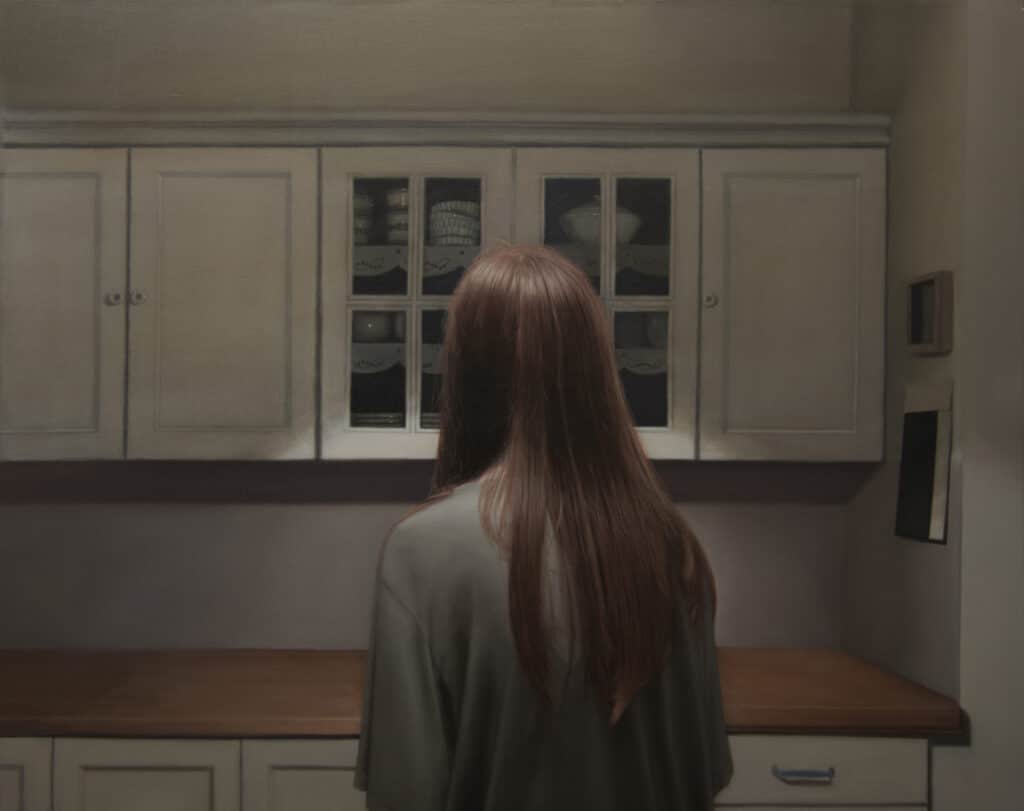
Back Steier. 80x100cm. Oil on linen. 2015
It would be false to say that an artist “seeks” his subject. One’s true subject matures in him like a fruit, like a birth. The artist begins where his or her individual perception and systems of thought meets the real world. In art there can be no documentary authenticity or objectivity. Objectivity presupposes an author; therefore it is subjective by nature.
The aim of any art that does not want to be thoughtlessly consumed and tossed aside is to engage with meaningful questions of life and human existence. This one can only do honestly, through a brave and authentic engagement with the medium and with the world we live in.
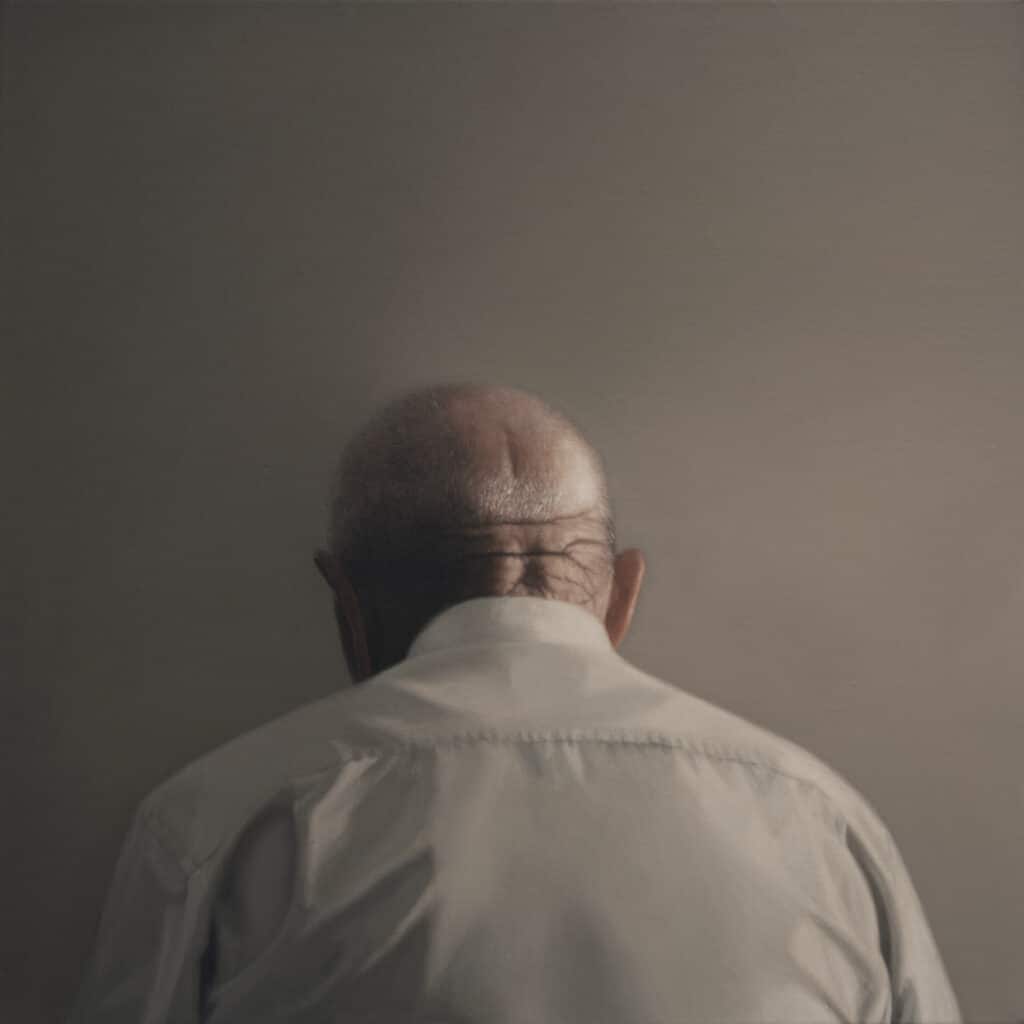
Daniel Coves, Back Portrait no.10. 60x60cm. Oil on linen. 2015
In science, human knowledge follows the steps of an endless spiral staircase; always new knowledges arrives to replace the old. Knowledge and artistic discovery merge and a new and unique image of the world is born. This process has neither beginning nor end, like some infinite system of interiorly perfect spheres, closed in themselves. Spheres may complement or contradict each other, but in no case can one substitute for another.
The concept of vanguardism, a “leading edge” in art, is practically meaningless, because accepting it means accepting the notion of “progress” in art. But who are we to say that one artistic approach is more “advanced” than another?
The artist has only one possibility: present to the public, honestly and openly, his or her individual struggle with the material. The most difficult task, the most exhausting, is of a purely moral nature: extreme honesty and sincerity are demanded, and this presupposes a sincerity and responsibility towards the spectator.
Of course, all art is also artificial. It only symbolizes a truth. But artifice based on poor knowledge or a lack of professionalism is very different from conscious stylization. Stylistic radicalism fails its mission when it does not apply itself to the demands of a conscious system of concepts or images, but only to an excessively forced effort and the need to achieve an effect at any price. The desire to be seen as a remarkably creative artist is a symptom of provincialism.
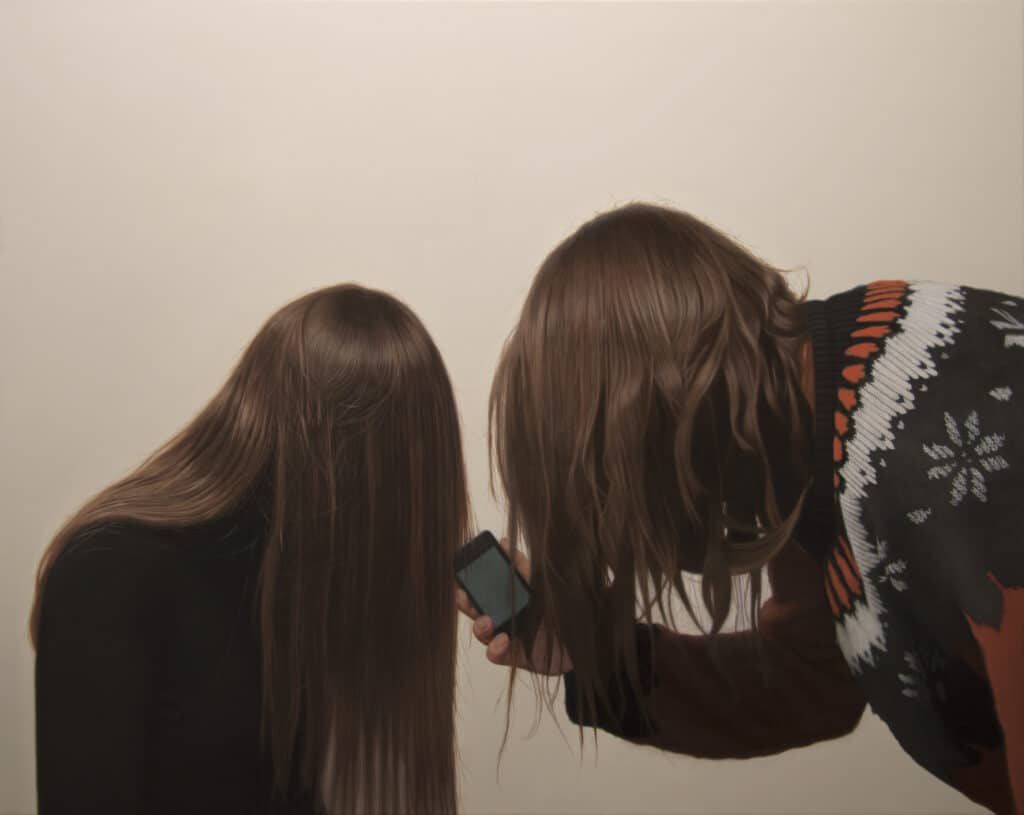
Daniel Coves, Steier no.4. 80X100cm. Oil on linen. 2016
Artists driven by a strong and authentic need to express inner truths will invent their own stylistic approach through their personal confrontation with the material.
Modern man tends to reject sacrifice, even though it is the essential prerequisite for achieving true individuality. It seems that a person’s actions and their destiny are inextricably intertwined. In a strict sense, humanity undoubtedly depends on actions. But as we have been educated as if nothing depends on any of us, one comes to accept the terrible feeling of not participating at all in one’s own destiny.
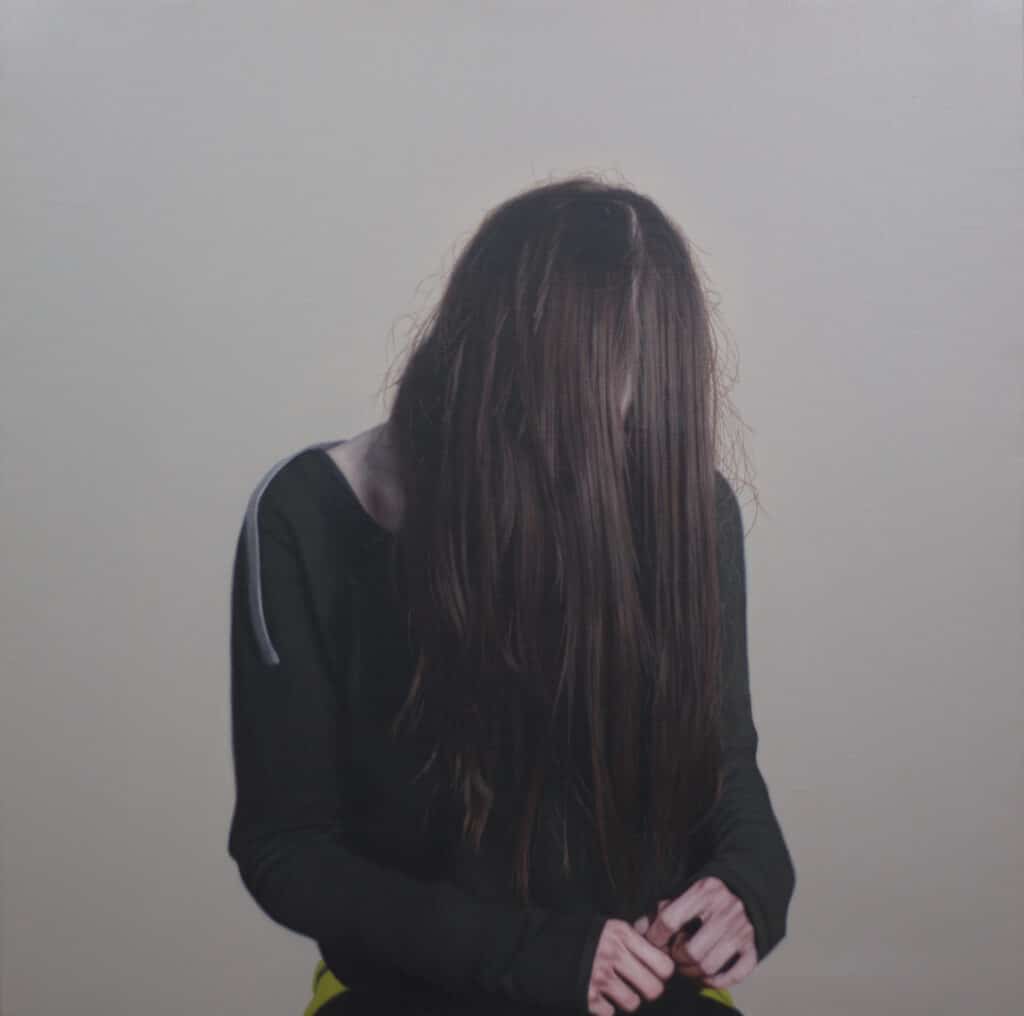
The Seamstress. Oil on linen. 60x60cm. 2016
The really tragic part of all this is that we do not know how to be truly free: We demand a freedom that is detrimental to others, seeing in others’ assertions of individuality a diminution of our personal rights and freedoms. But this is no freedom. Freedom means learning not to demand anything from life or from other, only from ourselves.
– Daniel Coves, edited by Christopher Volpe
Daniel Coves was born in Spain and currently works and lives between Madrid and Berlin. Drawing from the influence of cinema, his meticulous figurative paintings capture moments suspended in time. His work is exhibited in Spain, Portugal, France, Germany, United Kingdom and the United States, where he’s represented by Gallery Arcadia Contemporary.