Gouache may seem like a trendy rediscovery, but it’s actually one of the oldest forms of water-based paint — and it has a long, global history. Its roots can be traced back to ancient Egypt, where artists used a mixture of natural pigments and gum arabic to create opaque images on papyrus. A similar approach was used in Persian miniatures and medieval European illuminated manuscripts, where rich, opaque colors were prized for their brilliance and visibility on vellum.
The term gouache itself comes from the Italian word guazzo, meaning “mud” or “water paint.” In the 16th century, guazzo referred to a technique in which an oil painting was finished with a water-based layer, but the modern meaning — a water-soluble paint made with opaque pigments — became widely adopted in 18th-century France.
By the 18th and 19th centuries, gouache was being used by professional artists and illustrators across Europe. It was a favorite of French academic painters for preparatory studies and was embraced by artists like François Boucher and later by the Impressionists and Post-Impressionists for its portability and directness. In the 20th century, gouache became especially popular among commercial artists, illustrators, and graphic designers because of its bright, flat color and ease of reproduction. It featured prominently in the advertising art of the mid-century and was the go-to medium for poster design, fashion illustration, and animation.
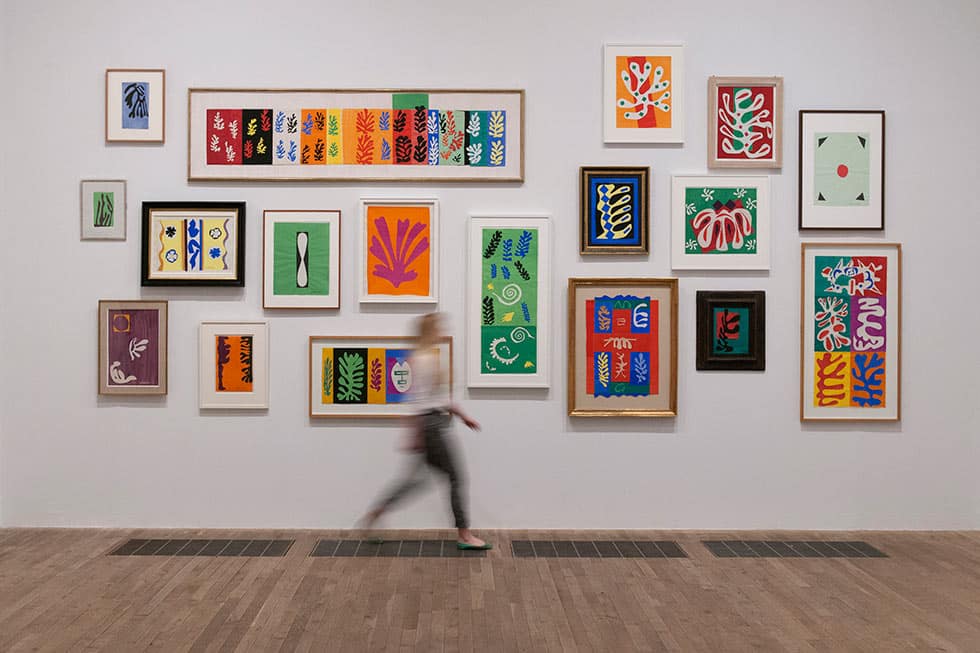
Henri Matisse: The Cut-Outs. Tate Modern. 2014. Installation view at Tate Modern. Tate Photography. With Composition (The Velvets) 1947, The Propeller 1945, White Alga on Orange and Red Background 1947, Composition with Red Cross 1947, The Eskimo 1947, Amphitrite 1947, and a selection of other works.
Notably, modernist masters like Henri Matisse used gouache in innovative ways. His famous “cut-outs,” created later in life when he was confined to bed, were made with sheets of gouache-painted paper. These works demonstrate gouache’s bold potential as a tool for abstraction and design.
Today, gouache continues to evolve, appreciated by plein air painters, urban sketchers, illustrators, and fine artists alike. Advances in formulation — including the rise of acrylic gouache and re-wettable designer brands — have expanded its versatility. Whether used for traditional landscapes, experimental mixed media, or vibrant sketchbook work, gouache offers a unique blend of control, color, and creative possibility rooted in centuries of artistic tradition.
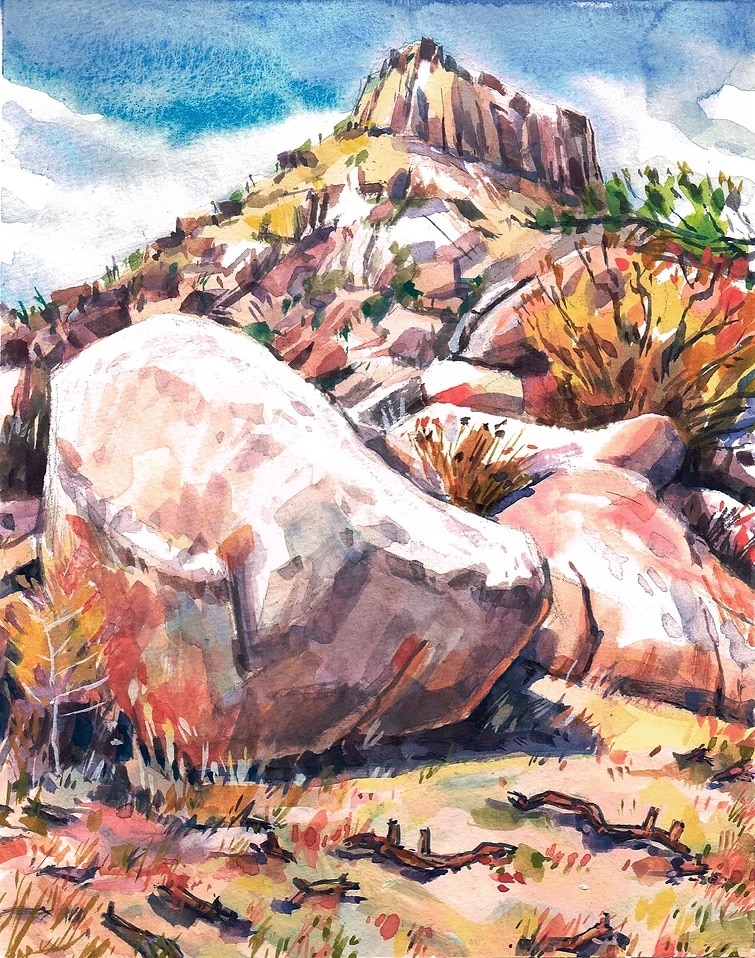
“Pipes Canyon Boulders and Branches” (watercolor and gouache, 12 x 8 in.) by Gary Geraths
WHY GOUACHE BELONGS IN EVERY PAINTER’S KIT
1. It Can Act Like Watercolor — or Not.
A member of the watermedia family, gouache can be thinned with water to create transparent washes, similar to watercolor. And the good news is, if you already have materials for watercolor painting, you can use the same brushes without fear of ruining them, and the same paper or any other surface suitable for watercolor. You can even mix gouache with your watercolor paints and use them together, as artist Donna Zagotta does.
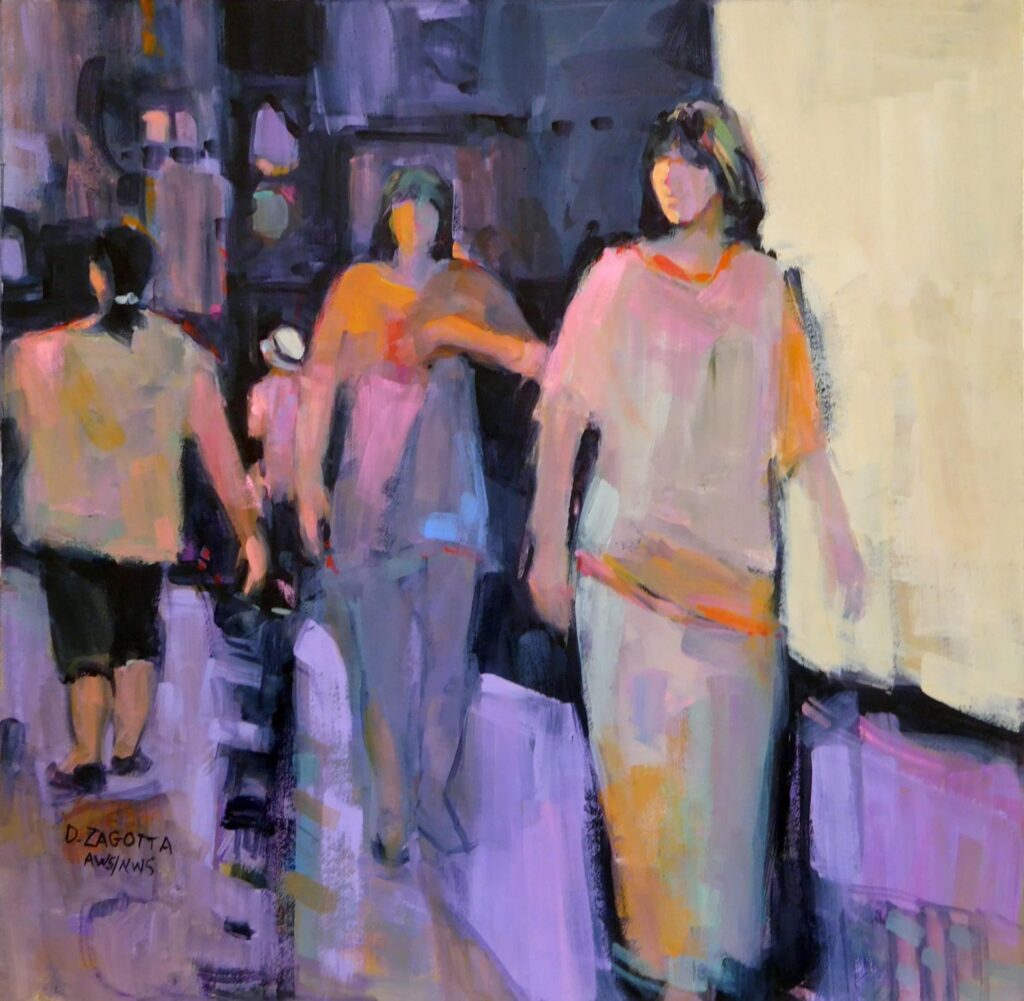
“Susie’s World” (gouache) by Donna Zagotta
So are gouache and watercolor the same, then? No. While you can use the same paper and brushes, gouache will handle differently from watercolor. That’s because on a structural level, it’s manufactured differently.
Compared to watercolors, gouache has larger particles of pigment, and its particles are packed more tightly together. Large, tightly packed particles leave less space for light to slip through, and that’s what makes gouache opaque. Some manufacturers include a white chalk additive to further reduce transparency.
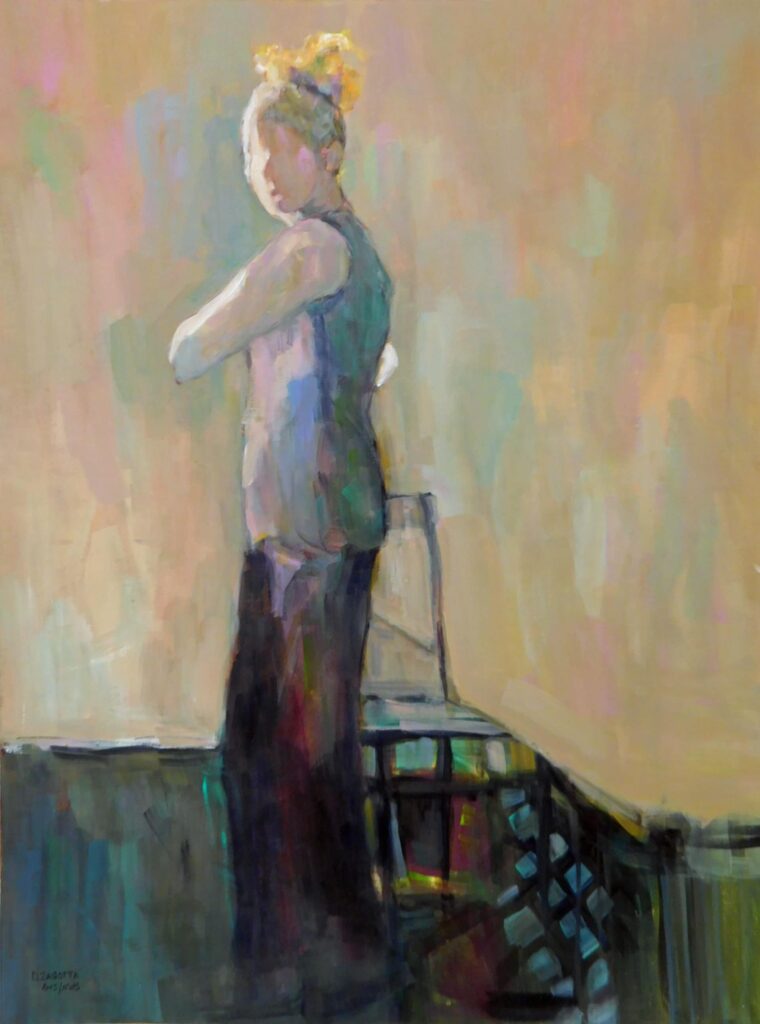
“Yesterday’s Girl” (gouache, 22 x 30 in.) by Donna Zagotta
This quality makes gouache great for painters who want opaque, bold effects in their work, but — when used straight from the tube — makes it terrible for creating those glowing effects so sought after by transparent watercolorists.
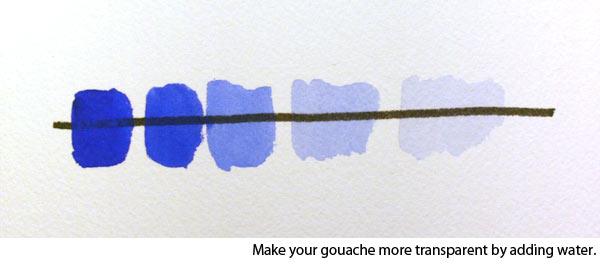
Fortunately, you can make almost any pigment transparent. With watercolor and gouache, you simply add more water. This creates more space between those big pigment particles and allows light to bounce back through. Just make sure to allow a layer to dry completely before going back in for a second glaze.
2. It Offers the Look of Oils Without the Fuss.
You can achieve rich, painterly textures without the long dry times or toxic solvents. Thanks to its opacity, gouache allows for painting light over dark, rich layering, and texture-building.
Bold Brushstrokes
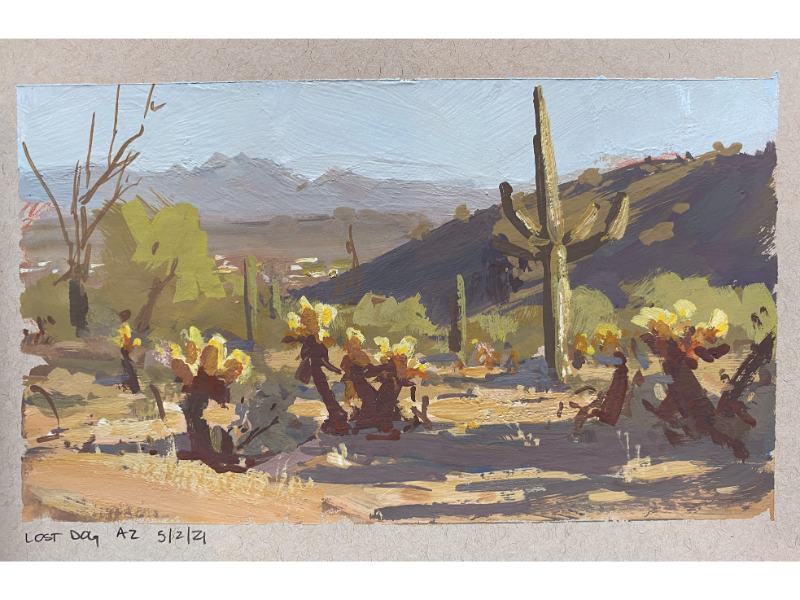
For Judd Mercer, it’s this opportunity for sculptural brushwork that lured him away from other mediums. “My style is the opposite of delicate. I prefer deliberate strokes without a lot of blending. Carving out a negative shape with a rich dark, man, that’s the stuff. I like it when brushstrokes feel like sculpting.”
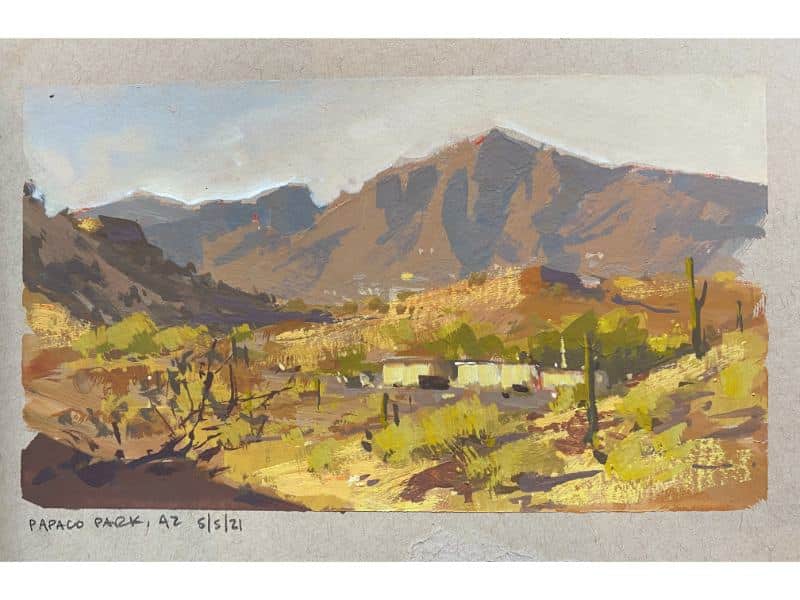
“Plein Air Study, Arizona” (gouache, 4 x 7 in.) by Judd Mercer
Fast-Drying and Forgiving
California artist Gary Geraths refers to his technique of using gouache as “throwing it around.” In part that’s because gouache can be used quickly on location, and in part because the paints are fast-drying and forgiving.
For someone like Geraths, who is passionate about outdoor sports and painting, gouache is an ideal medium. He can take a sketchpad, brushes, and a pan loaded with opaque watercolor whenever he is mountaineering and rock climbing in Europe, Canada, Alaska, or the western United States. Because gouache is opaque, it doesn’t require the careful buildup of transparent colors that watercolor needs, nor does it obligate an artist to haul solvents as oil does.
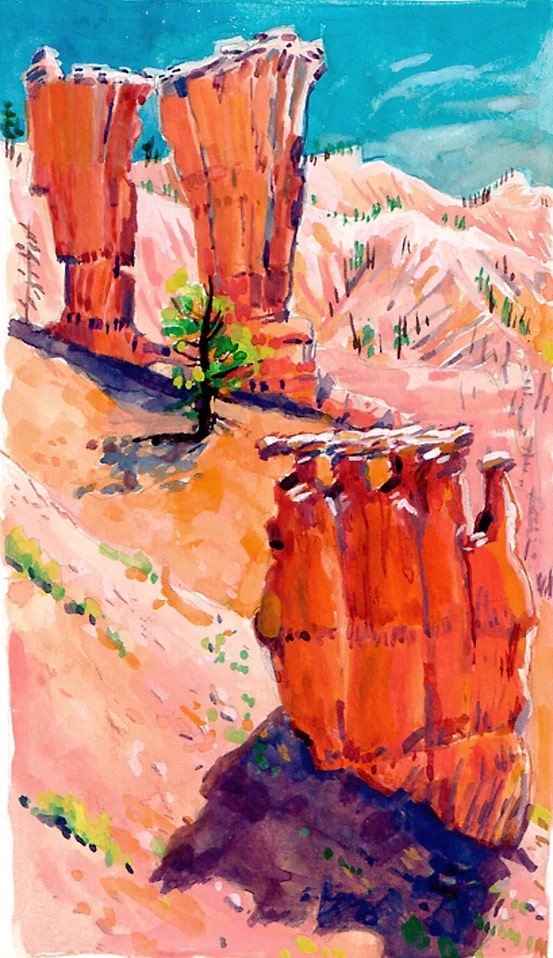
“Bryce Cyn. Fairyland Trail Spires” (watercolor and gouache, 12 x 6 in.) by Gary Geraths
Special Announcement

Learn How Master Artists Paint with Gouache
August 20-21, 2026: Join leading artists for two immersive days of live demonstrations and instruction that reveal how gouache really works: from mixing and layering to finishing confident paintings. Visit GouacheLive.com now to learn more and save your seat.