
The best way to learn how to paint is to paint in sustained, or at least frequent bursts – and, crucially, not to put too much psychological weight on the results.
When you’re going for quantity over quality, sheer volume over results, quality actually goes up. That’s the paradox. Instead of trying (and inevitably failing!) to make a “perfect” painting, work longer and smarter and you’ll get closer and closer to making a painting you like (or can at least live with).
To ramp up quantity (and thus improve quality) try the following:
Set a goal of making, say, three of the same kind of paintings in rapid succession, or painting every day for a set number of days in a row (even if it’s only two).
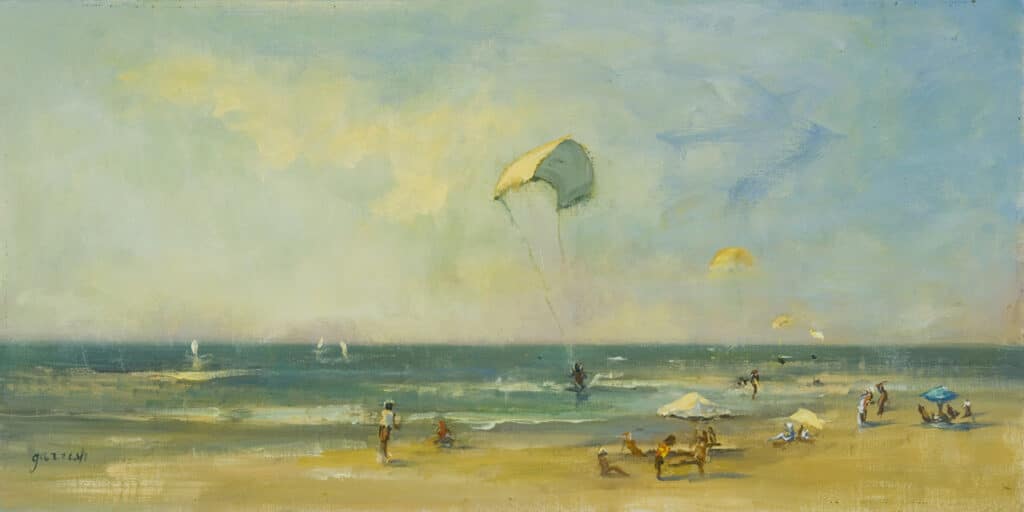
Mary Garrish, Fun in the Sun, oil, 8×16 inches
Developing new skills involves the creation of new thought-patterns in the brain. The more sustained experience you can get trying out what you’ve learned, the more new pathways in the brain you make. Read, watch, look, and think all you can, and actually move paint (or charcoal, or pastels) around on some kind of consistent basis. Again, even if it’s just two days a week, as long as it’s two in a row.
Seems obvious, but how many of us actually paint as much as we say we want to? The problem is we judge our work not by how well we’ve put learning into practice but, mistakenly, by how far we think we still have to go.
Education is key – you must learn the technical skills, and learning by doing is the only way to discover what works for you and what doesn’t. You will get better much faster by “making more pots” – by working at what you do often during sustained periods – applying to the next painting what you learned in the last. Working in series – three flower paintings in a row, for example, changing things up each time – fosters the essential skill of treating each painting as a learning process rather than an ultimatum on whether you’re “good enough.”
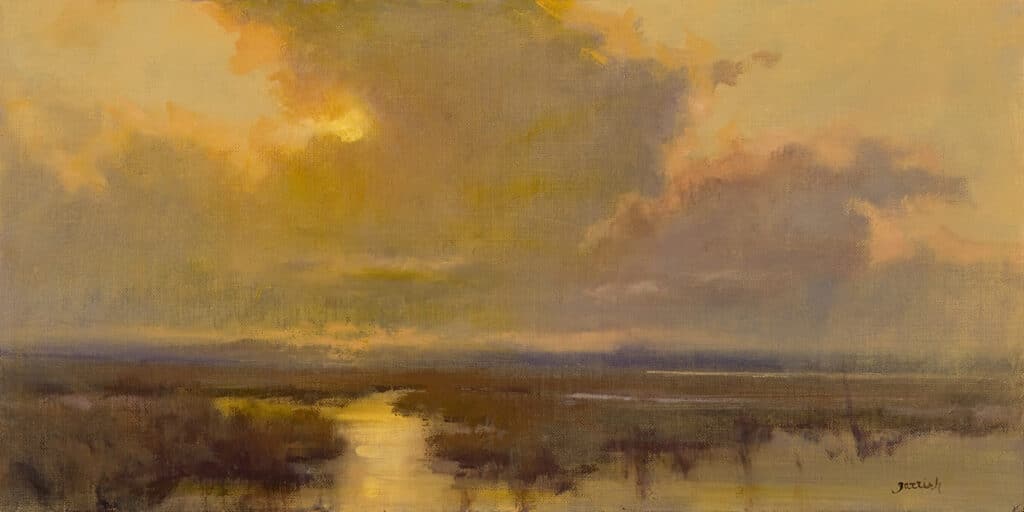
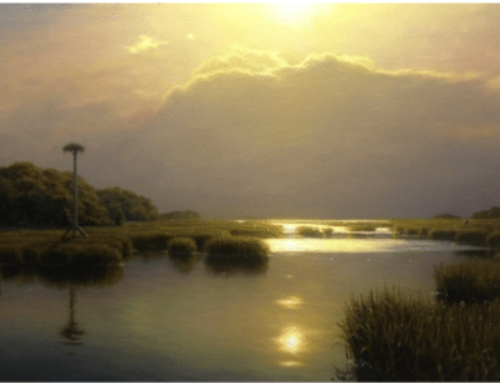
Mary Garrish, Twilight Reflection, 12×24 inches
The goal is to synthesize what you have learned through doing it. But you have to do it! (Lots.)
3 tips and tricks to try:
1. Alternate your attention from what you’re trying to paint to what the paint is doing on the canvas. Try harder to make a good painting that works than a good rendering – most beginners don’t do this enough, because they’re too busy trying to make the painting look like something. This is about putting into practice the principles of good design.
2. Stay mentally present with what happens when you actually do it – replace anxiety about how what you are doing is falling short of your hopes or expectations with observation of what the paint is doing. You will never stop learning about how your chosen medium behaves, and that’s a good thing. Instead of asking why something isn’t happening the way you want or expected it to, soak up what is happening and apply it:
3. Slow your mind down and process what is or isn’t working and why, and if you get stuck, work on a different part of the painting. You can often take a painting that seems to have gone off the rails and totally turn it around just by working on a different area than the one you’ve been stuck on.
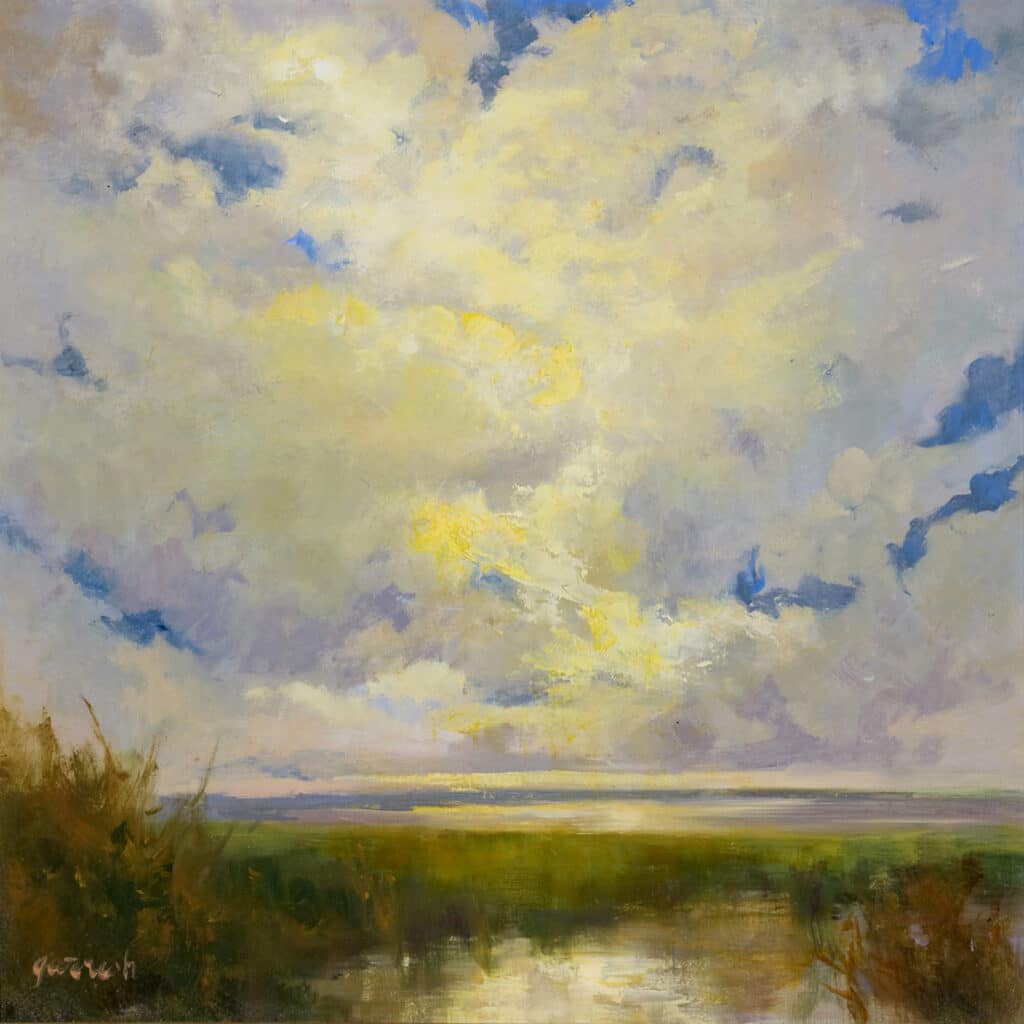
Mary Garrish, Diffused Light, 12×12 inches
Some of this may seem self-evident, but it’s nice to have it broken down like this, so you can reflect on and fine tune your learning process.
Design is one of the more confusing aspects of painting, and learning and practicing it is one of the surest ways to improve your work quickly and dramatically. Check out Mary Garrish’s video Six Elements of Design for a sound tutorial. (This post features a number of Mary Garrish’s expertly composed paintings.)
Classic Landscapes by African American Artists Boost Wooster Museum
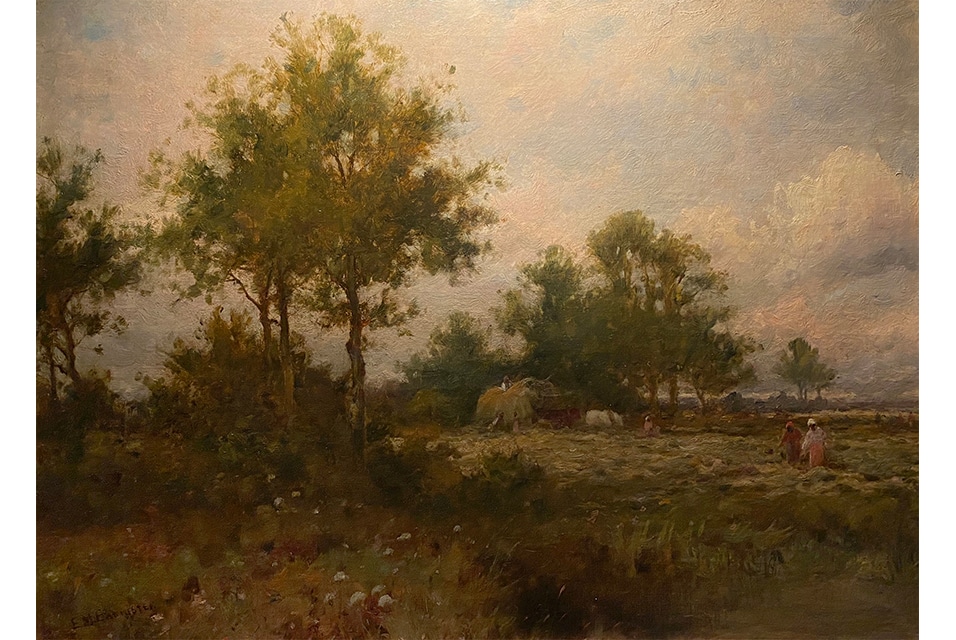
Edward Mitchell Bannister, about 1893, Hay Gatherers. Oil on canvas, 44.5 × 59.7 cm (17 1/2 × 23 1/2 in.), Museum Purchase.
The Wooster Art Museum has announced the acquisition of three paintings by artists Edward Mitchell Bannister and Charles Ethan Porter. Bannister’s The Hay Gatherers (about 1893) and Porter’s Still Life with Apples and Grapes (before 1900) and Carnations (1887) are now the earliest known paintings by African American artists in the Museum’s collection, expanding its scope in an important direction as the Museum seeks to represent a more diverse view of the history of art.
Bannister and Porter were both natives to New England and both achieved professional success and were internationally recognized for their works. Bannister’s career was characterized by success beyond what had previously been achieved by any Black artist in the United States. His work, The Hay Gatherers, is currently on view at the Museum in the exhibition Frontiers of Impressionism through June 25 and will be featured alongside Porter’s paintings following a comprehensive reimagining of the early American galleries in Spring 2024.