
Much to everyone’s surprise and unending delight, the art world learned of John Constable’s celebrated cloud studies after he died, when his daughter bequeathed them to the UK’s Victoria Albert Museum.
There are around fifty extant paintings of the sky that Constable made in Hampstead between 1821 and 1822, and it has been estimated that he produced over one hundred such studies at the time. He did them directly, en plein air, working fast. They were not for exhibition but for use in his studio landscapes. They are, however, delightful to look at in their own right, and useful to study for takeaways on technique and design.
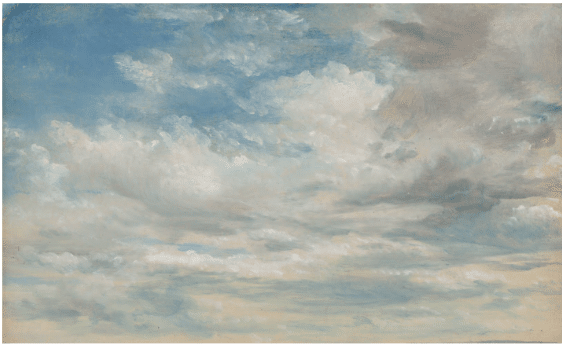
John Constable, Cloud Study, 1822
Constable’s renown as arguably Britain’s greatest landscape painter, combined with his beautiful, unfussy renderings of these sweeping cloudscapes with delicate colors, have made these studies coveted by museums and collectors the world over. There is in many of them a marvelous sense of vast open spaces within the intimate confines of a small canvas or piece of paper.
Part of the reason for that comes from the compositions and designs that he used. It’s interesting to note how in many of these studies, including the one above, Constable kept the lower fourth or so of the composition relatively blended. Besides being an atmospheric phenomenon that we see in the fairly regularly, this provides a sort of base for the depiction. This relatively solid band without big contrasts helps give weight and stability to the cloudscape. It’s an excellent strategy to keep in mind when painting skies over your own landscape paintings.
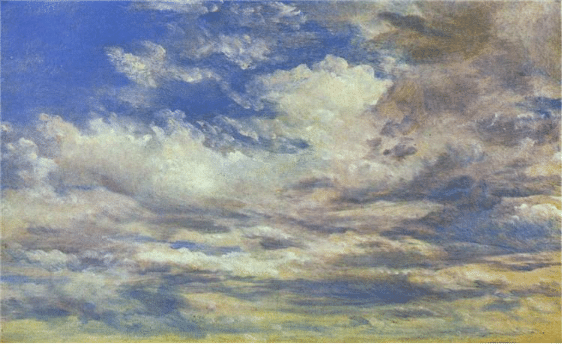
John Constable, Cloud Study, 1822

John Constable, Cloud Study, 1822

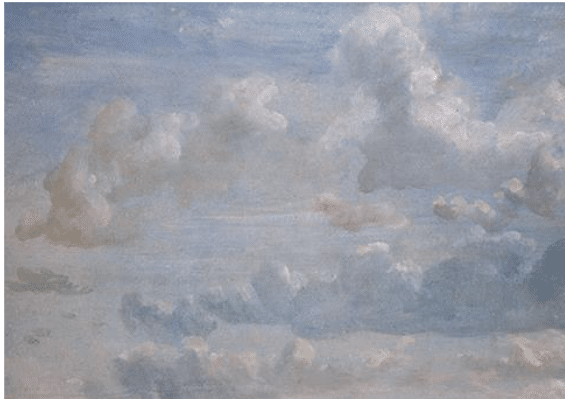
John Constable, Cloud Study, 1821-1822
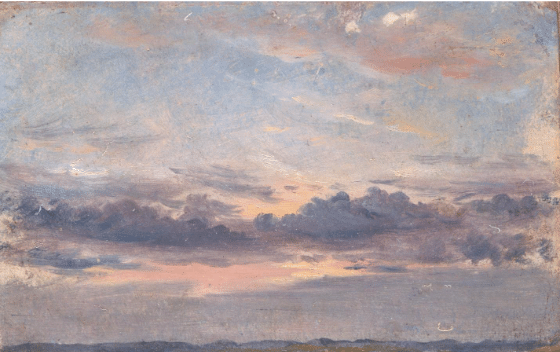
John Constable, Cloud Study, 1821-1822
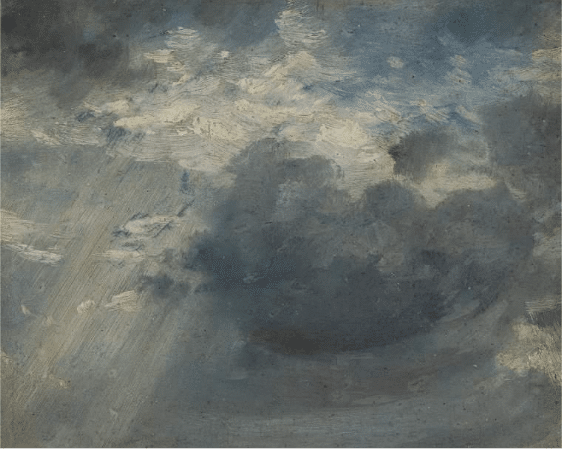
John Constable, Sky study with a shaft of sunlight, Fitzwilliam Museum
In the watercolor at the Metropolitan Museum in New York, (below), we see Constable’s trademark astute observational rendering in the service of sweeping motion, scale, and atmosphere . The museum describes it as follows:
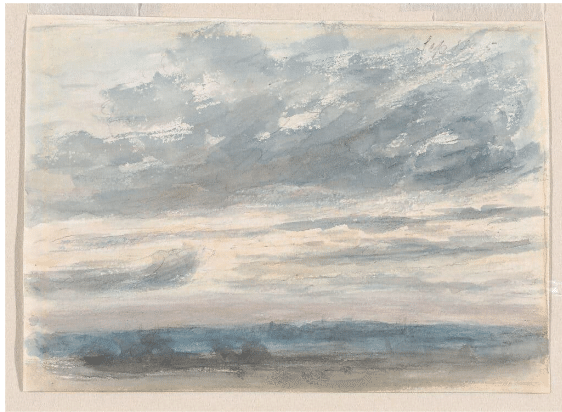
John Constable, Cloud Study, Met Museum
“On a sketchbook page worked outdoors, Constable captures a September sun sinking through clouds. The artist’s studies of England’s changeable skies are considered among his most characteristic works, part of a systematic and pioneering effort across decades to record varying weather conditions at different times of day.”
Since Constable’s time, artists have developed various methods for rendering and teaching clouds and sky. One of them is Clouds & Sky in Watercolor and Oil, a collection of cloud demos by 14 landscape artists at the top of their game.
Interesting side note: there’s a cloud study at the Tate in London with an inscription on the back in which Constable evidently clocked his time – one note says ‘11 o’clock’ and the other ‘Noon,’ indicating, says the museum, that it took him about an hour to paint.
Also, there are several books on Constable’s Cloud paintings that go deep, attempting to match Constable’s paintings with ideas and trying to establish the motives and context behind them. Look for them wherever you buy or borrow your books.


Don’t Miss: Interview with Jill Carver and Eric Rhoads
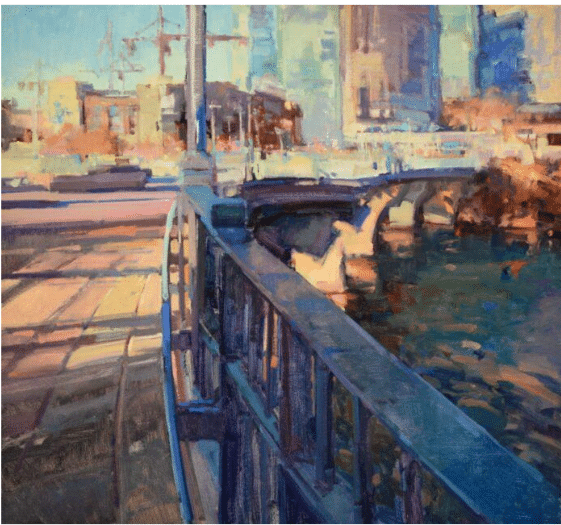
Jill Carver, “Downtown Austin,” 30 x 32 in.
“If I can stay in the ‘shape zone’ before I think too much about value and color, I can make important design decisions more easily,” says Jill Carver. “I use a permanent pen and either analyze design by shape alone with pure contour, notan, or a combo of the two – how do I choose? It depends on the questions in my head.”

From Jill Carver’s sketchbook (Instagram: @jillcarverpaintings)
Jill articulates her thought process in a way that makes complex concepts crystal clear, sparking “aha” moments. She revealed a “HUGE surprise” during this interview, so register to view the replay here now.