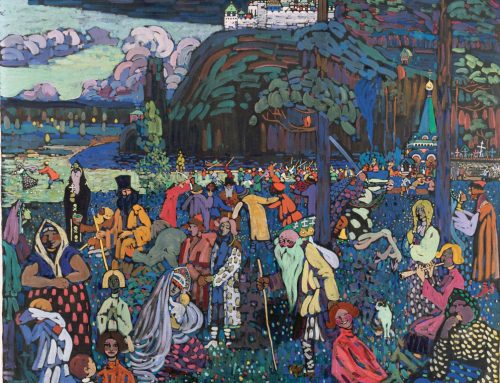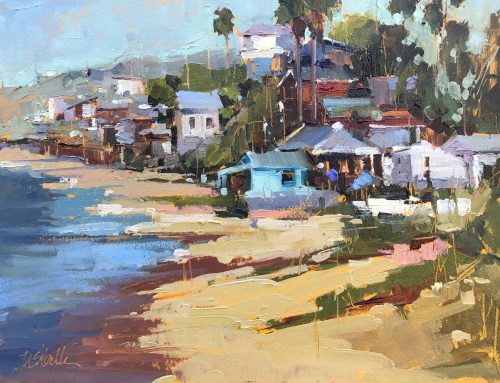
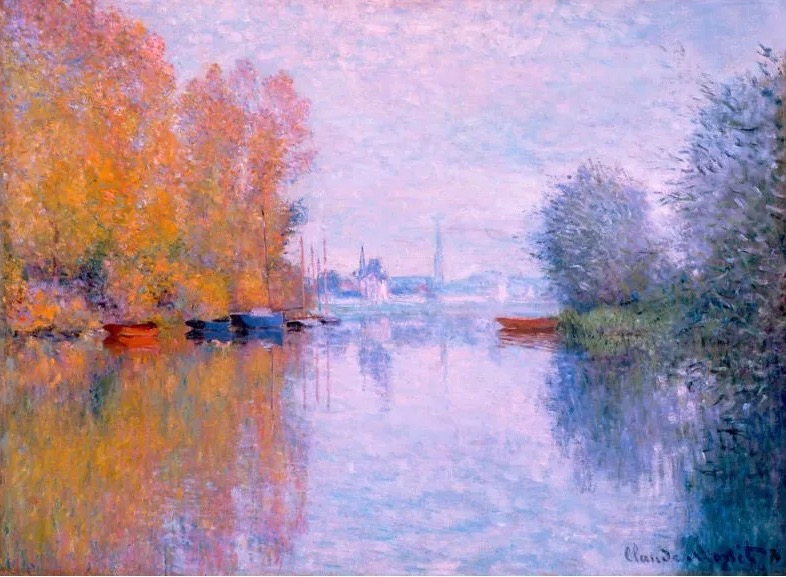
Ancient Greek philosopher Heraclitus put it simply: all is flux, nothing stays still. It’s hard to think of a season that makes his point more directly than autumn — the one stretch of the year when change isn’t subtle. Leaves that were green a month ago turn red, then brown, then fall. For centuries, painters have used that visible transformation to talk about something much bigger than foliage: the fact that nothing, including us, gets to stay the way it is.
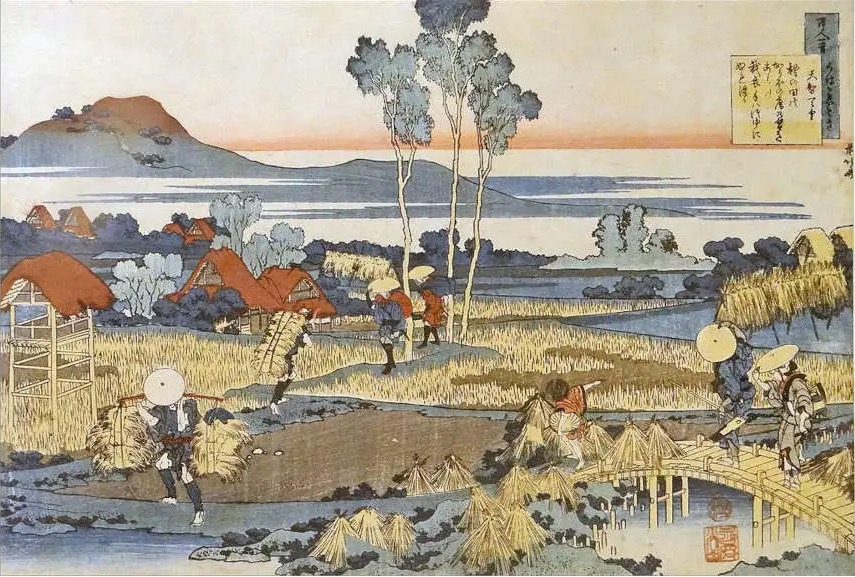
Hokusai, Peasants in Autumn, 1760-1849
Katsushika Hokusai, best known for The Great Wave off Kanagawa, painted a far quieter kind of autumn in Peasants in Autumn — a woodblock print of farmers gathering the season’s last crops, rendered in warm reds and yellows. There’s no drama here, just the practical rhythm of a harvest before winter closes in. It’s autumn as work, not metaphor, and that restraint is its own kind of statement.
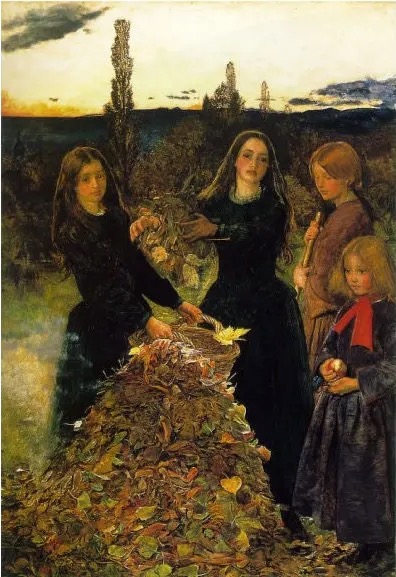
John Everett Millais, Autumn Leaves, 1855–1856
Not every artist wanted restraint. John Everett Millais, painting Autumn Leaves in the mid-1850s, insisted his real subject was religious reflection — he wanted the smoke from burning leaves to stir something like reverence in the viewer. Critic John Ruskin saw something different: he called it “the first instance of a perfectly painted twilight.” Both readings agree on the essential point. A pile of burning leaves, painted with enough conviction, can carry the weight of an entire meditation on mortality.
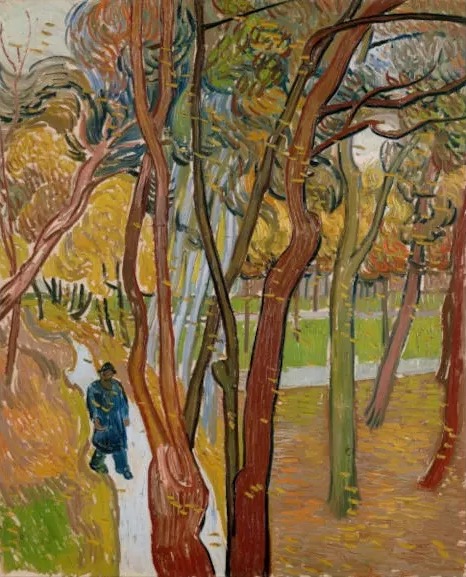
Vincent van Gogh, The garden of Saint Paul’s Hospital (‘Leaf-Fall’), 1889
Vincent van Gogh got there from the inside of a hospital garden. In 1889, while committed to the asylum at Saint-Rémy, he painted The Garden of Saint Paul’s Hospital (‘Leaf-Fall’) — leaves scattering in the wind, seen from a high vantage point he borrowed from Japanese prints and from friends Émile Bernard and Paul Gauguin. It’s one of the more quietly devastating autumn paintings in this tradition: a man watching a season end from inside an institution built to help him hold himself together.
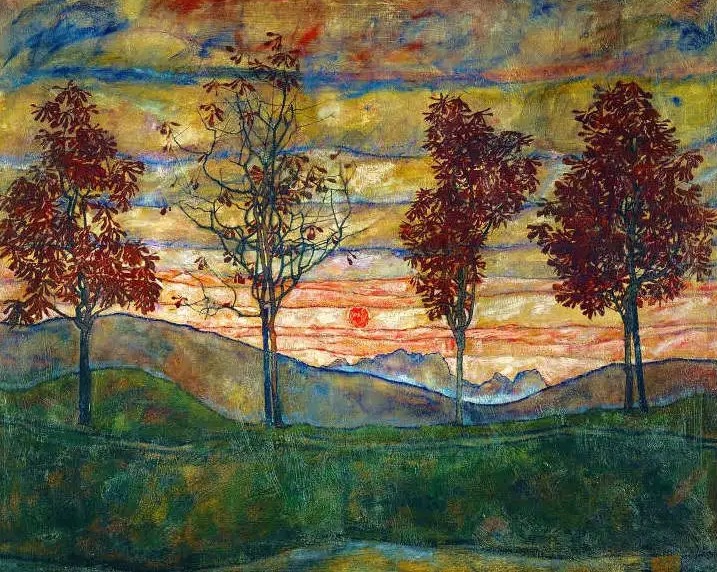
Egon Schiele, Four Trees, 1917.
By the time Egon Schiele painted Four Trees in 1917, autumn had become something closer to a mirror. His four trees stand unevenly against a setting sun, sharp contrasts of light and dark doing the emotional work his brush wouldn’t do directly. Schiele died the following year, at 28, during the influenza pandemic — which makes the painting’s quiet reckoning with endings feel less like foreshadowing and more like an artist who already understood exactly what he was painting about.
Different centuries, different countries, different techniques entirely — woodblock prints, Impressionist brushwork, Expressionist contrast. And yet every one of these painters, looking at the same turning leaves, arrived at the same unavoidable subject: that beauty and its ending are never really separable, and autumn is simply the season that refuses to let us forget it.
Happy first day of Fall!