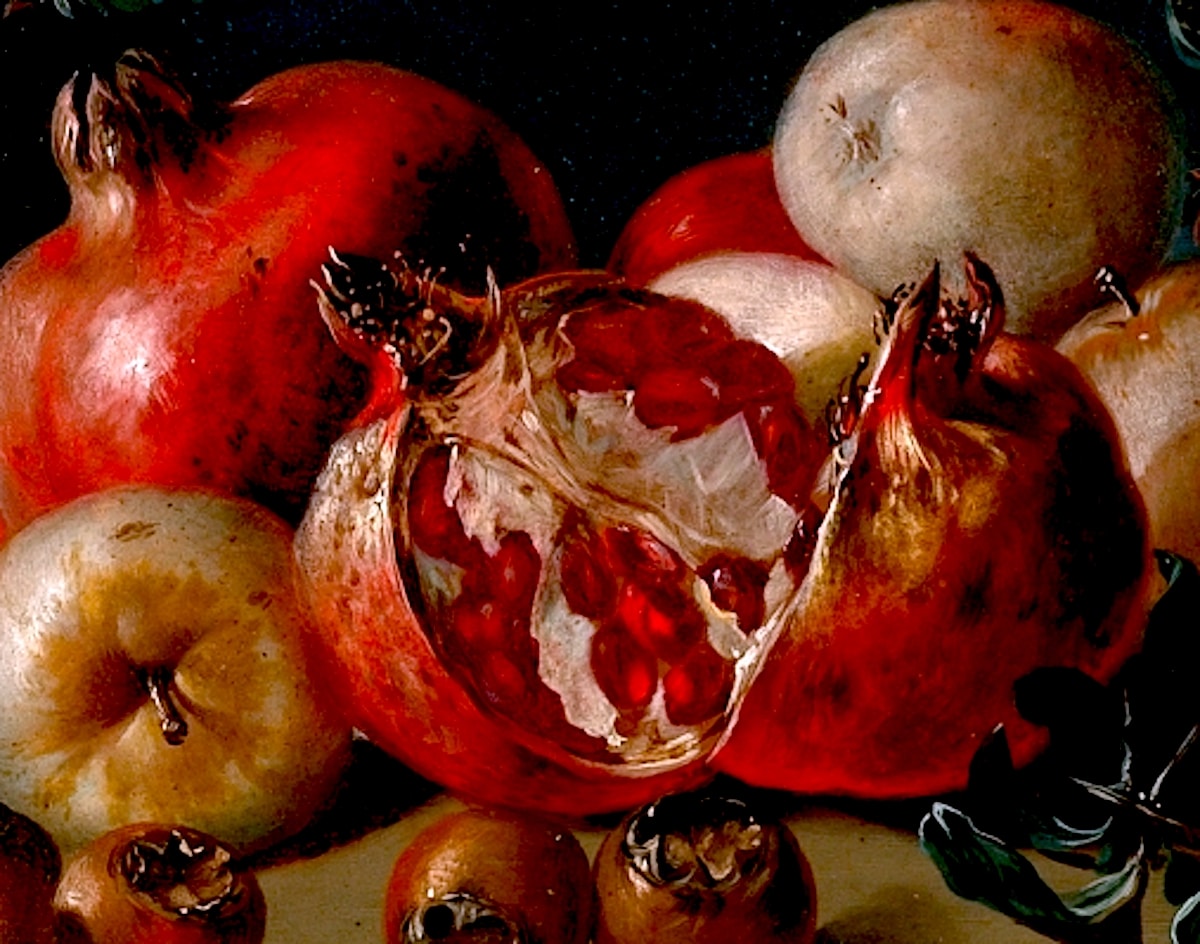
Although the pomegranate is often interpreted as a symbol of fertility, there have been many other interpretations and usages of the pomegranate throughout art history such as mythological, religious, sexual, or simply as a natural object in a still-life study, interesting in itself.
Painting, sculpture, literature, and the decorative arts have had a longstanding love affair with the pomegranate. In Roman times, the pomegranate was dedicated to Juno, goddess of marriage and fertility. An emblem of fecundity and passion, some representations of Venus have been found where she holds a pomegranate that is open.

Pomegranates, China, 18th c.
A similar meaning is at work in the Chinese custom of offering pomegranates as an engagement gift. The Chinese character for “seed” (zi) is the same as that for “son,” so the many-seeded pomegranate was long viewed as a symbol for having multiple sons who were expected to continue the family line. There’s also a whole chapter of “sacred heart” and Christian religious symbolism connected with the fruit.

Botticelli’s infant Christ holds an open pomegranate. 1400s
Why all the fuss about a fruit? Sure, outside it looks like an apple, but bust one open (peeling won’t do you much good) and you’ll find a thin, fleshy membrane and chambers, like a heart.
The milky membranes are studded and densely honeycombed with juicy, blood-red seeds resembling rubies. It’s been seen as particularly womblike, as it bulges with a multitude of seeds. It’s not just a motif; the pomegranate is charged with mystique out of the gate.
Perhaps that’s why it figures so prominently in art and myth. The classical Greek myth of persephone (or Proserpine, from the Roman Proserpina) involves the fruit. Persephone was the daughter of Demeter, the Earth Mother Goddess of agriculture and growing things (her Roman name, Ceres, gives us the word cereal). Demeter kept the world always in perpetual summer so vegetables, fruit and grain could grow in the warm sun year-round.

Bernini, The Abduction of Proserpina, Rome, 17th c.
One day daughter Persephone was out picking flowers when the ground split beneath her and the god of the underworld (Hades/Pluto) roared out of the earth in his chariot, snatched her up, and installed her as his Queen. Finding nothing but a scattering of wilting wildflowers where Persephone was playing, Demeter searched long and far for her daughter. In her sorrow she let the nourishing wheat die and the world turn cold and gray.
In one version of the story, Demeter learns what’s happened and Hades agrees to bring Persephone back. However, Persephone has fallen in love with him and found purpose in her new role as Queen of the Underworld. So before they leave, Pluto offers Persephone one last thing to eat – a ripe, blood-red pomegranate. Looking him in the eye, Persephone takes six seeds and eats them.
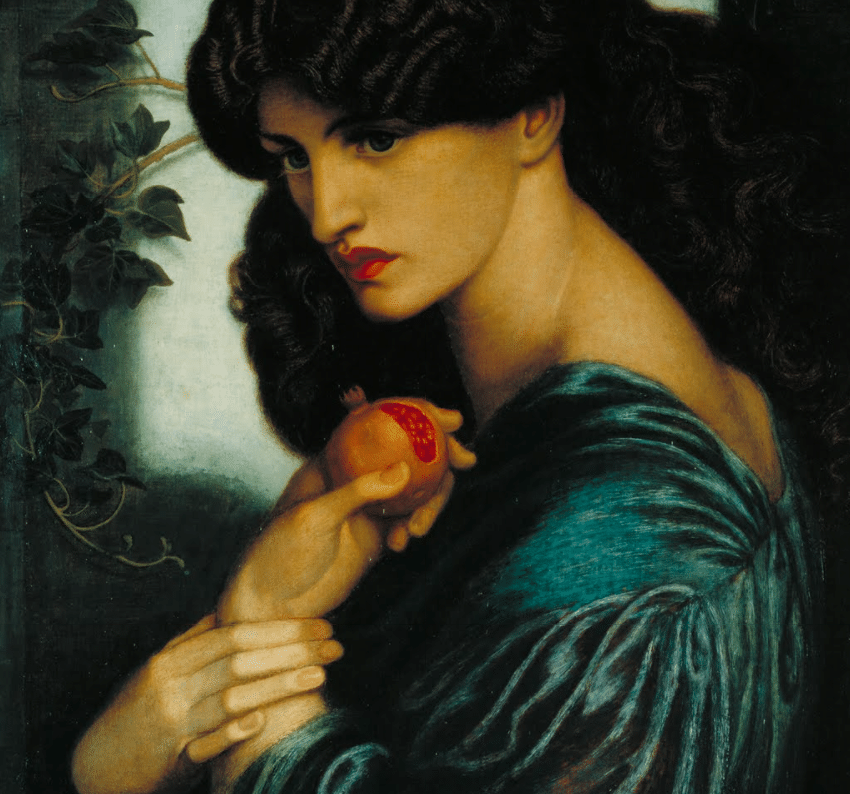
Detail of Proserpine by Dante Gabriel Rosetti
Back they roar above ground, ascending through a crack in the earth. Persephone throws herself into her mothers arms, and at once the earth again grows rich with life and the sun shines warm once more.
However, because Persephone had eaten the six pomegranate seeds, the gods agree that for six months of each year she must return to the Underworld with Hades, and winter would come to the world. Each spring she return to her mother, and the flowers bloom, the olive trees bear fruit, and the gold, sustaining grain begins to rise again.

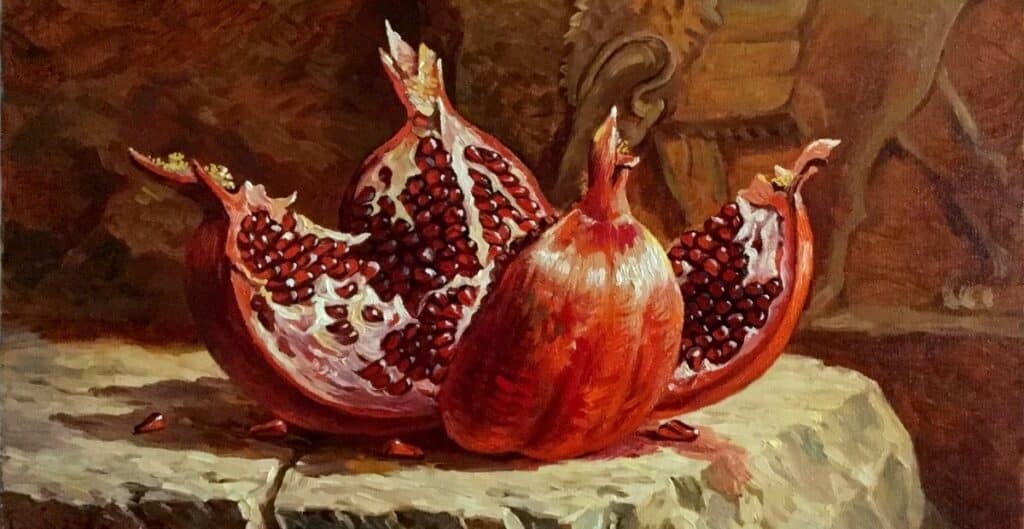
Contemporary pomegranate still life