In the winter of 1883 Édouard Manet, then 51 and confined to bed, was dying a painful death. And yet, over the course of his final year of life, the artist had been distilling the last of his strength into a series of intensely beautiful observational still lifes – 16 small paintings of the cut-flower bouquets family and friends placed at his bedside.
Rarely discussed because his large-scale masterpieces had such a major impact, Manet’s quieter flower paintings are like short lyric poems instead of the epic feats of genius that made his name.
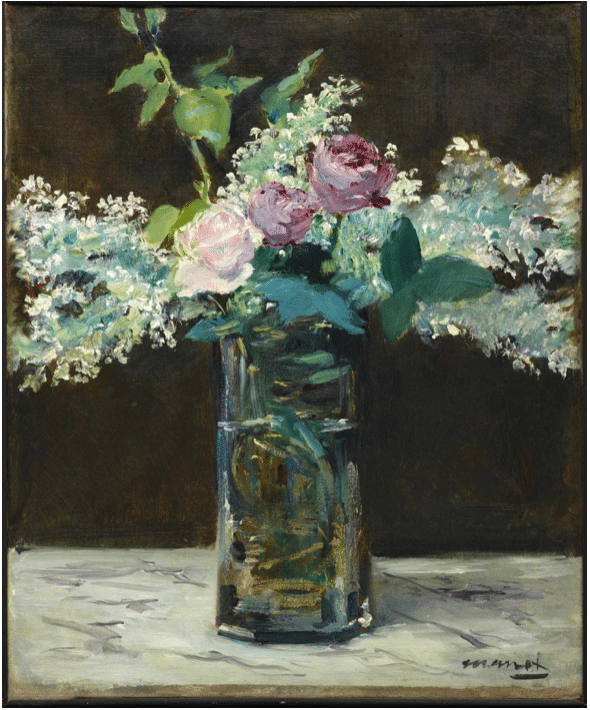
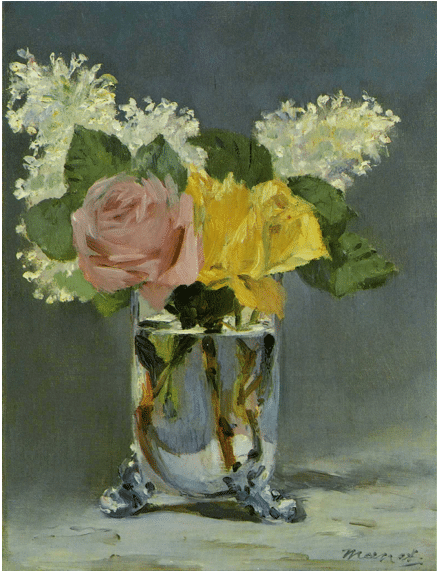
Édouard Manet, Vase of Lilacs and Roses, 1883. This was the artist’s second-to-last painting.
But don’t write them off just yet. They express Manet’s extraordinary intuition about paintings and their relationship to life. Not unlike Matisse’s cut-paper collages, created when Matisse could no longer control his brush, Manet’s final paintings are the fruit of a life lived deeply in art. Despite suffering terrible pain from syphilis and an infected (ultimately amputated) leg, Manet at last put his deep knowledge of painting at the service of “simple” energy and life directly transcribed.
As paintings, they are, as art historian Andrew Forge has written, “marvelously alive. The moves of his brush bring each flower spontaneously into the world: paint becomes flower…. The freshness and directness of the painterly expression is one with the freshness of the flowers.”
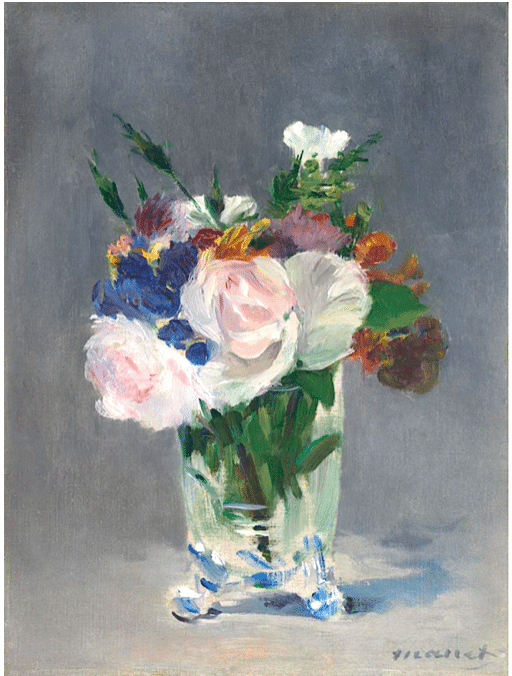
Édouard Manet, Flowers in a Crystal Vase, 1882 or early 1883
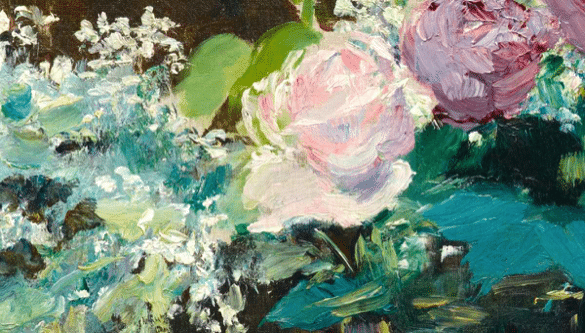
There’s more than you see at first glance. Manet breezes so masterfully through the rendering of Flowers in a Crystal Vase (above) that it’s easy to miss the painting’s frank yet lyrical vitality. The painter describes the translucent legs of the vase with miraculously few (read: expertly mixed!) strokes. But the real show is in what he did with the roses.
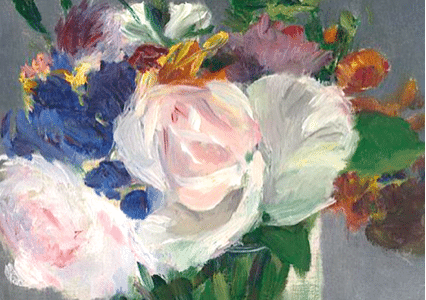
In closeup, you can see how the colors blend and glide, and how the strokes in the iridescent petals move in multiple directions, like fireworks, emphasizing the feeling of energy, movement, and life. These, by the way, are relatively small works – most of the paintings are under or around 20 inches high.
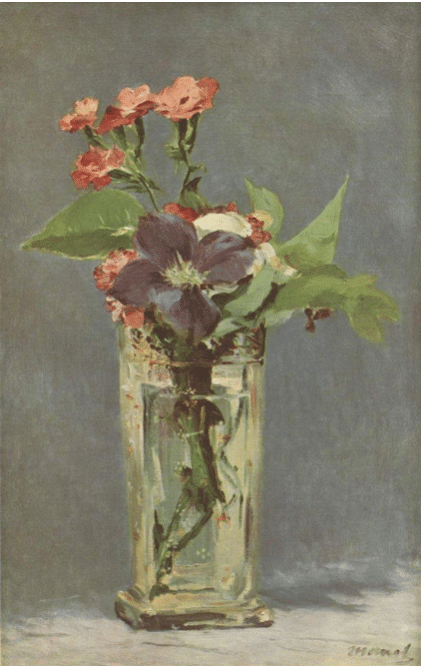
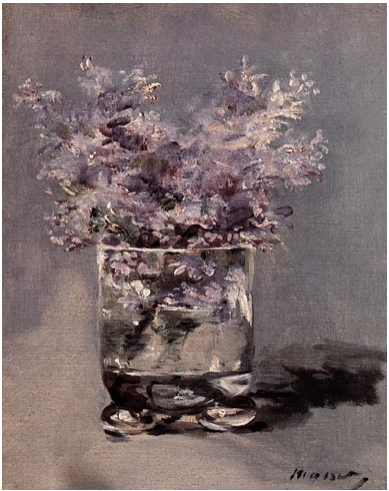
Édouard Manet, Flowers in a Glass Vase, 1883
Manet’s hand is extraordinary. He could almost literally scoop up pieces of color and light with his brush and transform them into bits of beauty. Here are a few more from the series:
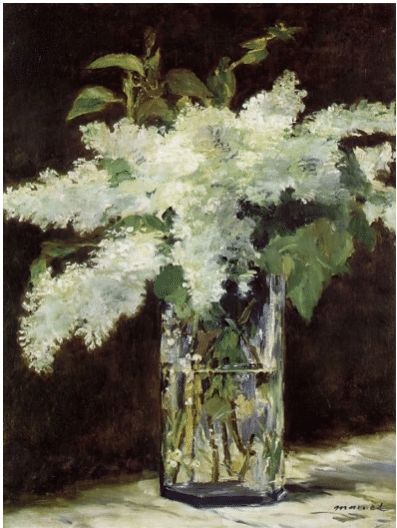
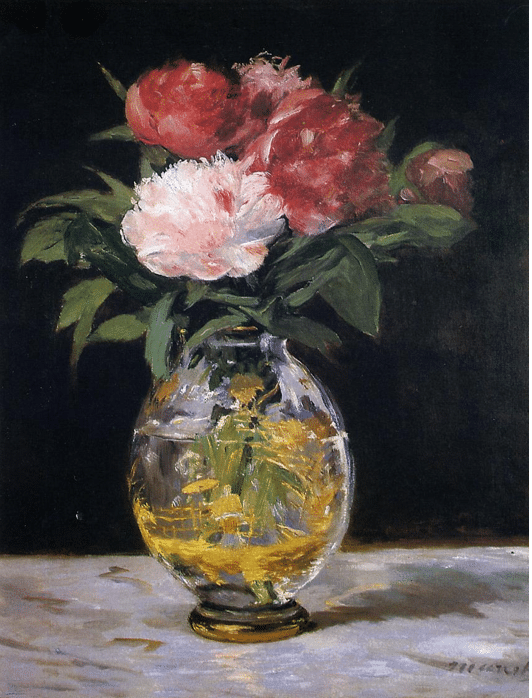
If they seem somewhat ordinary to us now, it’s because Manet’s treatment helped set the trend for the modern floral still life as it’s practiced today. Few previous artists had painted “just regular flowers” sitting in water in typical vases in such a modern and honest, straightforward way. There’s nothing merely descriptive, self-pitying, dreamy or sentimental; everything is clear-eyed, vivid and firsthand.
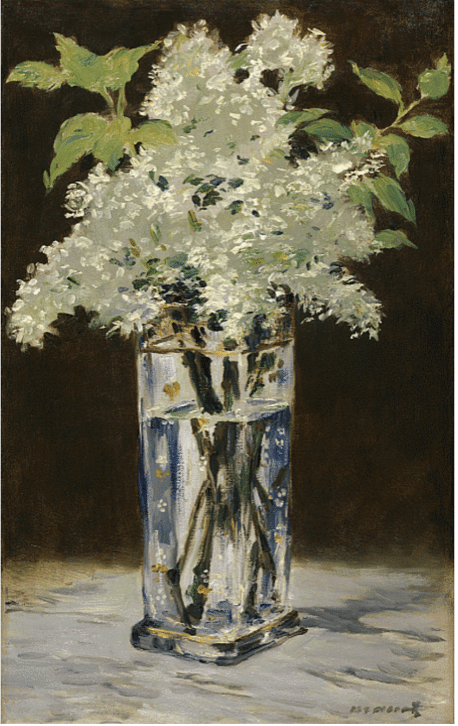
The floral still life continues to be, a mainstay of painting. Streamline offers what is probably the best selection of the most comprehensive, in-depth how-to videos on the subject all in one place – browse through them all right here.