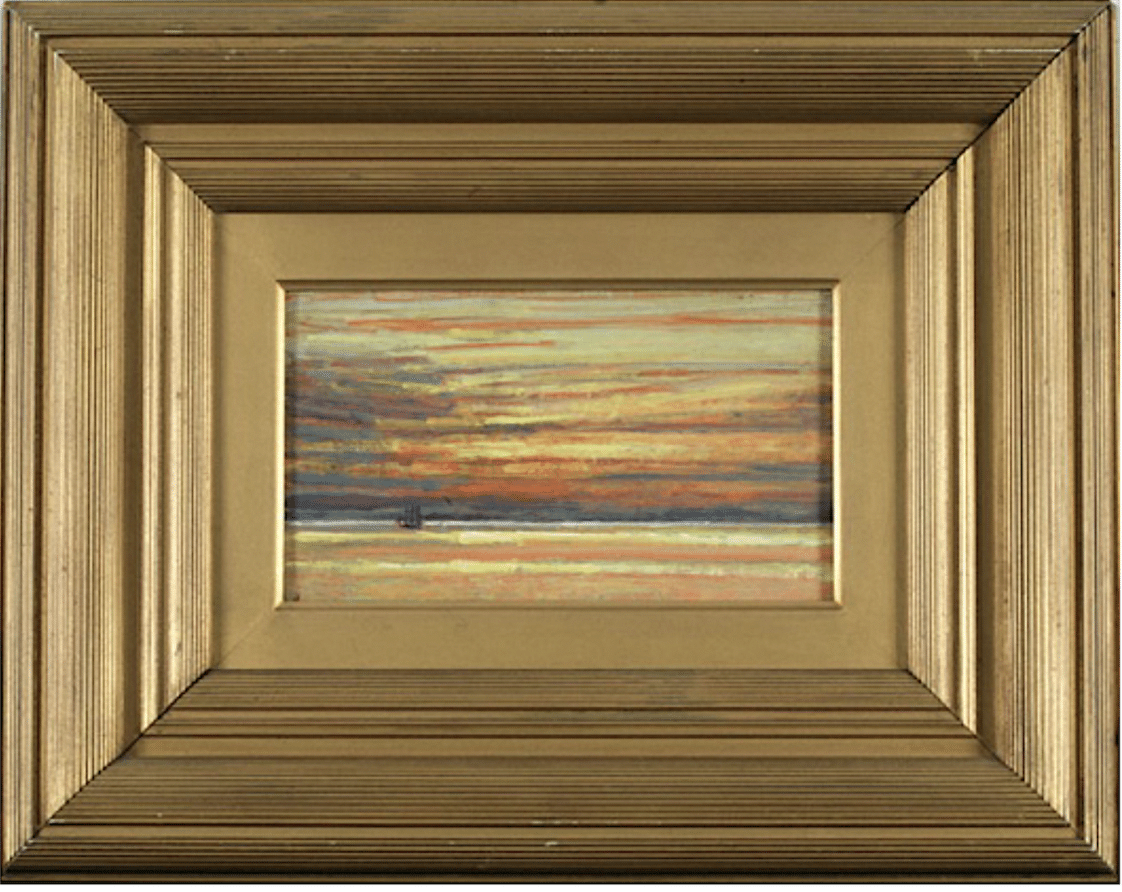
Art supplies are hard to come by on a tiny rockbound island 10 miles out at sea. Perhaps that’s one reason American Impressionist Childe Hassam used miniature cigar box lids to capture the fleeting fireworks of sunsets on Appledore Island, Isles of Shoals, nestled in the open ocean off the coast of southern Maine and New Hampshire.
Actually, using a cigar box lid for a sketch was fairly common back in the day, when plenty of artists could be found outside with a brush in one hand, a rag in the other, and a thin, cheap cigar clamped between their teeth. Hassam kept up the practice on several trips out West. Twice (in 1904 and 1908) Hassam traveled Oregon, Washington, Idaho and northern California capturing the varied landscape and spectacular skies in finished oils, sketches, and those tiny cigar-box lids. He painted over 60 images including landscapes, seascapes, portraits, and still lifes on his 1908 trip alone.
Hassam liked to explore the landscape of a particular region in depth, and he spent dozens of summers painting at the Isles of Shoals. Throughout the 1880s, Poet and painter Celia Thaxter opened her cottage on Appledore as a lively salon for the artists and literati of New England. Visitors beside Hassam included William Morris Hunt, Nathanial Hawthorne, and Ralph Waldo Emerson.
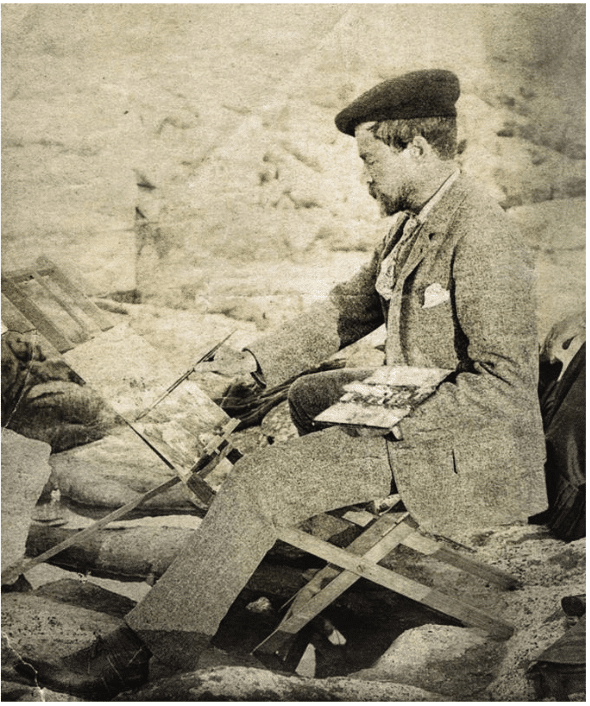
Childe Hassam painting on Appledore Island during the mid-1880s.
Says the Portland Museum of Art, which exhibited Hassam’s western paintings in 2004, “In some regards, the Oregon paintings share aspects of these other groups of work—an interest in the color and texture of rock formations, for example, seen in both the Isles of Shoals works as well as his paintings of the Oregon coast and Harney Desert. Other characteristics suggest a response unique to the sights and colors of the west, such as the low horizon lines and expansive skies common in his Oregon landscape compositions.”
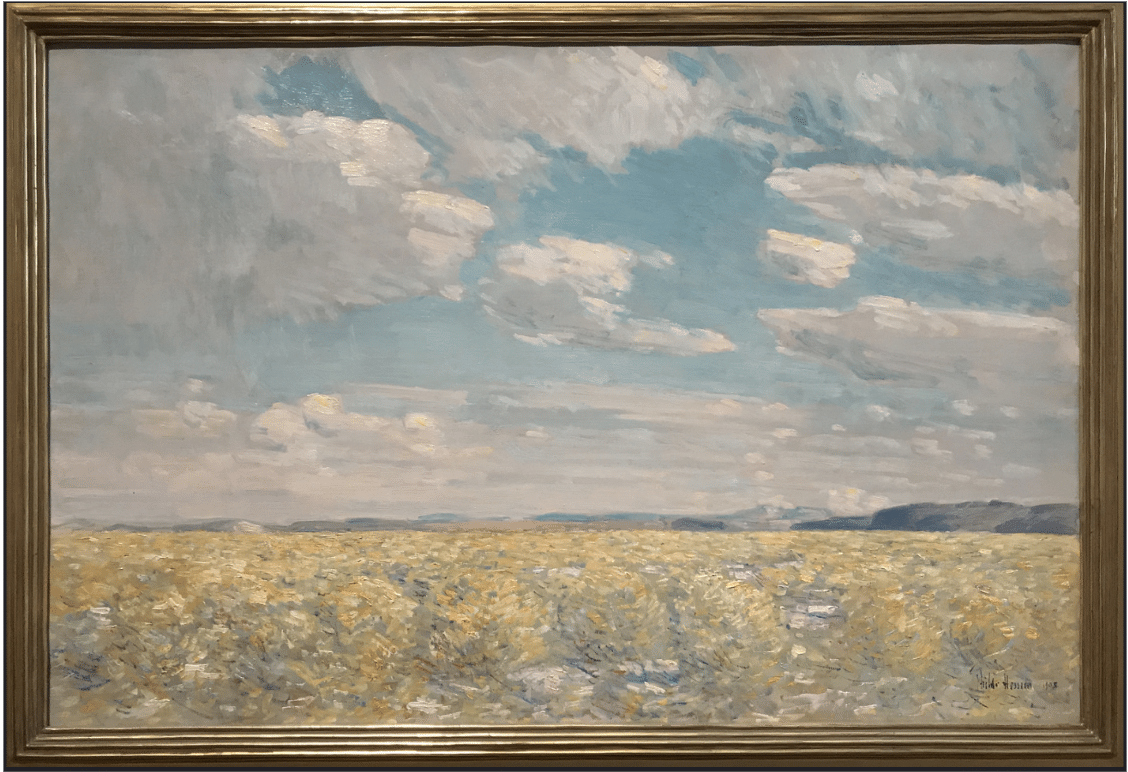
Childe Hassam, Harney Desert, Oregon, oil on cigar box lid, 1908. CC.
Many of Child Hassam’s most celebrated paintings are finished works he either began or completed at the Isles of Shoals. There, sun, sky and sea reign over jagged rock ledges punctuated by stunted grass, sea roses and some squat tenacious vegetation with pretensions to tree-hood. Hawthorne said it looks like the place God piled up all the scraps left after making the world. It’s that primal, so it’s been drawing artists since the 1700s.
Celia Thaxter’s famous garden beside the sea proved an irresistible motif for Hassam, who was a confirmed devotee of Monet.
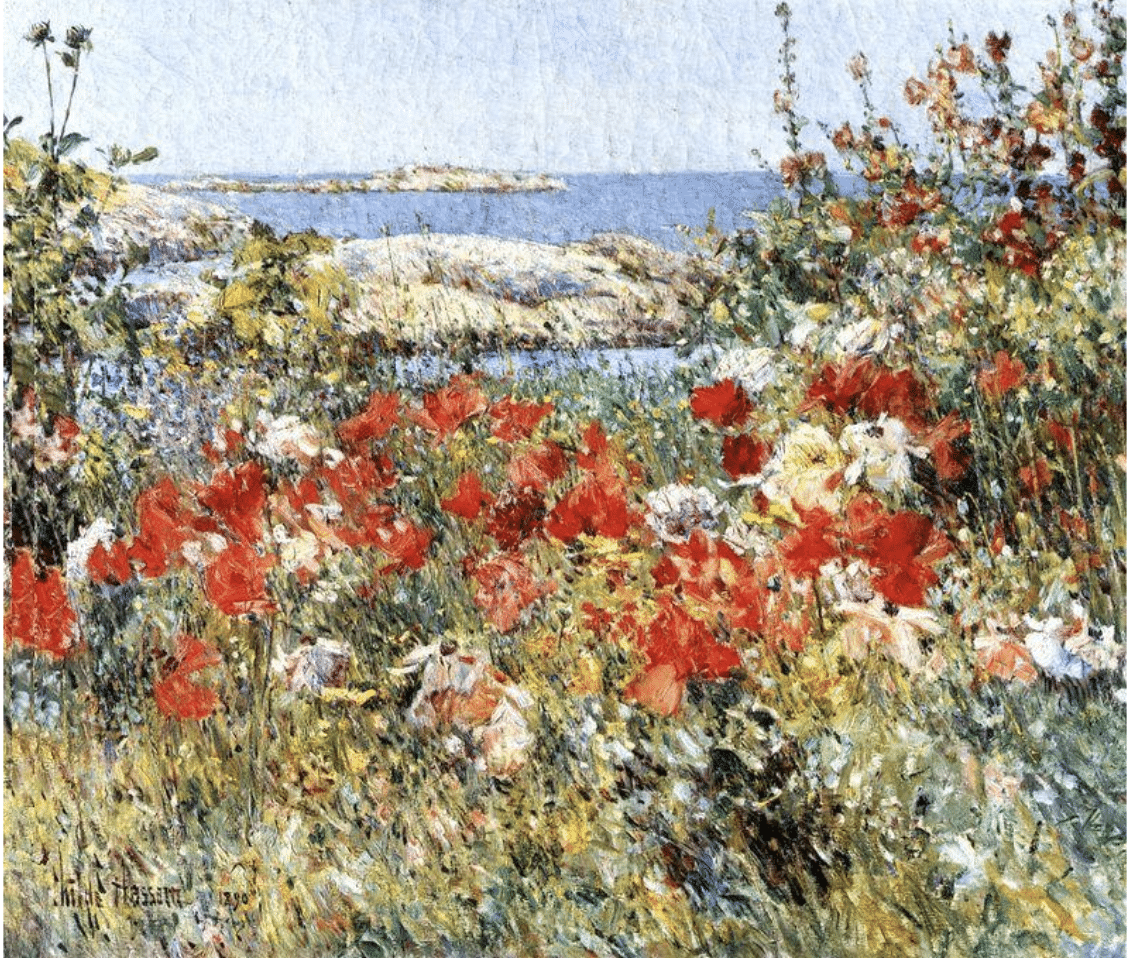
Childe Hassam, Celia Thaxter’s Garden, oil, 1890
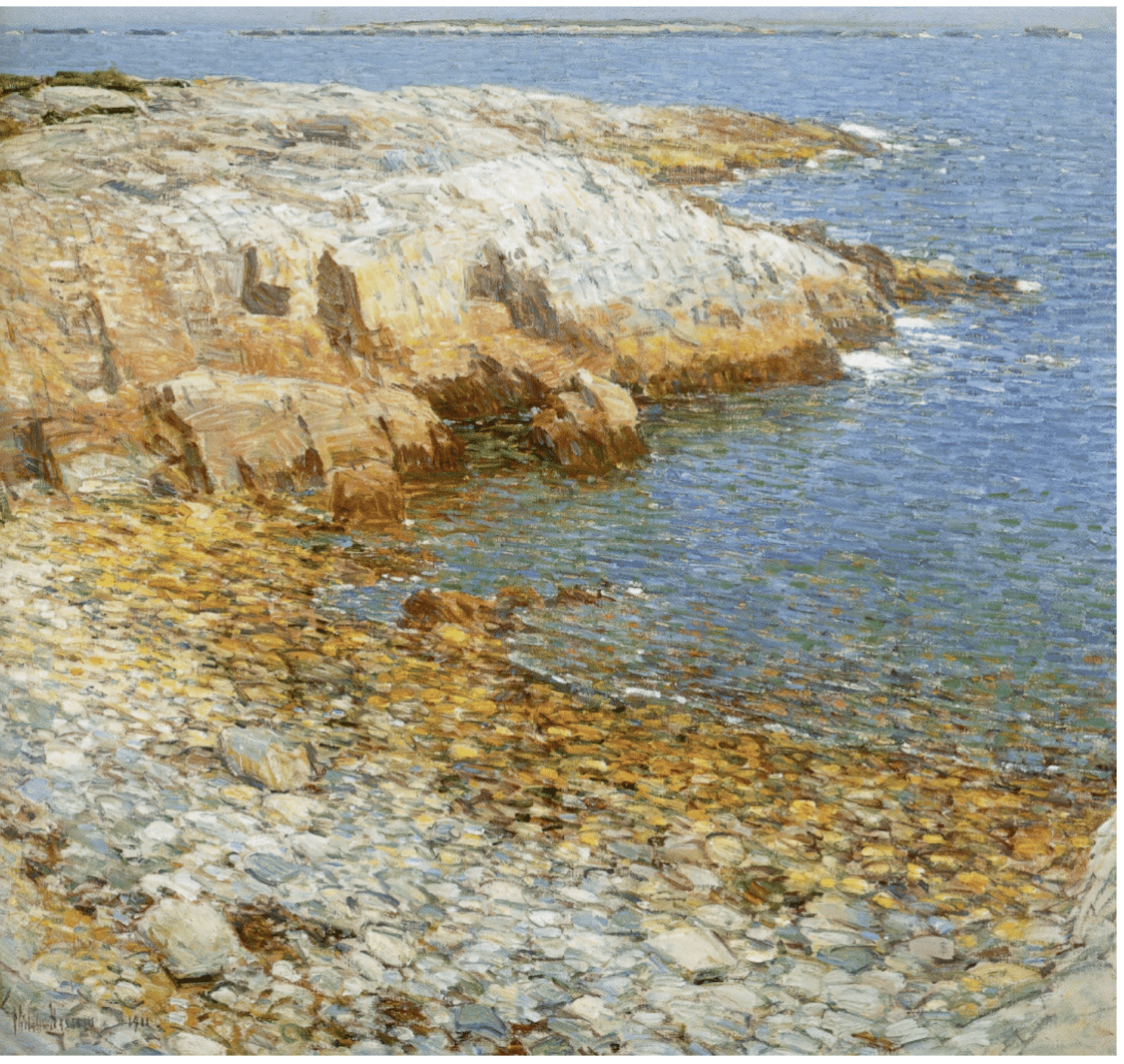
Childe Hassam, Cove on Appledore Island, c. 1890
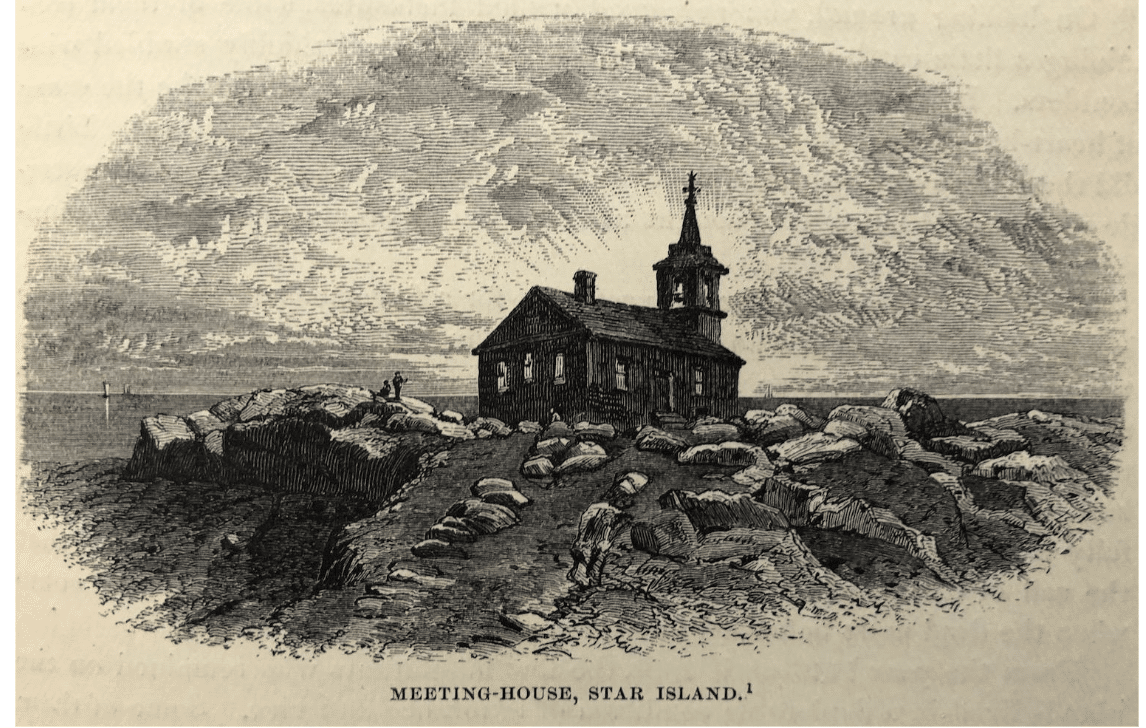
Painters still take the hour-long ferry ride from Rye or Portsmouth, NH to paint on Star Island. A grand hotel built in 1873 still stands on Star, amid a clutch of weather-beaten cottages (the oldest dating to the 1600s) and a very New England-looking stone church, white spire reaching skyward – it’s a location seemingly outside of time.
One such contemporary painter who’s fallen under the spell of the Isles of Shoals is New Hampshire-based painter Alastair Dacey.
After spending time as an artist in residence on Appledore Island, Dacey organized the first cigar box paint-out on the island. Dacey has invited about a dozen plein air painters on a two-day plein-air outing to Appledore this summer, supplying them with cigar boxes, which will double as palettes as well as painting surfaces.
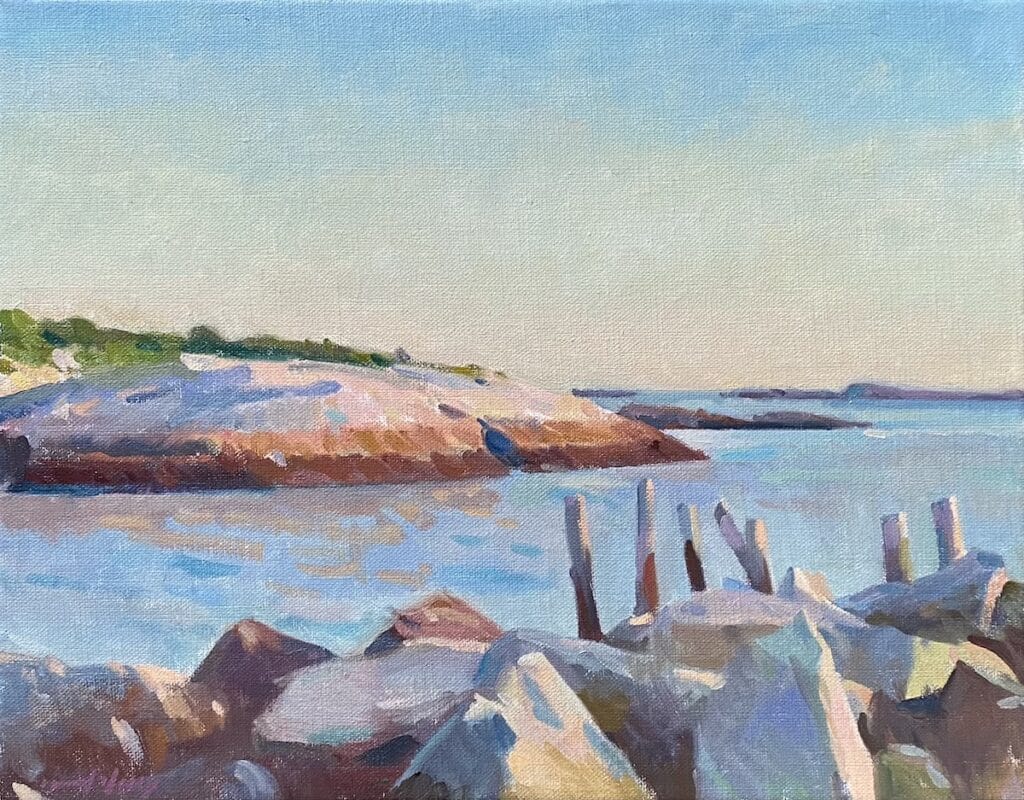
Alastair Dacey, Babb’s Cove at Sunset, oil, 11×14.
The cigar-box paintings the artists create will be sold at a special sale that will benefit Appledore’s main tenant and caretaker, the Shoals Marine Lab, an educational marine-science facility jointly operated by Cornell University and the University of New Hampshire.
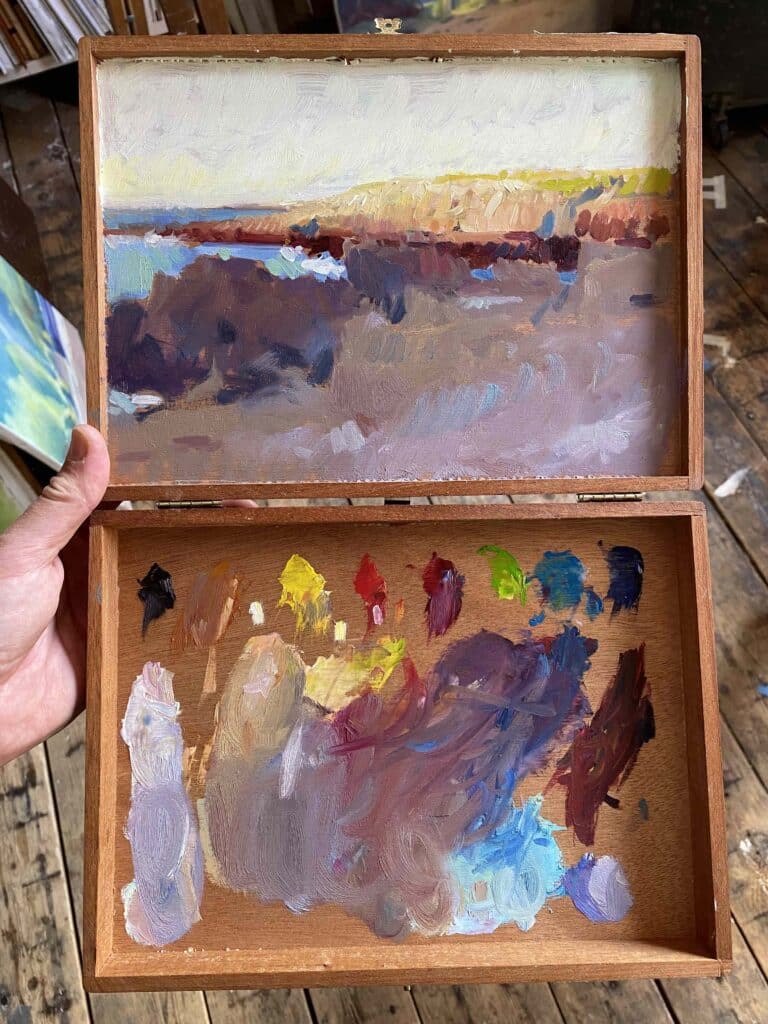
Have a cigar (box, painting). Alastair Dacey’s test run on a box lid.
In a way they’ll be exploring the same essence of plein air painting that captivated Hassam on the very same shores: quick, small-scale paintings partaking of nature’s vast, elemental beauty (whether it’s big-sky prairie or a tiny island in the ocean) distilled into a treasured gem. Only this time, ultimately the artwork will benefit 21st century marine science.
If you’ve a mind to paint the sea, you can learn much from a master with Don Demers’ Mastering the Sea.