Don’t letting painting from nature intimidate you. Sure, there’s a whole lot of STUFF out there! But there are many ways to tame the chaos and find the compelling painting hidden within the visual madness. Much of it’s rooted in composition.
Creating a visually striking and emotionally resonant painting demands a deep understanding of composition—the arrangement of elements within the frame. It’s how an artis transforms an ordinary “messy” outdoor scene (nature is inherently messy) into a captivating work of art.
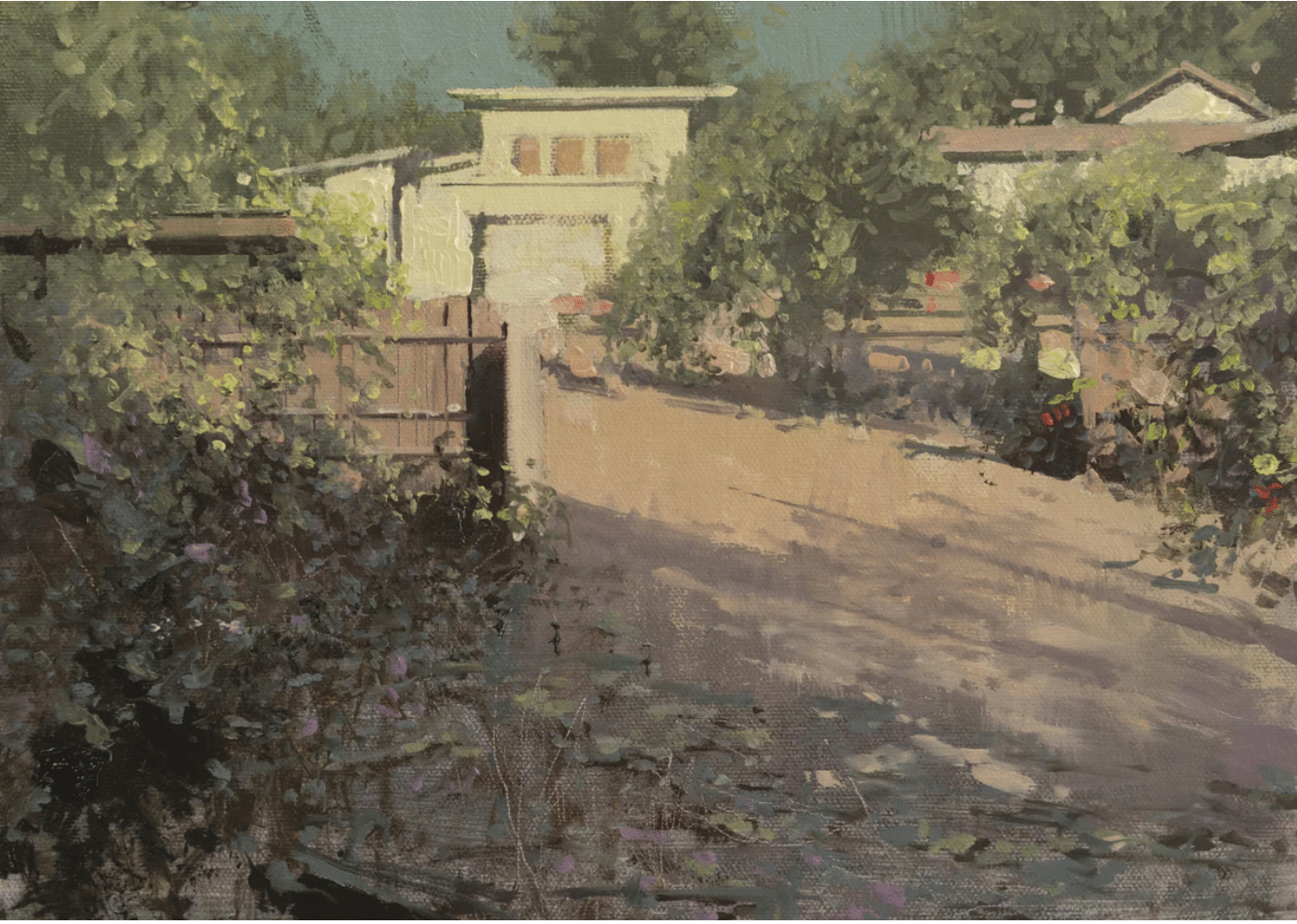
Composition is not IN nature3; it’s something you have to impose on it, something you make up. For example, this is the view from painter Daniel Sprick’s garage.
It’s the scene in the painting above as it appears objectively to the eye (or the camera, technically). Daniel meticulously breaks down his process of creating a dynamic painting from this ordinary scene in a free one-hour lesson that you can watch here.
He may not state it outright, but he starts with a vision – he “sees” in his mind’s eye a felt idea, a loose visual strategy for the finished work. It’s not detailed – just something to shoot for. As he indicates in the video, he’s holding in his imagination a pattern of shadows that are no longer there, and in fact these shadow forms end up paying a huge role in the completed painting.
That unspoken decision underlines the importance of memory, imagination, and above all composition and design in making strong paintings from life. Turning to the difference between the photo and the painting suggests the creative decisions and mental adjustments the artist made.
- When confronted with an outdoor scene, carefully observe your surroundings to identify what captures your imagination and ignites your artistic passion.
First step has to do with selection – what draws your interest most? (In this case, I think it’s the shadows that are no longer there). To bring that out, you’ll need to crop the scene into something more manageable.
 That alone, however, will not make a great painting. It’s still going to take painterly vision, knowledge of composition, and solid technique in paint handling to pull a good painting out of this scene.
Daniel begins by painting the distance, because much of the design work in this one will go on in the foreground (with those shadows). It’ll be easier to paint the foreground design in relation to the rest of the painting rather than the other way around.
2. Create a Dynamic Composition
Again, this is something you impose on the scene. Experiment with different viewpoints and framing techniques to emphasize your vision – that is, what you care about most in the motif. Everything else is about harmony and directing the viewer’s gaze.

3. A strong painting evokes a sense of movement and visual flow, guiding the viewer’s eye across the canvas. To achieve this, you’ll need to draw on the principles of balance, rhythm, and above all visual tension. Strive for harmony between elements by distributing visual weight strategically throughout the composition.
Incorporate diagonal lines, leading the viewer’s eye into the painting, or use curves to create a gentle rhythm. Remember, it’s not just about faithfully reproducing the scene; it’s about transforming it into a work of art that engages and captivates the viewer through thoughtful composition.
Comparing their image above to the finished painting, you can see how Daniel used his memory of the now-vanished shadows to invent the foreground diagonals that lead the eye in. See how many other subtle but important differences there are between the painting and the photo and ask yourself why. For example, Daniel subtly moves a lot of lines, such as those of the walkway (for a reason!). He reduces the big, bushy tree in the dead center of the actual scene from a distraction to a greatly diminished gentle curve that leads the eye where he wants it go.
Mastering composition is a vital skill for any artist seeking to transform an outdoor scene into a powerful painting. By establishing a strong focal point, creating a dynamic composition, and considering depth and perspective, you can elevate your artwork to new heights, capturing the essence and emotion of the scene in a way that resonates with viewers.
Remember, composition is not a rigid set of rules but rather a framework to guide your artistic choices. Allow your intuition and creative vision to shape the composition, infusing it with your unique style and perspective. With practice and a keen eye, you will develop the ability to see the potential in outdoor scenes and translate them into stunning paintings that leave a lasting impression on both the viewer and the art world.
Get the full-length Daniel Sprick video here.
Painters Love the Adirondacks

Winslow Homer, a Deer in the Adirondacks, 1889
Artists still adore the Adirondacks for their rugged natural beauty. Dozens are gathering this week (June 10-17, 2023) to paint in the footsteps of the greats at the annual Adirondack Mountains “Publishers Invitational” plein air event with Eric Rhoads, publisher of Inside Art and Plein Air Magazine.