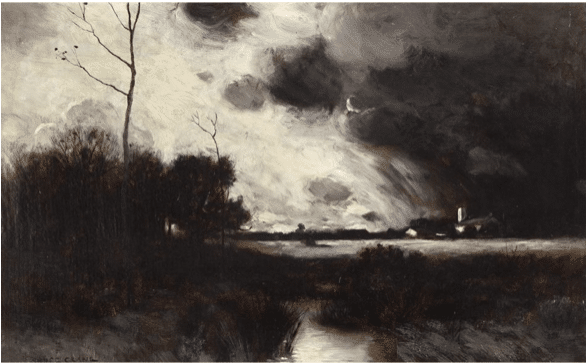

A typical Crane of his later period (1920s).
Robert Bruce Crane (1857 – October 30, 1937) learned his tonalistic approach from French landscapist Jean Charles Cazin (1841–1901), with whom he studied for a period. Cazin was a Salon painter with an eclectic background that included influence from the Pre-Raphaelites in England, an association with sculpture and ceramics, and the development of his own style of luminous landscape painting.
Cazin, After studying in France, abso to England, where he absorbed the poetic realism ethos of the pre-Raphaelite movement. Along with the figure-subjects he learned how to paint from the English group, his own luminous landscapes made his name as the leader of a new school of idealistic subject-painting in France.

Jean-Charles Cazin, Mist on the River, 1889, oil on canvas, Clark Art Institute, Williamstown, Massachusetts.

Jean-Charles Cazin, Midnight, 1891, 88 × 89 cm (34.6 × 35 in)
Crane loved Cazin’s emotionally expressive landscapes. After returning to the states, he melded his French influences with the Tonalistic style that was already picking up on the legacy of truly original American painter George Inness. Crane joined the Lyme Art Colony in Lyme, Connecticut in the early 1900s. His most active period came after 1920, when for more than a decade he made modestly sized oil sketches of woods, meadows, and hills.
Crane’s mature works were nearly always fall and winter scenes. He usually painted in his studio in Bronxville, New York, where like many of the Tonalists he relied mostly on memories of his outdoor sketching experiences to build simply arranged paintings that maximized mood and emotion.
Though who knows which to pick, any number of Crane’s best autumn paintings could be a candidate for the moodiest late autumn painting ever. Through mostly just value and atmosphere, he could elicit a wide range of feeling from super dramatic to incredibly subtle and subdued.
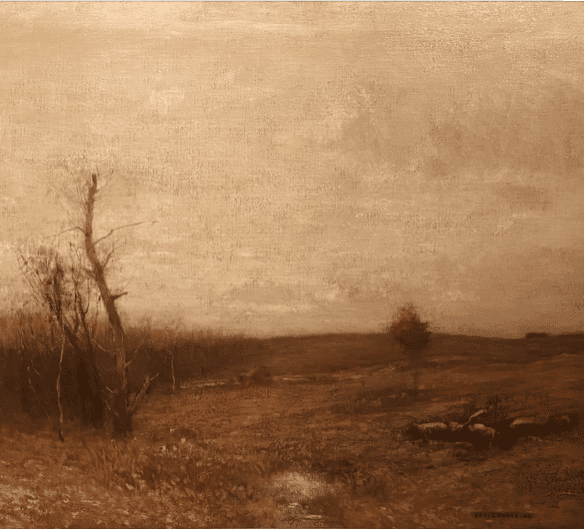
His often melancholy compositions helped define Tonalist painting: a subdued, restricted color palette, an emphasis on atmosphere, a twilight, evening or late afternoon setting in a rural locale, some off-center mid-ground foliage masses, a few spindly backlit trees, and a small body of water to break up the foreground.
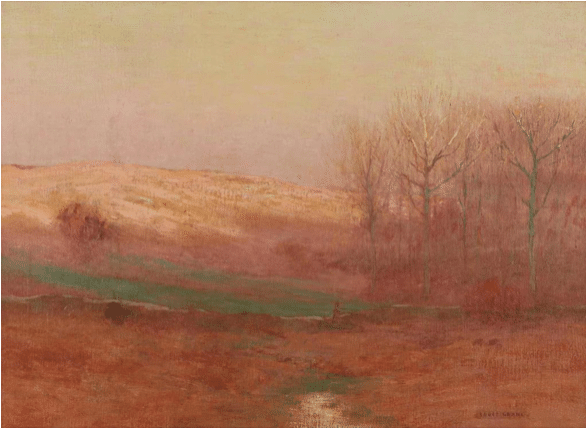
Crane’s chosen time was often the “Golden Hour” of late afternoon.
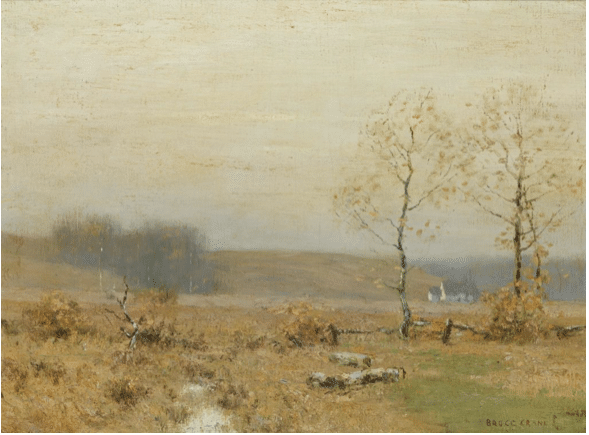
And lest the dregs of autumn melancholy overwhelm us utterly, here’s one more Crane, this one in the key of Summer (well, late summer to be fair, but still):

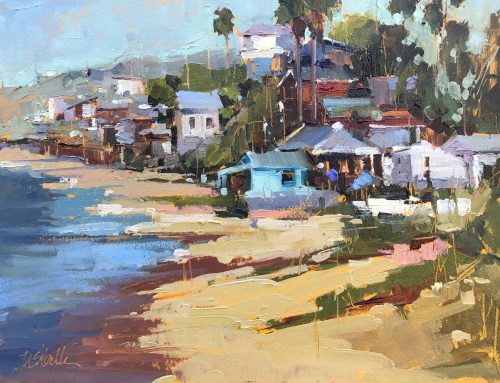
If you’re interested in adding a touch of tonalism to your toolkit, check out Mark Shasha’s video, The Golden Hour. It isn’t evening yet in Shasha’s demonstration painting, but rather late afternoon, that softly lit, atmospheric period when the lowering but still high sun throws graceful shadows and glittering reflections gently over sand and sea.

This oil by Mark Shasha truly savors the golden hour.
Mark Shaha will be among numerous leading artists teaching at Realism Live, beginning soon online. Check it out here!