Painter Brad Teare discovered that the biggest obstacle to his growth wasn’t a lack of skill but the impossible standards he held his own work to. This Thanksgiving week, his essay is a reminder to be grateful for what we’ve actually made.
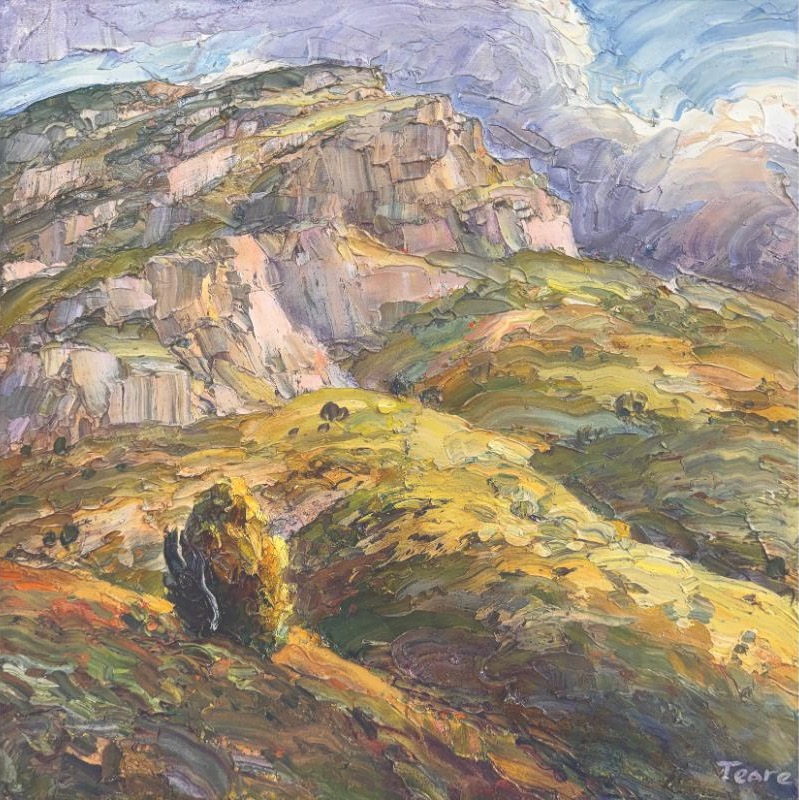
“Canyon Cliffs” (oil, 16 x 16 in.)
By Brad Teare
I never considered myself a great plein air painter. My thick impasto and palette-knife style never felt suited to quick work outdoors, and most of my field studies ended up stacked in boxes in my studio.
Then I was asked to exhibit at a respected regional museum, and of the 36 paintings selected, the director chose six of those small studies. I had always thought of them as flawed and incomplete. She saw them as finished works. Seeing them through her eyes, I began to look at my own paintings differently.
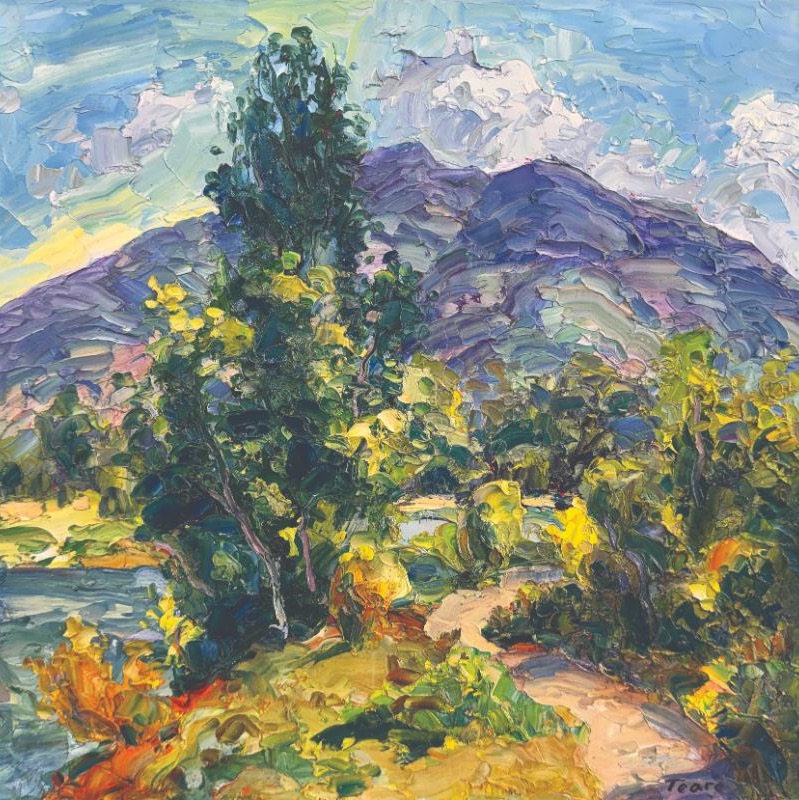
“Riverside Afternoon” (oil, 16 x 16 in.)
THE AFTERIMAGE PROBLEM
Have you ever photographed a spectacular sunset, only to be disappointed by the pictures later? Artists do the same thing to their own work. When we judge a painting right after making it, we compare it to the remembered intensity of what we saw and felt, and memory is rarely fair.
Over time, the gap between what I remembered and what I’d put on canvas began to shrink. The painting hadn’t changed. My perception had. The painting was never meant to replace the scene. It was meant to witness it.
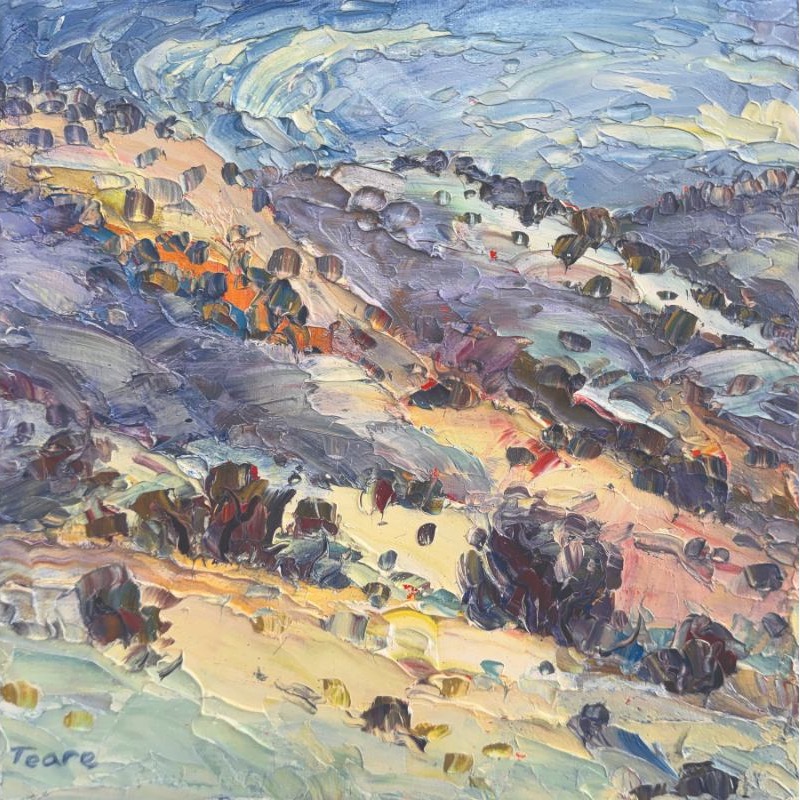
“Color of Winter” (oil, 12 x 12 in.)
NOT THE MOUNTAIN
Many of us believe plein air painting is a performance that should be fast, confident, and complete. I now think it’s closer to writing a poem in a notebook: a trace left by someone who stood in a particular place at a particular time and tried to translate experience into marks.
When I saw my work that way, I pulled out those boxed-up paintings and found genuine gems. With a glaze here and a touch of drybrush there, many were finished. I had assumed a painting succeeded or failed the moment I put down the brush. Now I saw them as living objects.
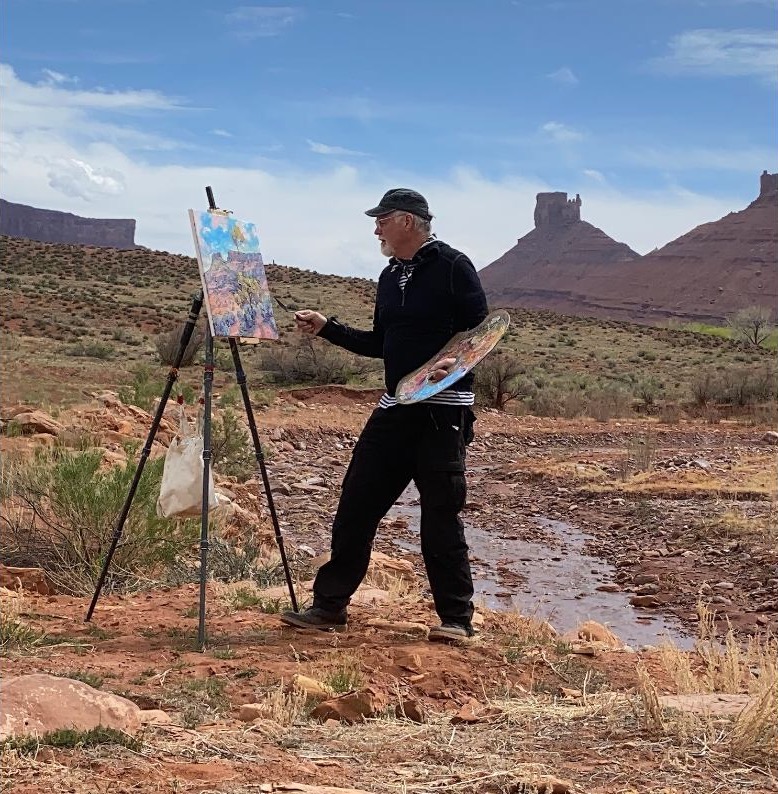
Brad Teare painting in Moab, Utah
I also recognized a force that had been working against me for years: the Tyranny of the Ideal. It whispers that a plein air painting should capture everything, from the exact light to the emotional electricity of the moment. But paint can’t hold all of that. I was punishing my paintings for being paint. I was judging them for not being the mountain.
That impossible standard shapes our behavior. We work more cautiously, take fewer risks, and begin to believe the problem is our skill, when the real problem is the standard we use to judge ourselves.
GROWTH WITHOUT SHAME
My growth wasn’t being held back by a lack of ability. It was being held back by shame, which disguises itself as high standards. What shame produces isn’t improvement but hesitation, along with a quiet fear of failure that drains the joy from painting. And joy is not optional. Joy is fuel.
Once I stopped judging my studies against the ideal, I could see their spontaneity, their unexpected compositions, and a fingerprint that was unmistakably my own. The roughness and eccentricity I’d seen as weaknesses were often what gave them life.
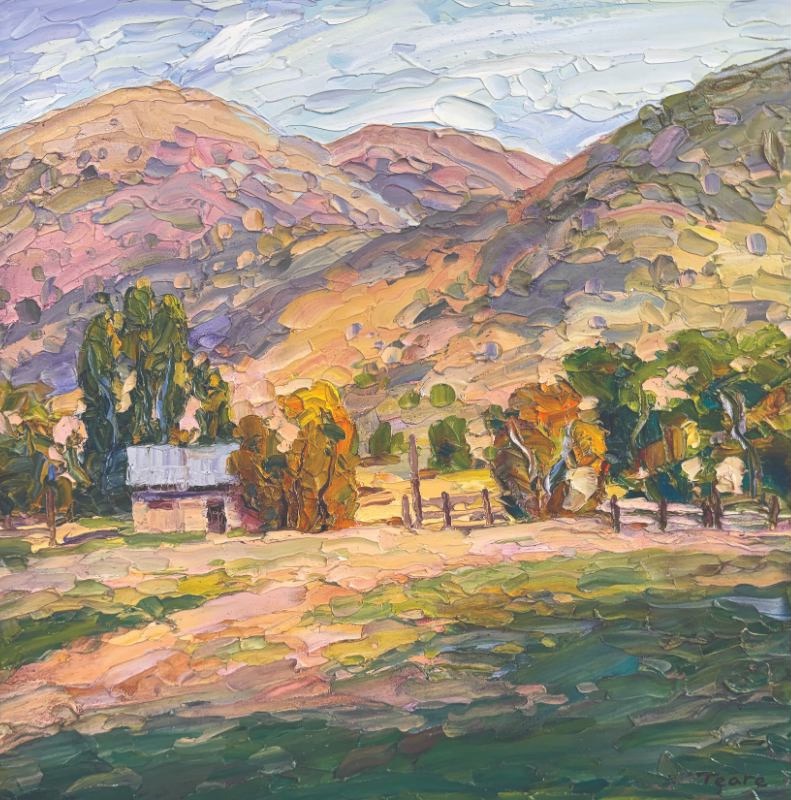
“Country Farm” (oil, 16 x 16 in.)
There’s a deeper kind of seeing every artist must eventually learn: the ability to see the beauty in our own work, to see what we actually accomplished rather than what we failed to accomplish.
The most important lesson plein air painting has taught me isn’t how to work faster. It’s how to judge more slowly. And in that slower judgment lies growth without shame, fueled by clarity, patience, and the quiet courage to keep going.
If Brad’s story inspired you to look at your own work, or the work you collect, with fresh eyes, there’s more where that came from. PleinAir Magazine brings you the stories, techniques, and breathtaking paintings of artists who capture the world as they see it. It’s the perfect companion for painters and collectors of every genre, and a thoughtful holiday gift for the art lover in your life.
Subscribe now →