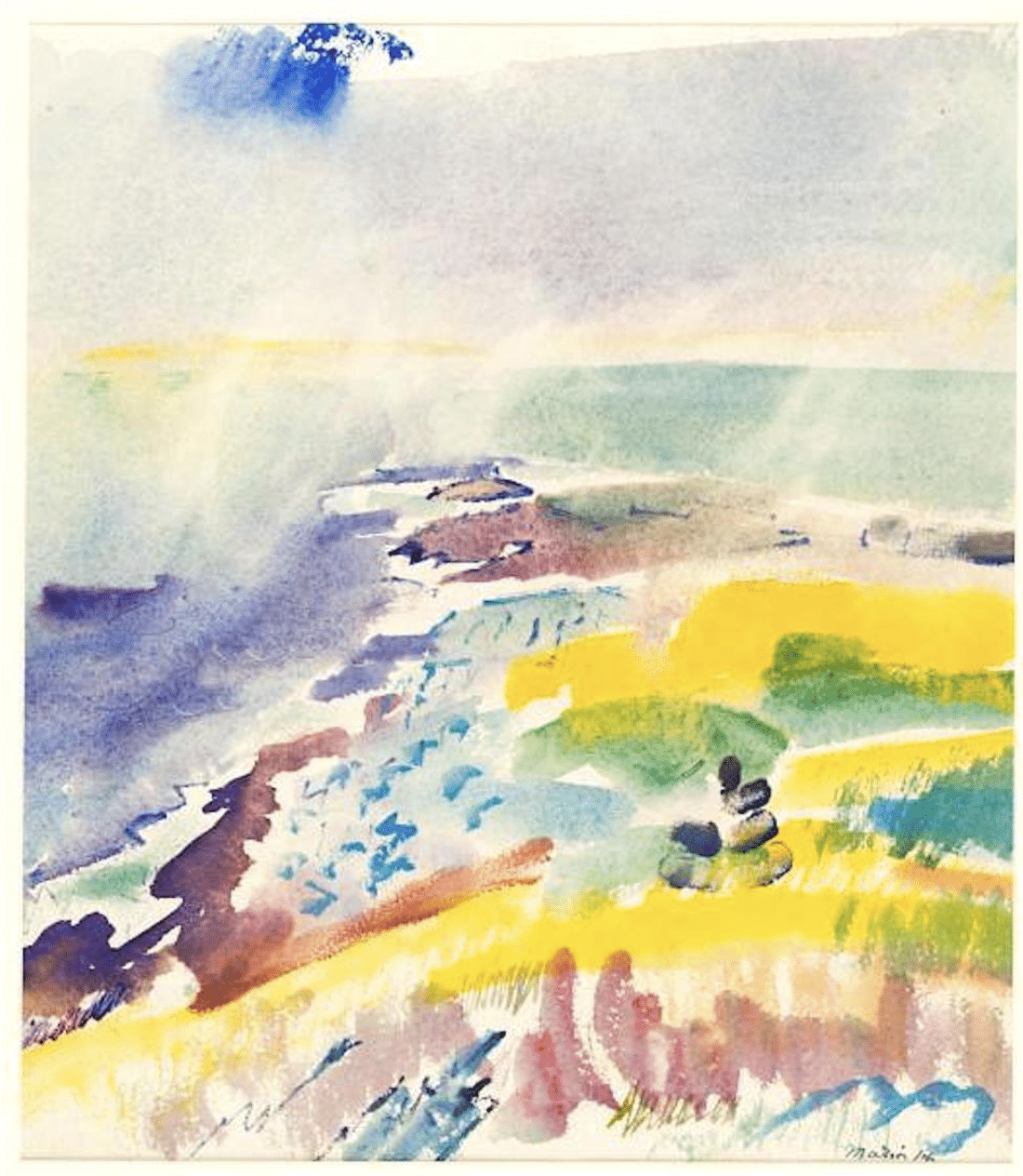
Harvard University is currently running a major exhibition of American watercolors, many rarely seen and by well-known and historically underrepresented artists.
American Watercolors, 1880-1900: Into the Light stakes a claim for the medium as more distinctly American and historically important than art historians have traditionally considered (and treated) it.
Harvard’s deep collection of watercolors, built over a period of more than 100 years, embodies the museums’ long-term engagement with the art of the present.
“For generations of American artists, watercolor was a medium of innovation and experimentation, a challenging form of expression that allowed practitioners to let loose their imagination and reflect on process and perception,” say the curators. “While the visual vocabulary of American watercolors changed dramatically over the century—from vibrant floral still lifes and radiant summer landscapes to surrealistic fantasies and immersive abstract works—the medium’s unique ability to capture light fascinated artists throughout.”
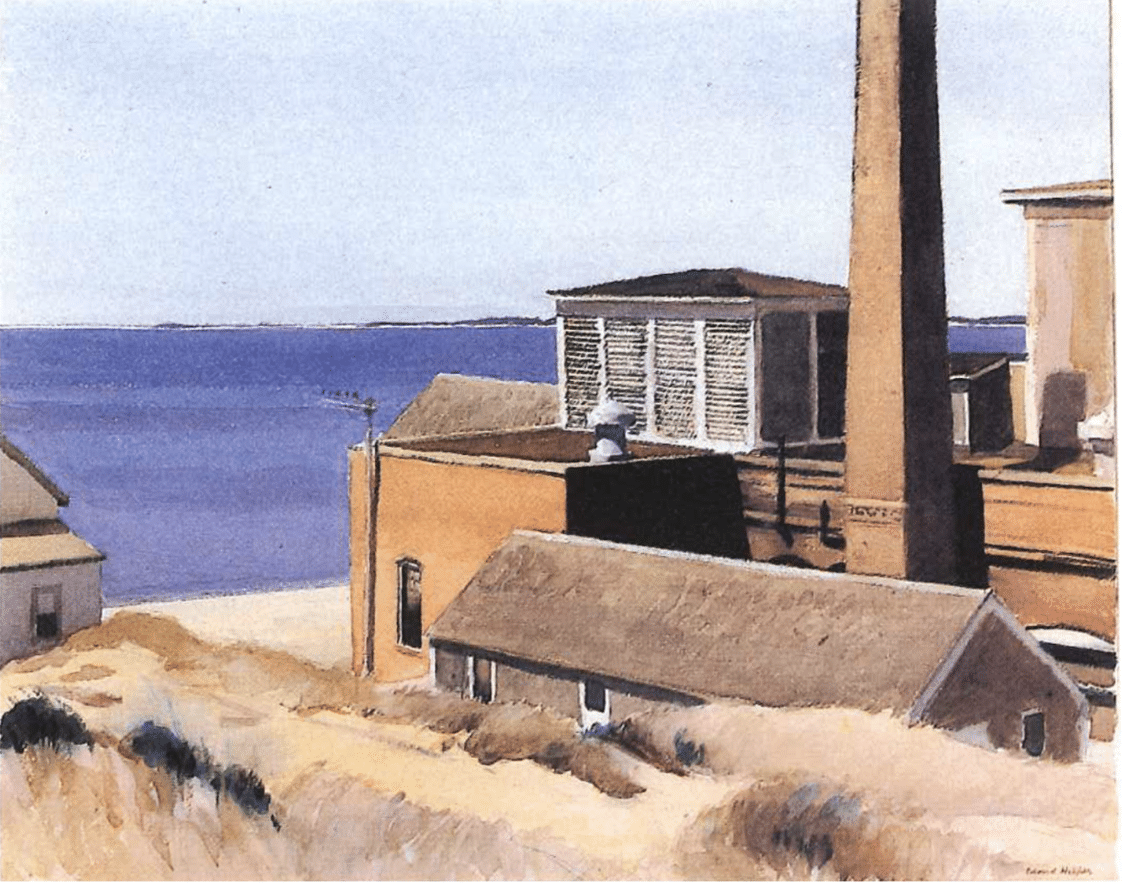
Edward Hopper, Cold Storage Plant, 1933, watercolor, 23×29
“Often regarded as a quintessential American medium,” the curators say, “watercolor has proven its capacity to render the full range of the American experience, including moments of adversity. In fact, as artists increasingly looked inward and away from European models, many encountered unsettling and disorienting moments of unrest in the United States that inspired new aesthetic and conceptual approaches to watercolor.”
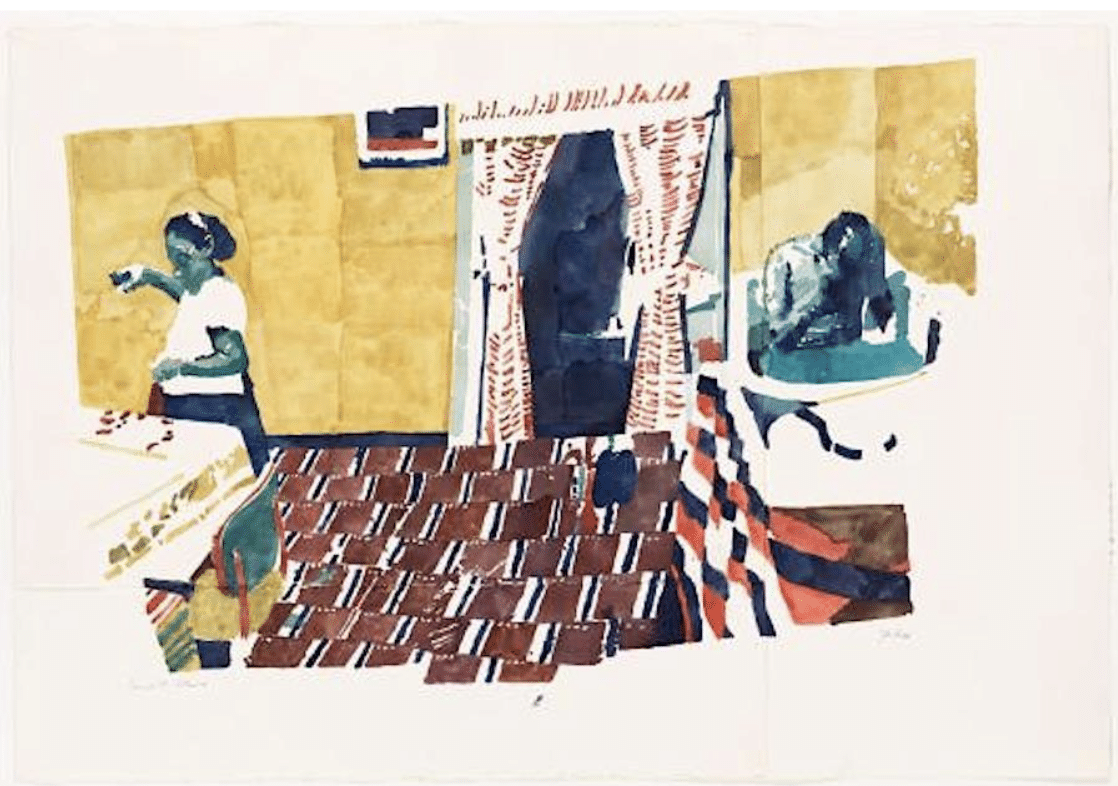
Richard Foster Yarde, American, Cunard Street, Interior II, 1980. Watercolor on white wove paper, three sheets overlapping, not joined. Harvard Art Museums/Fogg Museum, Arthur K. and Mariot F. Solomon Collection, 2021.214. © Estate of Richard Foster Yarde.
Expanding the canon and including many new acquisitions on view for the first time, this exhibition seeks to inspire conversations and enrich today’s practitioners. The unique challenges and rewards of watercolor are highlighted throughout with the help of historical materials, discussions of technique, and close-looking exercises that reveal artists’ creativity and inventiveness.
Staged across three adjacent galleries, the exhibition presents works by roughly 50 artists, including Romare Bearden, Charles Burchfield, Alexander Calder, Dorothy Dehner, Beauford Delaney, Charles Demuth, Lyonel Feininger, Zelda Fitzgerald, Sam Francis, Helen Frankenthaler, Winslow Homer, Edward Hopper, Jasper Johns, John La Farge, Sol LeWitt, John Marin, Alfonso Ossorio, Maurice Prendergast, Mark Rothko, John Singer Sargent, Bill Traylor, Richard Tuttle, James Abbott McNeill Whistler, Hannah Wilke, Richard Foster Yarde, and many others.
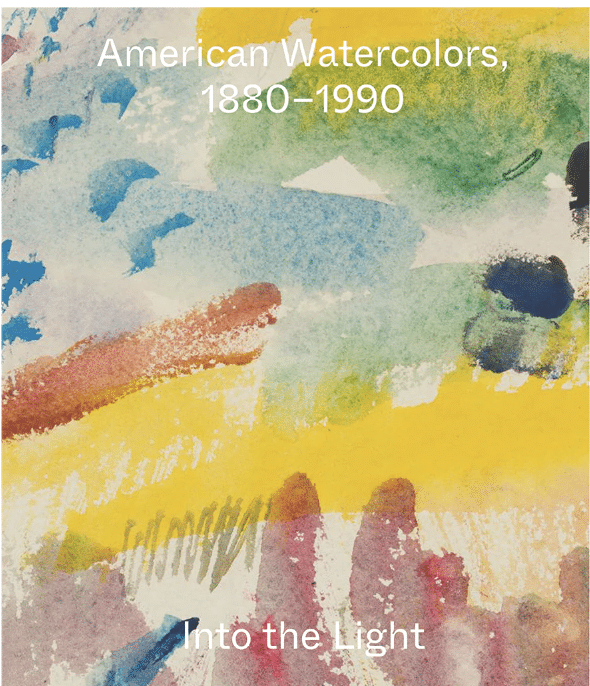
A sumptuously illustrated print catalogue includes contributions from curators and conservators, as well as an original essay by artist Richard Tuttle, sharing personal reflections on the medium and introducing new scholarship to the field.
Try Your Hand
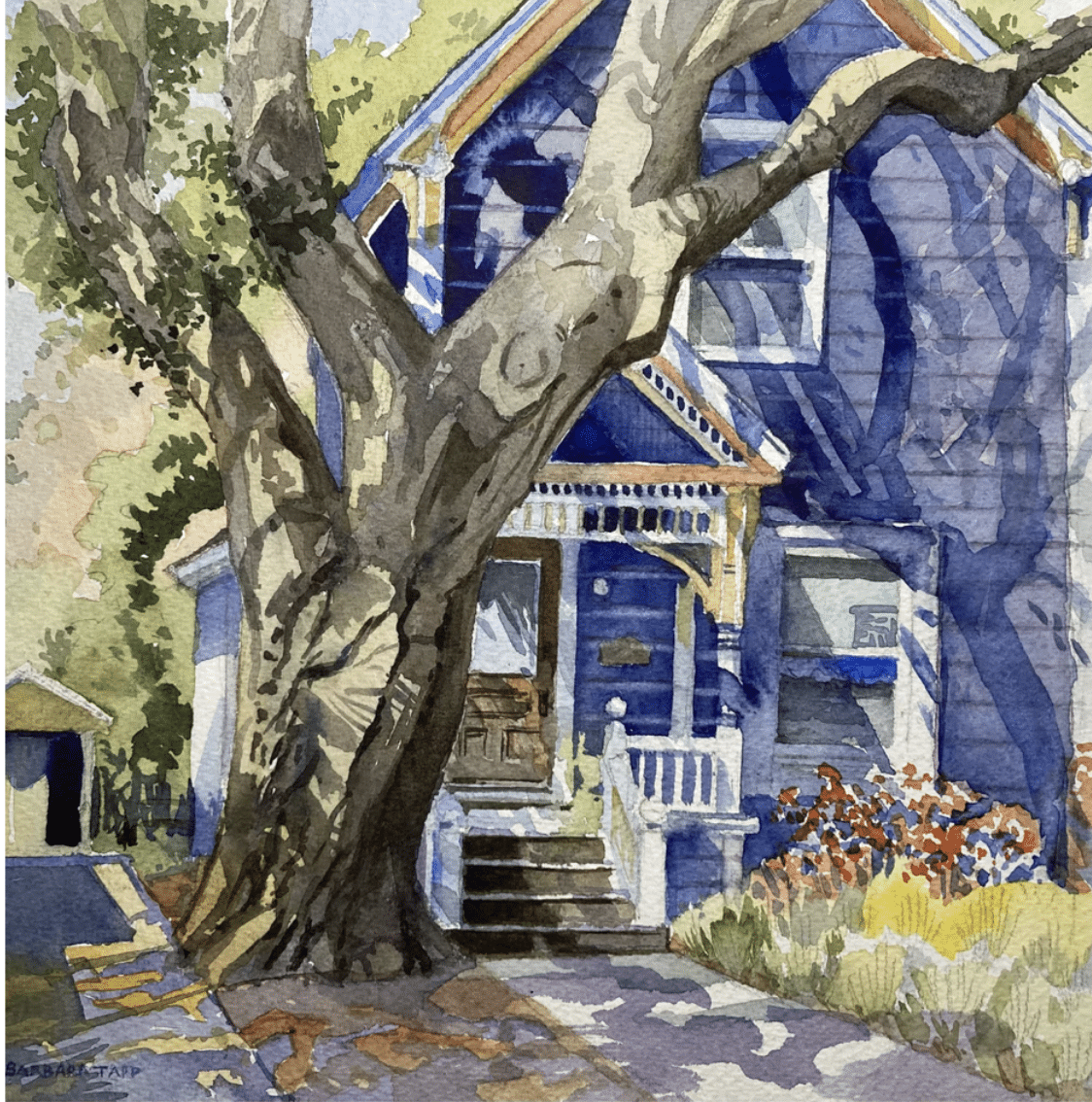
Barbara Tapp Watercolor
Watercolorist Barbara Tapp has established a thriving career as a painter and teacher. Let her walk you through her uniquely effective process in the new downloadable video and DVD, The Barbara Tapp Watercolor Method
The Best Art Museum in Every U.S. State
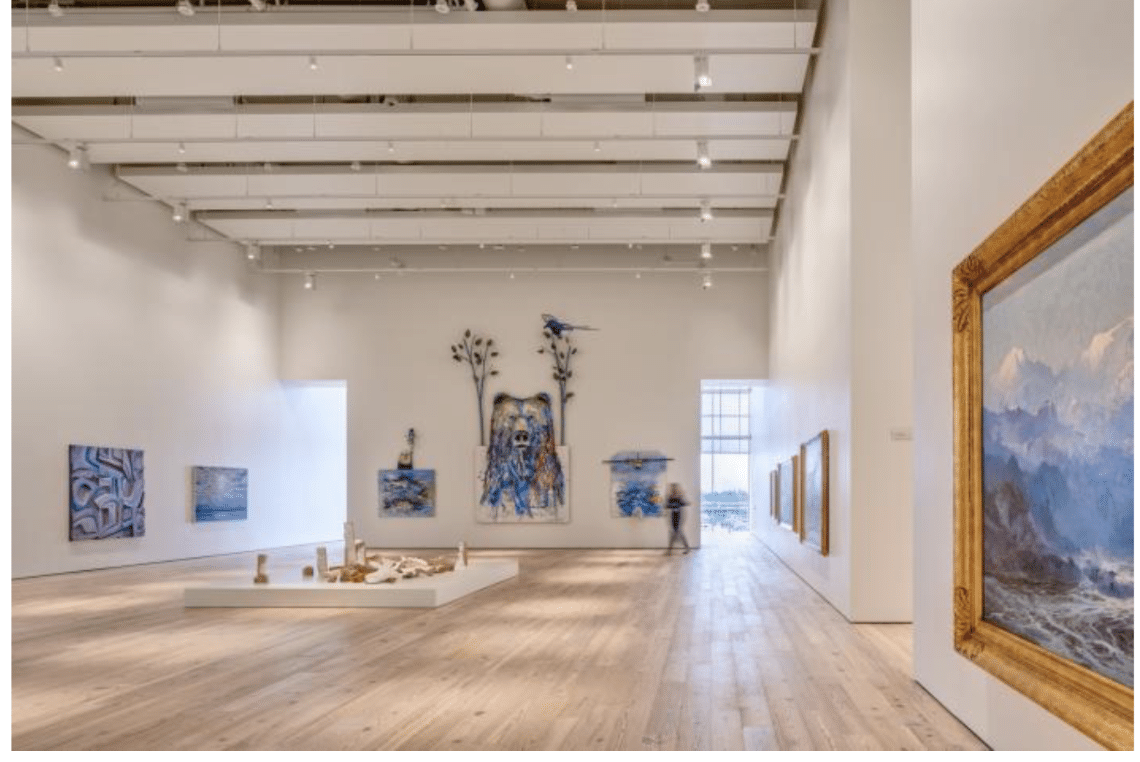
Wherever you find yourself in the country, you aren’t very far away from art. From intimate galleries to massive world-class collections, art museums worth visiting can be found across the country. Art & Object has rounded up the best art museums in every state, plus the District of Columbia. Scroll through the pics and writeups here.