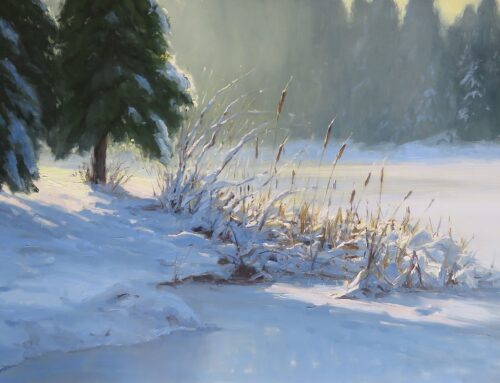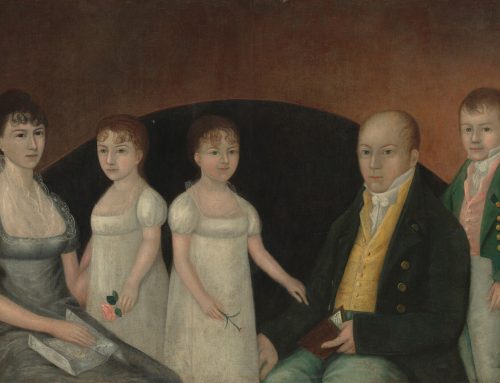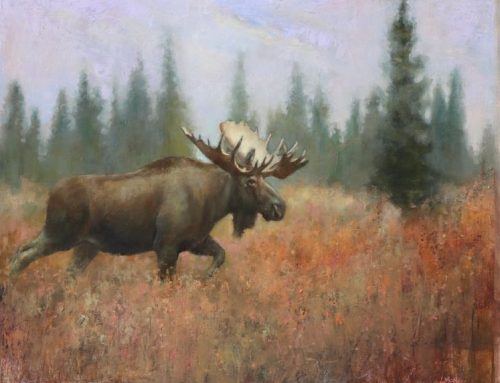

Pastel drawings and paintings glow with an intensely luminous color and rich velvety texture. This is because pastel powder is pure pigment.
Many pastel lovers favor the mediums for its sensitive quality that aligns with unfathomable perceptions, plus a rich sensuousness in the softer brands that satisfyingly connects with emotions. Colors and values do not change after application, as opposed to the slight darkening of oil as it dries.
Pastel colors are also portable, require minimal “extras” like oil paint medium, turps, knives, palette and brushes, and they have a very long shelf life. Also, they’re direct: they offer unmediated, hands-on contact with pigment in the form of the purest, most brilliant colors possible.
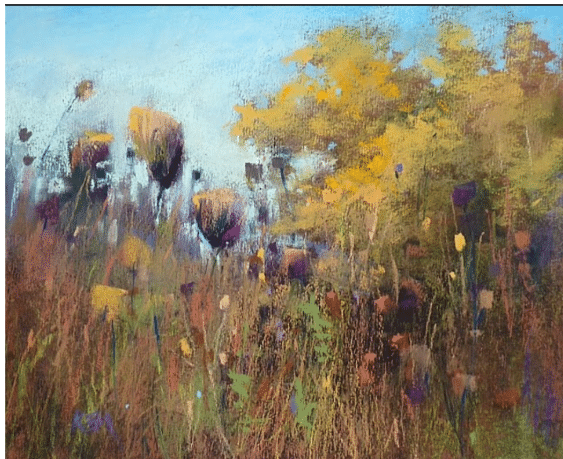
Karen Margulis, 8×10 in. pastel painting
There’s some general confusion about whether a work in pastel is called a “drawing” or a “painting.” The Tate Museum, for one, calls them pastel drawings, but for me, the latter term – pastel painting – is the more appealing one.

William A. Schneider, The Blacksmith, pastel, 16” x 20”
After all, like painters, pastel artists are applying and moving colors around, only in solid form rather than suspended in medium. Clearly, the medium straddles painting and drawing. Finished pastels can look as sumptuous and luminescent as paintings, but of course they’re made with a process that’s closer to drawing than painting.

Albert Handell, A Magical Moment, pastel, 16 x 15 in.
Oil pastels combine dry pastels’ vibrant and intense colors, with increased versatility in blending and layering and ability to create textured effects. Made with pigment, wax and a non-drying oil, their oil content is considerably lower than oil sticks, which behave exactly like oil paints. Because the wax binder in oil pastels is inert, oil pastels can be used on a range of surfaces including wood, paper, canvas and metal without any preparation. This is in contrast with the corrosive drying oils used in oil paint and oil sticks, which can leach into unprimed (non-gessoed) paper and canvas, compromising the longevity of the artwork.
Oil pastels, like dry pastels, can be messy. They are difficult to erase, and they smudge easily. Pastels require fixatives for preservation, and their thick texture can make detailed work challenging (though of course far from impossible).
Liquid-medium painters (oil, watercolor or acrylic) have much to get adapt to before comfortably wielding the “sticks.” Pastels don’t blend the way those mediums allow (you can smudge pastels with your fingers, a chamois cloth, or a Q-tip, but you often lose vibrancy in the process). They don’t let you just “switch to a smaller brush” on a dime, and they don’t stay “open” the way oil or open acrylics do.
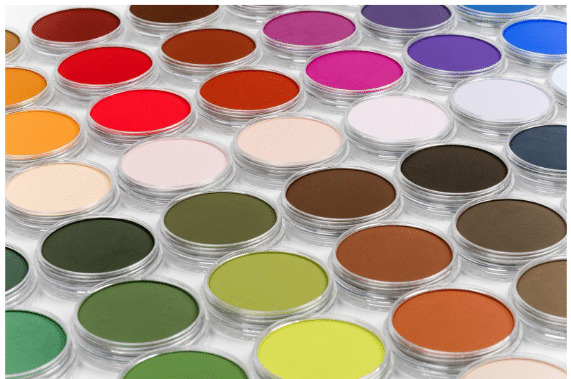
Source: PanPastel website
However, there’s a new kid on the block – a hybrid form called pan pastels. Brand name “PanPastels,” they’re the world’s first range of pastel colors that can be mixed and applied like paint. They come in “pans” (trays of wells filled with pigment) like watercolors, are applied with soft tools (like brushes), and can be mixed either in the pan itself or on the working surface (usually paper). It’s compatible with colored and pastel pencils, which allows for super-fine details.
The company was formed via the partnership of two artist-entrepreneurs out to change a pastel scene that had stayed pretty much the same over the last couple hundred years or so. Their company, PanPastels, was recently acquired by Golden Artist Colors. Could be a game changer; if you’ve tried them, drop us an email. We’d love to hear what you think.
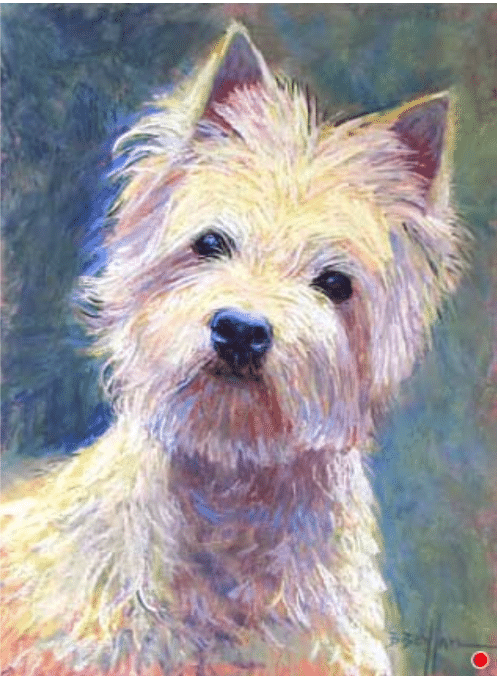
Brenda Boylan pet portrait, pastel
All of the images in today’s post are pastels. There’s a special video bundle available for pastel beginners – essentially a complete course of study with the four masters of the medium featured here today (William A. Schneider, Albert Handell, Brenda Boylan, and Karen Magulis). This bundle, with a monthly payment option, will only be available for a limited time, so if you’re interested, check it out asap.
Starting Your Next Renaissance
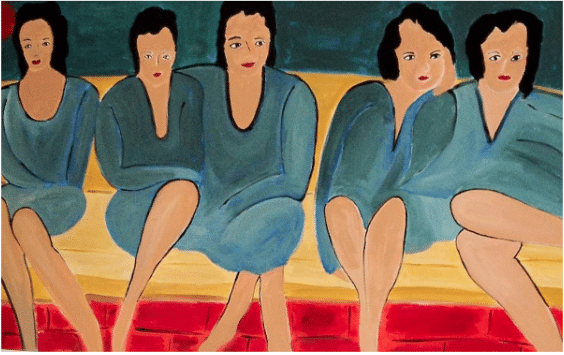
Each of us has the potential for a renaissance, according Harvard psychology professor Ellen Langer, a kind of reset “defined by a creative, purposeful, and engaged life.”
Langer herself experienced a major personal renaissance later in life when she began painting on a whim. Her book On Becoming an Artist shares her process and her revelation that mindfulness, the science and art of being fully in the moment, changes the game and makes entirely new things possible.
Langer kept painting until she unexpectedly found herself becoming an artist, showing and selling work at the urging of friends. She did not somehow “discover a hidden talent,” she’d say, she simply didn’t allow judgment to get in her way at any stage in the process.
One of the biggest derailments for so many artists, beginner and seasoned alike, comes from self-defeating mind-chatter and comparing oneself to others. Figuring out how to sidestep the background noise of unproductive chatter we carry in our heads makes possible that “personal renaissance.”
The opposite of “mindful creativity” is fussing and worrying about “getting it right,” according to Langer.
“If I fear making mistakes,” she writes, “I won’t fully engage myself in the task. Instead, I mindlessly follow a script for how to avoid them. If I am following a script, then I am not centered in the present, which could easily result in my making more ‘mistakes.’ And so the cycle continues.”
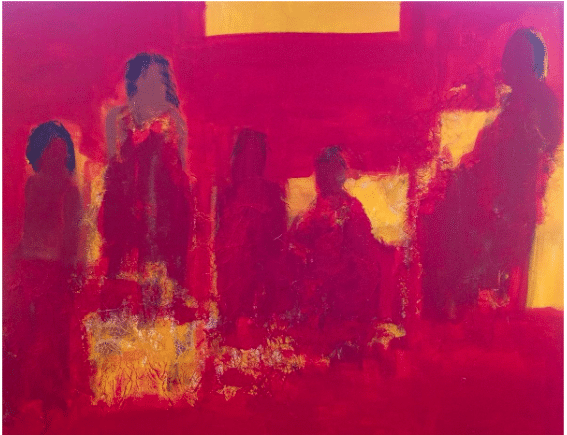
But what if after immersing yourself in the sheer joy of creation, you look back at the work and think, “this is awful”? Langer would say you can sidestep that unproductive perfectionism by not giving yourself more than a minute or two to judge. Rather, think how much you enjoy immersing yourself in creation and just get to it.
The first time Langer felt a work she’d really enjoyed creating “didn’t quite make it,” she writes, “I didn’t feel dejected at my failed attempt; I was too aware of the enlivening aspect of simply having created the piece,” and she allowed herself to get excited all over again about going in and seeing how she could change it.
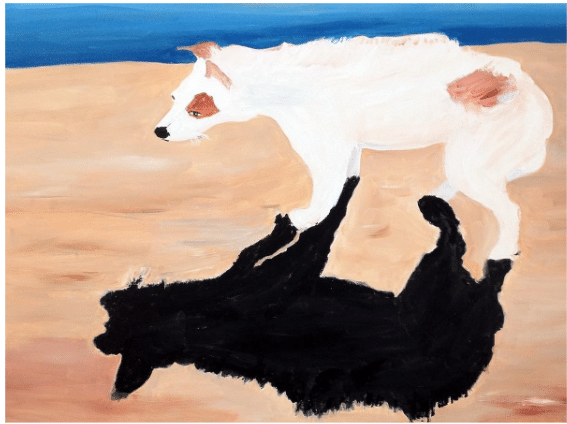
Ellen J. Langer, Me and My Shadow
“Once examined through this new lens, many of our ‘problems’ fall by the roadside,” she writes. “We can, it turns out, pursue art for art’s sake and art for life’s sake, and it matters little what that art is. Any creative activity can have a powerful effect on our lives if we pursue it mindfully and recognize the ways in which old familiar fears and habits can be set aside to make room for the personal renaissance we seek.”
Langer has generously made the introduction and entire first chapter of On Becoming an Artist readable for free online. It’s well worth a look.