It’s fair to say pastel artist Maria Marino draws inspiration from the Impressionists. But these days, that term gets thrown around loosely enough to apply to almost any representational painter. For Maria, that’s a problem — because she believes true Impressionism has two distinct components: a philosophical approach and a technical one.
The Impressionists weren’t just after mood. They used broken color to suggest the feeling of a scene — the artist’s impression of a place. Monet famously laid different colors side by side, letting them mix optically in the viewer’s mind. For Maria, if that technical rigor isn’t present, simply chasing feeling and atmosphere isn’t enough to call something impressionistic.
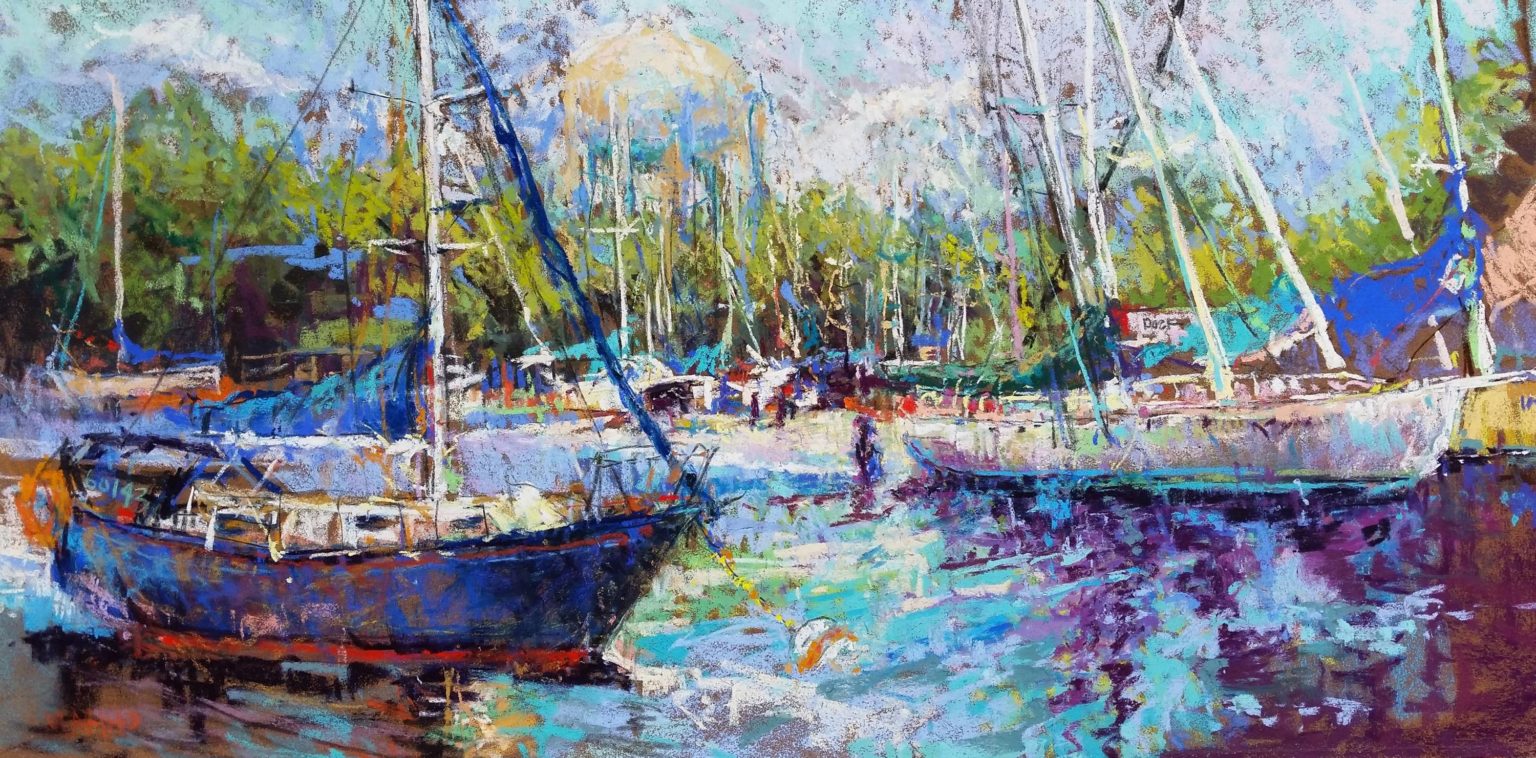
Maria Marino, “Eos,” 2016, pastel, 12 x 24 in., private collection, studio
These are fine lines, and Maria knows it. She’s not interested in arguing about who’s right. She’s interested in painting. “When I see a landscape, I taste color and I see colors that other people don’t see,” she says. “It’s gorgeous, and I want to get it down on paper.”
PASTEL PROCESS
It’s no surprise that broken color appeals to a pastelist. Working with sticks of nearly pure pigment on textured paper requires no palette, no pre-mixing. Allowing colors to blend in the viewer’s eye isn’t just a stylistic choice. It’s the nature of the medium.
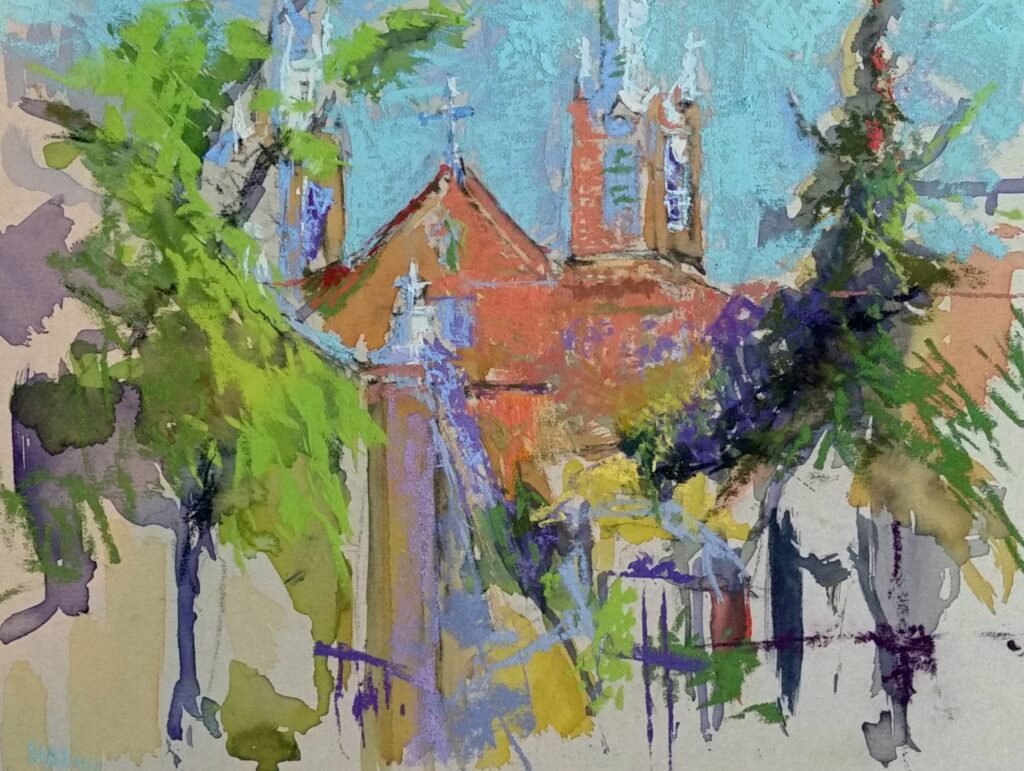
Maria Marino, “San Felipe de Neri Fundada,” 2017, pastel, 9 x 12 in., private collection, plein air
“It’s the way the light is captured in a painting, in a more fractured manner, that appeals to me as Impressionism,” Maria says. And don’t assume she’s thinking only of the French. “The Russians paint more in the impressionist manner than others. It’s how they mix color optically, with fresh brushstrokes — with no fear, no hesitation. In pastel you can’t premix colors; you have to optically mix them. It’s all about value and how intense that one color is against the other colors. It’s all about adjacencies.”
For Maria, that’s not just theory. It’s a hands-on, tactile process built from years of knowing exactly which stick to reach for — and when.
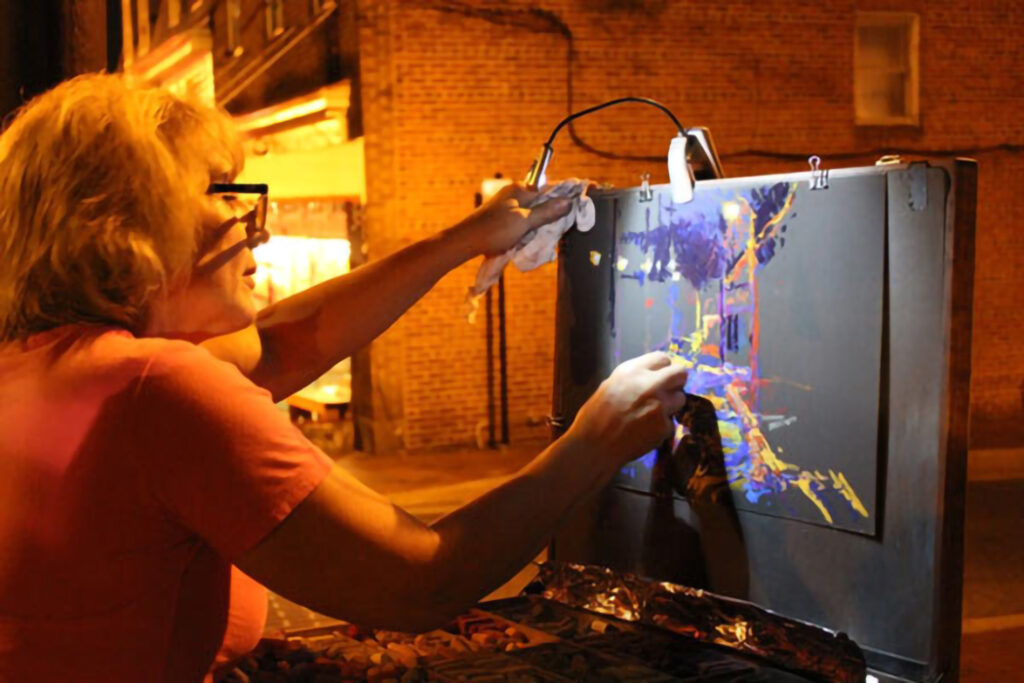
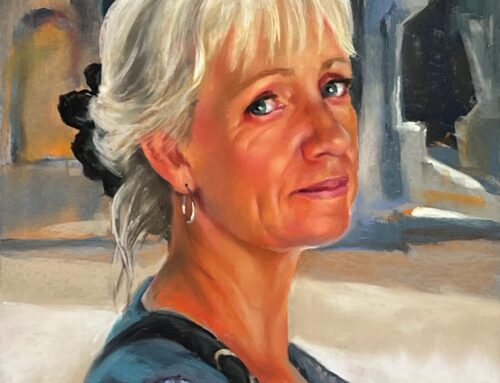
Maria Marino, shown here painting on location at Paint It! Ellicott City in Maryland, finds inspiration in a variety of subjects.
BUILDING THE SURFACE
Her technique is anything but one-note. “You can lay color down and create beautiful tactile surfaces with highs and lows. Still, your support can only take so much pigment, so you have to be careful … but you also have to be daring and just do it. I really grind the sticks into the surface. They start to fuse and create new colors.”
Broken color can easily tip into chaos. The solution, for Maria, is knowing when to quiet things down. “You don’t want it too busy all over the place.” She’ll take the side of a neutral stick and scumble over the busier passages, knocking them back so the focal point can do its job. “The minor areas of interest, the restful spots, help the major focal point stand out.”
Mara applies that same instinct to her creative life. Sometimes the best remedy for a rut isn’t a new technique — it’s a new place entirely.
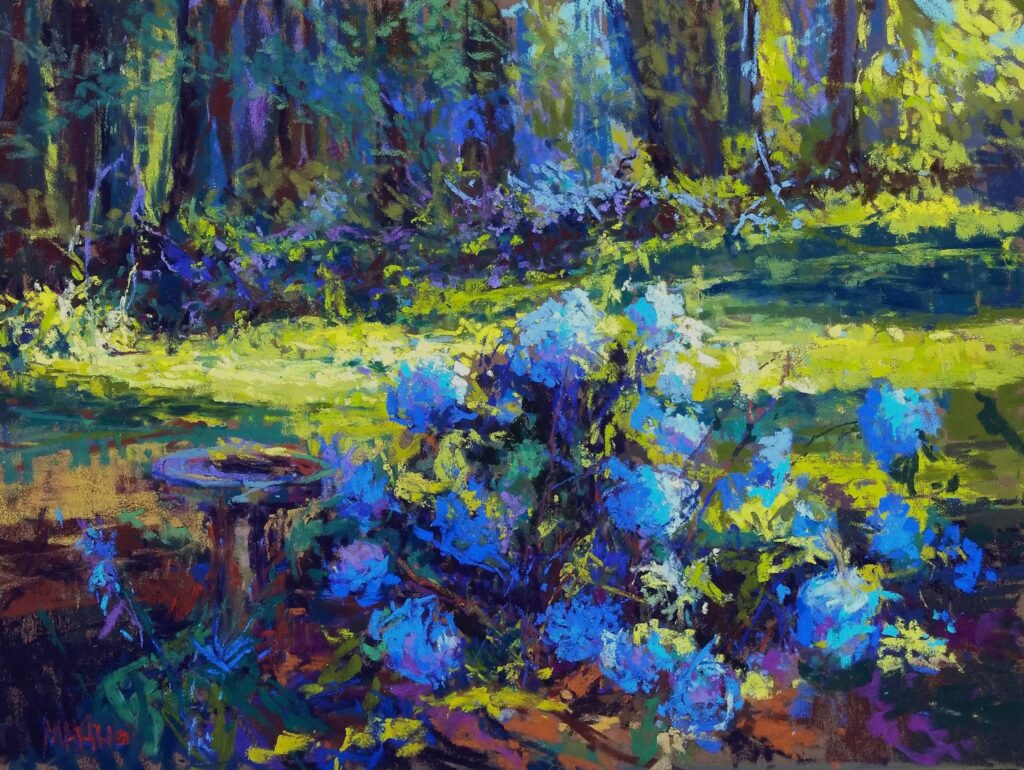
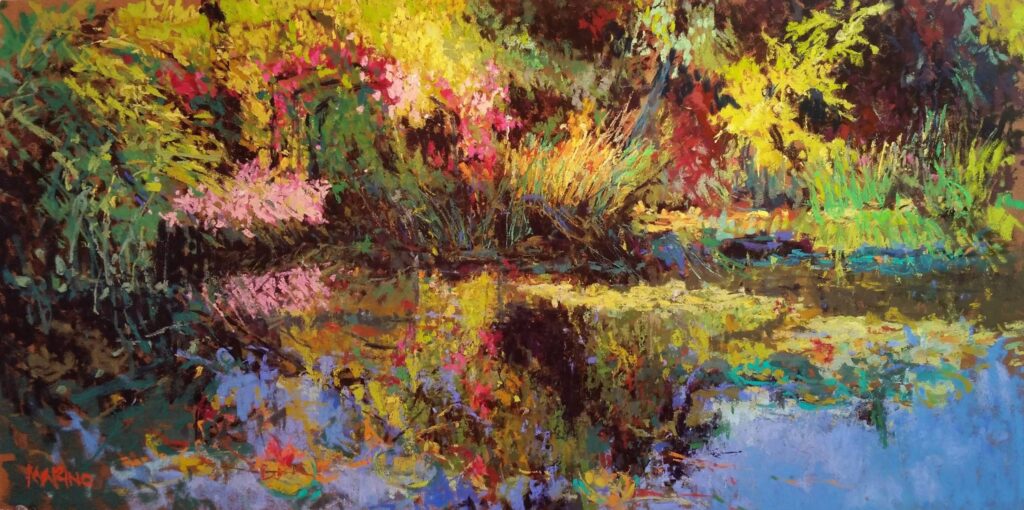
Maria Marino, “Late Afternoon in the Garden,” 2018, pastel, 12 x 16 in., Private collection, Plein air
CHASING THE LIGHT
Although Maria finds plenty of inspiration around her home in Maryland, she’s also keen on travel. “You need to go somewhere and experience a different land to get the gears moving again,” she asserts. “When I’ve been in a rut, I feel like it’s time to go. Travel helps rekindle the feelings of why I paint, of why I get up in the morning and want to do this. There’s nothing like going to a place with people who are both the same and different from you, and encountering a different landscape. That uneasiness wakes you up and gets you going, and maybe it allows you to come home and see something in a different light.”
Give your own creative gears a kickstart this May in one of the country’s most breathtaking landscapes — the Ozarks! There’s still time to join us there for the Plein Air Convention.