A great portrait subject, Lyn Diefenbach will tell you, announces itself. Strong angles. Definite personality. That instinct for the subject — the ability to see a face and immediately understand what it offers a painter — is the first step in Diefenbach’s portrait process. The second is getting out of the way of what you see, and letting the values do the work.
START WITH COLOR, THEN FIND THE FORM
Diefenbach begins with an underpainting in bright, bold colors — laying in strong hues before any refinement begins. The result, she acknowledges cheerfully, can look a little clown-like at first. But that’s precisely the point. The underpainting establishes the color temperature and emotional character of the portrait before the more measured work of value building begins. Once the underpainting is in place, she works from dark to mid to light values in each area — building form methodically rather than chasing detail.
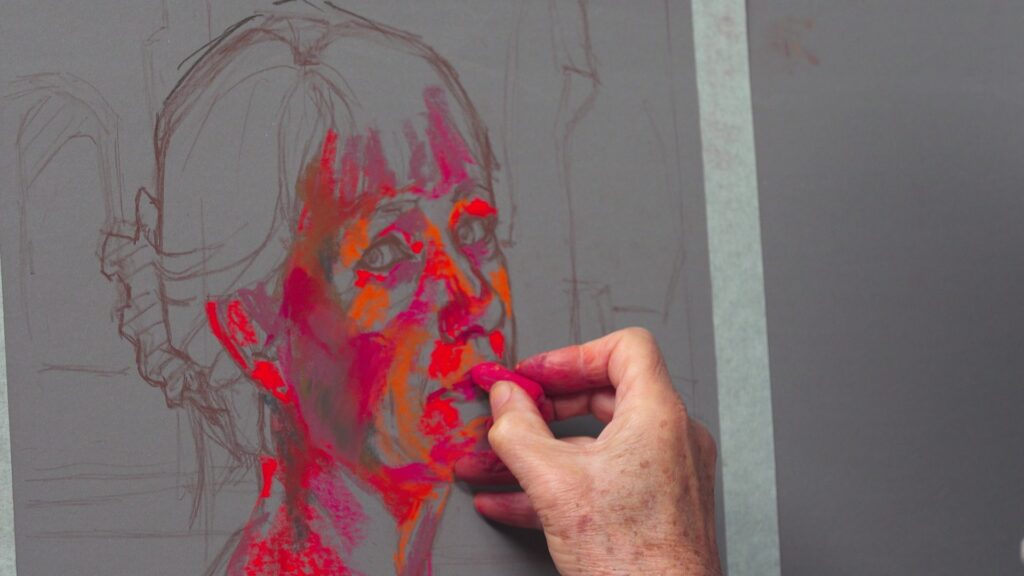
First stage: Bright, Bold Underpainting
“It is values that give the illusion of dimensionality on the surface of your painting,” she says. “We sculpt with values to create form.”
That principle — values before color, form before finish — is the spine of everything she does in a portrait. Color, she admits, can become a distraction. “You shouldn’t focus so much on the color as the values. The values are the most important thing for creating form.”
HAIR, BACKGROUND, AND THE SOFT EDGE
One of the most telling moments in Diefenbach’s process is the way she handles the transition between hair and background — an area where many portrait painters struggle. Rather than treating them as separate problems to be solved in sequence, she attends to both at the same time, pushing the hair softly into the background with her finger to create a lost edge, then coming back with dark colors to find individual strands. The effect is integration rather than separation — the figure emerging from the background rather than sitting in front of it.
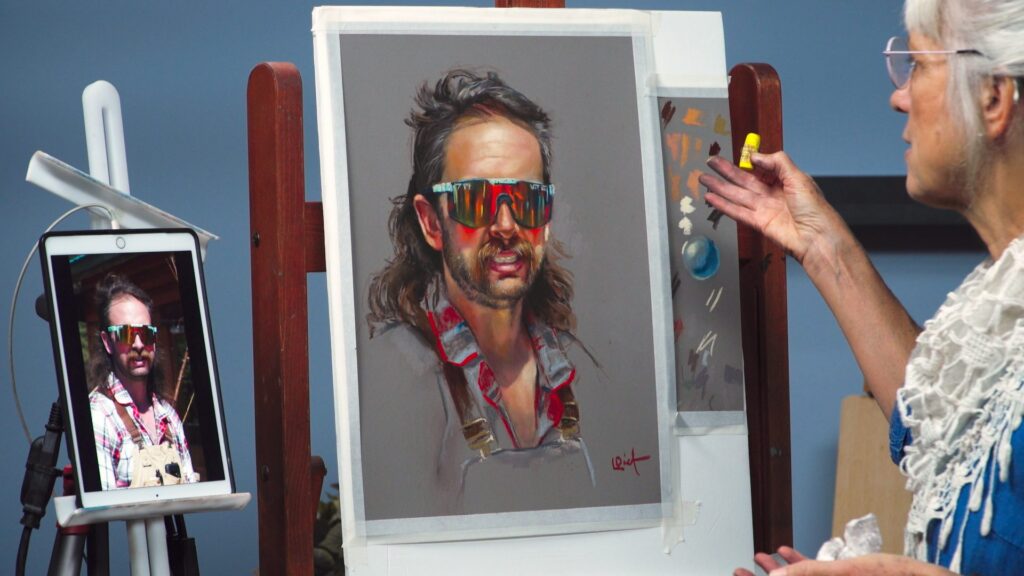
Pastel portrait setup
STEP BACK. LOOK MORE THAN YOU PAINT.
Diefenbach is a firm believer in the value of distance — literal distance — from the work in progress. Partway through a portrait, she steps away entirely. “Sometimes you get too close to it,” she says, “and certainly more look than paint at this stage is a good idea.” Returning with fresh eyes, she can see where colors and values have become misaligned, where a passage has gone flat, where a feature has drifted out of place.
That willingness to look critically — and to correct without hesitation — is what keeps the portrait alive. A lip that has gone too long gets pushed up. A nose that has flattened gets its values pushed further. “If something appears to be flat, you need to push those values a bit further to give form,” she says.
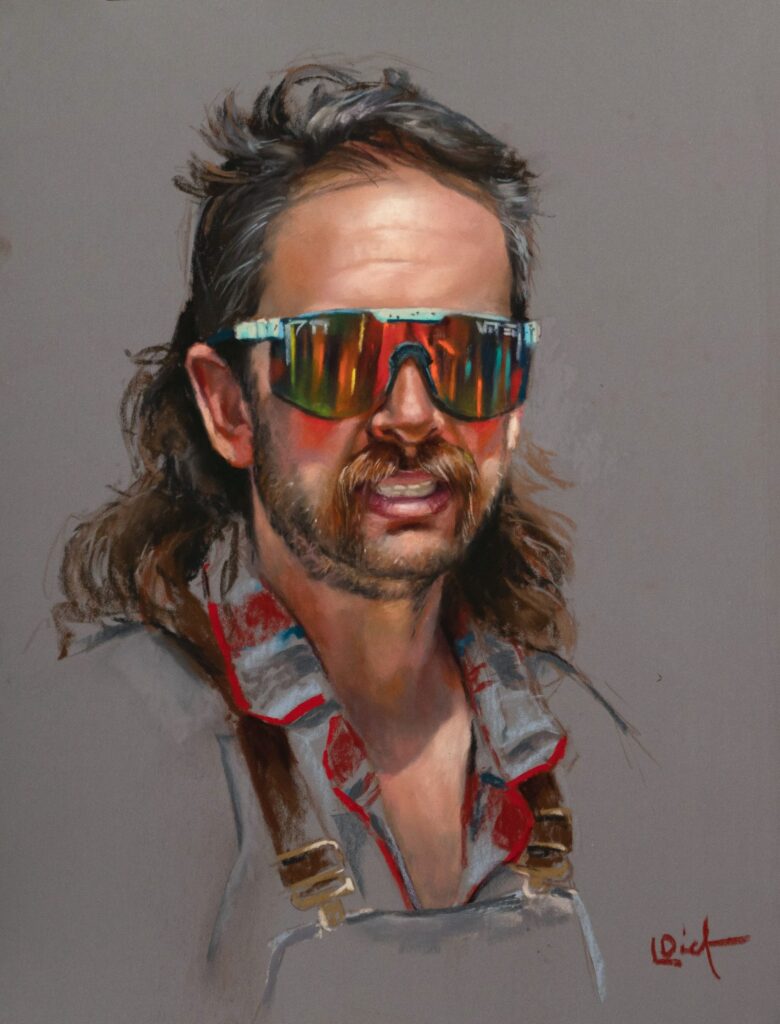
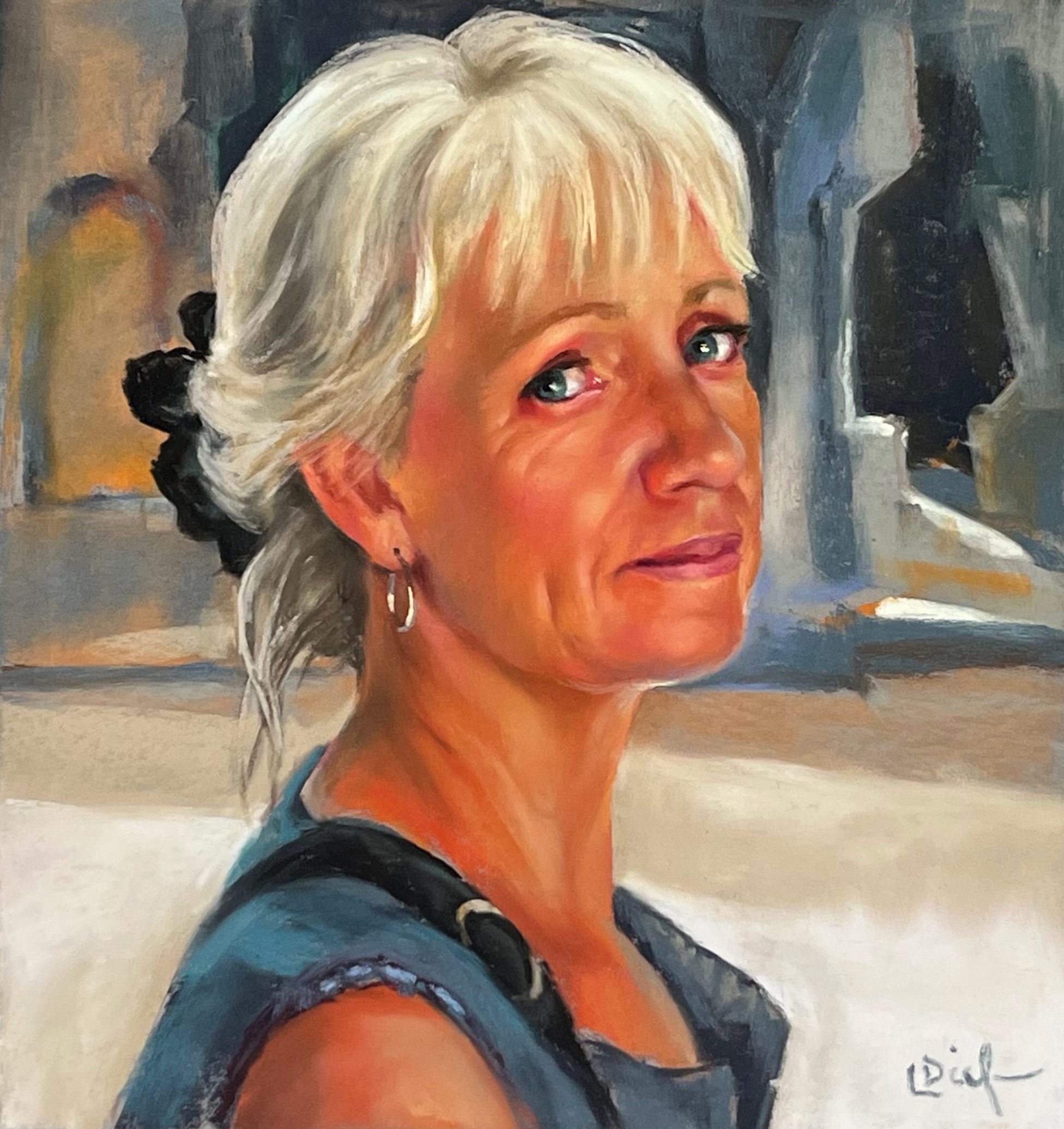
Finished pastel portrait
KNOWING WHEN TO STOP
The hardest moment in any portrait, Diefenbach suggests, is recognizing when it is finished — when further work will take away more than it adds. There comes a point, she says, when continuing to fiddle with color is a distraction from the larger truth the painting is trying to tell. Step back. Assess the whole. And when the values are holding the form and the face has the presence you were after — put your name on it.
Want to see the whole process — from clown-like underpainting to likeness — on two complete pastel portraits? Don’t sleep on Lyn’s new video workshop, Pastel Portrait Secrets: Paint 2 Lifelike Portraits with Likeness, Form & Personality.