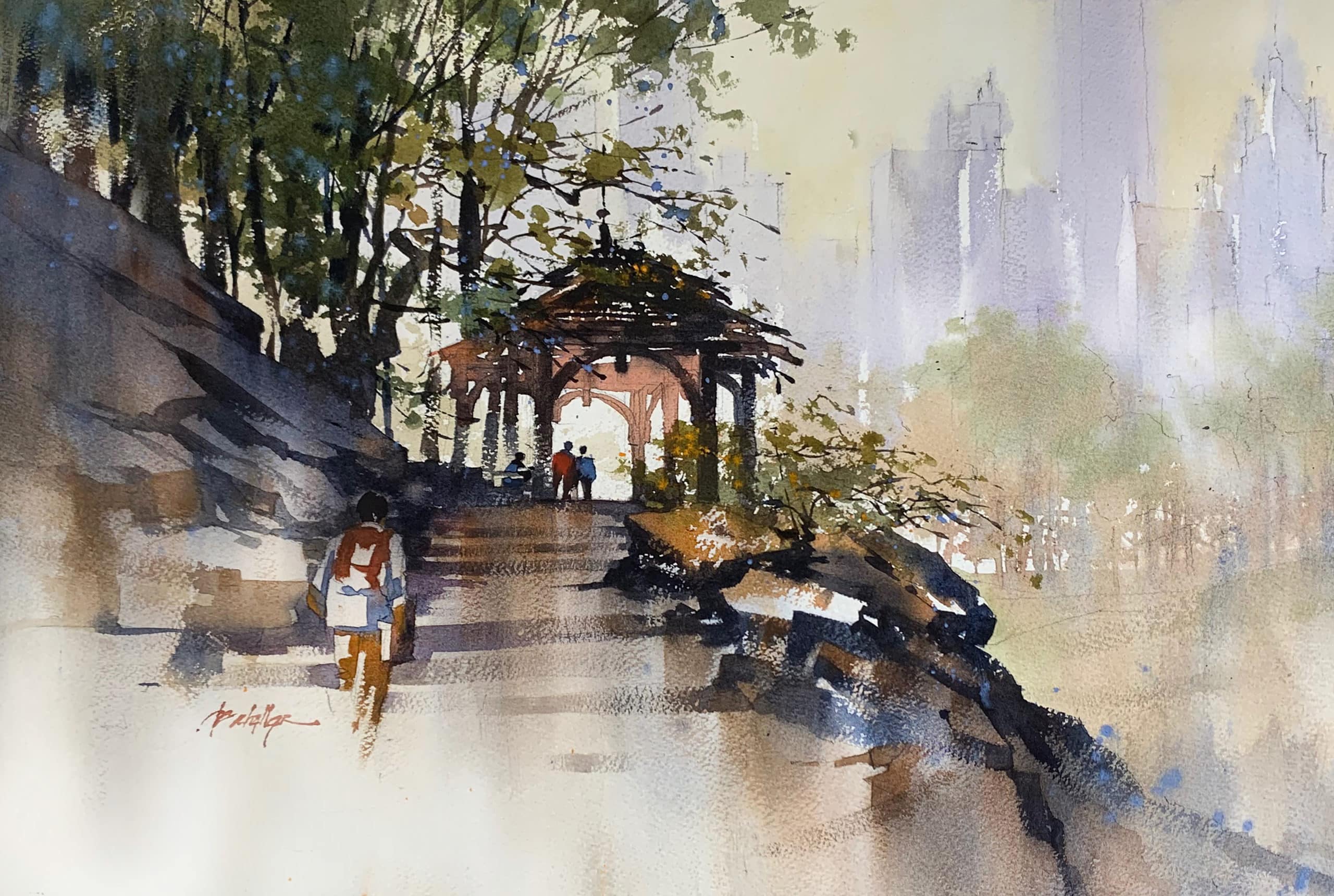
Thomas W. Schaller doesn’t have much patience for creative blocks. Or comparison traps. Or waiting for inspiration to strike. The celebrated watercolorist has spent decades thinking about what separates artists who grow from those who stall — and he’s come up with three truths worth pinning above your easel.
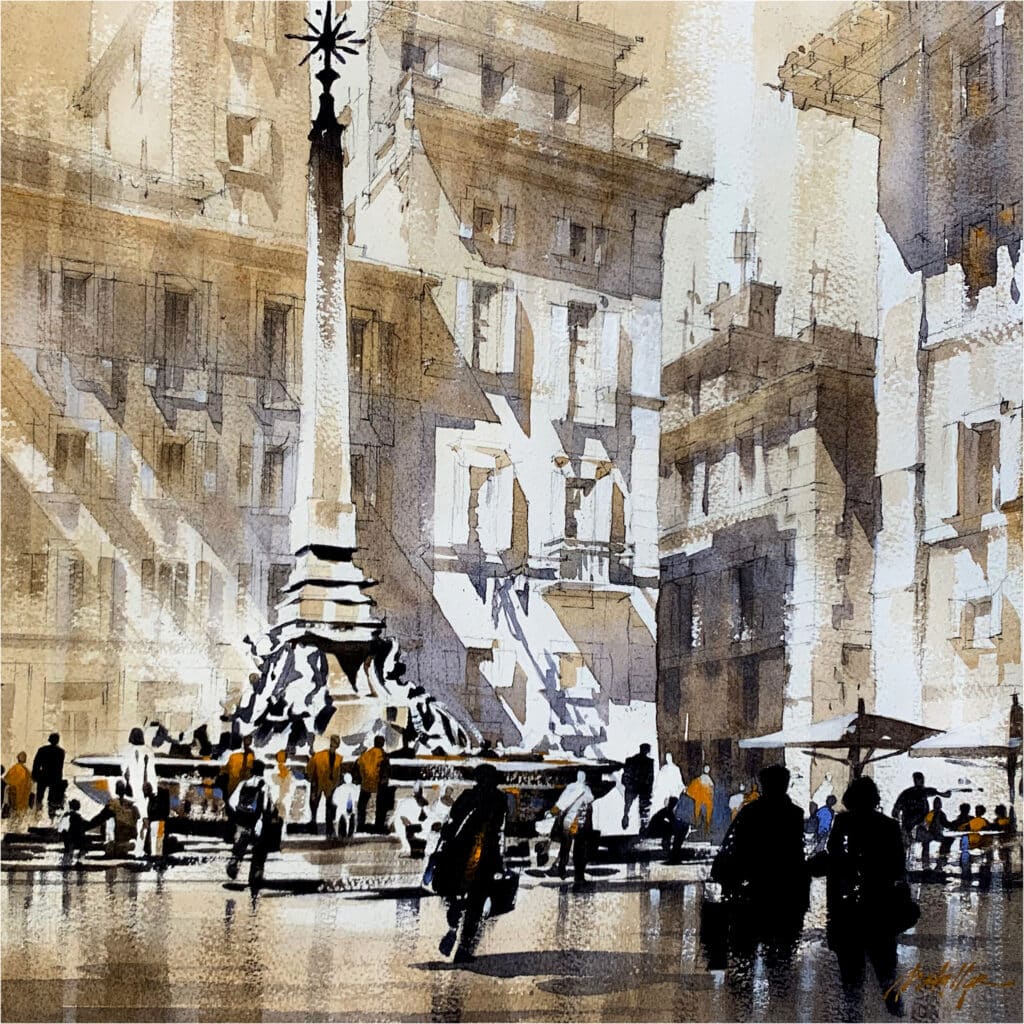
“Piazza della Rotunda — Rome” (watercolor, 15 x 15 in.)
1. Resist the urge to compare yourself to others.
“It’s natural when we start out, or even when we’re further down the road, to veer into the land of self-criticism,” he says. “We think, ‘Oh, he got into that show, and I didn’t,’ or ‘I’ll never be as good a painter as she is.’ Nothing could be a bigger waste of our time.
“You will never paint like your favorite artist — and you shouldn’t want to. Think of this: He or she can never paint like you either.
“Once you accept this, you take charge of your own creativity. You see that you have more power, more creative ability than maybe you thought you did. You can focus on the subjects you care about it, and your work will become more authentic.”
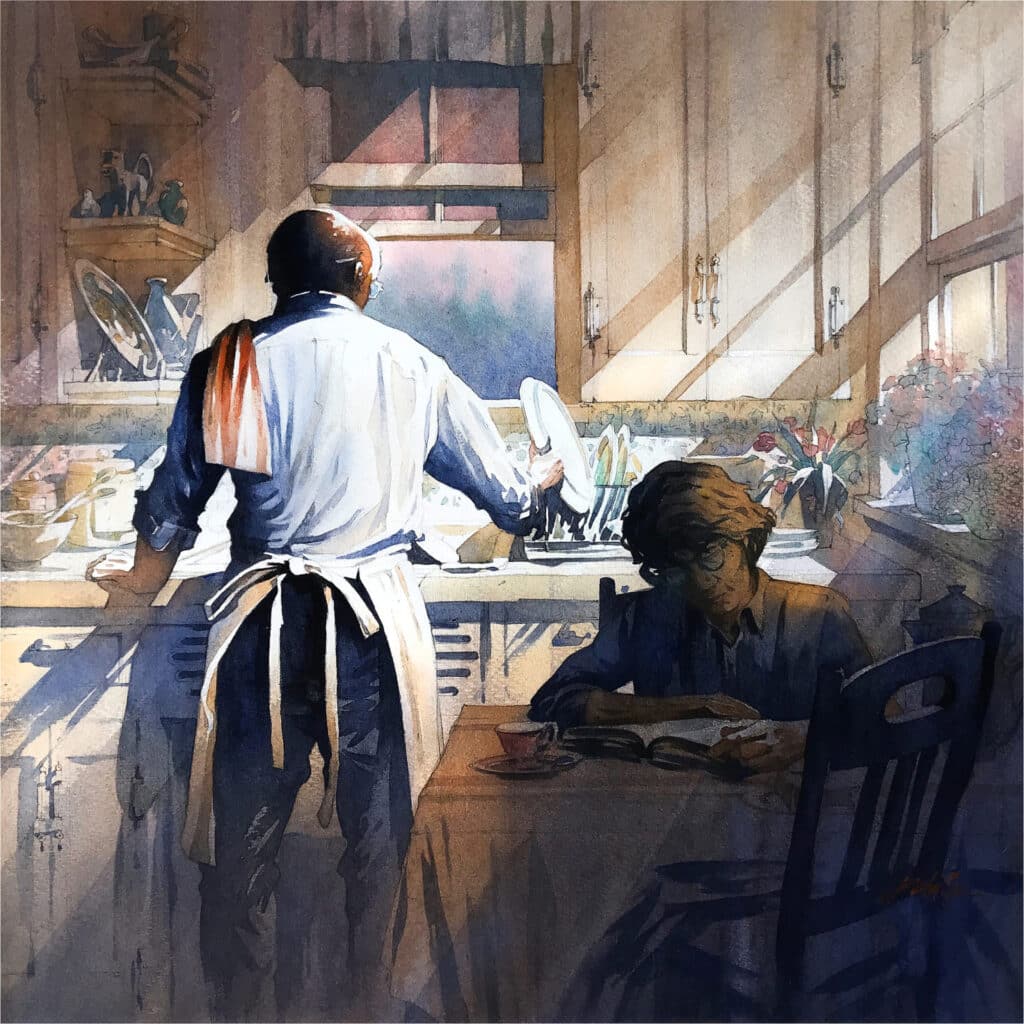
“Washing Up” (watercolor, 22 x 22 in.)
2. Paint what you “see,” not just what you “look at.”
“There is a massive gap between observation and how we feel about what we look at. We all have only a little bit of time on this earth and we get to decide how we spend it. As artists, we want to filter the visual information we encounter in the world in our own, expressive way.
“Sometimes a couple of artist friends and I set up in front of the same subject to paint. Invariably, we all prioritize what we think will make a good painting in slightly — or dramatically — different ways. And I think that’s where the art lives — in how we interpret the world around us or within us, what we choose to express, and how we do it.”
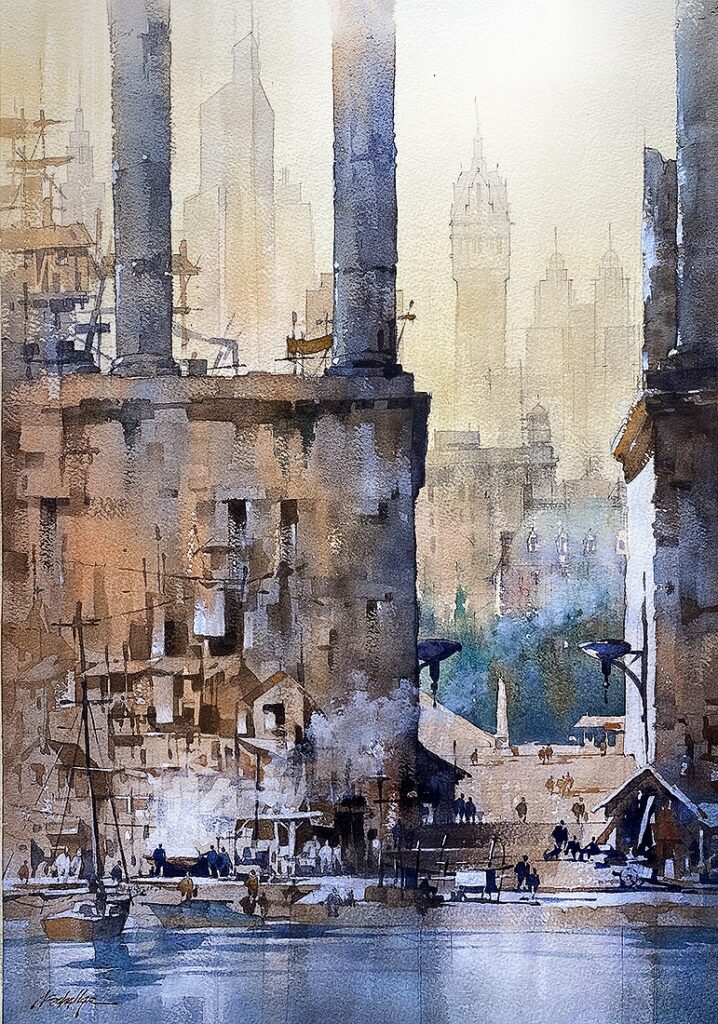
“Imagined City View” (watercolor, 22 x 15 in.)
3. Don’t wait for inspiration or “the mood” to strike. Just get to work.
“Chuck Close’s assertion that inspiration is for amateurs, and that the rest of us just get to work has always resonated with me. I think he means that we shouldn’t whine about not having something to paint or not knowing exactly what we’re doing. We shouldn’t blame our inactivity on a creative block.
“I don’t want to say it’s nonsense, but I can say those are self-imposed obstacles that are easier to get over than we like to think. If you show up to your studio, your workplace, your easel — even if you don’t know what to do — and grab a pencil and a sketchbook and start doodling, or pick up a paintbrush and old piece of paper and just start making strokes, something will happen. It always does. It might be rubbish, but it might not be. And, in any case, it’s the practice of literally just doing the work that is important. Painting isn’t just something we do; it’s who we are.”
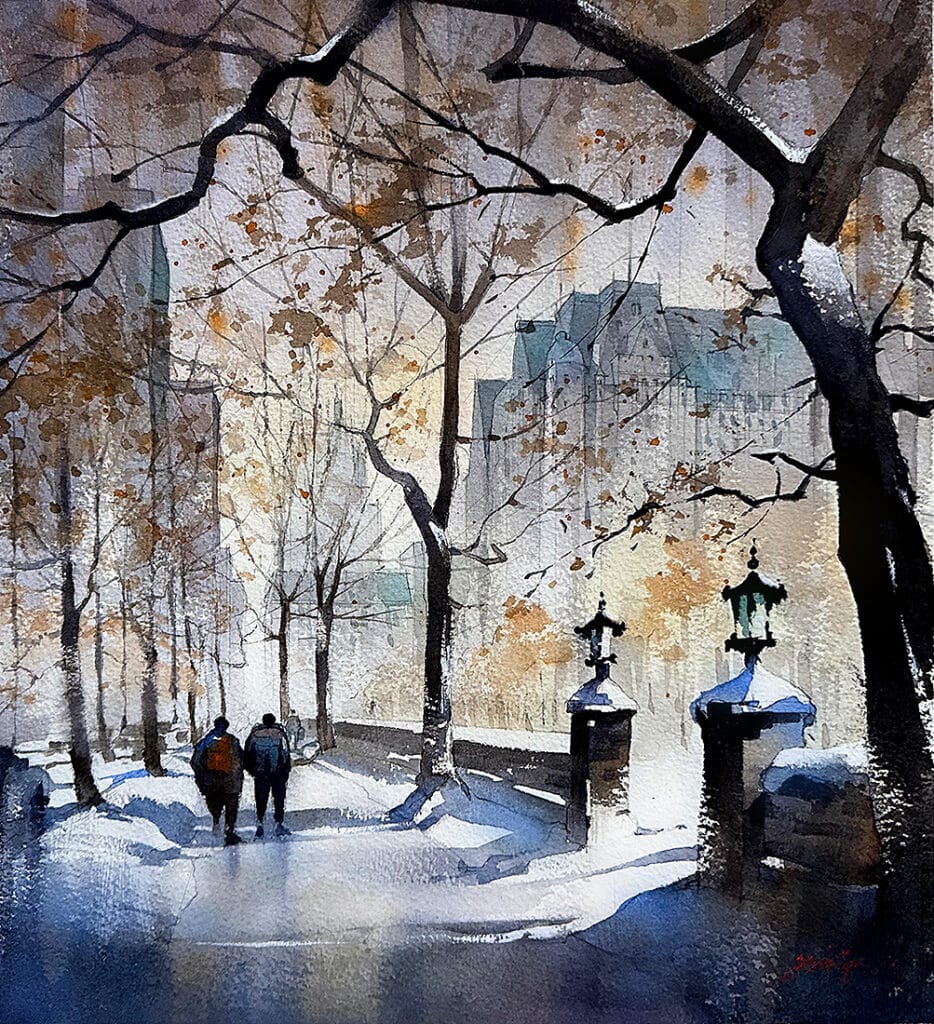
“Imaginary Cityscape” (watercolor, 15 x 14 in.)
BONUS STEP: Remember how it felt to draw or paint when you were a kid.
“That joy you had in creative play is the same energy you should channel every day. Painting is simply a lot of fun. Smile — and don’t forget to breathe!”
Thomas W. Schaller brings the same spirit to teaching that he brings to painting — generous, searching, and genuinely invested in helping artists find their own voice. He’ll be teaching the pre-convention watercolor workshop at the Plein Air Convention & Expo on May 14.