Spring officially arrived a few days ago — and there is no better way to celebrate than in the company of Pierre-Auguste Renoir, a painter who believed, with his whole heart, that beauty was reason enough to pick up a brush.
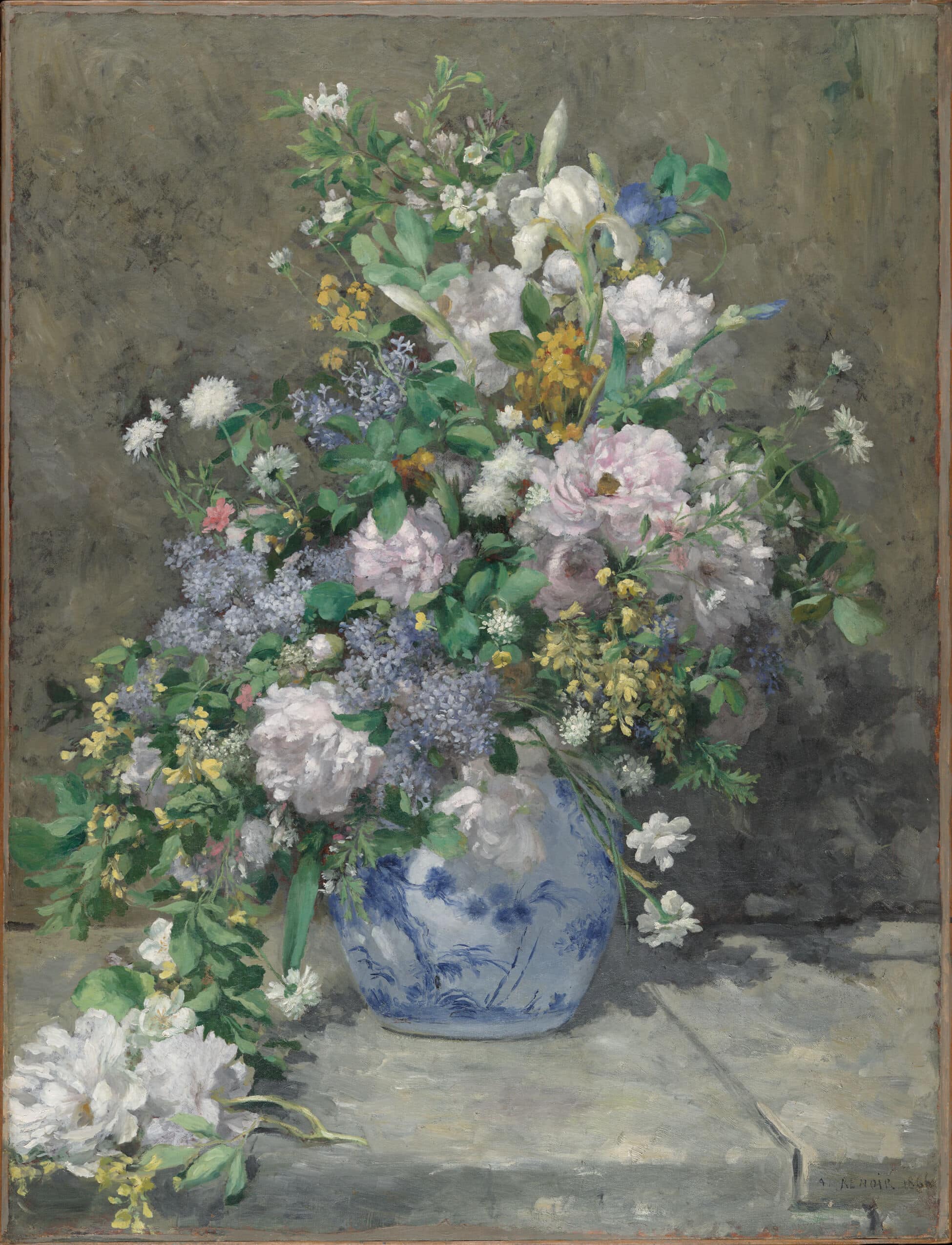
Spring Bouquet, painted early in Renoir’s career, is a perfect introduction to both the artist and the season. At first glance, it looks effortless — flowers spilling joyfully into the lower left corner of the canvas, alive with color and light. But look closer, and a precise, deliberate structure reveals itself. To the right of the vase, Renoir built a heavy shadow area rich in purples, its shaggy contour sharply contrasting with the pool of light below. In the lower right corner, a ruler-straight diagonal line anchors the whole composition — so essential that if you cover it, the painting tilts. What reads as spontaneous abundance is, in fact, a masterfully balanced act.
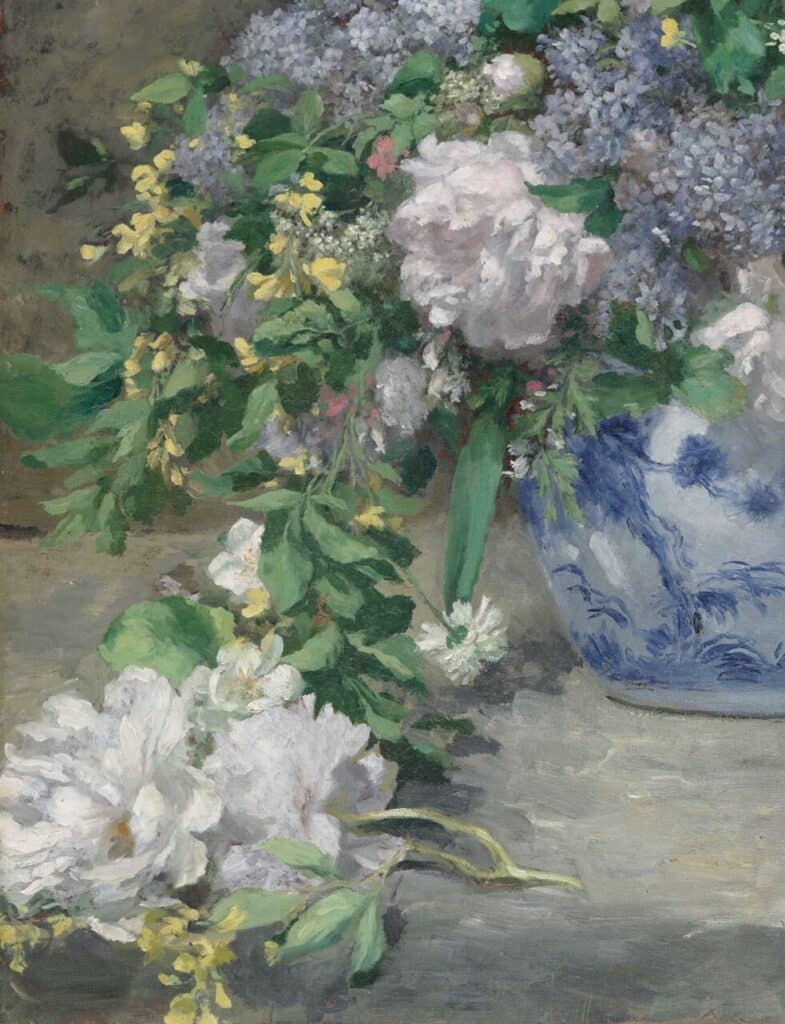
Close up view of lower left corner of painting
The painting also catches Renoir at a fascinating threshold. Impressionism had not yet fully arrived when he made this work, and the influence of Gustave Courbet is visible in the bold, fat brushstrokes and the distinct, individually rendered petals. And yet the canvas already glows with something new — a feeling of light and air and the outdoors that points unmistakably toward where painting was headed. Renoir was at the beginning of his career. His taste, as one critic observed, was already exceptional.
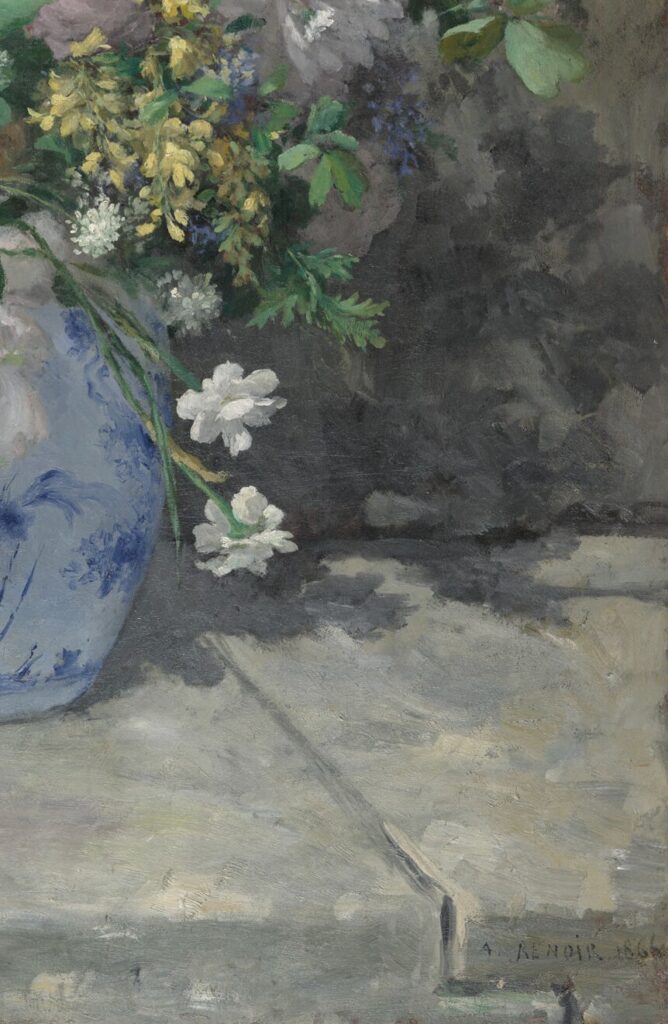
Close up view of lower right corner of painting
That taste was hard-won. Renoir spent his teenage years as a porcelain painter, copying floral designs onto plates and dishware — work that trained his eye for color, delicacy, and decorative beauty before he ever set foot in a formal studio. He later haunted the galleries of the Louvre, studying the Dutch masters and the lush, sensuous surfaces of Watteau and Boucher. By the time he painted Spring Bouquet, all of that looking had settled somewhere deep in his hand.
In later life, crippled by severe rheumatoid arthritis, Renoir had brushes placed directly into his bandaged hands so he could keep painting. He never stopped. “The pain passes,” he said, “but the beauty remains.”
It’s a philosophy as fresh as the first day of spring — and as enduring as the flowers on that canvas, still blooming more than 150 years later.
Inspired to Paint Your Own Spring Bouquet?
Renoir found his artistic voice painting flowers — and so might you. Whether you work in oil, watercolor, or pastel, we’ve got a video lesson to get you started:
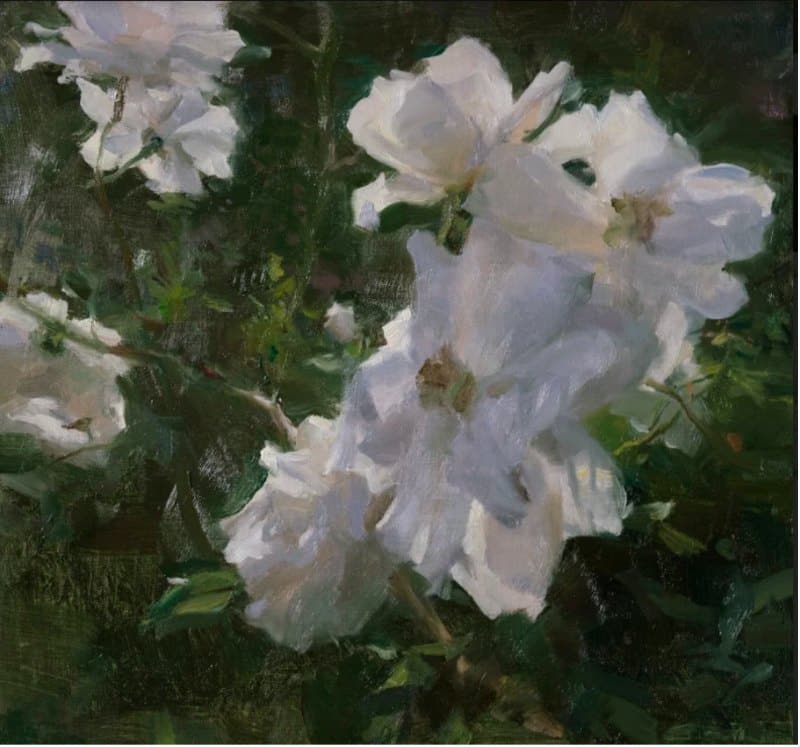
Floral painting by Kyle Ma
In Oil: Kyle Ma walks you through the lush, layered process of Painting Roses — capturing the velvety depth and delicate structure that makes florals one of painting’s most rewarding subjects.
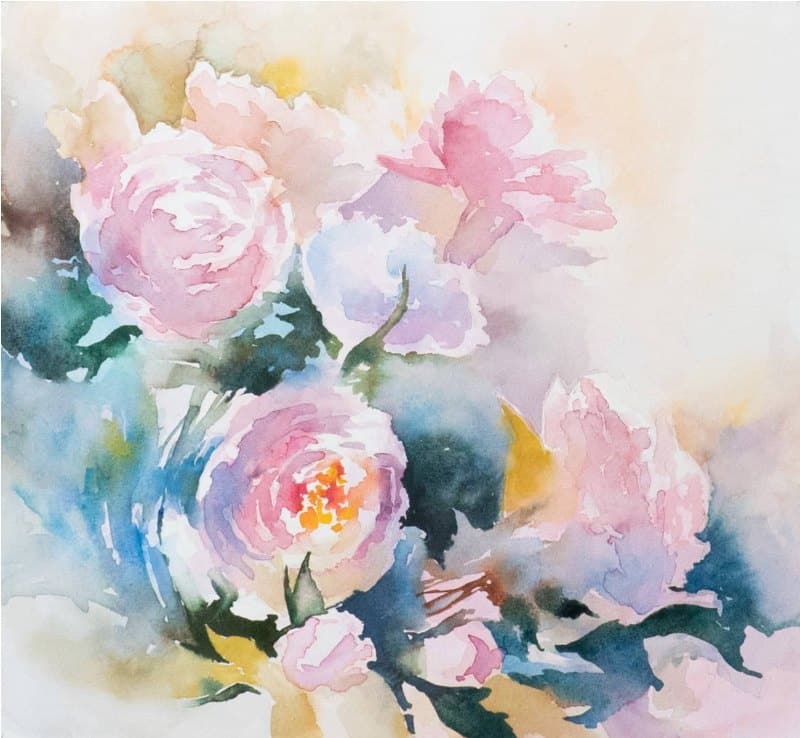
Floral painting by Susan Blackwood
In Watercolor: Susan Blackwood’s Simple Watercolor Secrets proves that flowers don’t have to be complicated — just beautiful. Perfect for painters at every level.
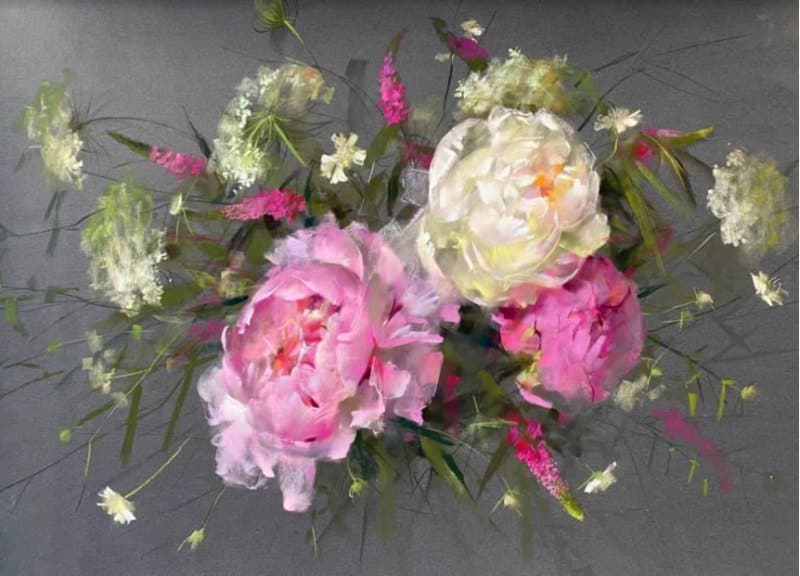
Floral painting by Vera Kavura
In Pastel: Vera Kavura’s Realistic Flowers in Pastel is a masterclass in color, texture, and the soft luminosity that makes pastel uniquely suited to capturing the beauty of blooms.
Spring only comes once a year. Pick up a brush.