It’s one of the most poisonous enemies artists at level face over and over again – Imposter Syndrome: the feeling that you’re a total fraud and it’s just a matter of time before you’re found out.
That dismissive voice in your head that says whoever is praising your work either doesn’t know enough about art or is saying good things because they like you and want you to like them, or because they have to.
That dreaded inner critic! No one gets a free pass. Unless they’re a total self-deluded echo-chambered narcissist, every artist has to deal with bouts of self-doubt at every stage of their career (trust me, you’d be surprised).
Who doesn’t want people to say good things about their work? But that need for … and what is it exactly? Admiration? Validation? Acceptance? Permission to live?? For most of us, there is always the danger that it will stifle the creative process.
And it’s not just about whether people are going to like what we make or not – it’s usually more nuanced and insidious than that. Fear of unforeseen (or indeed, foreseen!) consequences routinely kills ideas before they have a chance to become reality. Often professional artists worry, for example, about what the consequences of a given work will be. What does, or would it, mean for me to make this work? How will this work affect how people see me?
Times like that, it helps to look your fear in the face – take it into the interrogation room, sit it down in an uncomfortable folding chair, and shine a glaring light into its eyes. What you do is ask the Dreaded Voice the following: Is that true? Always in all cases? Or can there be an alternate narrative?
For example, “No one would ever buy my abstracts.” Is that (always) true? Aren’t there, in fact, some cases in which that might not be true? Come to think of it, how could you know?
Another tactic is to answer your inner critic with two magic words: So what? As in, “No one would ever buy my abstracts.” So what? What does that have to do with whether you should make them or not? Are there not, in fact, plenty of other reasons to make them that have nothing to do with money?
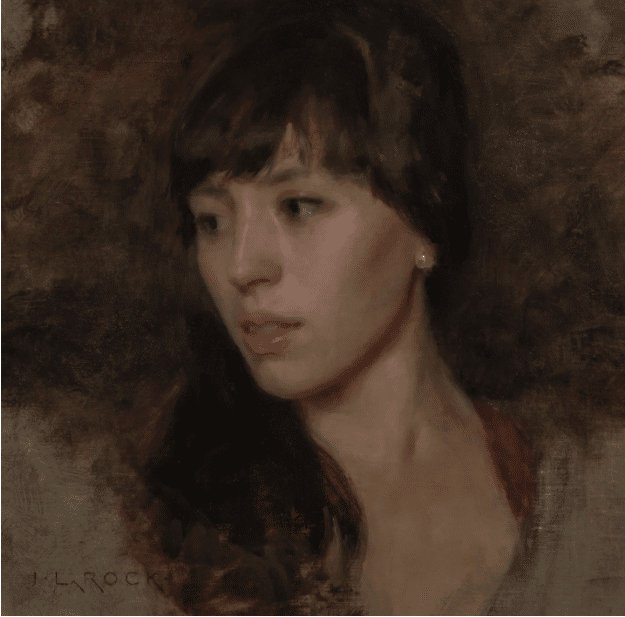
Joshua LaRock, figurative oil portrait
One more strategy to fight The Voice: see what a situation looks like when you turn it around. Example: “No one who saw them would ever buy my abstracts (not a single one, implied)” becomes Everyone who sees them always buys my abstracts (every single one). Is or could this ever be true (as in, always, in all cases)? Surely not, it’s absurd – it’s no more true than the original statement, which reminds us that the truth is (almost) always somewhere in the middle. It’s a trap!
It’s easy to get caught up in your head. Everyone does. So what’s stopping you from standing up to your fears? If you use the right interrogation tactics, chances are your inner critic will go down without a fight.
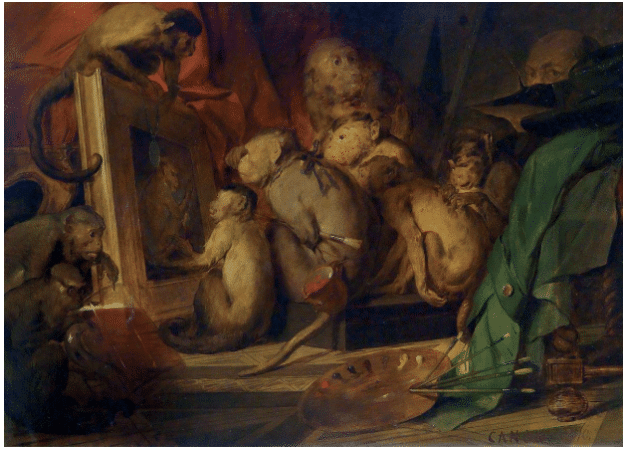
Don’t monkey around with critics.
There’s a reason more than one artist has painted caricatures of art critics as a bunch of monkeys. They don’t actually know what they think they do – no one does. No one really knows what art is, why we do it, or what makes it “good” or not.
Still, criticism hurts, especially when it’s unasked for, unwarranted or inconsiderate. Sometimes criticism may feel like the answer to a puzzle you couldn’t solve, and sometimes it will feel like a punch in the gut – yet, a good deal of that depends on your reaction.
Once you truly believe that the work you’re doing is good, then it is. Once you’re working toward an authentic expression of who you are and how you see the world, you are an artist, whether you’re painting “good” or “superior” or “important” work yet or not.Always consider the source, and remember that SO much of this stuff is subjective anyway. Keep calm and paint on.
Joshua LaRock covers the techniques behind his paintings (featured in this issue) in a teaching video titled The Classical Portrait.
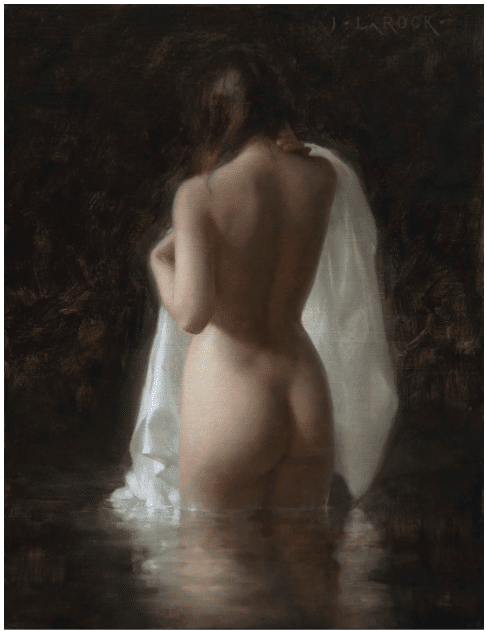
Joshua LaRock, figurative oil