This series started as “The 5 Most Inspiring” books for artists, but the list has gone beyond that number now. This is the first in the ongoing series.
#1. The Art Spirit, by Robert Henri
The Art Spirit, the inspirational collection of Robert Henri’s teachings, is as much a manual for living a full and creative life as it is a book about learning to paint. In compiling it at his students’ requests, Henri said, no effort was made “toward the form of a regular book.” The author’s opinions are “presented more as paintings are hung on the wall,” to be perused through more or less at random. “The subject is beauty – or happiness,” he stressed, rather than how-to technique. It’s not the kind of book you read cover to cover, but one you open at random for motivation and sound advice, and not just about art but about life!
For Henri, painting was primarily the manifestation and expression of a philosophy of living life fully and seeing clearly, eager for fresh experiences and open to everything. For Henri, “the art student that should be, and is so rare, is the one whose life is spent in the love and the culture of his or her own personal sensations, the cherishing of his or her emotions, never undervaluing them, the pleasure of exclaiming them to others, and an eager search for their clearest expression.”
Don’t study drawing because you think it will come in useful when you are “really an artist,” sometime in the future, he advised. Learn what you need to know to be “an artist from the beginning, busy finding the lines and forms to express the pleasures and emotions with which nature has alredy charged (you). No knowledge is so easily found as when it is needed.”
Here is a smattering of additional quotes from The Art Spirit:
“All manifestations of art are but landmarks in the progress of the human spirit toward a thing but as yet sensed and far from being possessed.”
“….Those who live their lives will leave the stuff that is really art. Art is a result. It is the trace of those who have led their lives… The great question is, ”What is worthwhile?” The majority of people have failed to ask themselves seriously enough and have failed to try seriously enough to answer this question.
“…..The object of a painting a picture is not to make a picture – however unreasonable this may sound. The picture is a by-product… The object, which is back of every true work of art, is the attainment of a state of being, a state of high functioning, a more than ordinary existence… we care for and treasure (works of art because they are) the traces of states of greater living, fuller functioning, because we want to live also, and they inspire to living…. That is the value of a work of art. The traces are inevitable. The living is the thing.
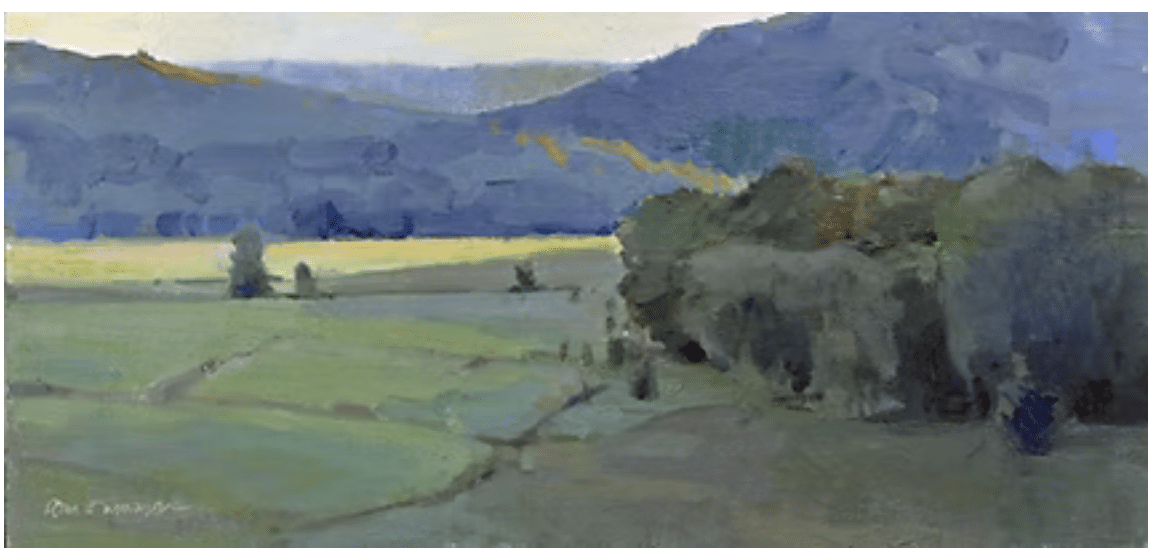
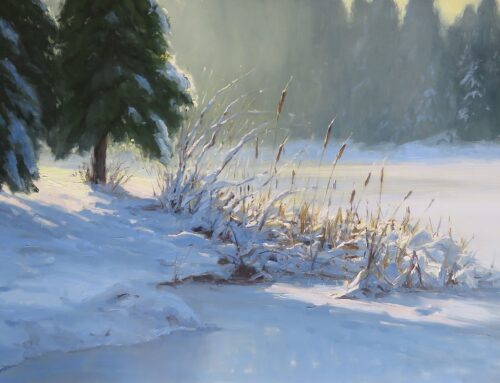
Dawn Whitelaw, The Grand View, 8 x 16 oil. Dawn Whitelaw, teaches the essence of her plein air method in the video titled Sketchscapes – from Study to Studio
“….It is a big job to know oneself, no one can entirely accomplish it yet – but to try is to act in line of evolution. (Humanity) will come to know more of itself and act more like itself but this will be by dint of effort. Today, humanity stands in its own way….The only (people) who are interesting to themselves and to others are those who have been willing to meet themselves squarely. The works of the masters are what they are because they are evidences from men who dared to be like themselves. It cost most of them dearly, but it was worthwhile. They were interesting to themselves, and now they are interesting to us.”
#2. Hawthorne on Painting
After Hawthorne died in 1930, his widow wrote to his students asking them to share the notes they took in his famed classes on Cape Cod (in and around Provincetown, mostly). It begins with this statement: “Anything under the sun is beautiful if you have the vision – it is the seeing of the thing that makes it so. The world is waiting for men and women with vision – it is not interested in mere pictures.”
“….What people subconsciously are interested in is the expression of beauty, something that helps them through the humdrum day, something that shocks them out of themselves and something that makes them believe in the beauty and the glory of human existence.”
He wanted artists to “see big” and to get the big shapes down using in what he called “spots of color” – fields and shapes of pigment coming together, establishing the big things and glossing over the unimportant “differences” that make up superfluous detail. “The layman does not know how the picture ought to be painted – you have got to show him,” he wrote. “When you can do this you will have an audience.”

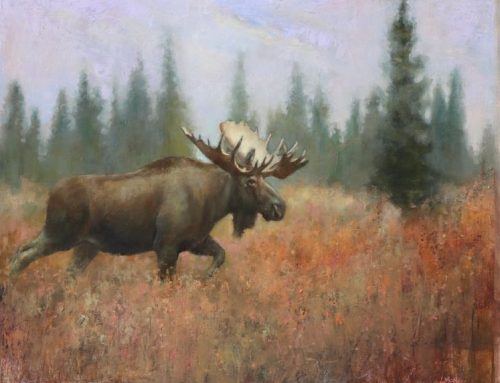
Kathleen Hudson, Gold Rush, Oil on linen, 40 x 48 in. Kathleen Hudson teaches you how to make the transition to painting larger canvases in her new teaching video, Mastering the Large Canvas: Scaling Up from Small Studies.
“….Don’t invent little schemes whereby you can get ahead of nature, little schemes to make it look like nature. You don’t need to know how to do it, all you need is to do it… It is not the sentimental viewpoint but the earnest seeking to see beauty – in the relation of one tone against another – which expresses truth – the right attitude. If you’re a thoughtful humble student of nature, you’ll have something to say – you don’t have to tell a story. You can’t add a thing by thinking – what you are will come out.
“….I want you to get something to work with – your ability to see – that’s the whole job of a painter.”
“….Your ability to see is your tools of trade; nothing else matters. Beautiful seeing is the desideratum. Remember, when you hear people say they see a thing but not do it (i.e. paint it) that they cannot really see it. If they did, they could do it even if they put the paint on with their fingers.”
So much to read and to say and learn but so little space to share it in! We will look at the next book on our list, William Hunt’s little-known gem On Painting and Drawing in an upcoming edition of Inside Art! Meanwhile, what inspires you? DO you have a favorite book about art, creativity, or painting in general? Send it in so we can consider sharing it here!
Just Out: The Inner Life of the Artist, Conversations from the Atelier, by Juliette Aristides
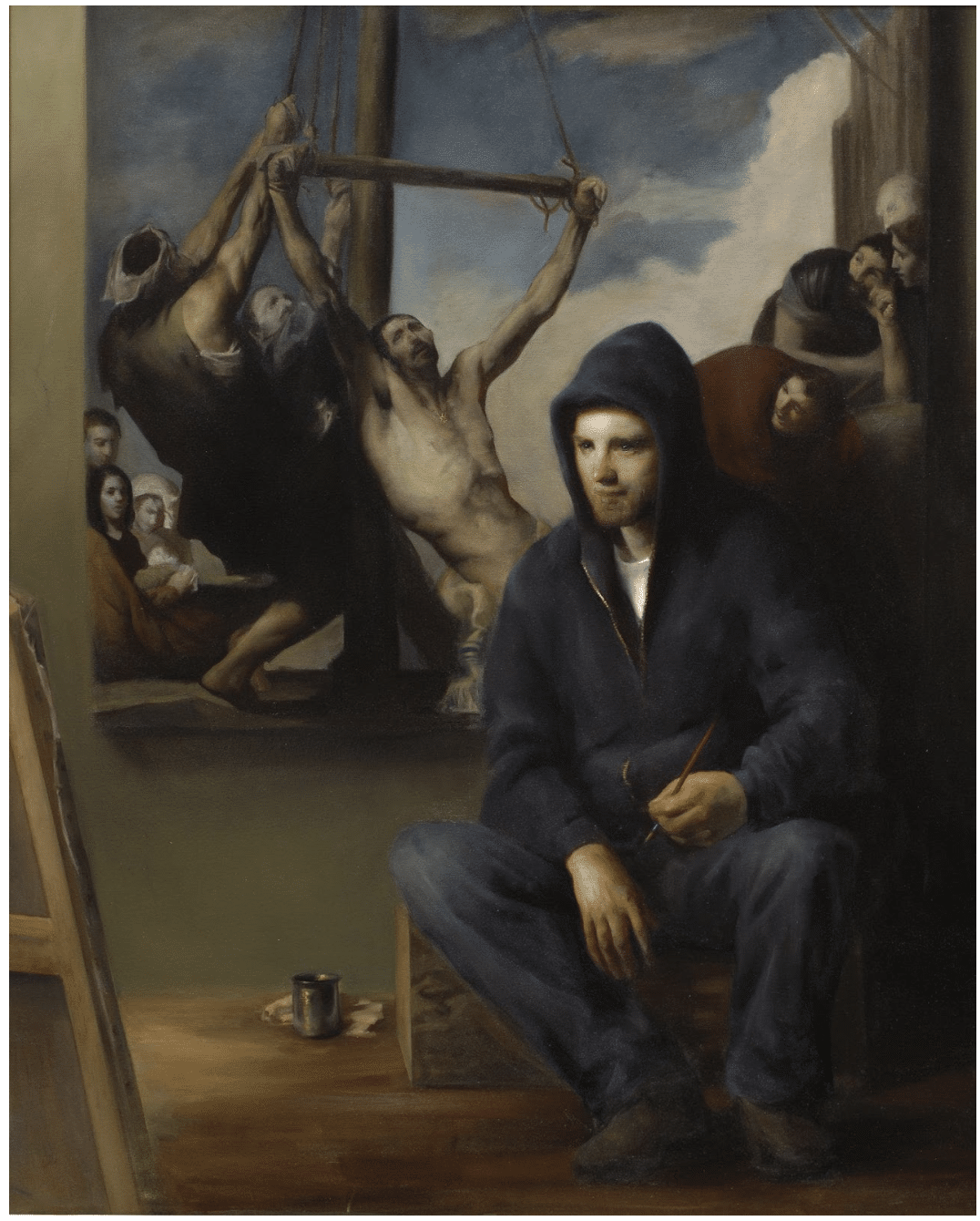
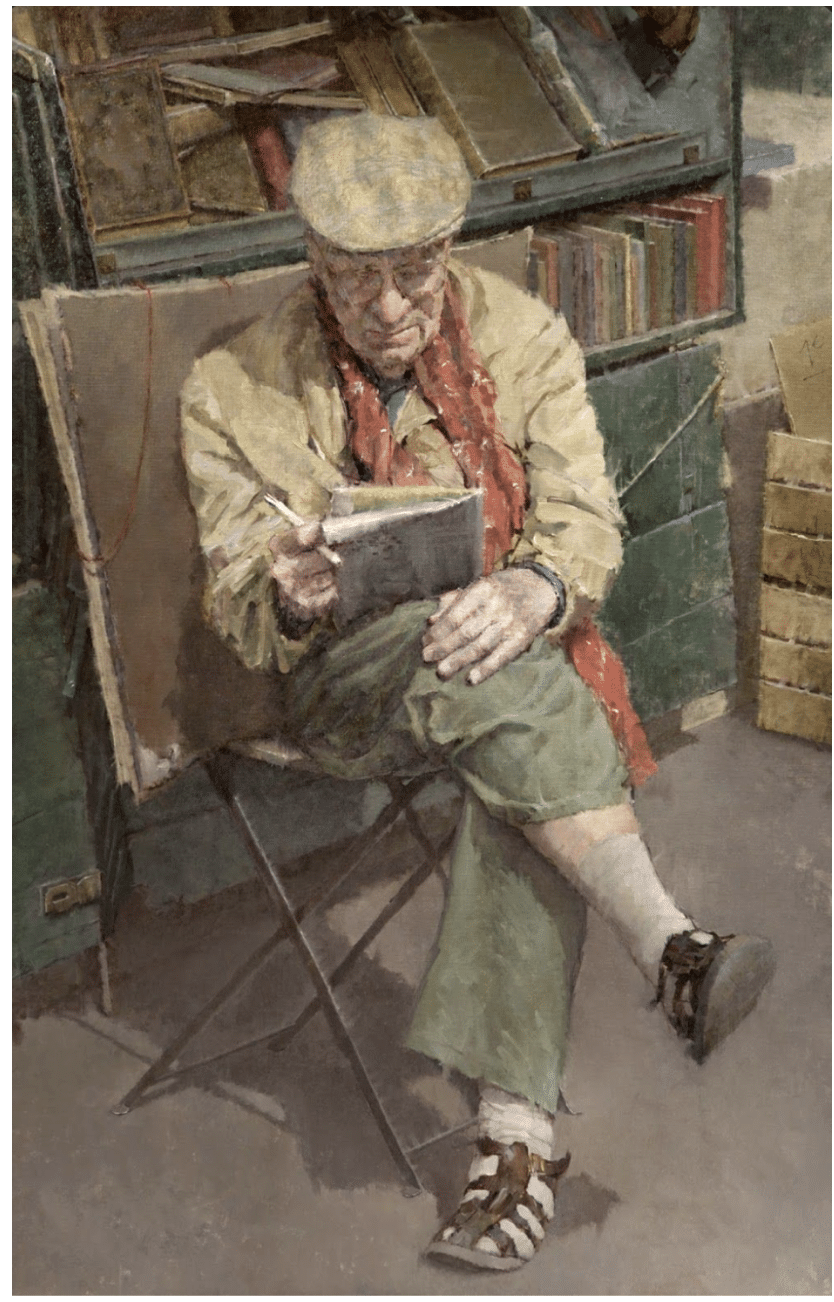
Juliette Aristides, The Artist, oil, 48 x 36
“We live but a fraction of our life. Why do we not let on the flood. Employ your senses.” That exhortation by Henry David Thoreau to live a livelier life opens Juliette Aristide’s new book, The Inner Life of the Artist, Conversations from the Atelier. Aristides is an accomplished painter (and teacher) in the realist tradition – why write? “I write to think. I think to write,” she says. “I draw to see. I daydream to grow.”
It’s a beautiful book, both physically and in terms of the ideas, quotes, and wisdom, not to mention the dozens of arresting and elegant images with which it brims. Aristides divides The Inner Life of the Artist into three sections, “I. The Artist’s Pilgrimage” on being, seeing, and growing as an artist; “II. On Art and Perception,” which comprises the value of contemplation, influence, education, and the tensions artists must contend with between seeing and subjectivity, perception and meaning (and relevance), inspiration and discipline, and the real and the ideal.
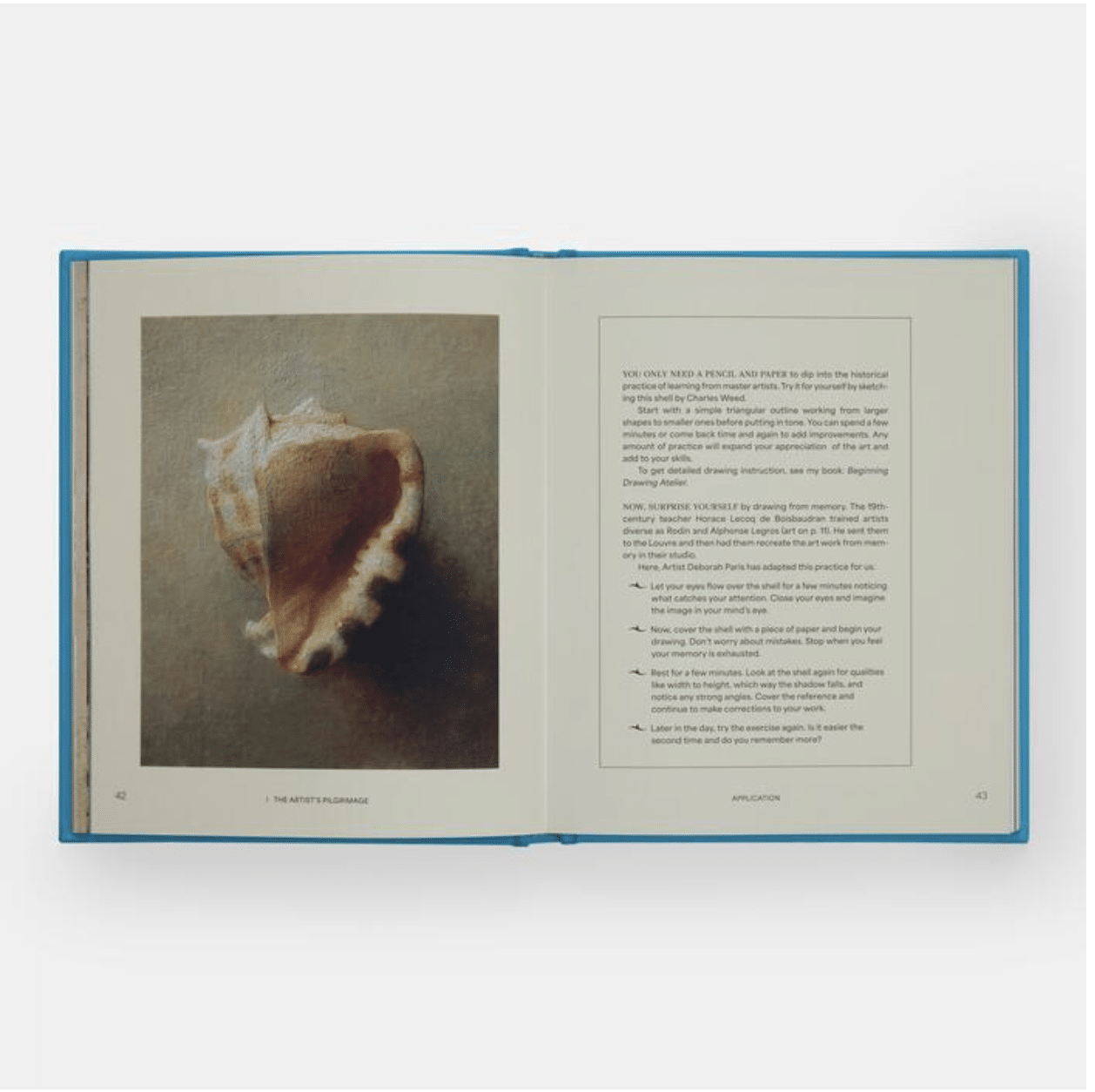
The third and final section brings the magic of poetry to bear on the practice of painting. Art, words, ideas, books, writing, and meaning chase each other beautifully through accessible passages of direct, down-to-earth writing throughout.
The lens widens still with a marvelous section on the “re-enchantment of the world.” Sections on “compassionate listening” and related “conversation starters” (e.g. “What do you think about before you go to sleep at night?”), hint at practical ways to live what Robert Henri said is true vocation of the artist: knowing oneself and embracing the human spirit. “Those who have lived and grown at least to some degree in the spirit of freedom are our creative artists,” he wrote. “They have a wonderful time.”
The Inner Life of the Artist, Conversations from the Atelier is rich with honest autobiography and valuable advice. It’s is a guidebook to the art life’s mysterious hints and callings. The books winds down with meditations on things as marvelous strange as beauty, meaning, the hearts of painters and poets, and the charm of light reflecting off water as the wind holds its breath.
Peter Trippi, Editor in Chief, Fine Art Connoisseur Magazine sums it up very well: ‘Juliette Aristides offers us a rare gift — an extraordinarily wide-ranging meditation on art and artistry, and also on how anyone might live life to its fullest. The structure of her case is clear, and her points are made convincingly through words, images, and even handy exercises, yet our overall impression is the joy of taking a leisurely stroll with a trusted friend. Aristides wears her profound insights lightly, calling upon an intriguing mix of creative people – from the past and the present – to help illuminate the path. Would that all great artists could articulate their ideas so deftly.’