Science is unlocking all kinds of “secrets” to one of life’s grandest and arguable most important mysteries – creativity.
There’s plenty of evidence now that creativity can indeed improve and even prolong your life. Taking up an art like painting keeps your mind limber and your emotions alive, helps you stay curious and adventurous, and it also relieves stress (when you’re not pulling your hair out and snapping your brushes in half over how the heck to paint a cloud!).
Researchers studying links between health and five major personality traits found that only creativity — not intelligence, extroversion, openness, or agreeableness — improves one’s chances of staying healthy longer. It’s because creative expression enhances neural networks, keeping the brain healthy even into old age.
Being creative is also good practice for keeping an open mind. Creative thinking is about problem-solving as opposed to hand-wringing. It’s about making new connections, not cultivating doubt and division, and it’s about considering and integrating new information rather than closing it off or shutting it out.
Psychologists are discovering that these are the kind of traits that translate well to social situations. Creative thinkers – simply meaning ordinary people who are developing their ability to think and act creatively – score better when it comes to empathizing with others and understanding alternate points of view. And goodness knows these days we can do with more of that.
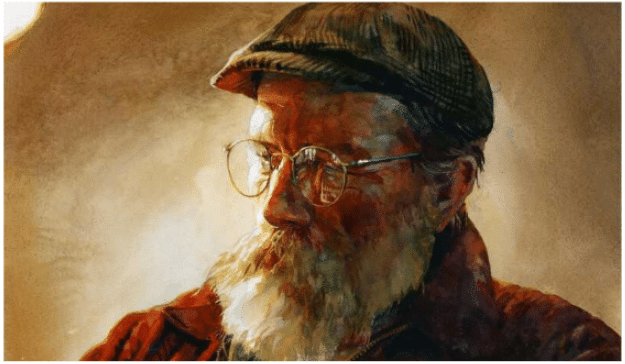
Stan Miller, self-portrait, watercolor on paper
“I believe that creative expression helps us leverage our better angels and be better versions of ourselves,” Veronica Keiffer-Lewis, Ed.D wrote in article published online by Psychology Today. “It can also help us develop and embody cultural humility, the lifelong commitment to understanding and respecting different points of view, … and see others in new ways.”
Artistry involves self-development. And that allows us to expand our understanding of ourselves and each other.
Attitude matters. Painting becomes a lot more fun if you can stay open and mostly uncritical while working. In other words, it helps when navigating the processes within painting if you can keep yourself in a state of suspended judgment, avoiding jumping to conclusions too quickly. It gives you a better chance of solving problems creatively as they arise rather than giving up the ship at every tenth wave. You also stand a better chance at being surprised by whatever comes next (or challenged to fix what unexpectedly goes wrong with that tree!).
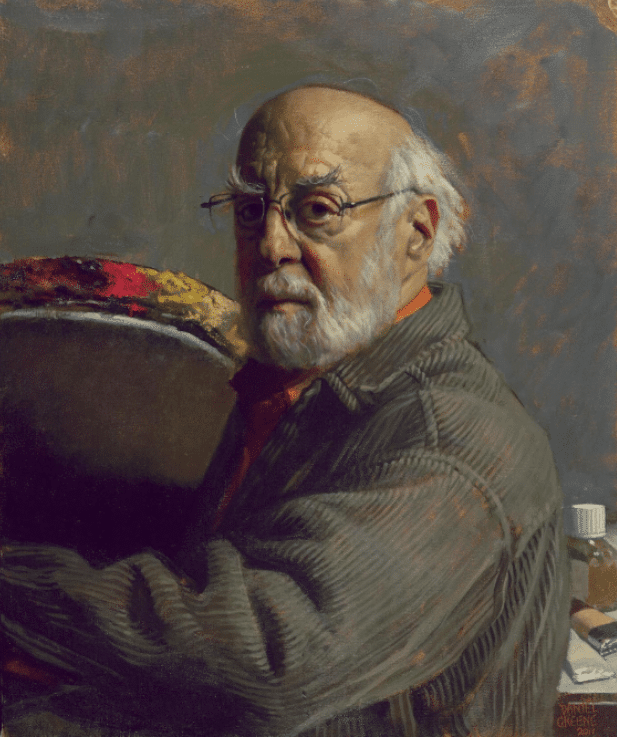
Daniel Greene, “Self Portrait with Palette” Oil on linen 24 x 20
In other words, painting, like life, is less frustrating if you reframe perceived missteps and obstacles as opportunities for creative problem-solving (I know, I know). To pull back the camera a little, art helps us better understand ourselves and relate to each other. Creative expression “can also help reframe (social) conflict as creative potential,” Keiffer-Lewis says, “or as an opportunity for understanding new social realities.”
Keiffer-Lewis tells an interesting story about a student at a college where she was presenting her research: “One day, a student at the college where we would be presenting came in and stared at a self-portrait my brother had painted entitled Colored. After studying the painting for a long time, he turned to us and said, ‘I really wish I knew what the artist was thinking and feeling when he created this.’
“My brother, in his wisdom replied, ‘Can you imagine a world where we all take as much time, care, and curiosity to understand another human being?’ That is the world I long for, and I dedicate my work to a world in which we see each human being as an amazing piece of art to be curious about, love, care for, and respect.”
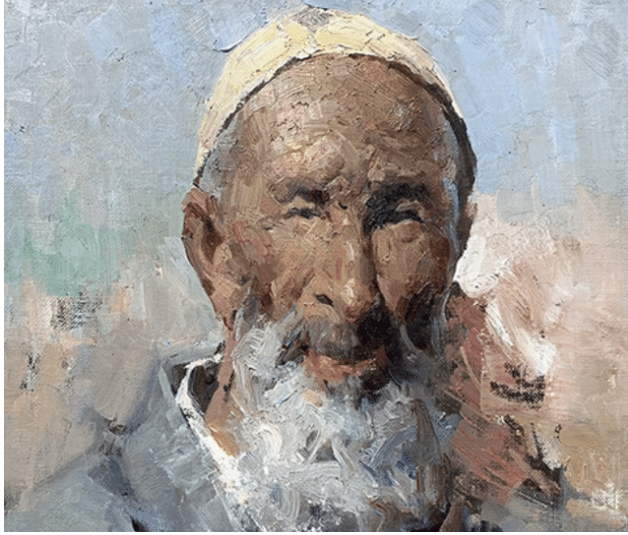
The three portrait masters showcased in this article, each working in a different medium, all have highly popular tutorial videos. Check out Jove Wang, Expressive Portraits (oil), or Stan Miller, Watercolor Portraits & and Daniel Greene, The Pastel Portrait.