“I am awaiting / perpetually and forever / a renaissance of wonder”
― Lawrence Ferlinghetti
Painting, like poetry, and all the best things in life, is often simple and complicated at the same time.
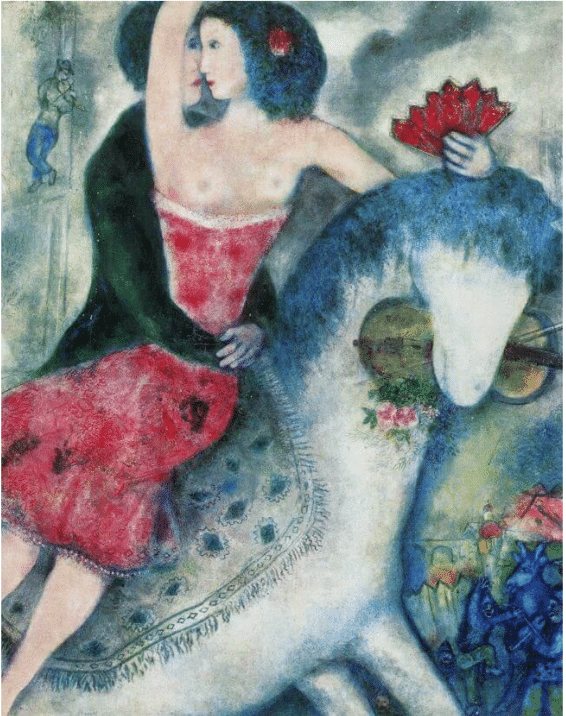
Marc Chagall’s 1933 painting, Equestrienne, seems like something a child dreamed up. That’s because the artist has deliberately bypassed the conventional “adult” world. Instead Chagall has conjured a new world in its place, full of the playful yet strange and mysterious logic of fairy tales, imagination, and dreams.
Although the double figure on the broad back of the horse fills almost the entire picture plane, at the upper left near the edge of the picture (standing on some scaffolding which might also be a symbolic window frame) there’s the small figure of a peasant (fiddling a love tune, perhaps). Chagall identified with the “common” people of his country and wanted to make art accessible to everybody. The fiddler makes us think of artists and poets, outsiders looking in, standing apart from life to weave it into a colorful creative tapestry for all to see.
There’s another fiddler in the lower right corner, where there’s a whole other painting in miniature: in the moonlight on the edge of a village, a man in some kind of costume makes music for a cow and an exuberantly dancing/leaping clown.
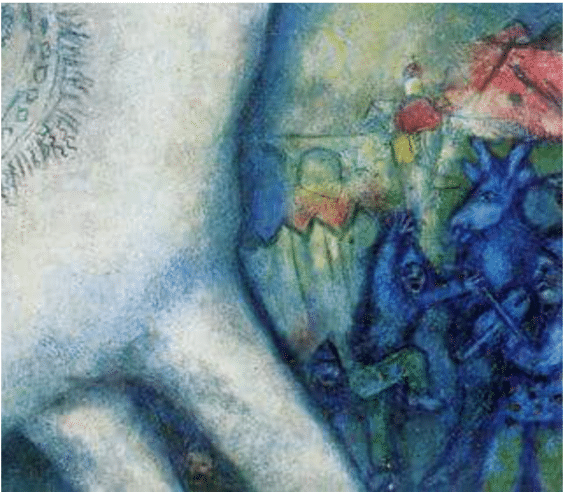
Detail of lower right corner of Equestrienne.
Chagall was living through a very happy period when he painted this. Theaters, concerts, and the social life in the Paris cafes had him rubbing elbows with fashionable society. He enjoyed this side of cosmopolitan life, which was something new to him, and as a celebrated painter, he could feel part of the artistic elite of the city that set the tone for the art world at large. This too is reflected in the elegance of the picture.
The graceful girlish figure of the circus horsewoman, who, with the soft pink of her embroidered dress and the red of her fan, sets the only higher-keyed color accents in the scene, poses calmly on the richly decorated saddlecloth of her white horse.
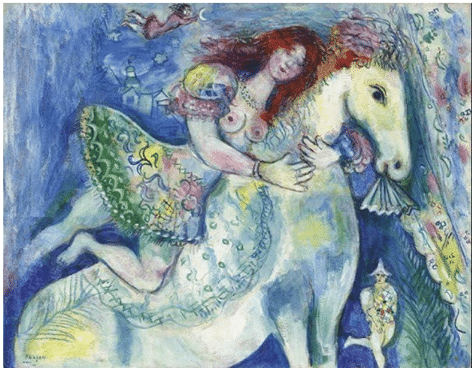
Chagall, Woman and Circus Horse, oil, cl 1935
As the writers of Chagall.net tell us, “It is a true fairy steed with the precious burden of a beautiful princess on its back, such as we may imagine from the Arabian Nights. With its gently bowed head it holds a garlanded violin. The rider herself is being embraced by her young lover, who is wearing a green velvet coat;” another stand-in for the artist, perhaps, who embraces life’s wild circus-ride to risk beauty.
The poet Lawrence Ferlinghetti caught the same spirit in words. He playfully misinterprets Chagall’s image to write a poem about making art and living life exuberantly free of outdated, alarmist, and over-cautious authoritative rules.
Don’t Let That Horse
Don’t let that horse
eat that violin
cried Chagall’s mother
But he
kept right on
painting
And became famous
And kept on painting
The Horse with Violin in Mouth
And when he finally finished it
he jumped up upon the horse
and rode away
waving the violin
And then with a bow he gave it
to the first naked nude he ran across
And there were no strings
attached.
-Lawrence Ferlinghetti
If painting horses (or dogs) interests you, there’s a combo deal on two animal painting videos by Johanne Mangi on sale here.
3 Days of Pastel Realism Recap
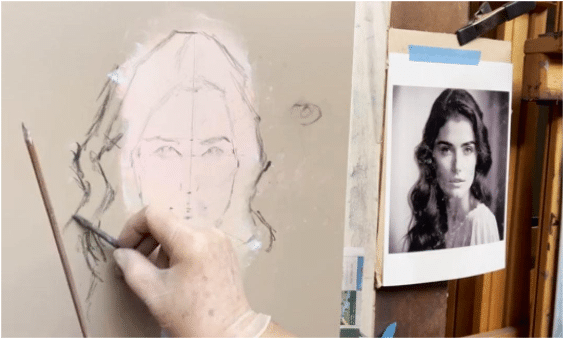
Enjoy video segments from the 3rd Annual Pastel Live, an unforgettable event for artists of all levels of painting with pastels. Pastel Live is a virtual art conference that took place August 17-19. You can catch the replays at PastelLive.com now.
For a recap of some of the highlights, including tips and screenshots from the event, check out this article in Realism Today.