We all could use a little more awe in our lives, and art is the perfect place to start.
Awe is the feeling of being in the presence of something vast or profound that leads you to see the world in a different way. When people feel awe, they may use other words to describe the experience, such as wonder, amazement, surprise, or transcendence. Awe can bring us to tears, give us chills, and uplift us.
Great works of art strike us – the word “stunning” gets thrown around a lot, because that’s often the feeling they evoke. Chances are it’s what prompted the artist to make that work in the first place: Sudden fascination, amazement, in a word, AWE.
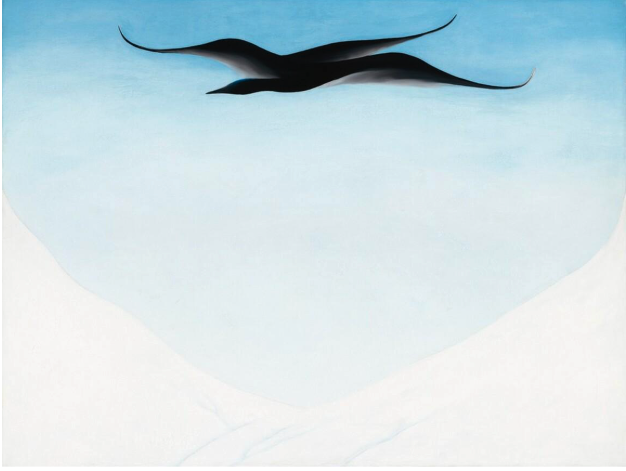
Georgia O’Keeffe, A Black Bird with Snow-Covered Red Hills, 1946, oil on canvas
“Jaws drop. Eyes widen. A quick gasp of whoa! or wow!” That’s how the National Gallery of Art describes the awe that overtakes the viewer in the presence of art. “Sometimes a work of art stops us in our tracks and makes us appreciate being in the presence of the ‘real thing.’ Art can help us discover unexpected connections, allowing us to feel our shared humanity.”
Children often have it, that sense of wonder, before it’s dulled by pain, fear, anxiety, and the routine boredom of average modern life. Life seems to conspire to make it difficult to see with fresh eyes; art reminds us it’s never too late.
On this score, the National Museum seems to have its heart in the right place. This month, they’re offering a series of gallery talks all about awe and wonder around some of the stand-out works in the collection. If you’re going to be near D.C., check it out on their website.
“Awe is more than a momentary good feeling,” the curators say. “Regularly experiencing and reflecting on moments of awe can have long-term benefits for our minds, bodies, and social connections. It opens us up to new ways of thinking, shifts perspectives, and increases empathy.”
Research shows that awe can:
• give us purpose and meaning, increasing life satisfaction
• sharpen our brains, encouraging critical thinking, curiosity, and creativity
• make us more humble, generous, and cooperative
• foster a sense of belonging and community
• bring inner calm, recharging our energy and boosting motivation
• help fight anxiety, depression, and loneliness
How do I cultivate awe?
“Develop an awe mindset! We often think about awe in response to rare or intense events, such as viewing the sun rise over the Grand Canyon or witnessing the birth of a child. But awe is also found in the everyday, if we pause to actively seek it out: observing the gentle flutter of a leaf outside your kitchen window or a stranger performing an act of kindness.
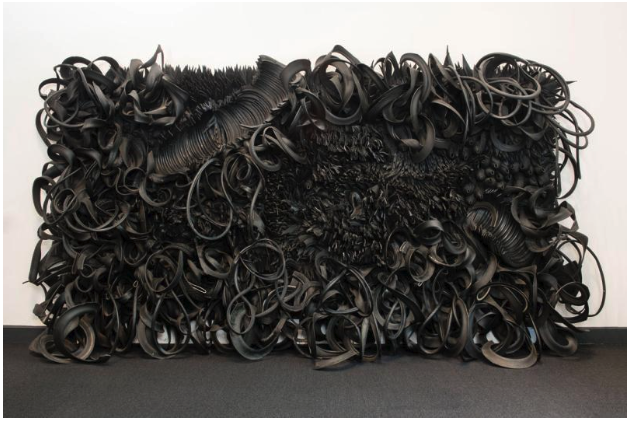
Chakaia Booker, Acid Rain, 2001, rubber tires and wood, National Museum of Women in the Arts, Washington, D.C. Museum purchase: Members’ Acquisition Fund
“To nurture your awe mindset, slow down. Look closely. Revel in the present moment. Activate all your senses. Wonder with the curiosity of child. Embrace the mysterious. Feel gratitude. Reflect on the interconnectedness of things.” Not just casually and half-heartedly. Allow yourself to take that in and to feel that, with a fully present heart and mind.
“It’s important to shake off routine ways of being and thinking, to find inspiration in wonder, connection, and awe. And what if that were not the exception but the rule? Perhaps, as spiritual leader Rabbi Abraham Joshua Heschel put it, “Our goal should be to live life in radical amazement …. to get up in the morning and look at the world in a way that takes nothing for granted. Everything is phenomenal; everything is incredible; never treat life casually.”
So, one of art’s jobs is to remind us that, as Heschel says, “what we lack is not a will to believe, but a will to wonder.” At times such as those we’re living through today, surely we could all use a little more of that.
How to Make a Living with Your Art
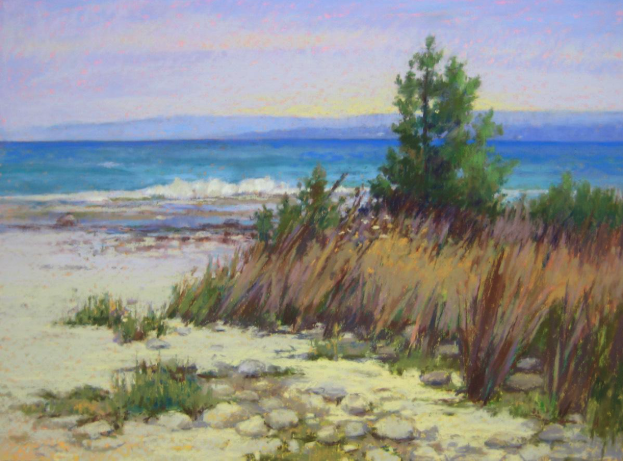
Jill Stefani Wagner, “Summer Breeze” (pastel, 18 x 24 in.)
By Kelly Kane
“When I first dipped my toes into the world of becoming a professional artist, I must admit I was a bit naive,” says pastel painter Jill Stefani Wagner. “Looking back I realize I had the silly notion that ‘If you paint it, they will come.’ Duh, not so much.
“Over the years I’ve learned that for most painters, making a living from art is a multi-layered challenge. Depending on just one way of creating income is precarious … and downright scary at times. So, in self-defense, I’ve spread my efforts across various opportunities to keep the cash coming in.”
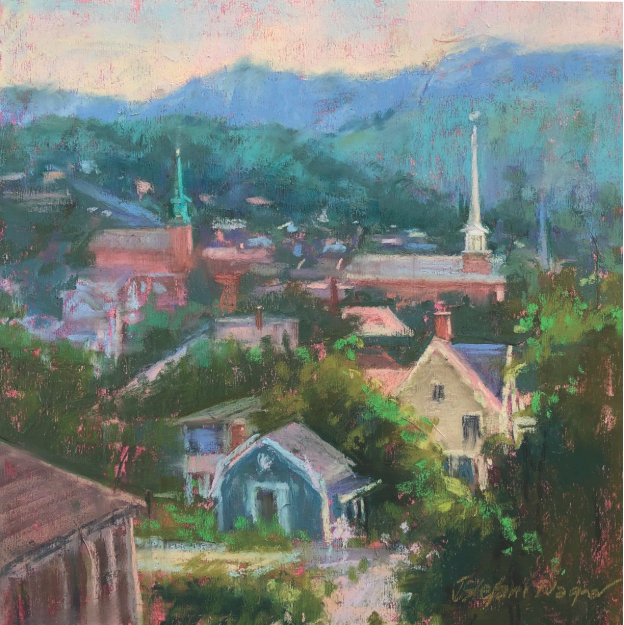
Jill Stefani Wagner, “Cumberland Days” (pastel, 12 x 12 in.)
“The number one task is always to create. I know, obvious, right? But it must be said. I paint all the time both en plein air and in the studio. And I do it for many reasons. First, I love it and can’t live without it. Second, painting constantly improves my work. Third, even though I sometimes feel overwhelmed by the number of canvases that pile up, I must keep inventory in stock. And you never know what subject matter an art lover might be looking for.
“Then I try to monetize those paintings through various outlets and products:
- GALLERIES: In this time of dwindling brick and mortar galleries, I’m lucky to be represented by four fine art establishments. I consider them my partners and do everything I can to make selling my work easy for them.
- ART CONSULTANTS: Over the years many art consultants from around the country have contacted me to provide original or printed art for their projects in hospitals, restaurants, corporate offices, residences and even cruise ships.
- PLEIN AIR FESTIVALS: My personal obsession with painting outdoors has led me to an exciting life of participating in festivals in many gorgeous locations. Between the awards given and art sold, it’s been a lucrative experience for me.
- NATIONAL COMPETITIONS: I enter 10-20 (mostly national) competitions each year. When accepted, these shows boost my income with awards and sales, but also help promote my work to a larger audience. Many galleries also keep an eye on competitions when considering new artists to bring in.
- SOLO AND GROUP EXHIBITIONS: I try to do a solo show of my work every couple of years, but also exhibit in events with other artists.
- TEACHING: I’ve started teaching workshops and giving demonstrations recently and have been honored to be on the faculty at the Plein Air Convention & Expo five times. These events often result in painting sales and allow me to meet new collectors.
- COMMISSIONS: I’ve heard that many artists don’t enjoy doing commissions. But I value the opportunity to meld my skills with a patron’s vision to create a unique piece of art.
- STUDIO VISITS: I hold Open Studio Hours during the holiday season but invite art lovers to make appointments to visit my studio any time.
- PRINTS: Many of my paintings have been photographed in super high resolution, which allows them to be printed in tiny and huge sizes. I know that reproductions may be considered “crass” by some painters, but I find they provide welcome income in times of slow art sales.
- NOTE CARDS and CALENDARS: I have these items available for sale but also use them as thank you gifts to art patrons and others who help get my art out to the world. With my contact information on the back of each, they also serve as promotion pieces.
- WEBSITE: This is by far my most valuable asset. I regularly receive inquiries and sales from my site, often from people I’ve never met. Galleries, competitions, and festivals also check in to evaluate my work online.
In her teaching video Pastel Painting from Photographs, Jill shares her process for creating a compelling painting from photographs.