They weren’t just painting the land – they wanted to reveal its inherent character – and the way it made them feel.
The greatest Russian and Ukrainian landscape paintings of the mid 19th to early 20th centuries were driven by nationalistic fervor: These artists sought to portray “the soul of Mother Russia,” says art historian Christopher Riopelle. “Russian Landscape artists wanted to penetrate imaginatively into the very essence of their countryside. For them, painting is a means, not an end in itself, not ‘art for arts’ sake’.” They did so with a battery of tools from Impressionism to realism and modern expressionism. Perhaps that’s why their landscapes can still feel so full of feeling and authenticity.
Today’s post, the second of two on the topic, continues our quick walk-through of some of the greatest winter snow paintings ever created.
Beginning with the closest to us in time, the expressive modernistic approach of the 20th century, in this “Winter” of 1911, Konstantin Korovin’s stark contrasts, paint slashes and stabs convey not pride of Russians but the gritty reality of surviving Siberian winters.
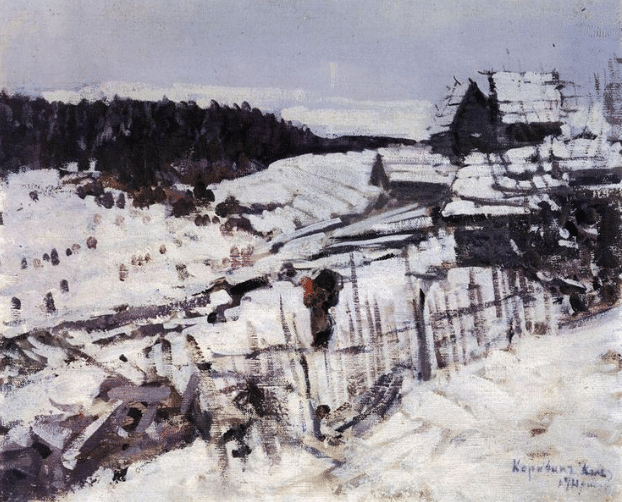
Konstantin Korovin, Winter, 1911, State Russian Museum, St. Petersburg, Russia.
Korovin was following more in the footsteps of Isaak Levitan. Levitan’s “Winter” of 1880 (below) is even more dark and dreary than Korovin’s. Levitan was a true poet of the landscape – he could paint as realistically as any, but arguably his best work took the more expressive, evocative approach.
The stark emptiness here is palpable! Everything is flat, heavy, and blunted. He renders the cabins as squat insignificant lumps oppressed by omnipresent grays. The forecast? Humanity in the grip of merciless natural forces for the foreseeable future.
It was in the far that the land became a container of such gloom. As Riopelle has pointed out, “The emptiness of the country’s vast reaches, the rigors of its climate, the difficulties of transportation, and the intense isolation that long winter months impose, all contribute to a specifically Russian sense of nature, different from – perhaps more fatalistic than – that of elsewhere.”
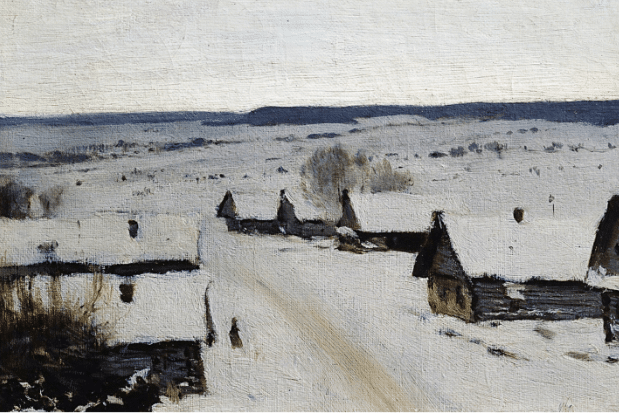
Isaak Levitan, Village in Winter, c. 1880
For corroboration, look no further than Levitan’s chilly 1884 vignette, “Winter Landscape with Mill.”(below) Here Levitan grudges us only the barely recognizable remnants of humanity – a crude mill and its rickety bridge. Getting the message? Winter in the north is beautiful but it is BLEAK, baby.
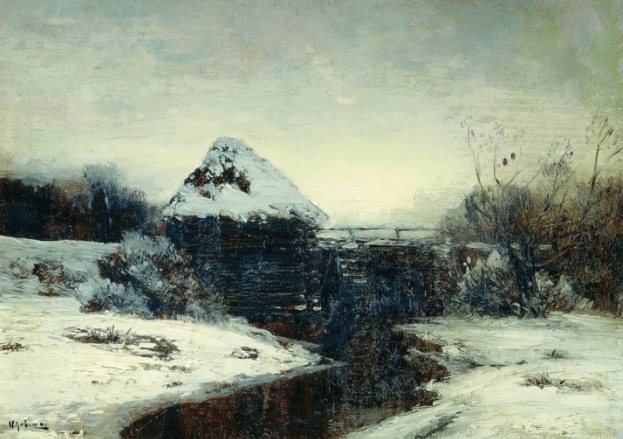
Isaak Levitan, “Winter Landscape with Mill,” 1884
In keeping with what makes such work “poetic,” paintings like these allude to the prevailing metaphor among poets of many times and places that at this time of year, locked in the depths of deep still snow and ice, nature – along with the human heart and soul – is dead.
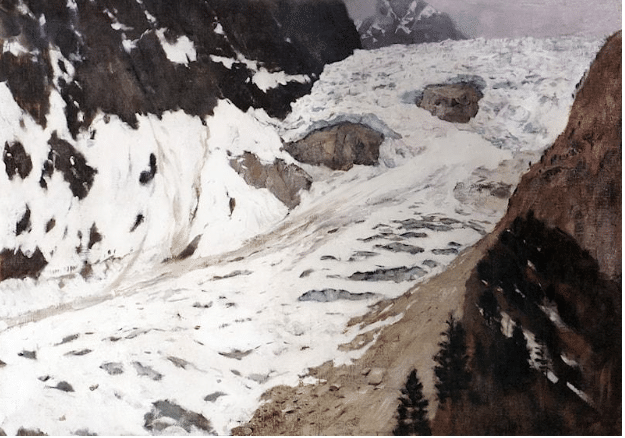
Isaac Levitan, “Alps, Snow,” c. 1890. 25 1/2 x 33 3/4 ins., oil on canvas
But hold on now, Igor Grabor would like a word! Of course we know nature isn’t dead. Look at Grabar’s bright and colorful “Winter Morning” below – it veritably explodes with life!
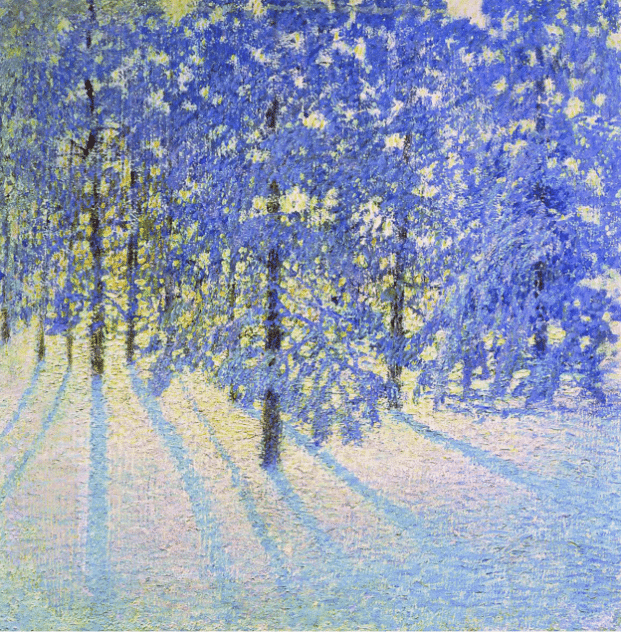
Igor Grabar. Winter Morning.
Kaleidoscopic color, streaming multicolored light, and a vigorous dance of blue snowy branches! It’s 1907 and French Impressionism has run its course, ending with pointillism. Igor Grabar was one of the first Russian artists to practice pointillism, as here rendering light and color with small dots and dabs of blue, pink, yellow, and even green. It’s just as expressive as Levitan’s dour realism – only it expresses something more like a celebration of life than an acknowledgment of mortality.
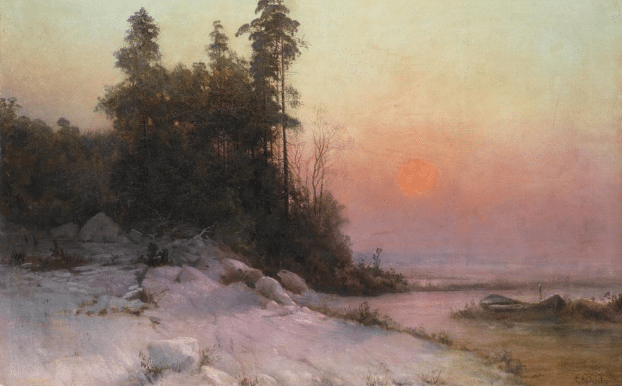
Russian /Ukrainian? 19th c artist unknown.
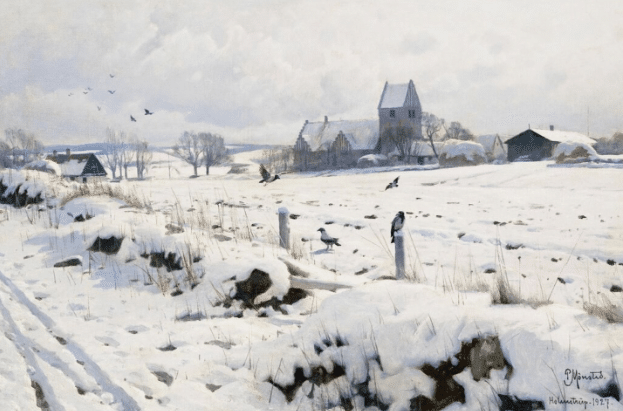
Peder Mørk Mønsted, “Winter Landscape” (1927).
While not Russian or Ukrainian, Peder Mørk Mønsted painted very much in the style of post-impressionistic realism that most of them favored. Mønsted was a Danish realist painter. His favorite motifs include snowy winter landscapes, crystal-clear water, and sunlit forest interiors.
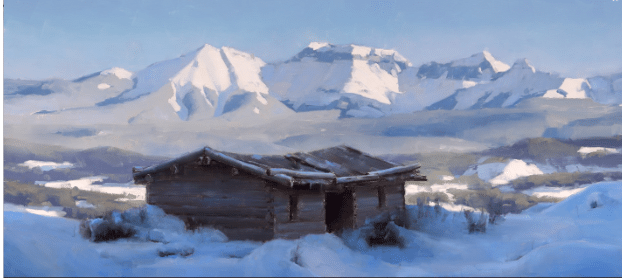
Dave Santillanes, “Remnants of Winter,” 24 x 44 ins., oil on canvas
Today, American painter Dave Santillanes teaches a contemporary, atmospheric approach to painting beautiful snowy landscapes in his professional instructional video, “Winter Landscapes.”
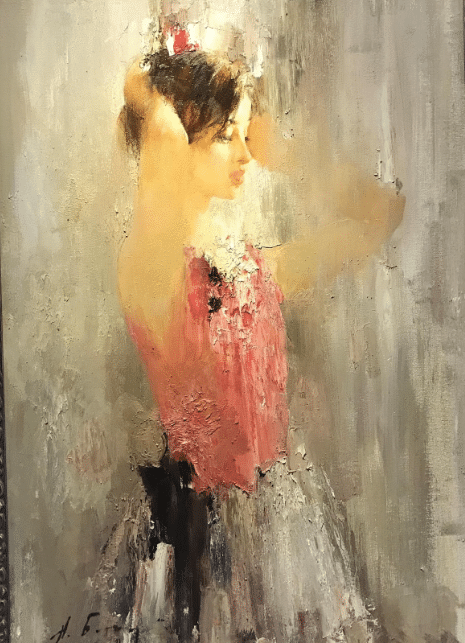
Nikolai Blokhin, “Ballerina”
And finally, bringing a little fire into this over-chill party, Russian master Nikolai Blokhin has a reputation as a leading portrait painter in the expressive tradition. He shares his approach to portraiture step by step in his video, Russian Master Portraits. Download it here.