“An artist must possess nature,” according to Matisse.
Matisse’s word choice in the quote above suggests the word possession had special meaning for the artist.
It comes from the Latin possess(us) which means “to occupy” and is related to the word for sitting. To be possessed by the muse is to feel oneself to be occupied by a creative power beyond oneself. To possess your subject matter, then, is to sit with it, to occupy it, in an emotional or imaginative way.
In other words, the artist must be present with his or her subject in a very special, attentive way. Matisse clarified by saying the artist “must identify himself with her (Nature’s) rhythm, by efforts that will prepare the mastery which will later enable him to express himself in his own language.”
Possessed by nature or possessing it, it’s the inspiration, the being present with nature’s “rhythm” that counts. The trick is to find a way to keep the inspiration going without worrying about “making it look right.” You do not want the valve on inspiration to close when your technical knowledge comes into play. Matisse suggests the best approach is to let inspiration lead the way.
It is precisely through the process of figuring out what techniques enable you to stay possessed by inspiration while working that you develop a visual “language” in Matisse’s terms, or in other words, your own authentic artistic voice.
Ideally, the resulting work will have a radiance akin to inspiration itself, occupying space somewhere between the material and the spiritual, resonant with the moment of “possession.” Continues Matisse: “A picture must possess a real power to generate light and for a long time now I’ve been conscious of expressing myself through light, or rather in light.”
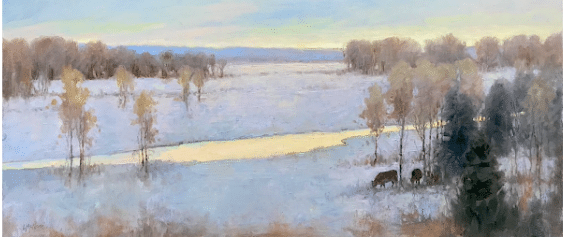
Lori McNee, Western Winter, oil on linene, 19” x 43”
How do you know it’s done?
Similarly, “a plein air painting is finished when you’ve got light in it” says a friend of mine. By that I think she means, not the correct angles of light and shadow, but the feeling of light, air, movement and life, the sense of possessing and being possessed by something that makes you want to stand still and just breathe.
That’s the moment of losing oneself to beauty, what American philosopher Ralph Waldo Emerson and his peers called transcendence. It’s something like getting out of your head and allowing yourself to be totally possessed.
“Standing on the bare ground,” Emerson wrote in his essay Nature, “my head bathed by the blithe air and uplifted into infinite space, – all mean egotism vanishes…. I am nothing; I see all; the currents of the Universal Being circulate through me; I am part or parcel of God.”
And of course, because it’s difficult to put things such as this into words, I’m making it all sound more complicated than it is. As artist Cindy Baron says, all that’s really needed is a genuine commitment to “reflect the beauty that is found in nature and take the time to study the colors around you.”
It’s just about being present, Cindy suggests, to experience beauty where it finds you, whether that’s “in a blustering storm or the tranquil air of everyday places.”
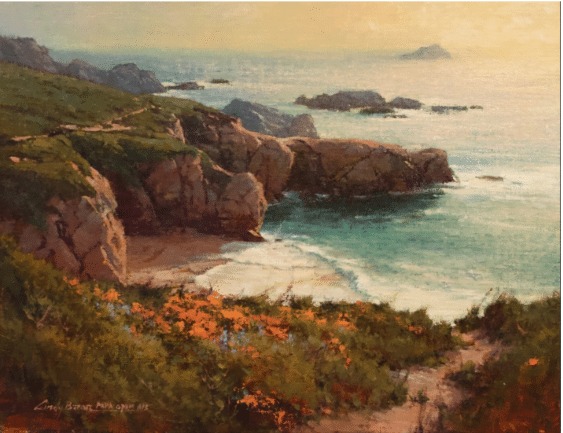
Cindy Baron, Showy Repose, 11”x 14” oil
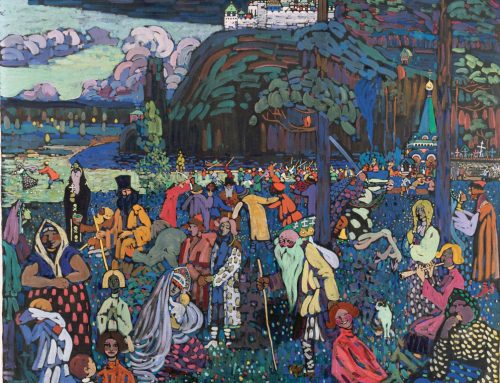
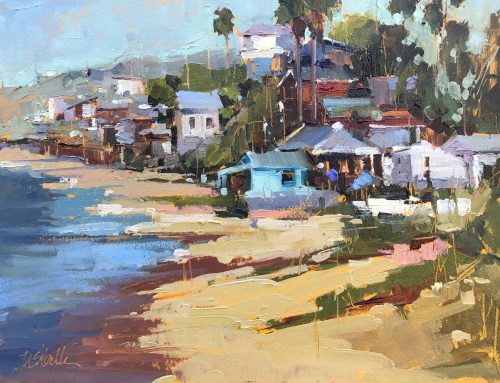
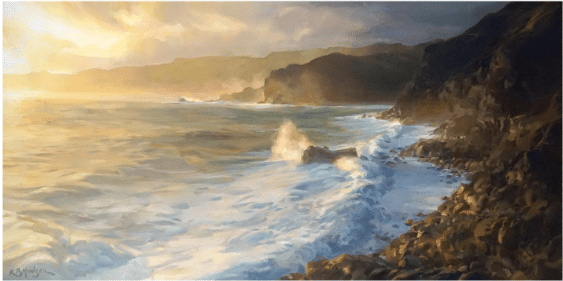
Today’s Inside Art features landscapes by three masters who all have outstanding teaching videos – in order of appearance:
- KATHLEEN HUDSON: CREATING DRAMATIC ATMOSPHERE IN LANDSCAPES
- LORI MCNEE: LUMINOUS LANDSCAPE PAINTING
- CINDY BARON: ELEGANT LANDSCAPES
Asheville Museum Showcasing American Studio Glass Art
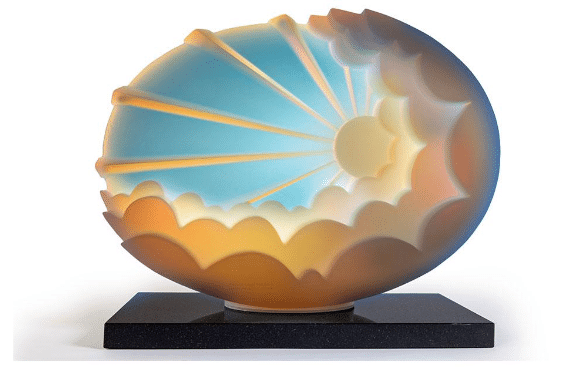
Mark Peiser, Passage Etude Tableau 2, 2013, hot cast phase separated glass on black granite, 17 ½×22×8⅝ inches. Giftfrom the James & Judith Moore Glass and Craft collection, Asheville Art Museum. ©Mark Peiser.
ASHEVILLE, NC.- Western North Carolina is important in the history of American glass art. Several artists of the Studio Glass Movement came to the region, including its founder Harvey K. Littleton. Begun in 1962 in Wisconsin, it was a student of Littleton’s that first came to the area in 1965 and set up a glass studio at the Penland School of Craft in Penland, North Carolina.
By 1967, Mark Peiser was the first glass artist resident at the school and taught many notable artists, like Jak Brewer in 1968 and Richard Ritter who came to study in 1971. By 1977, Littleton retired from teaching and moved to nearby Spruce Pine, North Carolina and set up a glass studio at his home.
Since that time, glass artists like Ken Carder, Rick and Valerie Beck, Shane Fero, and Yaffa Sikorsky and Jeff Todd—to name only a few—have flocked to the area to reside, collaborate, and teach, making it a significant place for experimentation and education in glass. The next generation of artists like Hayden Wilson and Alex Bernstein continue to create here.
Exhibitions, including Intersections of American Art, explore glass art in the context of American Art of the 20th and 21st centuries. Themes such as Time & Place, Experiments in Material & Form, and Collaboration & Interdisciplinary Dialogue frame Intersections in American Art. These ideas are the cultural heritage, present, and future of the region and are explored in each gallery. Presenting regional contributions within the context of American art on the national scale, these themes help visitors organize and personalize their Museum experience. A variety of techniques and a willingness to push boundaries of the medium can be seen in this selection of works from the Museum’s Collection.
Established by local artists and incorporated in 1948, the Asheville Art Museum is the third oldest art museum in the state. The Museum has seen several homes over the years, with its current state-of-the-art facility opening in 2019 after a major renovation and expansion project. The Museum is dedicated to collecting American studio glass and within that umbrella, explores the work of Artists connected to Western North Carolina.
Asheville Art Museum/Judith S. Moore Gallery
Western North Carolina Glass: Selections from the Collection
June 28th, 2023–April 15th, 2024