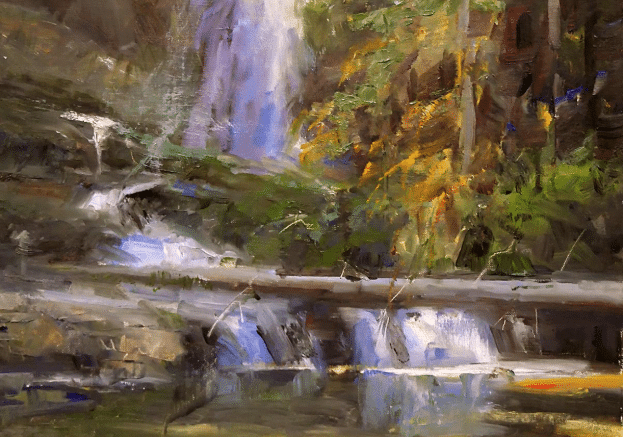
Howard Friedland, “Virgina Falls Revisited” (detail). Friedland, whose method is not that different from Charles Hawthorne’s vibrant “spots of color” approach, has a video on painting waterfalls.
“Swing a bigger brush – you don’t know what fun you are missing.”
So wrote Charles Hawthorne in a little gem of a book assembled by his widow upon his passing titled, Hawthorne on Painting.
A big brush keeps you from getting too fussy too soon. “It is the large spot of color that tells the story,” Hawthorne says. “Make the big tone and make it true…Don’t look up at nature and consider an inch at a time.”
Big brushes help you do that. They free you from trying to “get it right.” If you’re using a big brush or a pallet knife to paint, you simply can’t worry about detail or precision – it won’t work. You must give up and give yourself the freedom to throw some paint around. It’s a wonderful way to connect what you’re doing on the canvas with what you’re thinking and feeling and not just what you’re trying to do.
The other way to go is to paint a smaller painting.
Of course there’s a catch. If you want to paint loose, you must accept that you won’t be in complete control. You must let go and let the paint be the paint. Try to make it to the end of the painting by putting it on and leaving it on. Tell yourself that when you reach the end you’ll get to go back in and clean it up – but, if possible, put the painting aside and do the cleaning up tomorrow.
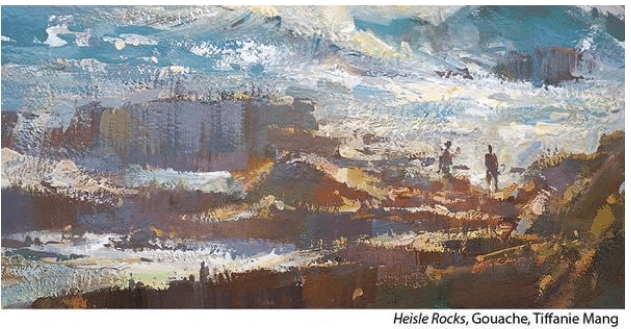
Tiffanie Mang, Heisle Rocks, gouache, approx.. 4 x 8 in.
“There are so many benefits from working small!” says Tiffanie Mang. “I make all my students do it. Working small — 4 x 5 inches or even smaller — AND working with a big brush really forces you to simplify, which is the NUMBER 1 thing I tell my students to do. Since you cannot fiddle with detail, you are forced to rely on well designed shapes to form a cohesive painting. Readability and unity is the goal, not detail.
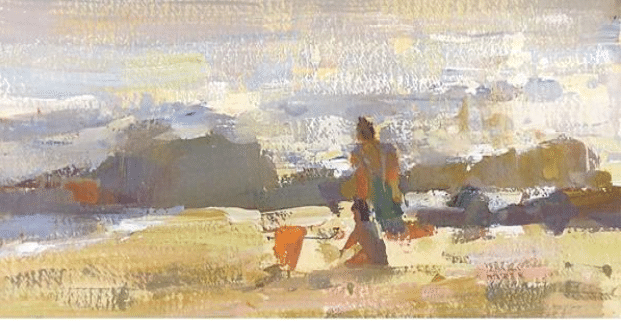
Tiffanie Mang, “Laguna Beach 2,” gouache, approx.. 4 x 8 in.
“It is also a great challenge to work small, and who doesn’t love a challenge? For plein air when you are on a time restraint, it can be very beneficial to jot down quick color notes on a small area. It is also good to throw your brain off course and challenge it with exercises it is not used to, because I guarantee that when you go back to painting bigger, you will discover new realizations and concepts to apply to your bigger paintings that you didn’t find before.”
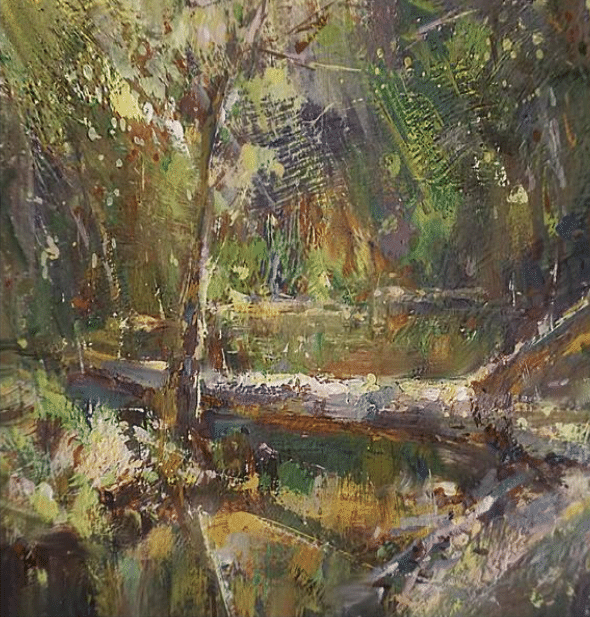
Tiffanie Mang, “Las Penasquitos 6,” gouache, approx. 4 x 4 in.
Big brush, small canvas, or otherwise, I’m with Hawthorne in believing that “painting big” is akin to “seeing big” and can help you put more of yourself into the work. “The big painter is one who looks and does, the little painter is always tickling with a camel’s hair brush,” Hawthorne says. “My plea is for something big and fine and honest.”
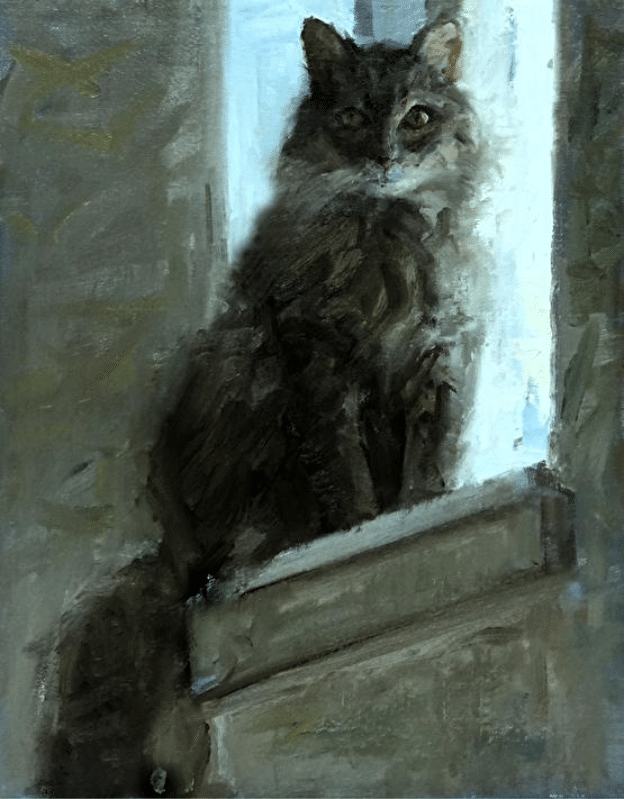
Howard Friedlander, “Rocky at the Window,” oil, 16 x 20 in.
Howard Friedlander is a master of the loosely painted, atmospheric oil. If you follow along with his video, Painting Waterfalls in Oil no matter your current skill level, you’ll find yourself admiring Howard’s talent and ability for painting raw beauty. You may even catch yourself saying, “I wish I could paint like that!”- Then finding out you can.