French Impressionism was officially born in Paris during the autumn salon season of 1874. Lambasting a pop-up exhibition by a bunch of rogue bohemian artists, a critic scoffing at Claude Monet’s painting, an “Impression” of a sunrise, fixated on its title to mockingly brand the group as mere “Impressionists.”
Impressionism took root though, and eventually undermined the very foundations of the state-endorsed mainstream Academie Francaise. It took another 20 years for the style to establish a serious hold in America.
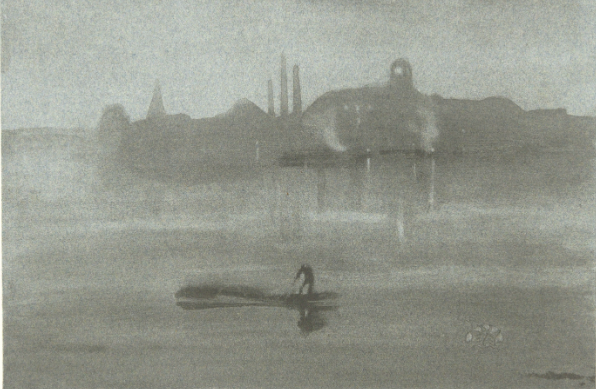
James MacNeill Whistler, “Nocturne: The River at Battersea,” Lithotint, 13 3/8 × 19 in. (34 × 48.3 cm) Frederic George Achelis Memorial Collection, Gift of Miss Elisabeth Achelis, a lover of prints.
But by the late 19th century, American Impressionism constituted a decisive aesthetic break from the grandeur and precision of the Hudson River School. It was characterized by freer, more intimate works that often focused on local scenery and everyday life as opposed to the grandiose and sublime vesture of the North American landscape.
At least it did so until the next French wave of avant garde art arrived on America’s shores. After Modernism shattered traditional artistic norms via the Armory show in New York in 1913, Impressionism fell out of the limelight. It has never, however, disappeared from the American easel and is arguably more widespread than ever.
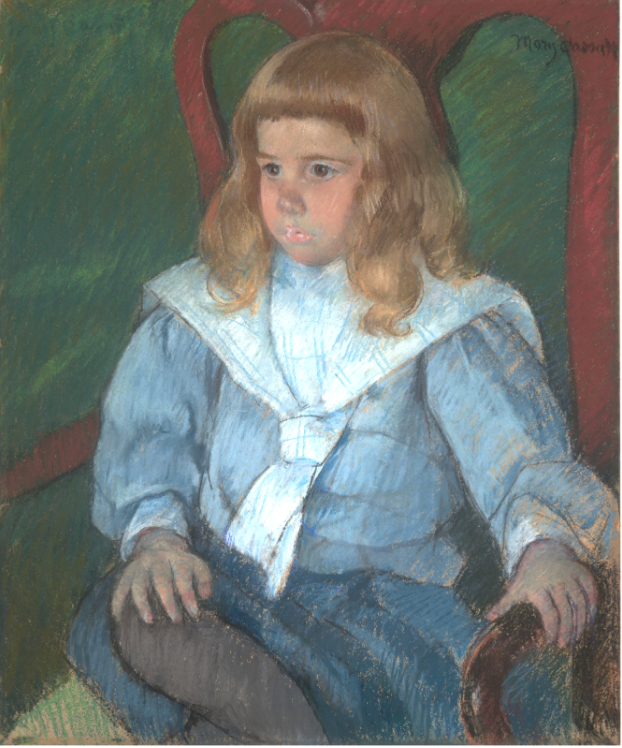
Mary Cassatt, “Boy with Golden Curls,” pastel on paper, 1898,
21 1/2 × 19 1/2 in. (54.61 × 49.53 cm) Gift of Robert N. Whittemore, B.S. 1943
Currently, Yale University is showing exemplary works by some of the most celebrated of the original American Impressionists, including Mary Cassatt, Childe Hassam, Thomas and Mary Nimmo Moran, Thomas Wilmer Dewing, Joseph Pennell, John Singer Sargent, and James McNeill Whistler.
The show, American Impressionism is on view on the fourth floor of the Yale University Art Gallery until June 14, 2026. The exhibition features drawings, prints, and paintings, including a portrait by Mary Cassatt of a young blond boy (above).
A large and beautifully airy Sargent watercolor is also on view. This painting itself seems like a lesson on the nature of impressionistic art.
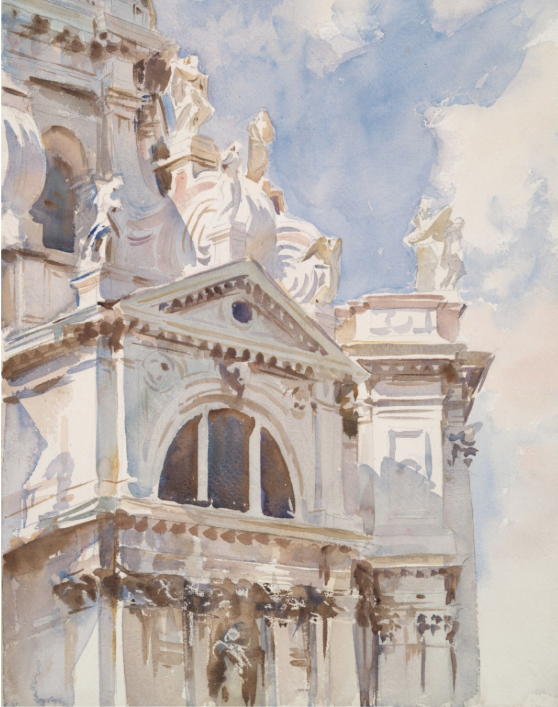
ohn Singer Sargent, “The Salute, Venice,” Watercolor over graphite underdrawing,1904-1907 21 15/16 × 14 1/16 in. (55.7 × 35.7 cm) Christian A. Zabriskie Fund
In this shining work, the iridescent forms of Sargent’s architecture appear ready to change places with the insubstantial air and light of the cloud-whisked sky. The work veritably embodies Impressionist art’s ability to translate brief exhilaration into lasting material form.
Try Your Hand
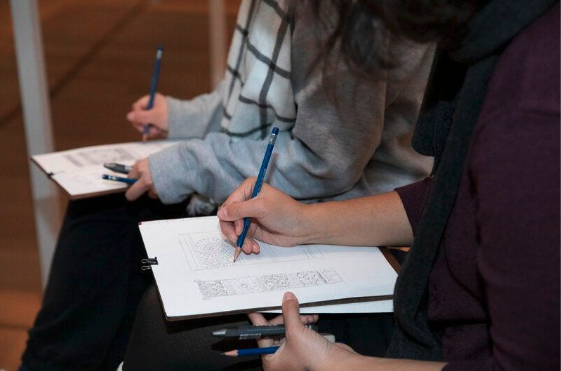
The Yale program Sketching in the Galleries, 2025
The Yale University Art Gallery is something of a “learning gallery.” It comprises a collection and exhibition space especially well-suited to rounding out art education and showcasing important turning points in the history of Western art.
In fact, inaugurated in 1867, Street Hall (today part of the gallery) housed the first collegiate school of art in the country. Its curriculum permitted students from a variety of disciplines to sketch from live models and original works of art.
The gallery still carries forth that mission. It regularly opens the galleries and invites the public to take part in this centuries-old practice through free guided sketching events. Generously sponsored by the Martin A. Ryerson Lectureship Fund, the sessions are open to all ages and levels of drawing experience, and materials are provided. Watch for upcoming dates by checking out the website.
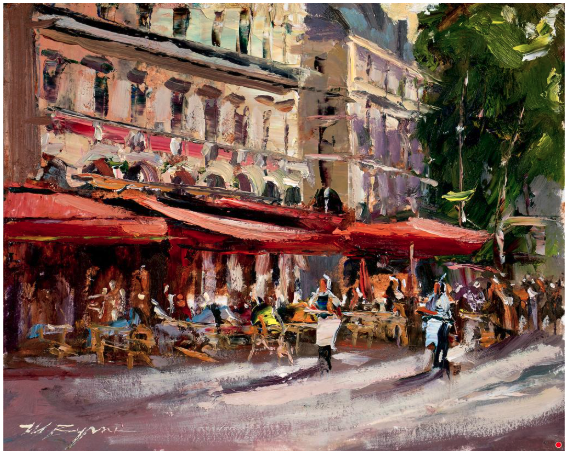
Michelle Byrne, “Saint-Michel Café,” Oil on board, 8×10 in.
Numerous videos exist in which professionals teach the technique as well, including Michelle Byrne (above). Check it out here.