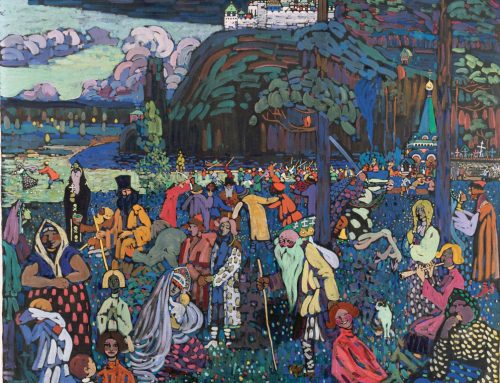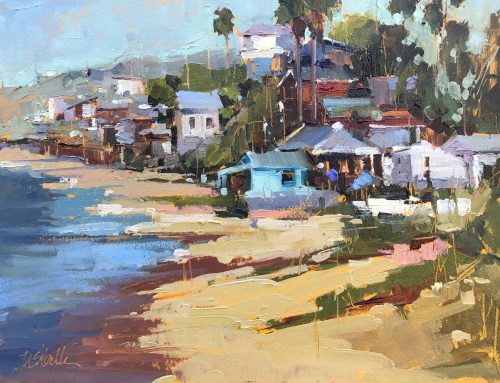
Painting is about feeling, evocation, and “stories,” insights into life on this planet, transporting viewers into realms of mind and emotion. Feeling or “mood” comes not from what you paint but how you paint it. Mood in painting usually comes down to how artists handle color, edges, atmosphere – all the aspects of painting, really – to create an elusive moment of emotional experience, recognition and connection for viewers.
The Role of Color
Color is one of the most potent tools an artist has at their disposal to convey mood. Each hue carries its own psychological and emotional associations. Warm and vibrant colors, like red and yellow, are thought of as high-intensity, high-energy triggers. The cooler, more subdued blues, violets and grays are frequently linked to calmness, serenity, thoughtfulness and melancholy.
In terms of value, high-contrast areas of dark and light again convey intensity, “noise,” rhythm and vibration, whereas similarly matched values convey balance and, often, a sense of calm.
Crucially though, it’s largely how the artist combines and juxtaposes (places side by side) these colors and values that conveys a painting’s mood. Complementary colors, for example, can create contrast and liveliness or drama, while analogous colors can harmonize, calm, and soothe.
Consider one of Picasso’s blue period paintings, his “Life” from 1903 (below). This work was inspired by Picasso’s own emotional turmoil and financial destitution during the period (1901-1904).

Pablo Picasso, La Vie, 1903
The close and uniformly cool hues and relatively subdued values and lack of big contrasts align with the content and create a poetic vision of the cycles of human life, love, sorrow, artistic practice, solitude, bonding, pity, and joy – universal humanity at its most primal and most mysterious. The mixed imagery defeats a simple narrative, and the transposition away from the expected colors of daily life removes the scene from ordinary reality and places it in the realm of symbolism and mythology. The mood? It’s dark, brooding, rather sad, but also far-seeing and evocative of the joys and especially the difficulties ordinary men and women have faced forever.

CW Mundy, Off to Work, oil, 24” x 36”
Composition, Arrangement, and Atmosphere
Beyond color, the composition and arrangement of elements within a painting shape mood as well. The placement of objects, the use of perspective, and the overall layout influences how viewers perceive and experience the painting. The shallow, undefined space and divergent gestures of the closely grouped (yet ambiguously related) figures in the Picasso above suggest a somber, ancient drama lost to history and time.
In simple traditional terms, symmetrical composition is thought to create a sense of stability and order, while asymmetrical arrangements can introduce tension and dynamism. Crowded spaces give off energies ranging from joyous to claustrophobic, while open distances tend to suggest more expansive moods, ranging (who knows?) from wistful to desolate, all depending on everything else going on in the work.
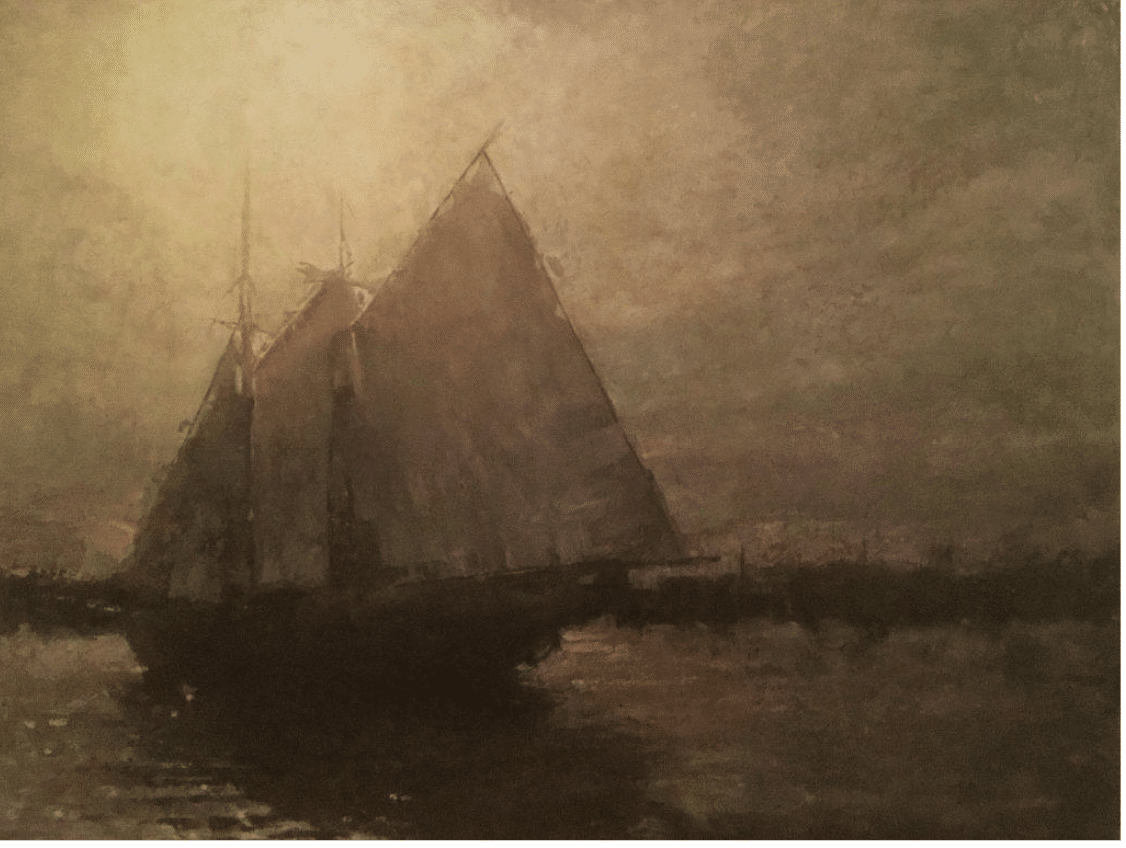
Atmosphere relates to the amount of diffusion or deliberate indefiniteness (essentially, either under-drawing or over-blending in the work). Softened (blended) often called “lost” edges leave areas of a painting less defined and therefore require the viewer to become actively involved in completing the image, using technique to convey the work’s emotional content. Strongly atmospheric paintings minimize or eliminate hard edges and attention-getting contrasts. This can evoke an aura of memories or dreams.
Mood in painting is a complex interplay of color, composition, technique, and style. A viewer experiences a painting as an emotional journey when the artist has aspired to convey something of the depths of human feeling.

CW Mundy, Sunset Sail, oil, 24” x 36”
CW Mundy has a way of teaching that encourages you to shut down your internal self-talk and just paint without stress and the anxious voice of criticism coming from inside your own head. He shares numerous insights from a 60-year career as an artist and illustrator in his video, Painting with Freedom. Download CW Mundy’s video. now