When Kathryn Stats first started painting, she viewed painting as a fun hobby. That hobby quickly turned into a passion, not just for painting but for capturing light – as beautifully as possible.
She started with the familiar rural landscapes of her childhood, and over time she discovered the magic of modern realist landscapists such as John Carlson, Scott Christensen, and Russian masters like Vasily Polenov. She studied with artists near and far, especially in the Taos and Salt Lake City areas, on and off for 20 years.
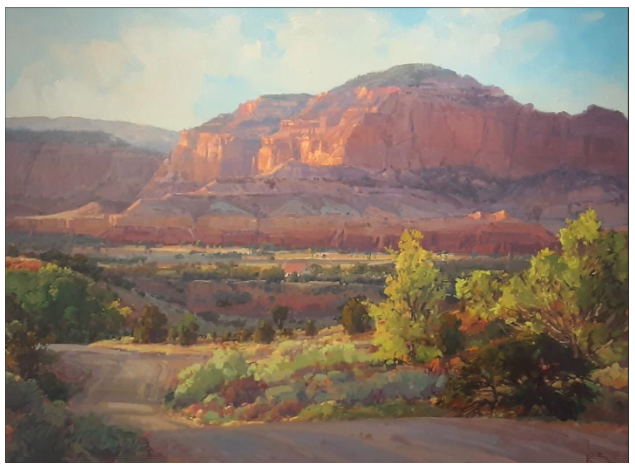
Runing out of local motifs, she began taking road trips to southern Utah. Along the way she became more and more enthralled with the powerful red rock formations that are found there.
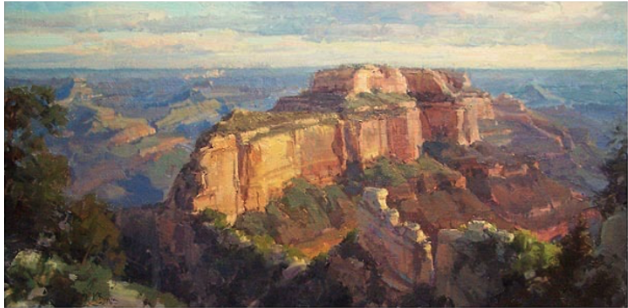
Kathryn Stats, “Cape Royal, 18 x 36
She paints in France as well, and though she still paints plenty of rural scenery, over the years those red rock paintings, which she’s now doing on a larger scale (e.g. 36 x 48 in.), have found a very eager audience. The common factor through it all is her sensitive and deliberate treatment of compelling effects of light.
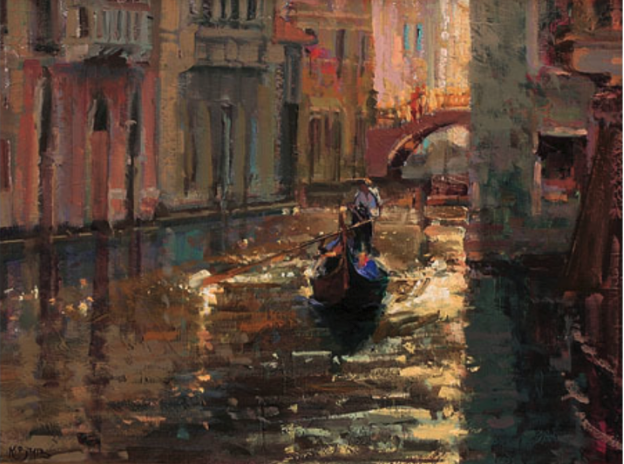
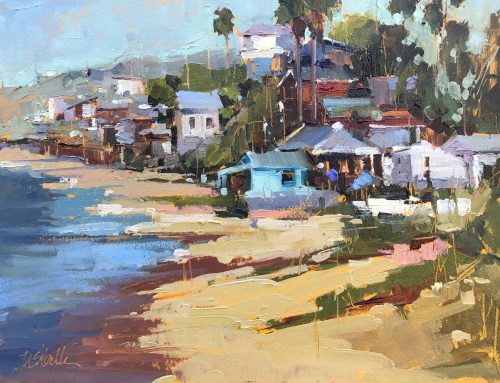
Kathryn Stats, “Quiet Ride,” (Venice) 12 x 16 in.
She uses light to draw viewers into her paintings first then guides them across the canvas in a visual journey that discloses itself point-of-interest by point-of-interest. Light, along with edges, controls atmosphere too; by blending edges and bringing down color intensity just enough, she controls for mood and depth. The result is a consistently captivating experience for her viewers.
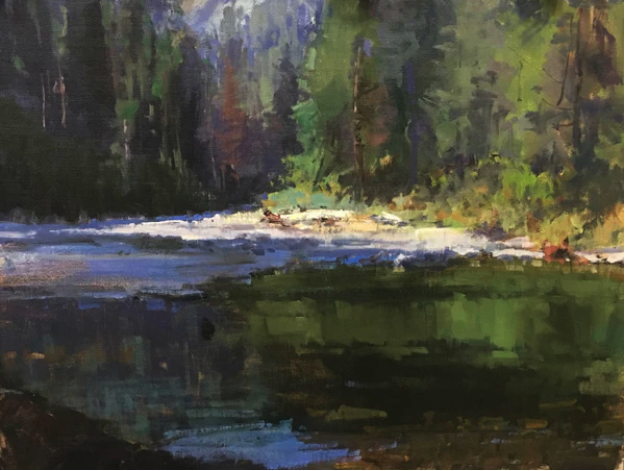
Kathryn takes us through her process step by step:
- “First, I find subject matter that is interesting,” she says. How? “I ask myself why it has appeal. Well, I just love it is not an answer. I have to work out the nuts and bolts of pattern, shapes, contrast, mood, focal point, design, etc.”
- “Once I have my subject and know why I want to paint it, next comes drawing. I do a few thumbnail sketches to find the best composition. This is where I work out the plan. It is easier to do measurements from the sketch than to take them directly from the distant natural setting.”
- “After drawing, I plan three to six large shapes that vary in value – like puzzle pieces. I work from dark to light, starting with the darkest tones, including shadows. This should be the skeleton of the composition.”
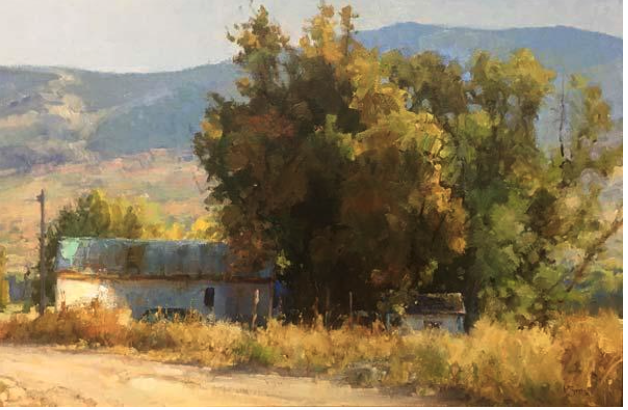
She proceeds to work on subtleties and variations to tie the piece together, she says, being careful not to break up a value pattern by introducing big value changes at this stage. “It is better to change color within a value mass than to disrupt the mass itself, she points out. “This leads to stronger form. I am always planning the path the eye should follow in the painting.”
Crucially, she reminds herself that painting plein air rarely yields a perfect painting. This helps her know when it’s finished. “As soon as I find my painting slipping backward, I quit.”
“Finally, I highlight or darken patterns to accentuate shapes and important areas where I want the eye to go,” she says. “I like to think of it as hanging the jewelry to finish up.”
Kathryn teachers in depth with FOUR videos, two of which can be purchased as a specially priced bundle, available here.