There are many ways to start a painting, and some of them double as creative prompts, not just to get the brush moving but to get the imagination revved and running.
For Northern Irish pastel artist Emma Colbert, it’s color and the process of mixing it that gets the artist thinking about where to start and what comes next.
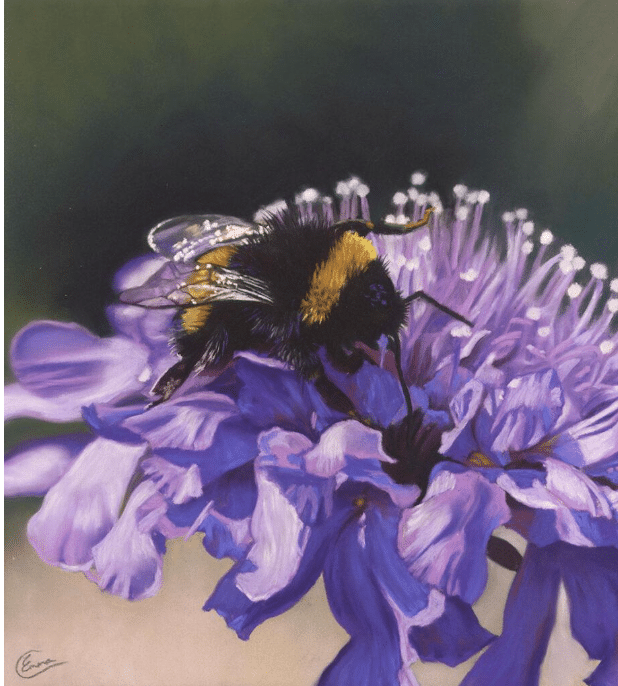
Her vital sense of the joy and play of colors against each other is well on display in her painting of a gold-banded bumble bee gathering pollen from the burst of a purple flowerhead (above).
“Plants and flowers give us a great excuse to pick up our most vibrant colors,” she says. “Quite often my portraits include flowery backgrounds and greenery.” Yet, her landscapes as well hinge on color primarily.
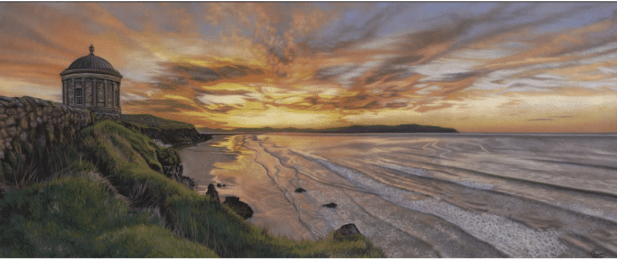
Emma Colbert, pastel.
“The one thing I do each and every time I set up a new pastel painting,” she says in a recent Pastel Today article, “is to spend time choosing my palette of colors before I start to paint.”
“I like to spend time thinking about the color choices and how they might relate to each other in the painting. This creative prompt always helps me get past the blank page syndrome. By spending time analyzing my photo reference I start my painting with a clear plans
However, it’s important to know that “color” doesn’t just mean “color,” as in is it red, blue or yellow.” When an artist such as Colbert says “color” she’s also incorporating subtleties such as chroma (intensity) and value (relative light and dark) in addition to whatever hue it happens to be.
“There are two main considerations I have when analyzing color,” she says. “The tonal value – how light or dark the color is – and color temperature – how warm or cool the color appears. That helps me a lot when choosing a color palette to get started.”
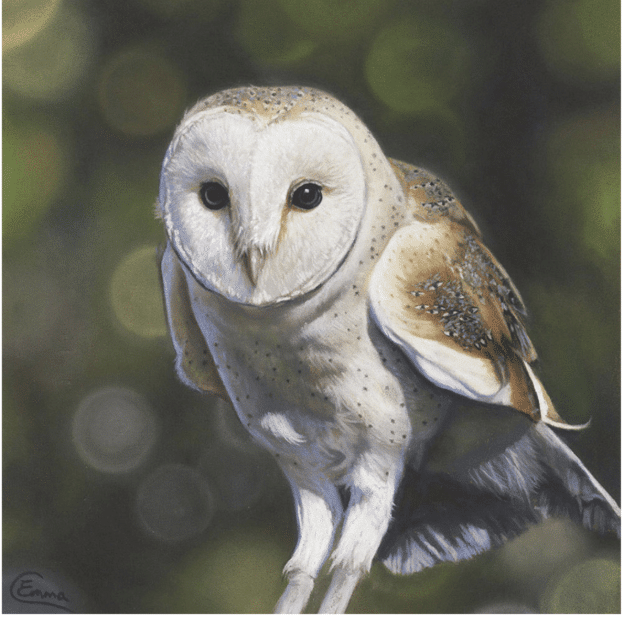
Emma Colbert, pastel.
“First, I look at my photo reference. Once I have established the direction of light in the reference, I know I need to treat areas of light and shadow differently in order to capture the effect.”
“When thinking of value, I start with the extremes. What are the darkest and lightest values in the reference? When choosing the mid-tones, I will think about how they differ in the reference between sunlit and shadow areas.”
“This leads me to color temperature. A lot of the time when I’m talking about temperature, it will be in relation to the light and shade. Will my brightest warm highlight also work as the brightest highlight in the shadows? Often I need a cooler highlight color for the shadows. Perhaps I can bring in some complementary opposites.”
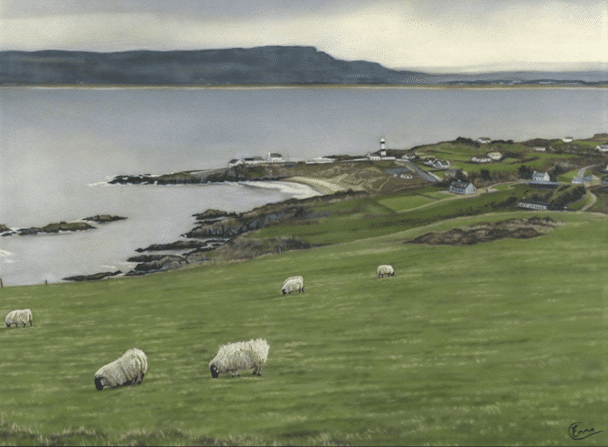
Emma Colbert, pastel.
“These are all decisions I will think about from the start and I’m always aiming to include a bit of color theory to enhance the color harmony in my work.”
Starting with Color
Alternately, while this isn’t Emma’s approach, it is quite possible simply to start with a color and keep adding to it. What if you simply made a mark in the form of a colorful improvised shape – without a reference – and then asked, what now? What would it be like, just for fun, to mix a different color to put next to the first one and take it from there?
With this prompt, it’s best to stay open to suggestion, to constantly be looking at what’s happening, waiting for an idea to come, for something that emerges that you can use. Think of it as a Roersach test – look for what the color and shape relationships suggest about what direction you might take the painting in. As soon as something suggests itself, forget the exercise and go in that direction.
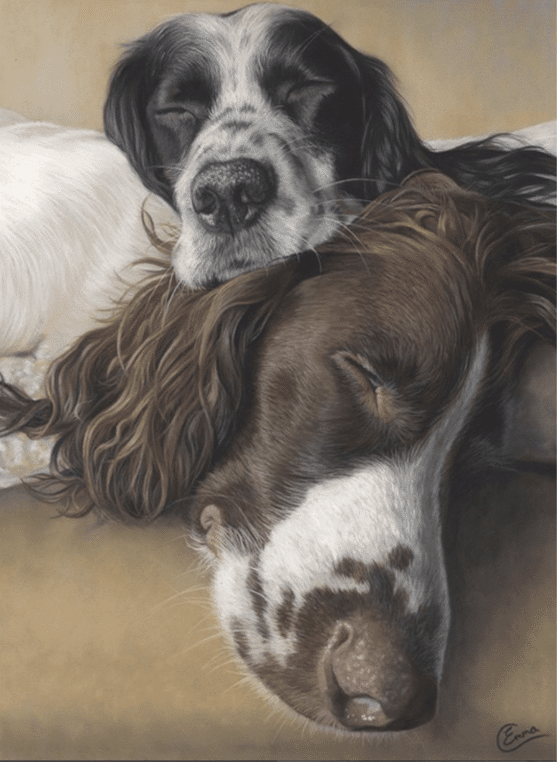
Emma Colbert, pastel.
Colors can convey moods, emotions, and ideas. Another way to use color as a prompt is to create something inspired by a single color based on the associations and feelings you have with it.
Create a painting inspired by the color…
- Red or the theme of passion, love, danger…
- Orange or the theme of joyful energy, warmth, happiness…
- Yellow or the theme of excitement, warmth, spring….
- Green or the theme of summer, growth, rebirth, regeneration, hope…
- Blue or the theme of serenity, calmness, spirituality…
- Purple or the theme of psychic powers, magic, mystery, creativity itself….
Emma Colbert has been a regular instructor at Pastel LIVE, Streamline Publication’s annual online pastel conference and appears frequently in Pastel Today.
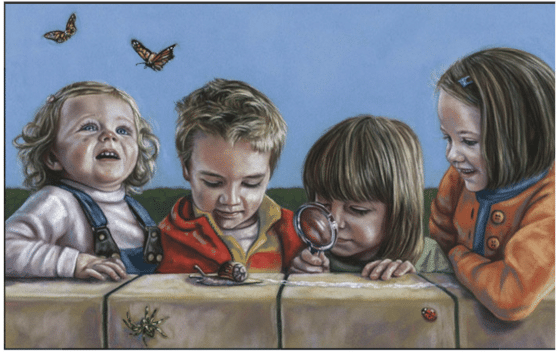
Emma Colbert, pastel.