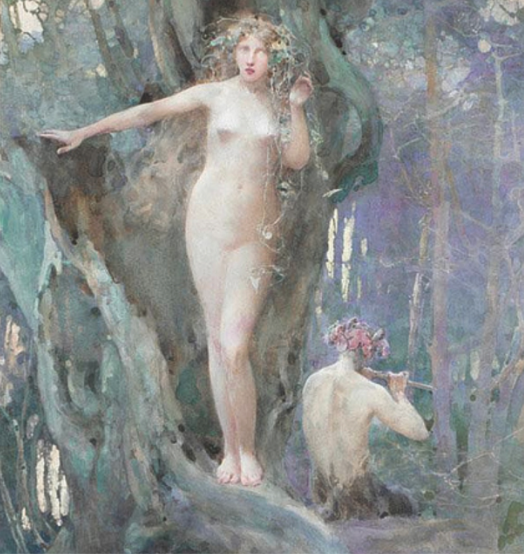
If we listen, as the winter wanes, can we hear within the distant strains of far-off summer’s music a piping and a dancing, such as artists and sculptors have celebrated in many a work of art?
Is the storied Great God Pan really dead or merely asleep and waiting?
The mythology of Pan winds through many centuries. As a nature god, his image has appeared in art since ancient times. Familiary with his story, however passing, can make viewing art in which he has a role that much more enjoyable.
Though he’s usually depicted as half-man and half-goat, Pan was originally a formless and invisible god of Nature and the Universe. He was a local rural deity of the wild and of flocks, lord of the dance and companion to the nymphs.
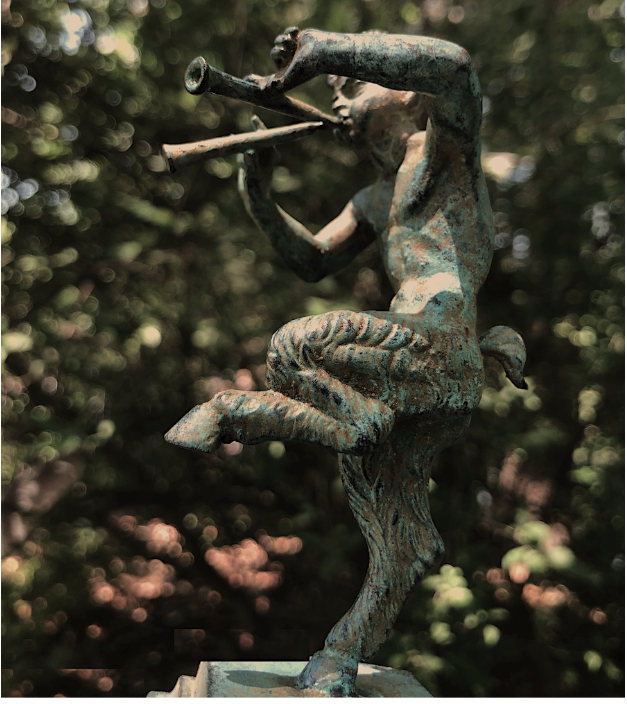
His origin was on the steep mountainsides of Arcadia, where the primary way of life was goat-herding, and his name literally means “herdsman” (in Homeric Greek, “pan” derives from the same root as “pasture”). Though the Arcadians were illiterate, the name’s double meaning (“pan” also means “all,” as in “Pan-American”) suggested he embodied the all-encompassing force of Nature’s wildness. It’s also the origin of our word “panic,” because goat herds suddenly bolt whenever he’s near. His favorite haunts were lonely pools and pastures, dense forests and rocky fields – wherever civilization thins out and wild nature presses back in.
The Athenians merged him with their own mythology of satyrs, unruly equine disrupters of order. The Romans called him Faunus or Sylvanus, and by then satyrs had adopted Pan’s goat-like features to become the familiar half-human, half-goat creatures from classical art and literature, such as we see in the life-size “Nymphs and Satyr” by 19th century French Academician Adolphe Bouguereau.
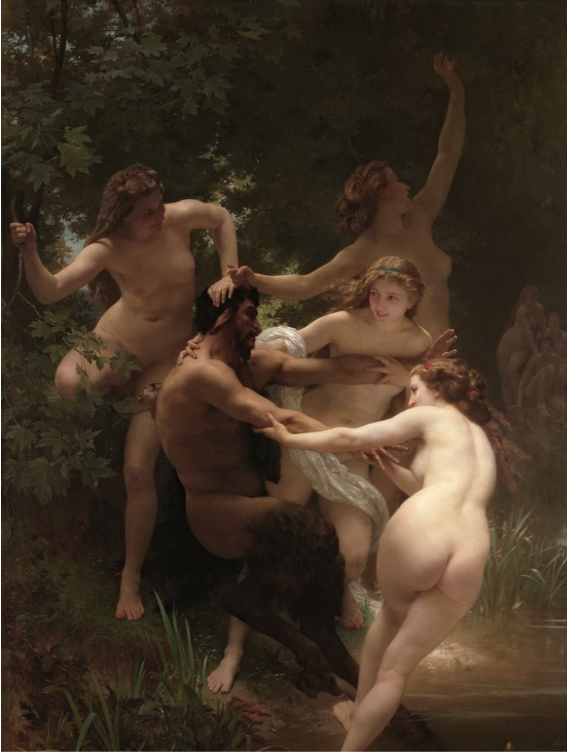
Adolph Bouguereau, “Nymphs and Satyr,” Oil, 1873, 102 1/2 x 72 in. (260.4 x 182.9 cm) Frame: 122 1/8 x 90 3/4 x 7 in. (310.2 x 230.5 x 17.8 cm).
Just like the satyrs, Pan was fond of chasing nymphs (feminine nature spirits), and he got his famous pipes as a result of one of these exploits. In a myth recounted in Ovid’s Metamorphoses, a nymph named Syrinx fled from his advances until trapped at the edge of a river. Pan lunged, she begged the gods for escape, and just as he embraced her, she found herself transformed into a stand of water-reeds. Pan gathered seven different lengths of the reeds to form the syrinx, more popularly known as the pan pipes, the musical instrument forever associated with him in art.
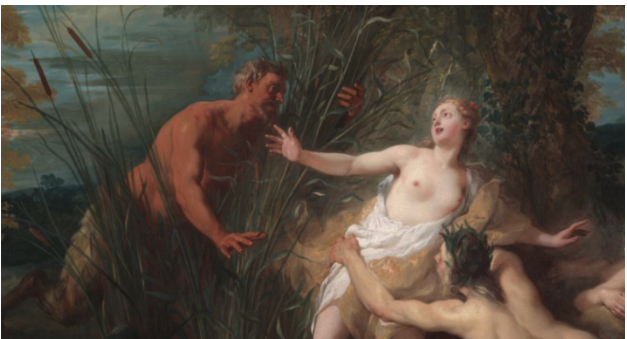
Detail from Jean François de Troy, “Pan and Syrinx,” Oil, 1720
Pan thought quite highly of himself as a musician. He even had the audacity to challenge Apollo, the god of the lyre, to a musical contest. Of course, Pan immediately lost. Apollo topped-off his victory by turning to King Midas, who’d been rooting for Pan, and cursing him with donkey ears – a sign of his animalistic “tone-deafness.”
The story might seem merely amusing, but the implications are broad. Apollo is everything Pan is not – refined, sophisticated, logical, measured. He represents what the classical era prized most – civilization over barbarism, city over country, academic over illiterate – beauty, goodness, truth, balance and order over chaos – and most of all, reason over ungoverned emotion. In its broadest terms, Pan’s defeat (and supposed eventual death – but that’s a different story) meant the triumph of Western civilization over nature. And here we are.
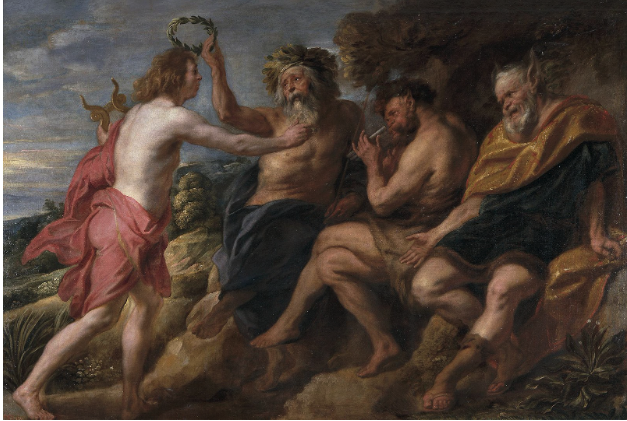
Peter Paul Rubens, “The Judgment of Midas,” 1637
In a darker variation of this story, it’s a cheeky satyr named Marsyas who challenges Apollo’s musicianship. And this time, Apollo’s wrath arguably overstepped the bounds. As the victor, just as “civilized man” conquered nature, the vengeful god tortured and destroyed his opponent rather than suffer him to live and let live. Literally removing his hybrid animalistic form, Apollo hung his opponent from a tree and skinned him alive. “The Flaying of Marsyas” became a favorite motif in classical and later European painting.
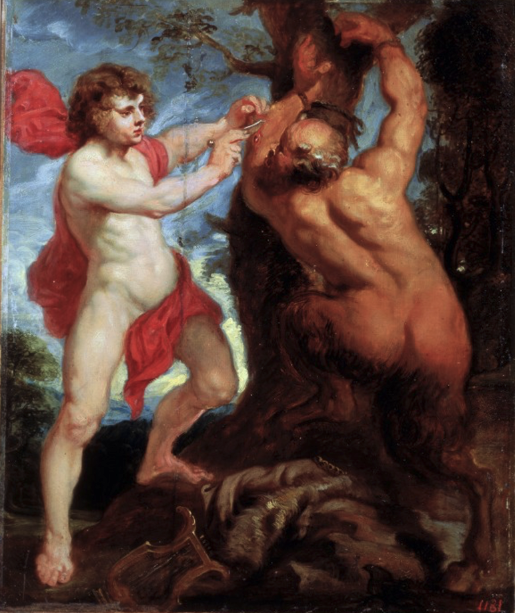
Apollo and Marsyas by Rubens. Ouch!
In art, music and literature, as the living soul and energy of nature, Pan is never truly dead. He abides as ever over processes of rebirth and transformation. He can be recognized in the “Green Man,” a male embodiment of Mother Nature, still watching from the stone of Medieval cathedrals. He can be seen in the return of green shoots in spring; he can be felt in the air and the falling of the rain; he can be conjured by the sounding of the morning glory’s bell.
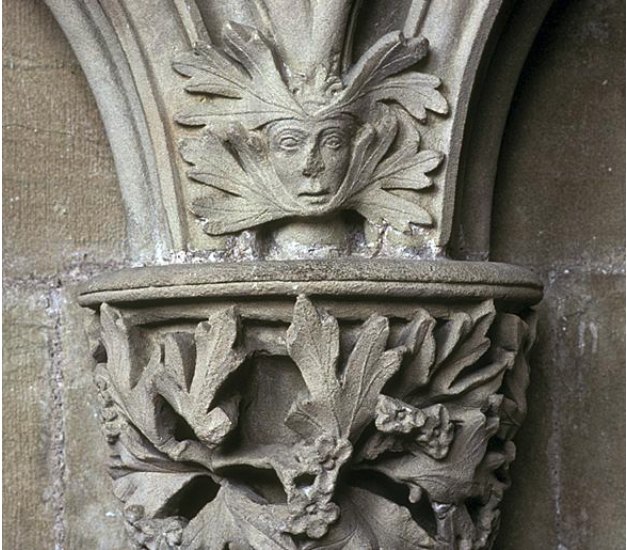
”Green Man” architectural sculpture at Southwell Minster Cathedral, ca. 1290. Source.
If you’re a fan of classical art and the realism that carries that torch, check out our sister publication, Fine Art Connoisseur and consider receiving the beautiful print version of the magazine in the mail!