“Why do artists do it?” asks painter Russell Jewel. “Why do we bare our souls to the public and risk one person’s opinion?” His words capture the tension every artist feels when entering a juried event — the balance between vulnerability and ambition. But what makes a painting rise above the rest? What qualities make a viewer stop, linger, and fall in love? We turned to some of the art world’s most experienced judges, collectors, and curators to find out.
1. INTENTION
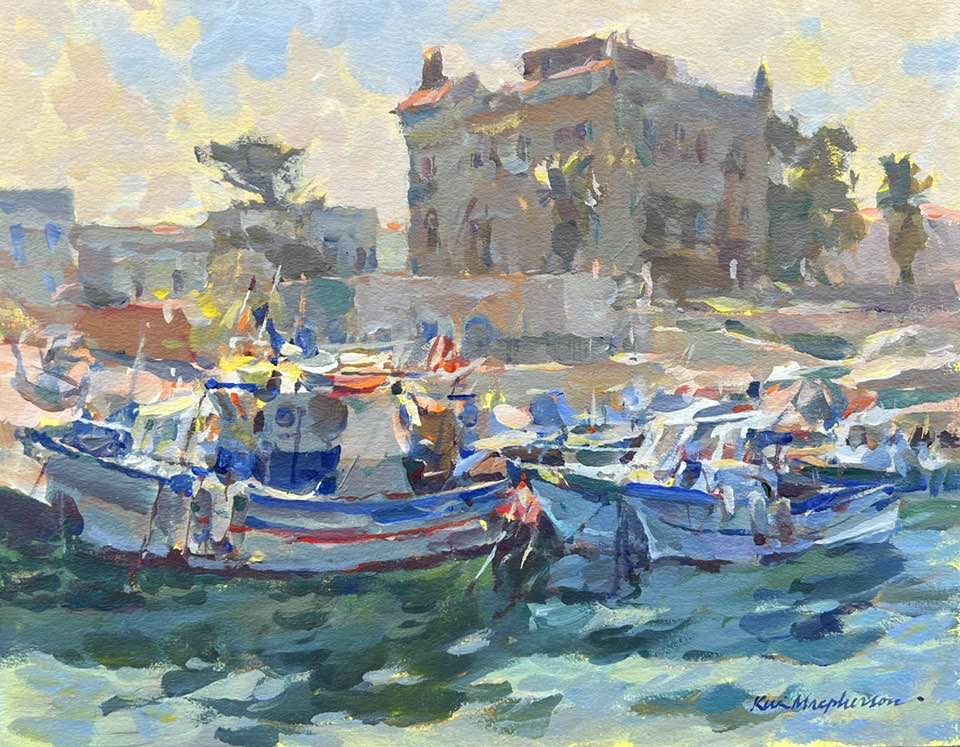
“A great painting goes beyond technical ability,” says esteemed visual artist and plein air painter Kevin Macpherson. “I need to feel the artist’s intention — the choices they made to guide the viewer through the painting, hold their attention, and convey the emotion behind it. Their reason for creating the piece must come through.”
2. THE SEVEN C’S
Veteran plein air painter Bob Upton outlines seven criteria that often guide a juror’s decision:
- Compelling – An irresistible visual impact that draws you in.
- Craftsmanship – A mastery of drawing, values, paint handling, and presentation.
- Composition – A design exhibiting unity, balance, movement, and rhythm that feels intentional, not accidental.
- Color – Harmony and relationships that make the light and atmosphere believable.
- Creativity – A fresh, distinctive voice that stands out from the rest.
- Capture – A truthful impression that evokes emotion.
- Challenge – Evidence that the artist has overcome plein air obstacles with skill and spirit.
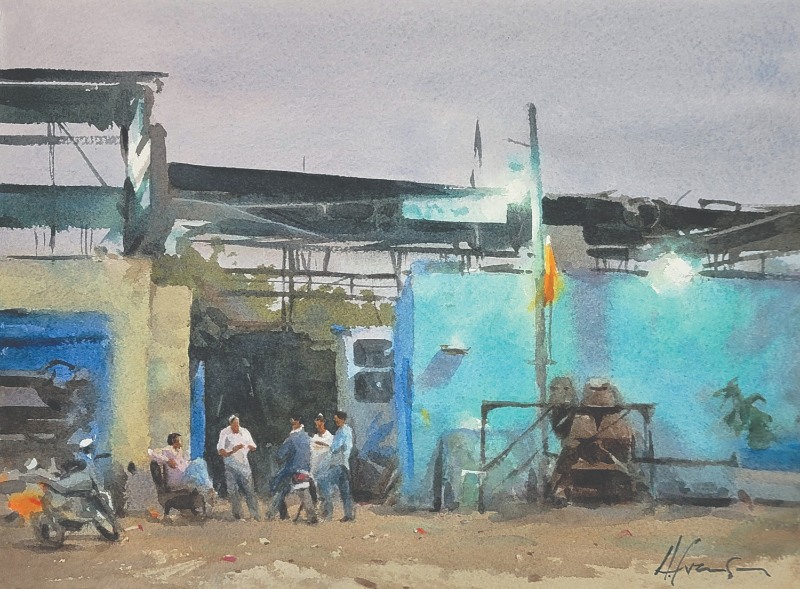
“Shop Talk” (watercolor, 11 x 15 in.) by. Andy Evansen
3. COMPOSITION
“It all comes down to composition,” says David Leadman, director of Fine Art at the Greenbrier Resort and owner of Walls Fine Art Gallery in White Sulphur Springs, West Virginia. “If the composition isn’t sound, the painting isn’t there. Be it abstract or realist, every painting comes down to shapes.”
4. FASCINATION
“Although I’ve devoted much of my life to promoting and selling art, I’ve never been compelled to create it myself,” says Susan Simpson Gallagher, owner of Simpson Gallagher Gallery in Cody, Wyoming. “That distance helps me stay objective. I just know when a piece works — when I can travel into it, rather than being stopped at first glance. Art is subjective, of course, but I trust that intuitive response.”
5. CONNECTION
For award-winning artist Stan Kurth, the standout paintings are those that make a visceral connection. “Regardless of style or subject, I look for a correlation between captivating content and mastery of the medium,” he says.
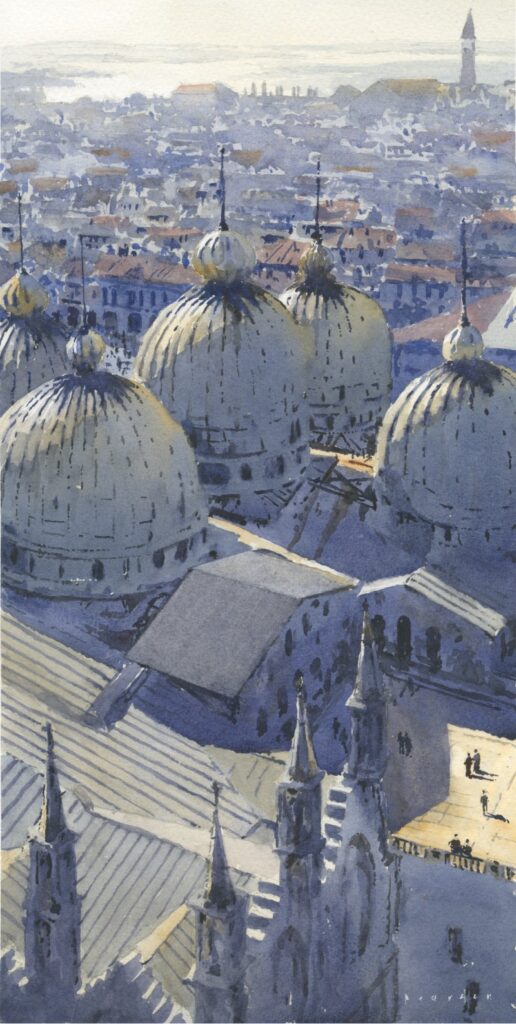
“Domes of San Marco” (watercolor, 20 x 10 in.) by Michael Reardon
6. EMOTION
“When I’m judging an art competition, first impressions matter,” says curator and connoisseur Richard Montoux. “The emotion a piece conveys is essential — it’s what draws me in and stays with me.”
7. AUTHENTICITY
Respected watercolor artist Andy Evansen looks for paintings that showcase a medium’s true voice. For watercolor paintings, for example, he favors those “that reveal the medium’s versatility and its unique, luminous qualities — the very things that make it so beautiful.”
8. HONESTY
“In the end, it comes down to a feeling of connection,” says acclaimed plein air painter Mike Hernandez. “Beyond technical mastery or unique expression, a painting must feel honest — true to the artist’s experience.”
9. IMPACT
“Sometimes, while jurying a show, a painting just stops you in your tracks,” says California watercolorist Michael Reardon. “I know I’ve got a winner when I think, ‘I want that one on my wall.’”
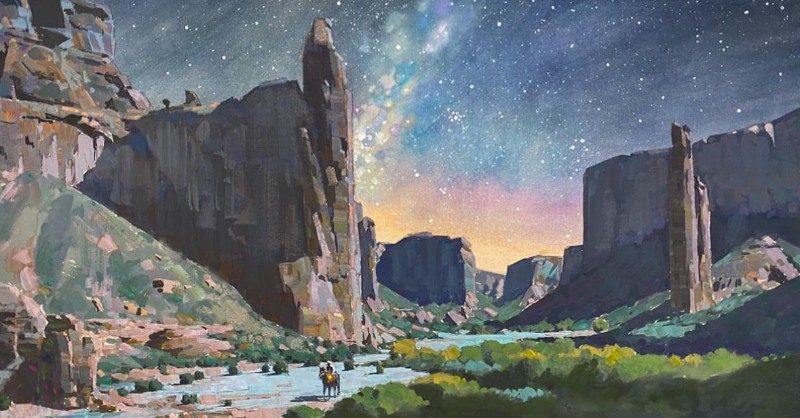
“Night Ryder” (gouache on paper, 10 x 8 in.) by Mike Hernandez
10. EXPRESSION
“Judging work is an honor — but extremely difficult,” says renowned watercolorist Thomas W. Schaller. “There has to be an artistic impulse, an electric jolt of intent. Then the shapes, values, and colors must be orchestrated to create an emotional experience and a dialogue with the viewer. The best paintings make you ask questions.”
11. COMPLEXITY
For watercolorist Birgit O’Connor, a great painting balances “a strong sense of design, effective color use, creative expression, technical ability, and a level of complexity that communicates clearly with the viewer.”
12. VOICE
“I look for paintings with an identifiable voice,” says Vermont artist Charlie Hunter. “To quote Richard Schmid, great art ‘shows you what the world feels like to someone else.’ The best work captures a moment, depicts a place that resonates, or is simply beautiful — and the viewer should trust their gut about which paintings move them.”
13. BEAUTY
“First and foremost, I look for pieces that show a sense of beauty,” says artist D. Eleinne Basa. “Then I consider whether the artist has conveyed their intention and how effectively they achieved their objective.”
14. DISTINCTION
“To start, I look for paintings that stand out visually from the others,” says plein air oil painter Peggy Immel. “A strong emotional component, a unique point of view, excellent technique, and honest use of the medium are what make a painting rise above.”
15. VIRTUOSITY
“The paintings that draw me in combine virtuosity with intelligence — offering insight as well as keen perception and confident control,” says curator Mark D. Mitchell.
This story originally appeared in PleinAir Magazine. Fifteen years in, it’s still the essential read for anyone serious about painting or collecting great art.