In an era of endless new tools, techniques, and trends, Donald Demers paints with a wooden stick with some animal hairs on the end of it. That’s how he describes it, anyway — and the simplicity is entirely intentional.
“I like to keep it simple so I’m not distracted by tools,” says the Maine-based maritime and landscape painter, whose plein air work is widely regarded for its richness, depth, and atmospheric truth. “It’s just me and the scene and the brush and the paint and that’s it.”
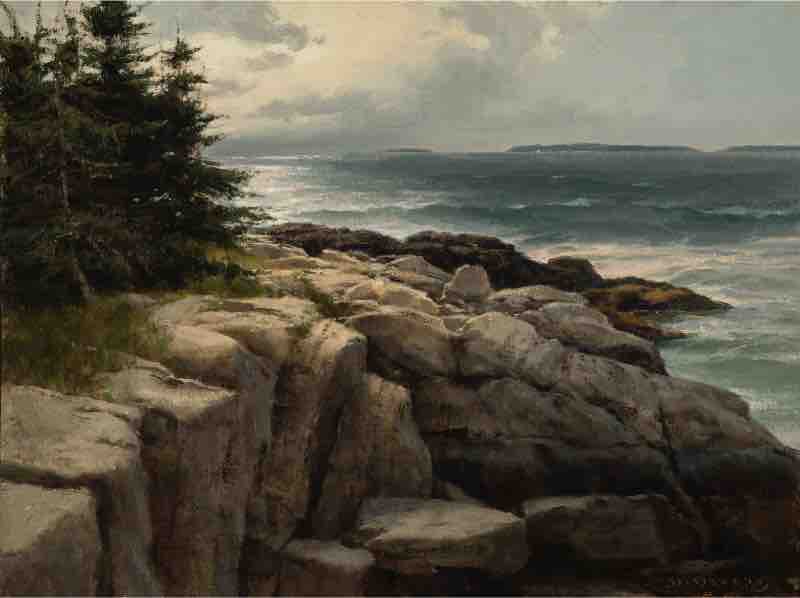
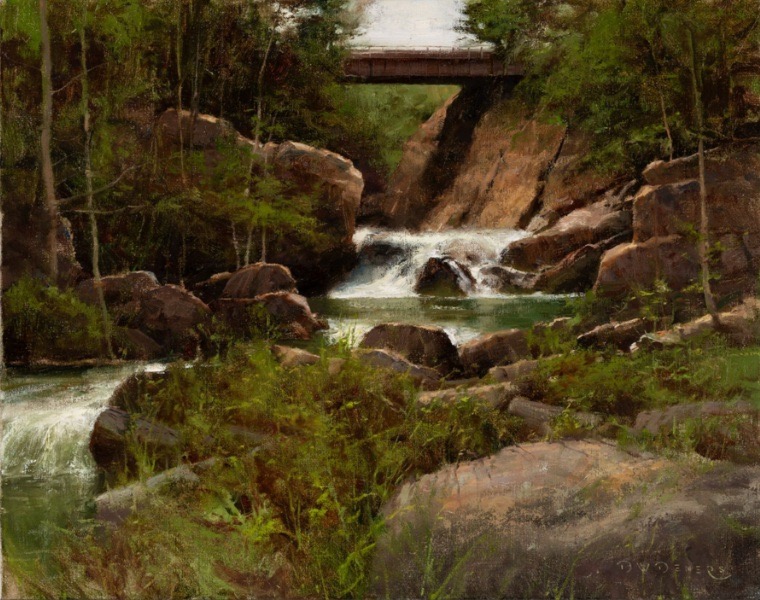
“Rocks of Pemaquid” (oil, 12 x 16 in.) by Donald Demers
Demers sets up with a wooden pochade box on a photographer’s tripod. His palette sometimes comprises as few as seven colors. He almost never uses photography. And while art suppliers may wince at his restraint — “The art suppliers don’t like me,” he quips — his results speak for themselves.
That restraint extends to how he thinks about color. Rather than chasing formulas or premixing, Demers finds his colors through firsthand experience, mixing in small batches between warm and cool tones. “I do not have a system other than setting my palette up the same way I have since I was in my late teens,” he says. “I never premix anything and prefer to find colors through direct observation rather than preconceived formulas.”
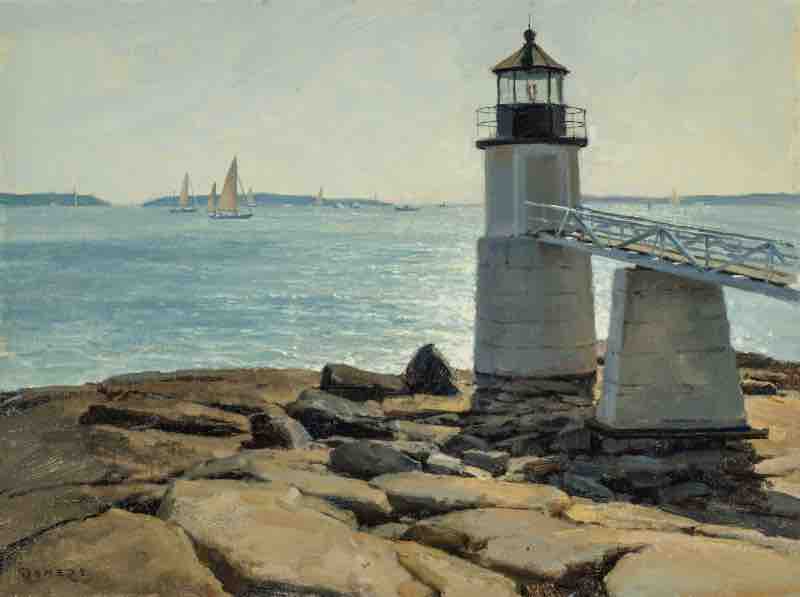
“Bright Day at Marshall Point” (oil, 9 x 12 in.) by Donald Demers
It’s a philosophy rooted not in stubbornness but in hard-won clarity. Demers came up through illustration, spent years sailing aboard square-rigged vessels, and studied the work of painters he admired in galleries and museums when art school left him cold. What emerged over decades was an approach stripped of everything unnecessary — one that puts the painter in direct, unmediated contact with the scene in front of him.
And at this stage of his career, the questions driving his work have little to do with technique at all. “Now it’s mostly the ‘why’ of painting,” he says. “What does the scene mean to me? What human experience does it capture? I’m not interested in just a ‘pretty picture.’ I’m interested in the human experience coupled with my personal aesthetic.”
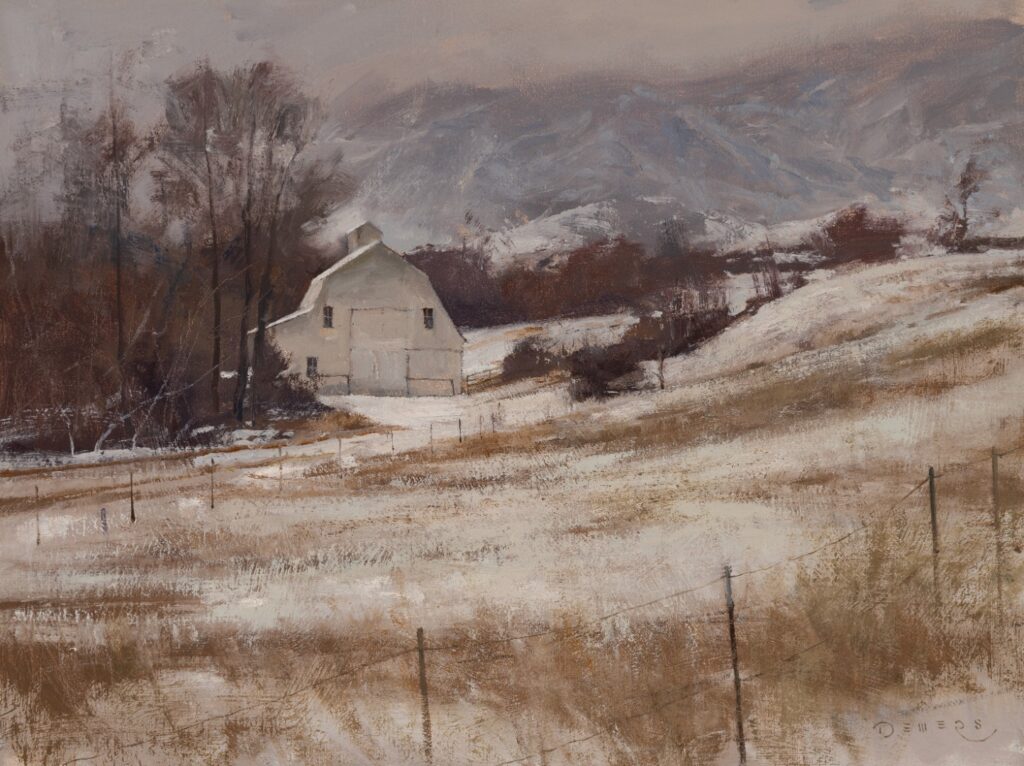
“Brinton Barn” (oil, 12 x 16 in.)
For Demers, a painting succeeds on two counts: did it fulfill its intention, and does it carry the craft and aesthetic he requires? If the answer to both is yes, the work is done.
No gimmicks required.
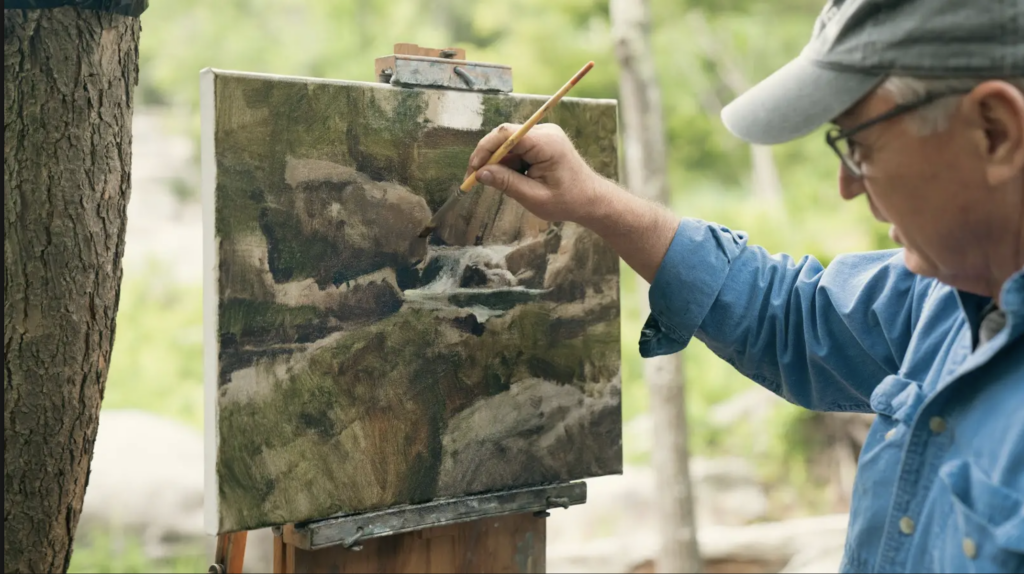
Don Demers painting on location
Want to see what direct observation looks like in real time? In his new step-by-step video, award-winning painter Don Demers takes you on location to the Adirondacks to paint a forest waterfall — rocks, rushing water, and all.