Women aren’t generally associated with America’s 19th century Hudson River School painters, but that’s not because there weren’t any. There were dozens.
And they did it by going rogue. Women in the 19th century could acquire a limited arts education, but being a professional artist was the province of men. Most art academies didn’t admit women, and neither did the clubs that linked artists with patrons. For women, the required figure-drawing classes, which featured nude models, were off-limits.
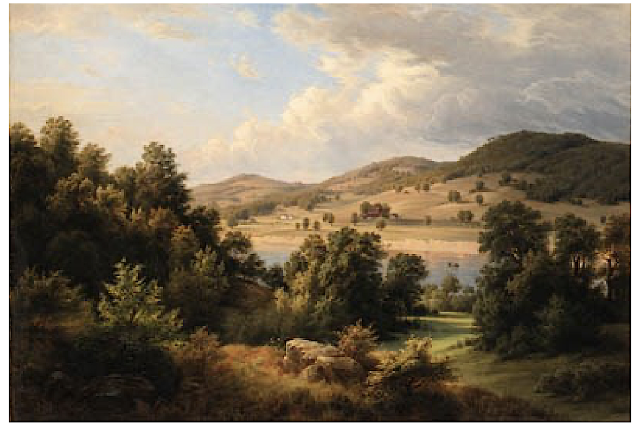
Harriet Cany Peale, “Braddock’s Field,” 1855, 25 x 38 in.
Women like Harriet Cany Peale. Sarah and Emily Cole, Julie Hart Beers, Laura Woodward and Ann Sophia Towne Darrah broke through once in many moons, but mainly because they were the wives, sisters, daughters and granddaughters of better-known male artists.
More and more impressive work is coming to light by the many overlooked women who painted majestic landscapes in the shadows of their celebrated male peers. In 1999 a landscape by Harriet Cany Peal, expected to fetch less than $10,000 at auction, instead sold for $18,400, and the trend has continued. Most recently, the sale of a Julia Hart Beers in 2022 brought the record for a Hudson River landscape by a woman north of the $20K mark.
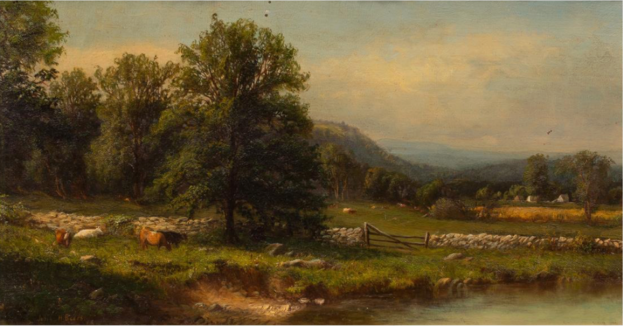
Julie Hart Beers, Summer Landscape, 1865, Oil on canvas, canvas, 8.75 x 16.75 in.
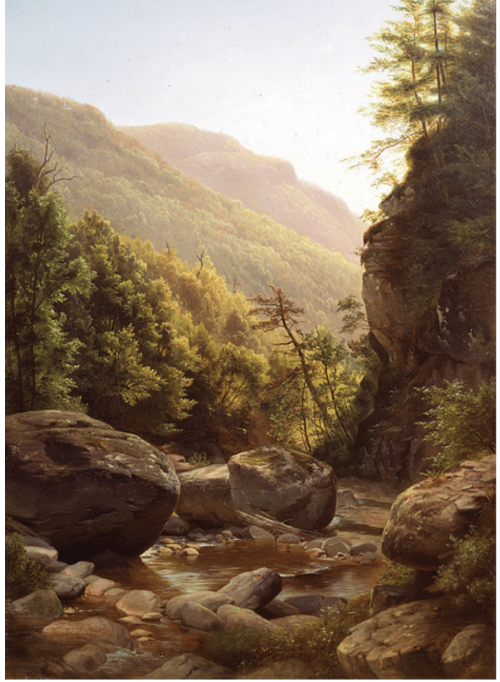
Harriet Cany Peale (1799-1869) was first a student, and then the second wife, of Rembrandt Peale, son of Charles Willson Peale, who won fame for his portraits of George Washington and other American Revolutionary figures. Connecticut’s New Britain Museum of American Art has just announced its acquisition of Harriet Cany Peale exquisite three-foot tall painting, “Kaaterskill Clove.” (top of page)
“Harriet Cany Peale’s Kaaterskill Clove is an extraordinary picture and we are thrilled it has found a home here at the NBMAA,” says Stephanie Mayer Heydt, the Connecticut museum’s Director of Collections and Exhibitions.” Not only is it skillfully rendered, but the detail is such that some features of the landscape are still identifiable in photos of the site today.”
Harriet’s admiring husband painted her as a young woman in a sumptuous blue gown.
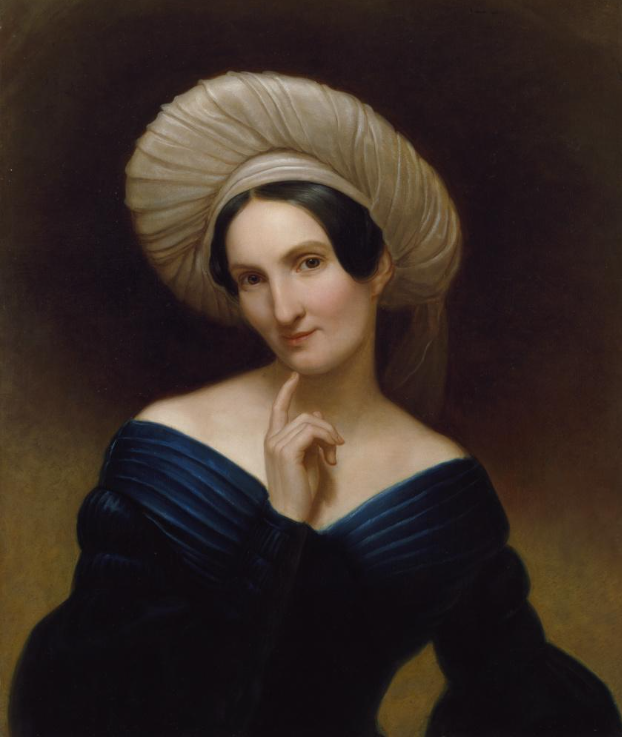
Rembrandt Peale, “Portrait of a Lady (Harriet Cany Peale),” ca. 1840, oil on canvas.
“The acquisition is also a landmark purchase for the Museum,” Heydt says. “As our first major landscape painting by a woman artist, Kaaterskill Clove offers a powerful complement to our existing strength in American landscape painting. It speaks directly to our mission to expand and diversify the collection in meaningful ways.”
What follows are some examples from some of the prominent women mentioned above who painted landscapes on a par with their male counterparts in the Hudson River movement: Julie Hart Beers, Laura Woodward, and Sophia Ann Towne Darrah.
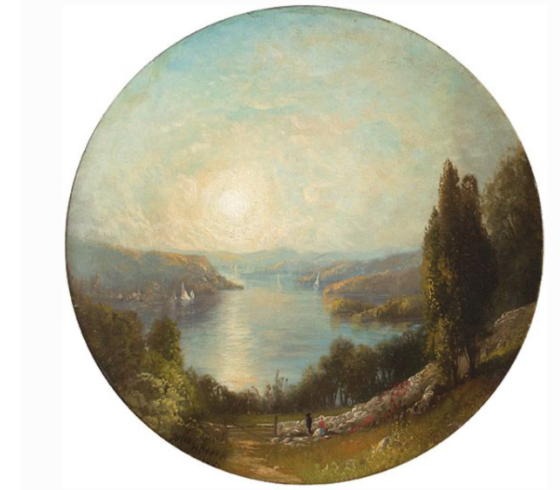
Julie Hart Beers, “The Hudson as Seen from Henry Villard’s House – Tarrytown, Christmas,” 1881
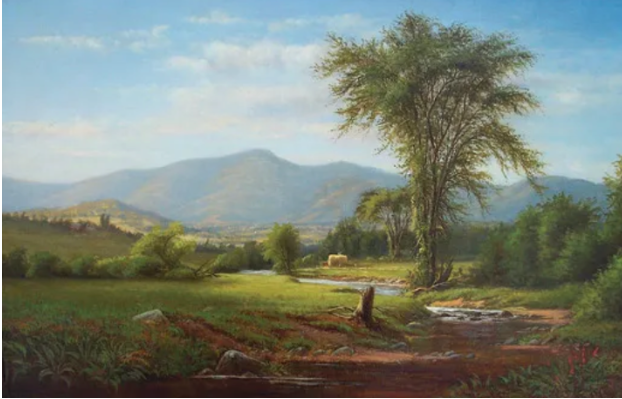
Laura Woodward, Untitled (Clarendon, VT?), 1874
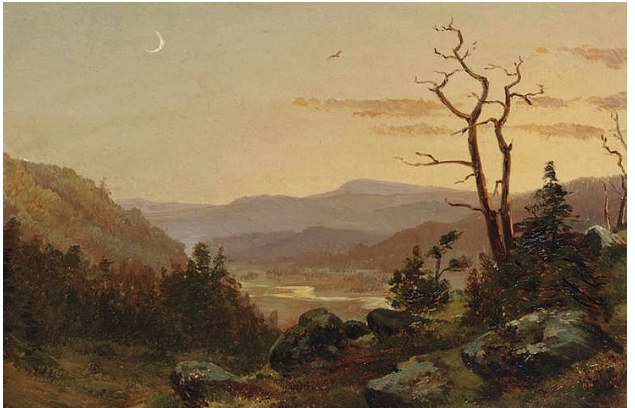
Ann Sophia Towne Darrah, “Twilight,” before 1881.
If you’re interested in learning to paint like the artists of the Hudson River School, check out Erik Koeppel’s videos here.